



























Frontier Developments returns with their third dinosaur management simulator, and the premise remains deliciously absurd. You’re tasked with building profitable theme parks around creatures that could tear through a crowd like tissue paper.
The game operates in a post-Jurassic World timeline where humanity has somehow decided that keeping prehistoric predators as zoo attractions is a sustainable business model. This tension between profit-driven entertainment and the very real danger these animals represent forms the backbone of every decision you make.
Jurassic World Evolution 3 refines the formula established by its predecessors while introducing meaningful new systems that change how you engage with your scaly attractions. The juvenile dinosaur mechanics stand as the headline feature, transforming what was once a simple collection game into something resembling multi-generational stewardship.
The customization tools have expanded dramatically, allowing players to craft parks that feel genuinely personal rather than assembled from preset templates. This is a management sim that understands its audience: people who want to tinker with complex systems while occasionally watching a Tyrannosaurus wreak havoc on tourists who ignored the warning signs.
Building a Network of Prehistoric Mishaps
The campaign serves dual purposes here. It functions as an extended tutorial for newcomers while providing a structured progression path for returning players. You work with the Dinosaur Integration Network, led by Cabot Finch, who guides you through rehabilitating failing parks across different locations. The narrative framework involves a terrorist organization that believes dinosaurs should have stayed extinct, which provides just enough conflict to justify your globe-trotting without becoming intrusive.
Jeff Goldblum reprises his role as Ian Malcolm, delivering doom-laden prophecies about genetic tampering with his signature unpredictable cadence. Every time he appears to warn you about creating super-dinosaurs, it feels like a knowing wink at the franchise’s core absurdity. The supporting cast includes various advisors and a corporate suit character focused solely on revenue.
The campaign structure represents a significant improvement over the previous entry’s action-focused approach. Instead of completing isolated missions, you hop between multiple parks, each presenting unique challenges. You might start developing one location only to hit a roadblock that forces you to visit another site to research a vaccine or prove your conservation credentials. This creates a sense of managing a global operation rather than working through a linear checklist. The progression system encourages you to apply knowledge gained at one location to improve your previous parks, and chasing five-star ratings across all sites provides substantial longevity.
The difficulty curve feels carefully calibrated for newcomers, teaching core systems without feeling patronizing. The contract system drives you forward with clear objectives while leaving room for experimentation. However, the narrative lacks the dramatic depth that the Jurassic franchise is capable of delivering. The films thrive on espionage and complex character dynamics. The campaign touches on these themes but never commits to exploring them meaningfully. Experienced players will find themselves covering familiar territory, particularly if they’ve already spent time with the previous games.
Streamlined Operations With Hidden Complexity
Park management favors accessibility over granular micromanagement, which proves to be the right choice. Building placement, road connections, and power grid management work through intuitive interfaces that let you focus on the bigger picture. Color-coded service zones show at a glance which areas need additional amenities, removing much of the guesswork from expansion planning.
Shops generate profit through straightforward mechanics. You won’t adjust salt levels in the fries or fiddle with pricing models. Instead, you cater facilities to the demographics visiting your park. Thrill-seekers prefer restaurants with jukeboxes, while education-focused tourists want fossil displays. Once configured properly, these facilities largely run themselves, freeing you to focus on the dinosaurs.
The staffing system provides the support infrastructure needed to keep operations running smoothly. Ranger teams patrol enclosures and handle maintenance. Capture teams respond to breakouts with tranquilizer equipment, and you can take manual control of helicopter missions if you want hands-on involvement. The science division manages the genetic side of your operation, handling everything from disease research to breeding programs.
Financial management creates interesting tension between safety and spectacle. Larger, more dangerous dinosaurs draw bigger crowds and generate higher revenue, but they exponentially increase the risk of catastrophic breakouts. You’re constantly weighing whether the profit margins justify the potential for disaster. Research trees unlock new capabilities, from advanced vaccines to genetic modifications that can alter dinosaur behavior.
The game lets you experience the park from ground level through viewing platforms and tour rides, which helps you understand what guests see when they visit. The balance between simplicity and depth works because the game trusts you to engage with systems at your own pace. Casual players can focus on basic park functionality while dedicated players will find plenty of room to optimize operations.
The Heart of the Experience
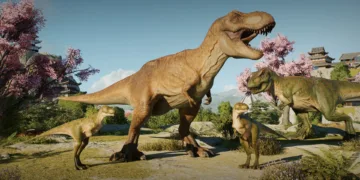
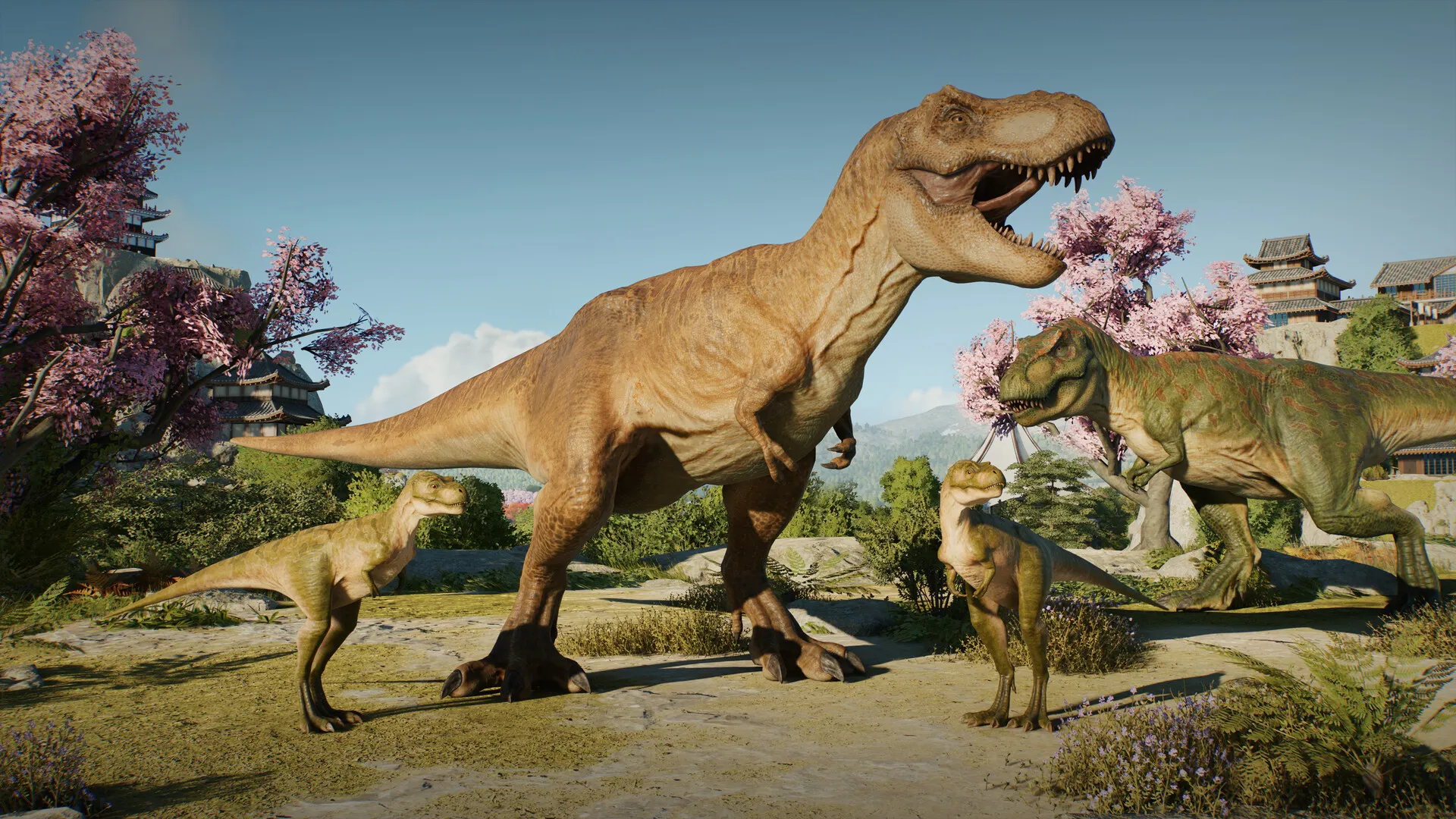
The juvenile dinosaur system transforms how you interact with your prehistoric collection. Previous entries treated dinosaurs as static exhibits you created and maintained. Now you’re breeding them, watching eggs hatch, and managing the unique needs of younger animals.
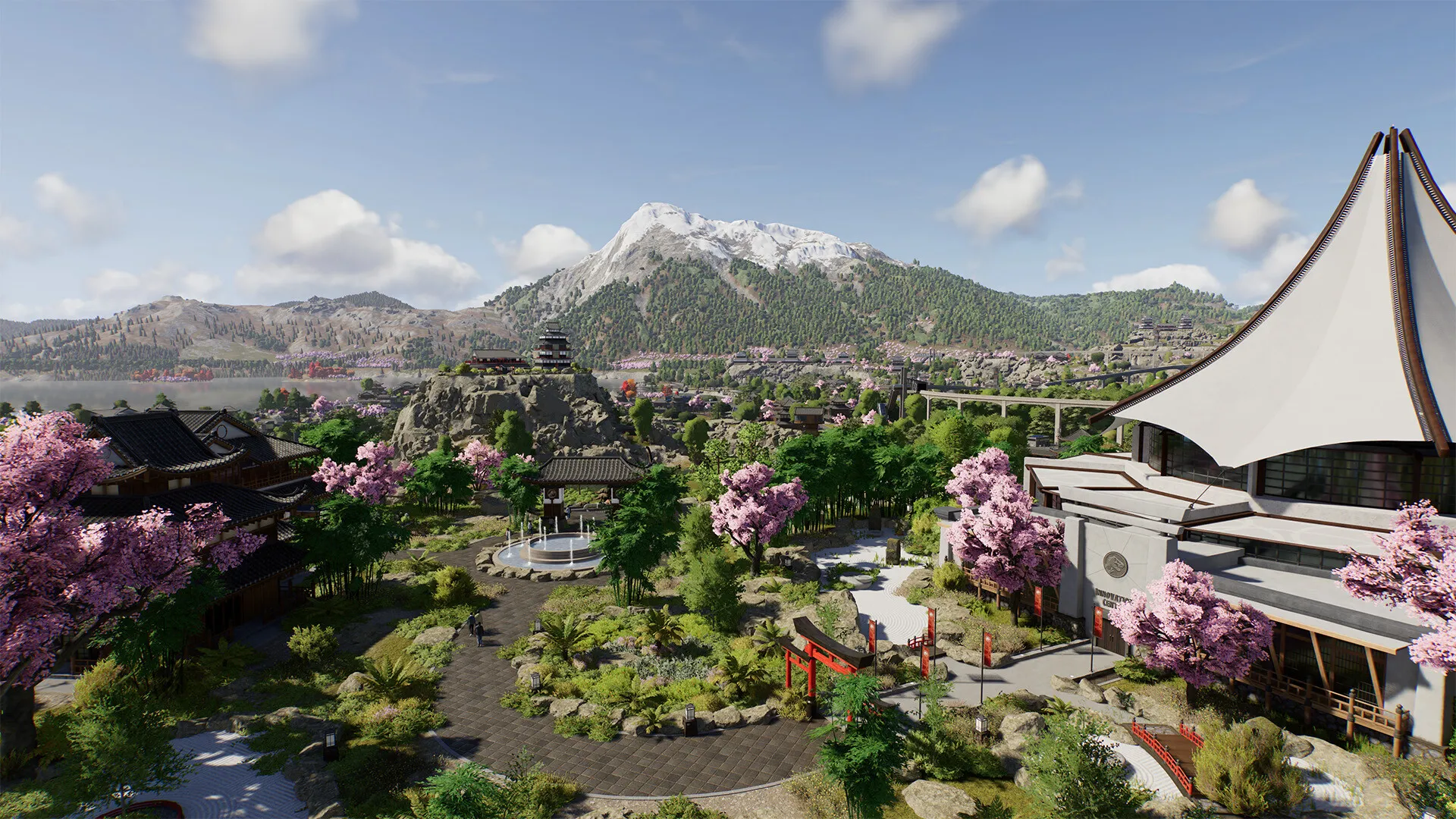
Breeding mechanics require both male and female dinosaurs in appropriate enclosures. The offspring inherit traits from their parents, including appearance patterns, behavioral tendencies, and temperamental characteristics. A baby raptor born to aggressive parents in a stressful environment will likely grow into a hostile adult. Conversely, juveniles raised in comfortable conditions develop into more social, manageable creatures. This creates meaningful long-term consequences for how you design enclosures and manage dinosaur welfare.
The practical challenges add welcome complexity. Herbivores that feed from treetops present obvious problems when their offspring can’t reach the leaves. You need to provide appropriate food sources at different heights. Overpopulation becomes a real concern when breeding gets out of hand, forcing you to either expand enclosures or implement population control measures.
Lineage tracking lets you follow genetic lines across generations. You can see which traits persist and how your breeding program shapes future dinosaurs. This system creates surprisingly strong emotional attachments. Watching a beloved dinosaur grow old and die hits differently when you can see its characteristics living on in descendants you’ve personally helped raise.
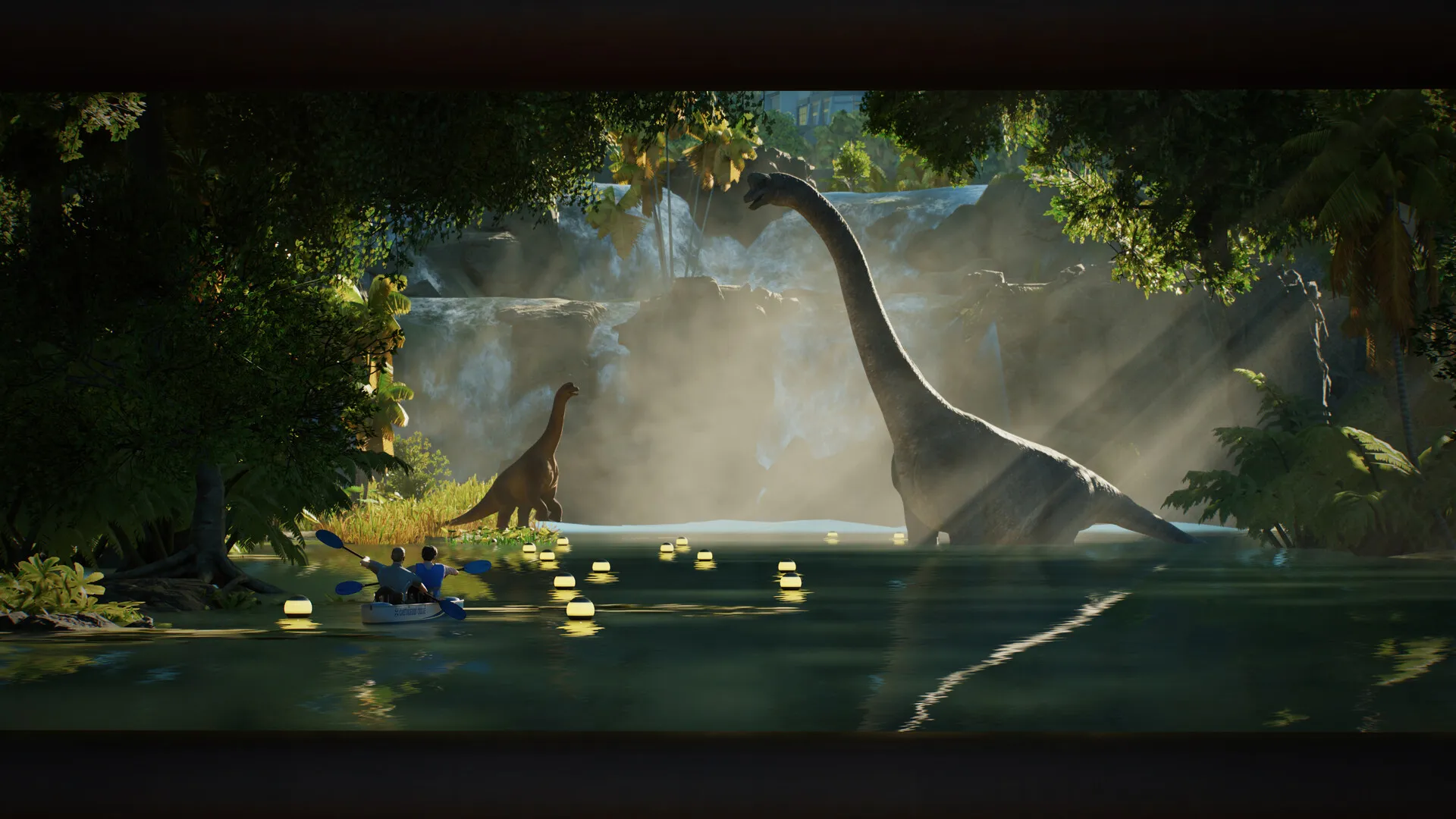
The expanded roster includes over eighty species ranging from small, docile creatures to massive apex predators. The visual presentation makes observation genuinely enjoyable. Zooming in on a single Gallimimus or Tyrannosaurus to watch it go about daily routines remains one of the game’s simple pleasures. The animation quality and behavioral variety make these animals feel alive.
Enclosure requirements vary significantly by species. Social dynamics matter. Some dinosaurs thrive in herds while others prefer solitude. Habitat needs include specific vegetation types, water features, and terrain configurations. Comfort metrics track whether each animal’s environmental preferences are being met.
The inevitability of breakouts adds tension to every expansion decision. Eventually something will go wrong. A storm damages a fence. A dinosaur decides it’s had enough of captivity. Watching a massive predator stampede through crowds of tourists carries a perverse entertainment value that the game fully embraces.
Creative Freedom With Purpose
The customization options represent the most significant mechanical evolution from previous entries. The modular building system lets you modify individual elements of structures rather than accepting preset designs. Panel colors, material choices, lighting fixtures, and decorative elements can all be adjusted to create facilities that match your vision. You can construct unique structures from scratch or use templates as starting points.
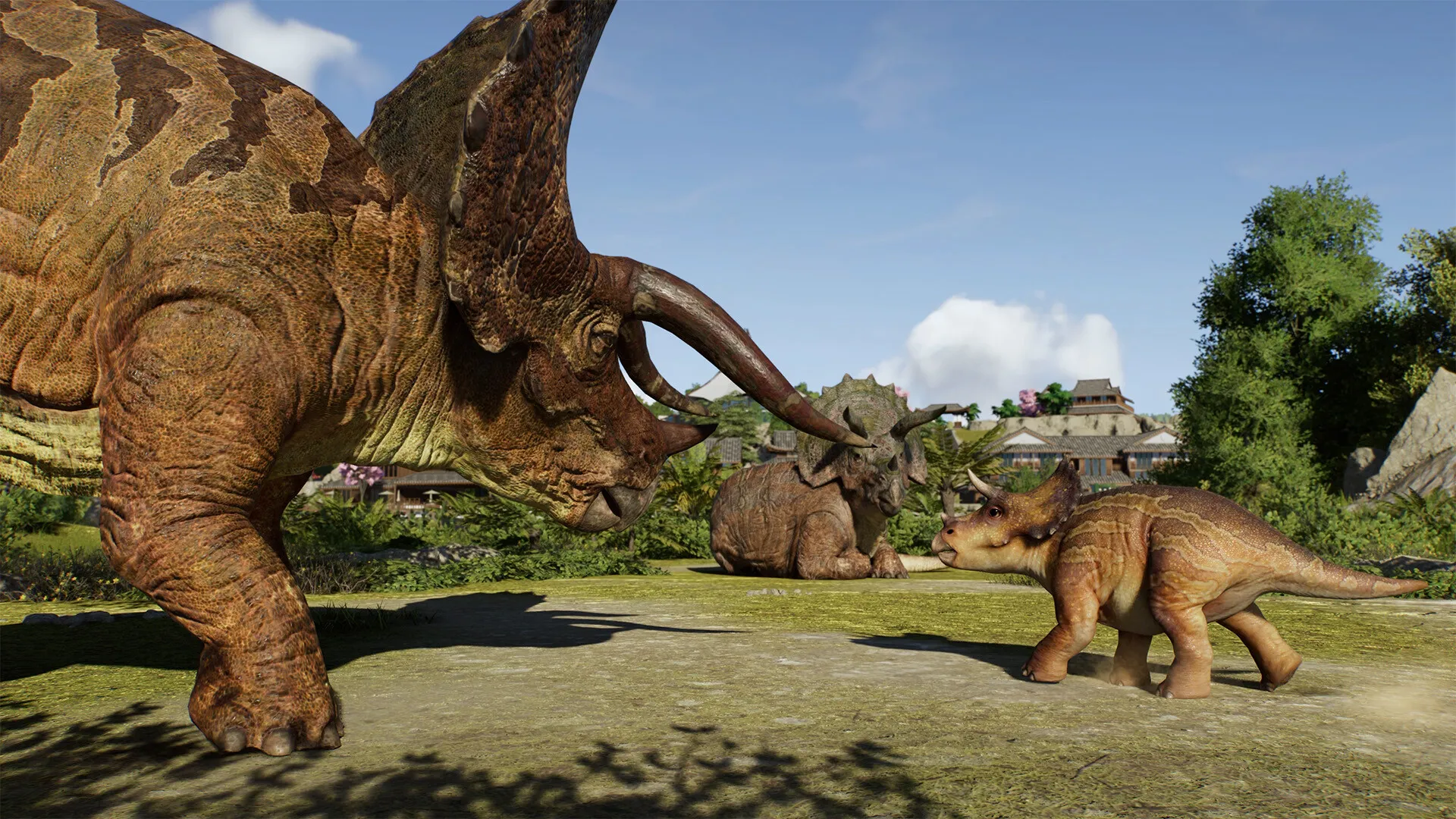
This extends to major facilities like hotels and restaurants. The game includes recognizable structures from the films if you want that authentic aesthetic, but it also provides the tools to design something entirely original. Players with artistic inclinations can spend considerable time perfecting the visual presentation of their parks.
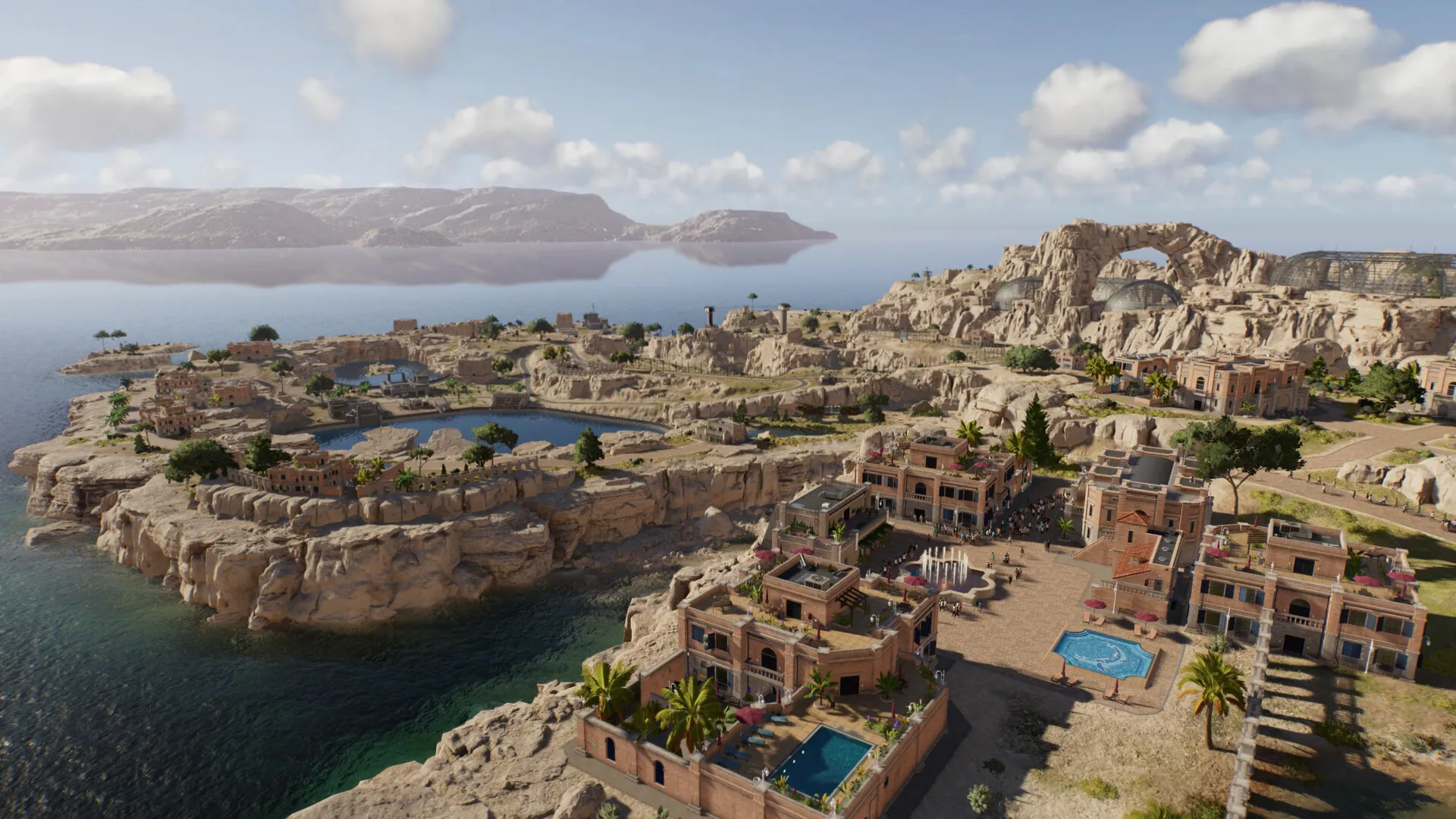
Enclosure design has moved beyond traditional fenced paddocks. Natural terrain functions as barriers now. You can carve canyons to create impassable walls, use mountain ranges as natural boundaries, or position water features strategically. Scenery blocks serve as building materials for partial or complete enclosures, allowing for organic layouts that feel less like zoo exhibits.
Environmental customization tools include robust terraforming capabilities. Creating waterfalls, placing vegetation for food and shade, and designing water sources that look natural all contribute to crafting a living ecosystem. Transitions between biomes feel smooth, with forests blending into grasslands naturally. Using landscape features strategically for containment adds a puzzle-solving element to enclosure design.
The island generator in Sandbox mode provides blank canvases for ambitious projects. Sliders control terrain shape, water coverage, mountain placement, and tree density. Generated islands can be shared through DNA codes. These serve as starting points rather than finished products, and the terraforming tools let you refine the generated landscape to suit your needs.
Workshop integration lets you share building designs and download creations from the community. The library of available designs should expand rapidly after launch, providing endless inspiration for players less confident in their creative abilities.
Modes That Cater to Different Ambitions
Challenge mode unlocks progressively as you advance through the campaign. These scenarios test your mastery of specific mechanics by imposing strict conditions and time limits. You might need to rehabilitate a failing park within a set timeframe while adhering to budget restrictions, or manage a disease outbreak with limited resources.
The replayability comes from the flexibility of the game’s systems. Multiple approaches can solve most challenges, rewarding players who experiment with different strategies. Some scenarios emphasize financial management, while others focus on dinosaur welfare or visitor satisfaction.
Sandbox mode represents the natural endpoint of the progression path. After learning systems through the campaign and honing specific skills in challenges, Sandbox gives you complete freedom. The full roster of eighty-plus dinosaurs becomes available, along with every facility and item in the game. Various park locations provide different environmental settings and constraints.
The mode shines when you impose your own limitations. Complete freedom can feel paralyzing, so creating self-imposed rules often produces the most engaging experiences. You might restrict yourself to specific dinosaur families or commit to building a park focused entirely on conservation rather than profit. The difficulty sliders let you adjust how challenging the economics and dinosaur management become.
Legacy content from previous games integrates smoothly with the new features. Returning islands provide familiar settings for players who want to revisit locations from earlier entries while taking advantage of improved mechanics and expanded options.
Visual Fidelity and Technical Execution
The visual improvements over previous entries manifest most clearly in the dinosaurs themselves. Model detail has increased noticeably, and the animation variety makes each species feel distinct in how it moves and behaves. Lighting sees particular enhancement on PC, where ray tracing support adds realistic reflections and shadow behavior. This ranks among the best-looking management simulators available.
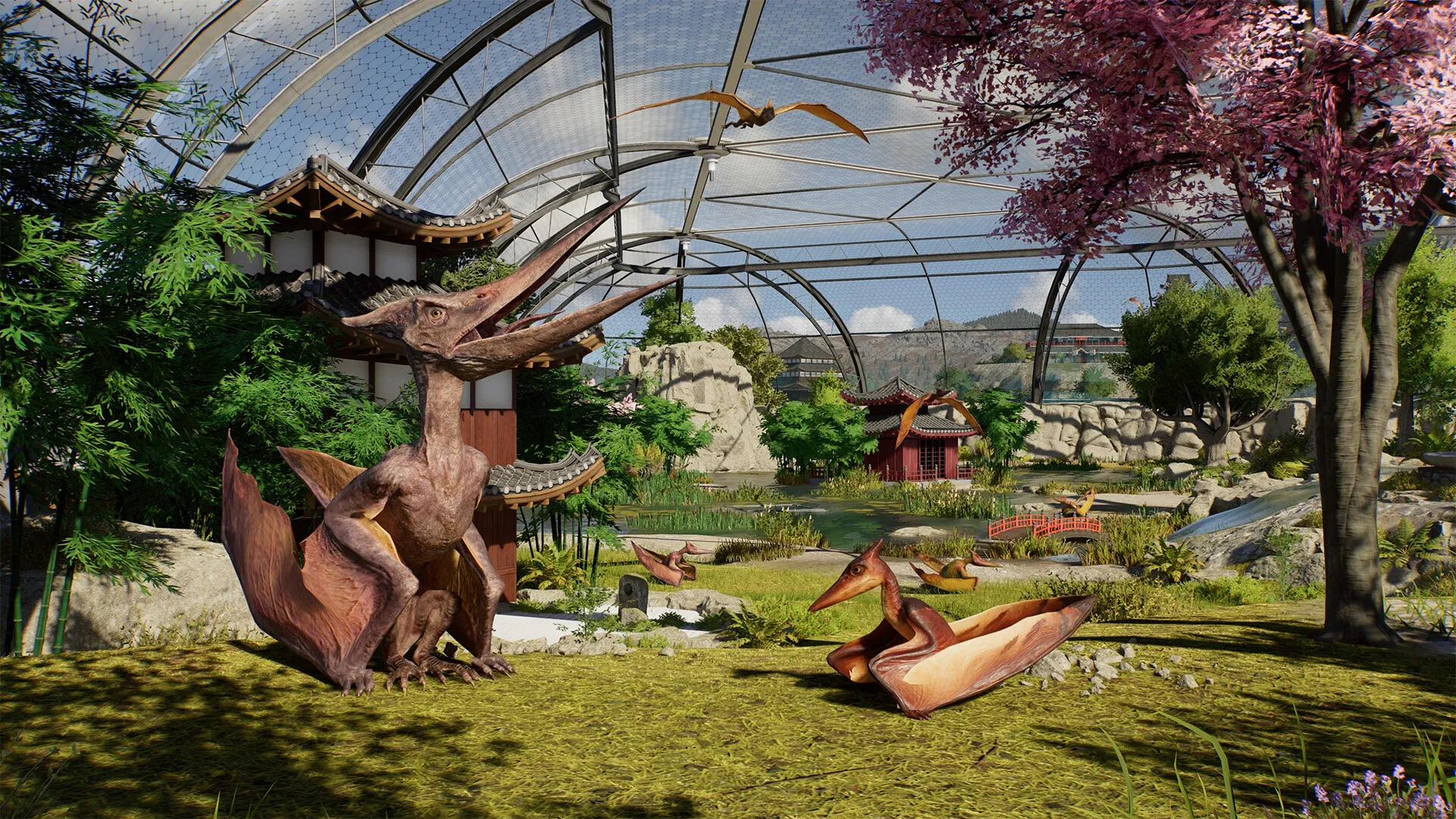
PlayStation 5 performance stays smooth through most situations, though frame rate dips appear as parks grow larger and more complex. Water features seem particularly demanding. The game employs dynamic resolution scaling to maintain performance, which generally works well. Ground detail pop-in becomes visible when you zoom in quickly, with higher-resolution textures loading as you approach.
The absence of separate fidelity and performance modes feels like a missed opportunity. Players should have the option to prioritize visual quality or frame rate stability. The available toggles for depth of field and motion blur provide some customization, but they don’t address the fundamental performance-versus-quality trade-off.
PC scalability proves solid for mid-range hardware. Running at a combination of high and ultra settings on moderate builds produces good frame rates without major compromises. The overall polish level remains high, with minimal stability issues across extended play sessions.
The Review
Jurassic World Evolution 3
Jurassic World Evolution 3 delivers the definitive dinosaur park management experience. The juvenile breeding system adds emotional weight and strategic depth, while expanded customization tools let you craft truly distinctive parks. The campaign's non-linear structure keeps things fresh, though the narrative never quite matches the dramatic potential of its source material. Performance holds steady across platforms with minor hitches. For fans of management sims or the Jurassic franchise, this represents the series at its peak—a polished, feature-rich simulator that balances accessibility with meaningful complexity.
PROS
- Juvenile dinosaur system adds emotional depth and strategic complexity
- Extensive customization tools for buildings and terrain
- Non-linear campaign structure encourages experimentation
- Over 80 beautifully animated dinosaur species
- Streamlined management mechanics with hidden depth
- Strong community features through Workshop integration
CONS
- Narrative lacks dramatic depth despite franchise potential
- Frame rate drops with large parks and water features
- No fidelity/performance mode toggle on consoles
- Campaign retreads familiar ground for series veterans
- Generated islands can look awkward without manual refinement