

























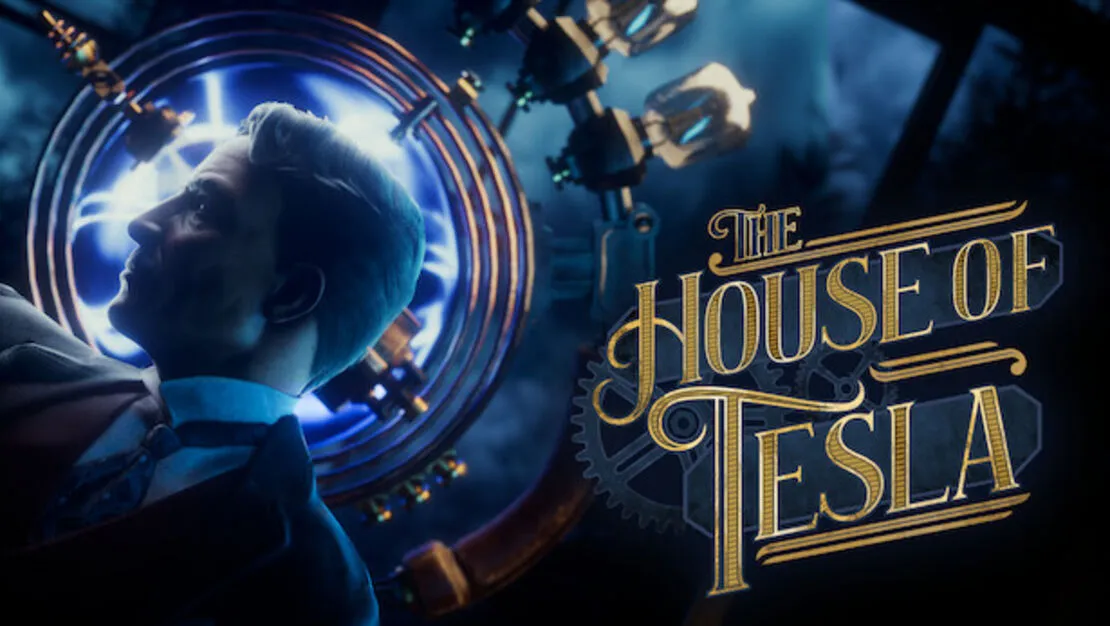

You wake in Nikola Tesla’s office with gaps in your memory and a locked door between you and freedom. This premise launches The House of Tesla, Blue Brain Games’ latest point-and-click puzzle adventure that follows their Da Vinci trilogy into another historical figure’s world. The setup mirrors classic escape room design: examine your surroundings, solve interconnected puzzles, and piece together what happened through scattered documents and letters.
The game introduces its central mechanic early through the Unfinished Prototype, a device that lets you visualize electrical connections and link power cables to various objects. Given Tesla’s legendary work with alternating current and energy transmission, this mechanic feels thematically appropriate rather than arbitrary. The chapter-based structure moves you through different locations—from the cramped office to the sprawling factory floor, then onward to the laboratory and finally Wardenclyffe Tower. Each space presents fresh puzzles while gradually revealing both Tesla’s troubled professional life and the circumstances of your confinement.
Blue Brain Games positions this as both a brain-teaser and a history lesson, letting players interact with accurately recreated early 20th-century inventions while learning about the inventor’s financial struggles and ambitious projects. The formula blends mechanical problem-solving with biographical discovery, creating a rhythm that alternates between hands-on tinkering and quiet reading.
Puzzles That Connect and Confound
The game operates through standard point-and-click navigation, letting you move freely through environments before zooming into specific objects for detailed examination. Your mouse cursor transforms into a magnifying glass when hovering over interactive elements, a simple visual cue that prevents aimless clicking. The opening chapter presents a learning curve that might frustrate some players: certain crates and background objects blend into the scenery, making it unclear what constitutes a puzzle element versus decorative filler. This initial confusion fades as you develop an eye for the game’s visual language, though it requires patience.
Puzzle variety stands as one of the game’s strengths. You’ll manipulate lever systems to unlock doors, operate code-writing machines to access secured rooms, and assemble complex suitcase mechanisms with sliding components. The train sequence demands that you activate multiple systems in sequence, each requiring its own mini-puzzle. These challenges maintain thematic consistency with Tesla’s world while avoiding repetition. The welder puzzle exemplifies both the game’s ambition and its occasional missteps. The solution involves adjusting the device’s direction, but the logic governing correct versus incorrect turns remains opaque. I solved it through systematic trial rather than deduction, noting which direction worked at each step without understanding why. The puzzle functions, but it doesn’t teach its own internal rules clearly enough.
The inventory system adds another layer of complexity. Collected items sometimes require repair or proper assembly before use, forcing you to treat certain puzzles as two-stage problems: first figure out how the object works, then determine where to deploy it. This creates satisfying moments when a repaired device clicks perfectly into place, though it can also lead to confusion. Some inventory items lock after correct configuration, while others remain adjustable. This inconsistency caused me to second-guess completed puzzles, wondering if I should revisit them or move forward.
The game’s most inventive moments come when it breaks from mechanical puzzles entirely. You’ll guide a small boat through an obstacle course, control a theatrical performance featuring a character called “little gaspark,” and operate a crane with precise timing. These variations prevent the experience from settling into a predictable pattern of switches and buttons. Each chapter brings mechanically distinct challenges that demand different types of spatial reasoning and pattern recognition.
The escape room structure works because puzzles genuinely interconnect. Solving one challenge doesn’t just check a box; it provides tools or information needed for the next step. This creates forward momentum that keeps you engaged even during tougher sequences. The difficulty balance skews toward moderate, occasionally spiking when puzzle logic doesn’t quite land. Some players will breeze through segments that stump others, depending on how their minds process spatial and mechanical problems. The game respects your intelligence without punishing mistakes too harshly, though a few puzzles rely more on experimentation than genuine insight.
History Through Fragments and Static Memories
The narrative unfolds through collected documents rather than cutscenes or dialogue. Letters, notes, and journal entries accumulate in your inventory diary, revealing Tesla’s biography in fragments. You learn about his groundbreaking work on alternating current, his perpetual money troubles, and the ambitious Wardenclyffe Tower project that consumed his later years. The game presents Tesla as a brilliant mind hamstrung by poor financial acumen, unable to secure lasting sponsorship or proper compensation for his patents. These documents create a portrait of historical frustration: a man whose ideas outpaced the world’s willingness to fund them.

Interactive choice moments punctuate the experience. At key points, you select what motivated Tesla during specific decisions in his life. Choose incorrectly and the game gently corrects you, sometimes offering interesting speculation about how that alternative motivation might have led him down different paths before steering you toward the historically accurate answer. These moments feel educational rather than punitive, expanding your understanding even when you guess wrong.
Tesla functions as an active presence despite your amnesia. When you encounter new machines or puzzle configurations, you hear the scratch of pencil on paper. Opening your diary reveals Tesla’s sketches and observations, beautifully rendered drawings that capture technical details and personal thoughts. This mechanic creates a sense of collaboration between player and protagonist. You’re not simply controlling Tesla; his expertise informs your problem-solving, occasionally providing crucial hints embedded in his notes. The inventor’s mind remains sharp even if his memories have scattered.
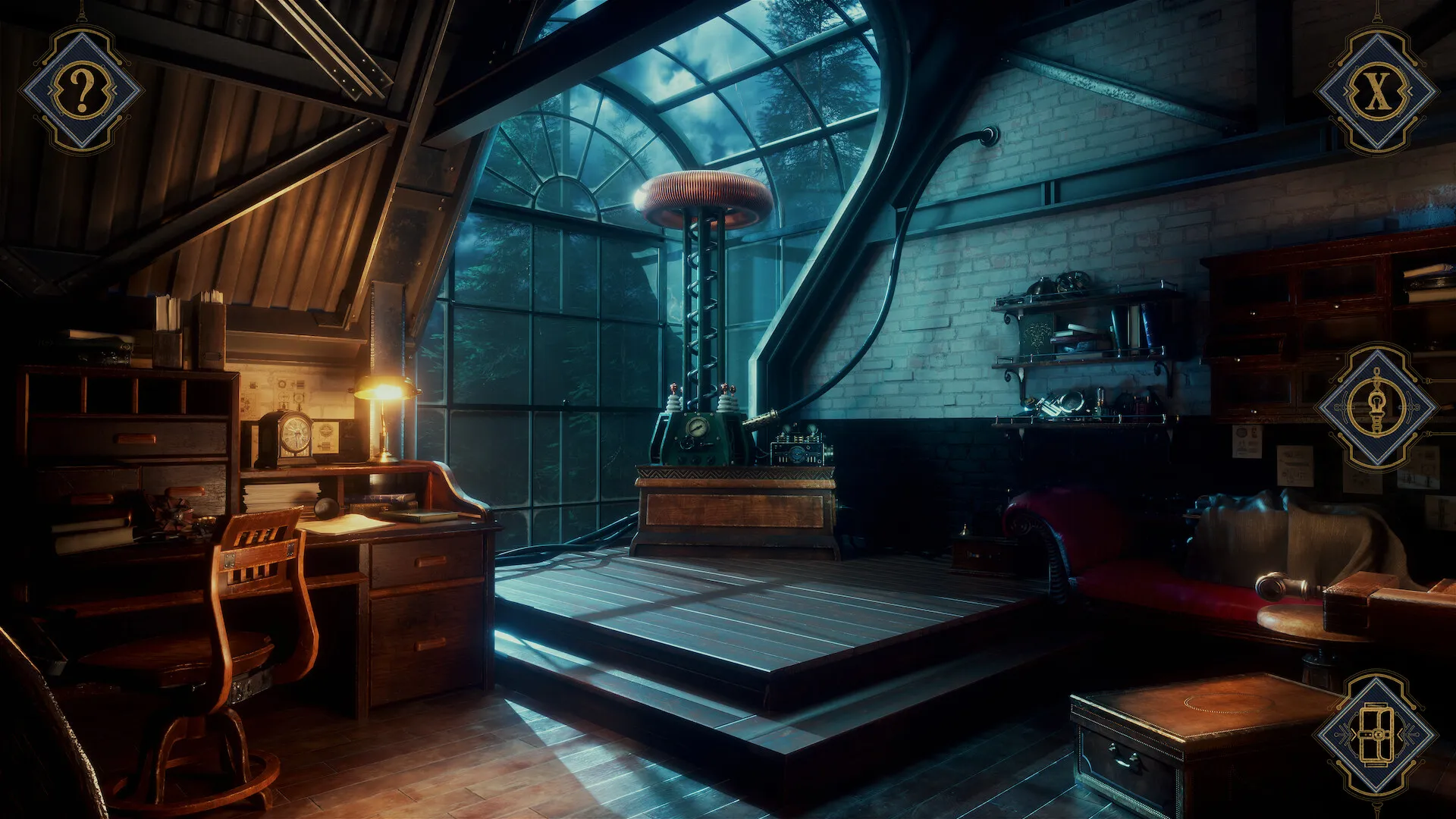
The environmental design captures early 1900s industrial aesthetics convincingly. Factory machinery, laboratory equipment, and Tesla’s various inventions occupy spaces that feel historically grounded while maintaining the sci-fi edge his work naturally possessed. The locations breathe period atmosphere, from wooden paneling to brass fixtures to the imposing presence of Tesla’s experimental apparatus. Walking through these spaces feels like exploring a functional museum where every object serves a purpose.
Then the cutscenes arrive and break the spell. Character models look stiff and artificial, frozen in poses that evoke wax museum displays rather than living people. Tesla himself fares better than secondary characters, but none escape the uncanny valley. The cutscenes depicting recovered memories compound the problem by remaining completely static—characters hold single poses while voiceover delivers their dialogue. Animation would inject life into these moments; without it, they feel like illustrated audio plays rather than visual storytelling. The voice acting creates its own disconnect. The performance doesn’t match the intellectual, driven figure that emerges from written documents, creating two different impressions of who Tesla actually was.
Audio design takes a minimalist approach that generally serves the thoughtful pacing. Music remains understated, providing ambient texture rather than dominating attention. The soundscape supports concentration, letting you think through puzzles without distraction. Ambient effects—clicking mechanisms, electrical hums, environmental sounds—establish spatial presence when they work properly. The technical issue emerges when sound disappears entirely. Music cuts out, effects vanish, and you’re left in silence that feels wrong rather than deliberate. These dropouts happen sporadically but frequently enough to disrupt immersion. Hearing buttons click one minute and encountering total silence the next breaks your connection to the space, leaving you uncertain whether the quiet serves artistic purpose or technical failure.
Guidance Without Hand-Holding
The hint system deserves recognition for its thoughtful implementation. Most puzzles provide three hints, with some offering a fourth that delivers the complete solution. The structure respects player autonomy through graduated assistance. The first hint never solves anything directly; instead, it points you toward relevant elements. “Check the chests in the hallway” or “examine the lever on the table’s side” give direction without removing the satisfaction of solving the puzzle yourself. You can stop there and continue working through the problem with this gentle nudge.
Subsequent hints grow more explicit. The second typically explains the puzzle’s underlying logic or identifies key relationships between elements. The third walks you through the solution step-by-step. The fourth, when available, simply provides the answer. This tiered approach lets you calibrate assistance to your current needs. Stuck but want to preserve the challenge? Use the first hint and push forward. Completely baffled and ready to move on? Skip to the full explanation. The system trusts players to choose their own experience rather than forcing a single difficulty level.
The puzzle reset function, accessible through the hint menu, adds another smart feature. You can return any puzzle to its starting configuration without restarting the entire chapter. This encourages experimentation since mistakes don’t carry lasting consequences. Try a theory, see it fail, reset, and approach from a different angle. The feature removes the anxiety of potentially breaking a puzzle through the wrong sequence of moves.
Technical problems undermine these successes. A significant bug can skip entire chapters without warning. Loading the game after a break might transport you from the laboratory directly to the final chapter, completely bypassing Wardenclyffe Tower. The skipped content doesn’t disappear permanently—the game eventually deposits you back in that section after completing the chapter it jumped to, as if it systematically swapped their order. This creates obvious narrative confusion and disrupts the intended pacing.
The absence of chapter selection compounds the issue. You cannot revisit completed areas or replay favorite puzzles without starting the entire game fresh. The automatic save system means you lose all progress when restarting, making it impossible to correct these chapter-skipping bugs without significant time loss. For a puzzle game where players might want to replay specific challenges or explore alternative solutions, this limitation feels restrictive.
The House of Tesla succeeds at its core mission of delivering thoughtful puzzle design wrapped in historical context. The variety of challenges keeps the experience fresh across its runtime, and the hint system provides assistance without condescension. Learning about Tesla through found documents creates an effective biographical sketch that contextualizes the puzzles within his actual work.
The game stumbles through its visual presentation of characters and sporadic technical issues that range from annoying audio dropouts to game-breaking chapter skips. These problems don’t destroy the experience, but they prevent it from achieving the polish that would let it stand alongside genre leaders. Players seeking cerebral puzzle-solving will find satisfaction here despite the rough edges, though they should prepare for occasional frustration from sources beyond the puzzles themselves.
The Review
The House of Tesla
The House of Tesla delivers clever, varied puzzles wrapped in an educational exploration of the inventor's life. The escape room structure works well, and the hint system respects player intelligence while offering meaningful assistance. Environmental design captures the period convincingly, and the puzzle variety prevents monotony. However, stiff character models, lifeless cutscenes, and technical issues—including game-breaking chapter skips and audio dropouts—diminish the experience. These flaws keep it from matching genre benchmarks, but puzzle enthusiasts will find enough brain-teasing satisfaction to justify overlooking the rough edges.
PROS
- Thoughtful, varied puzzle design with creative challenges
- Excellent tiered hint system that respects player autonomy
- Engaging historical context through found documents
- Strong environmental design and period atmosphere
- Puzzle reset function encourages experimentation
CONS
- Artificial, lifeless character models and static cutscenes
- Game-breaking bug that skips entire chapters
- Sporadic audio dropouts disrupt immersion
- No chapter selection for replaying content
- Some puzzles rely on trial-and-error over logic