

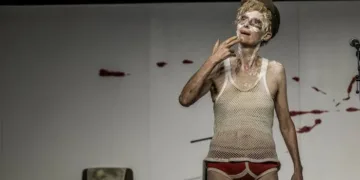















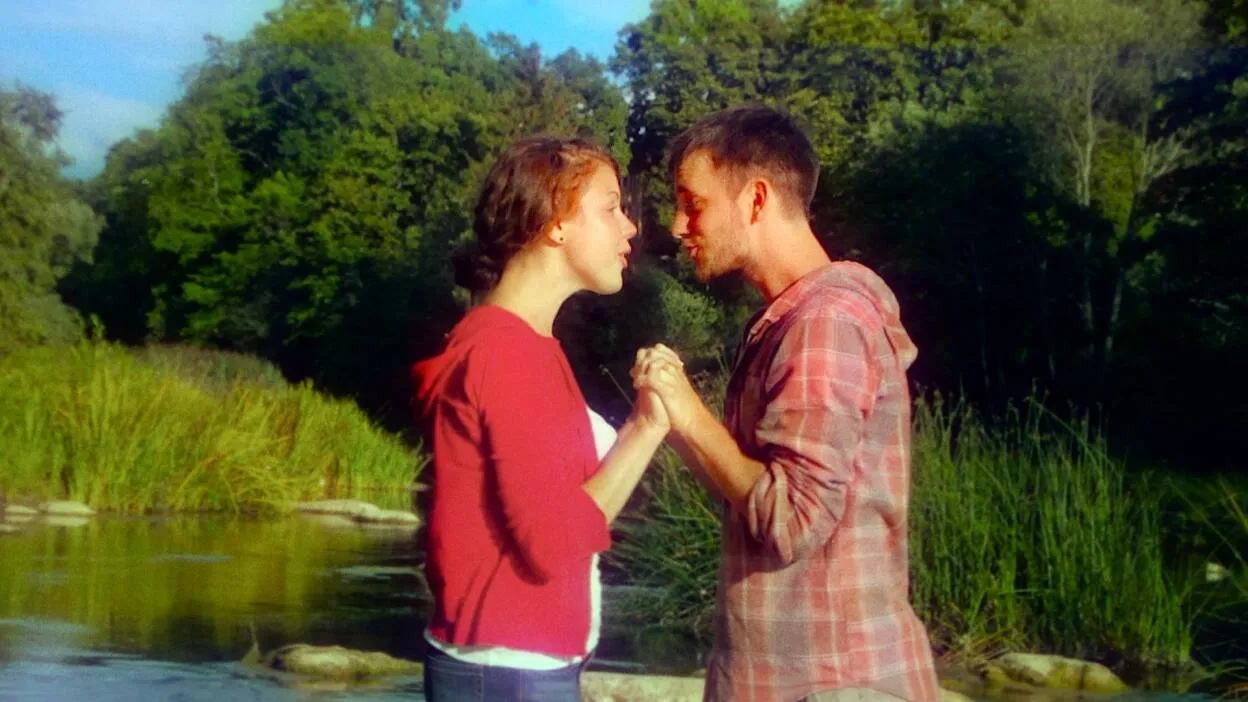
A young woman stands at a bridge rail, stripped of job, family, and even her dog, glaring down at the shallow stream below. She notices a man preparing to hurl himself into the same meager water. Their eyes lock in a shared, almost comic recognition of defeat, and the encounter erupts into an immediate duet about mutual misery. That absurd, crystal-clear moment sets the stage for Chainsaws Were Singing, a low budget Estonian feature from writer, director, and composer Sander Maran.
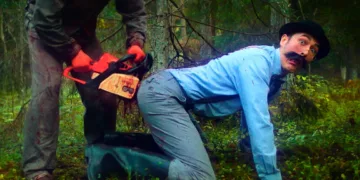
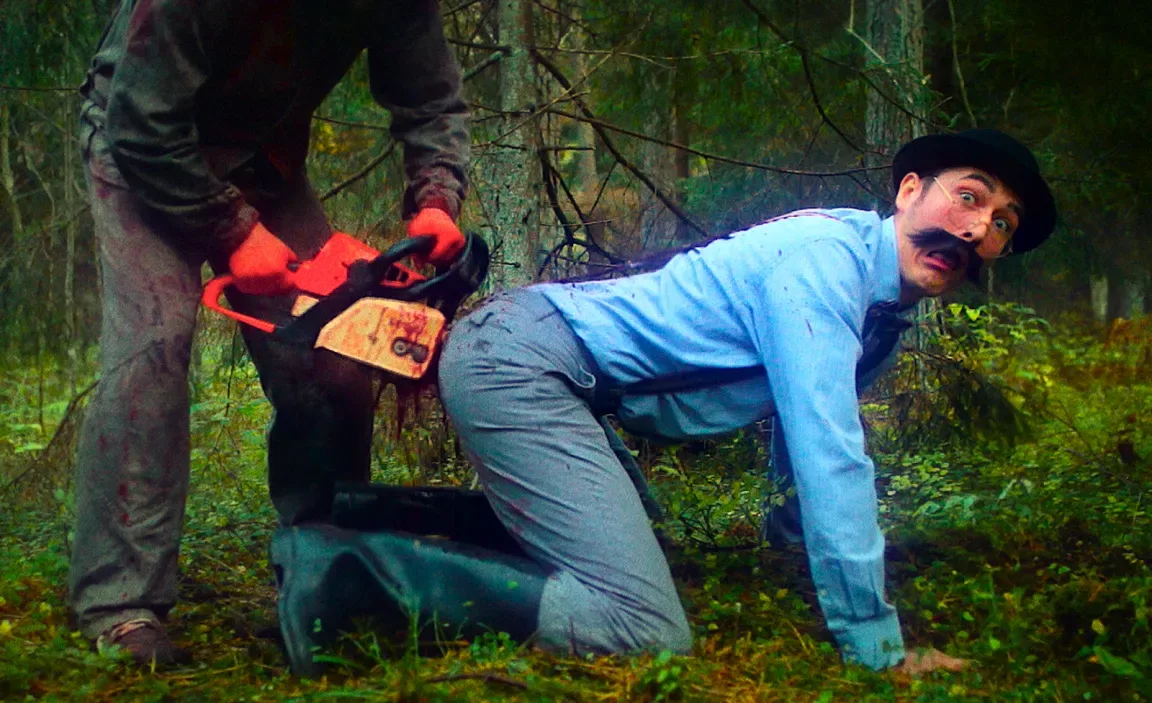
From there, the film plunges into a horror musical-comedy world that thrives on chaos. The fragile connection between Maria (Laura Niils) and Tom (Karl Ilves) shatters when a chainsaw wielding, blood soaked maniac (Martin Ruus) kidnaps Maria for his cannibal relatives.
Tom sets off through the wilderness on a frantic rescue mission with Jaan (Janno Puusepp), an idiosyncratic driver whose presence keeps the quest off balance. Conceived as a maximalist experiment and shot in 2013, the film now arrives as a fully realized work, shaped over a long period of creative gestation into a relentless, singular piece of cinema.
The Gonzo Aesthetic
Sander Maran’s film channels a fierce DIY impulse and an unapologetically maximalist mood. The production positions itself as a deliberate affront to polite taste, designed for viewers who actively seek out outsider art. Maran’s resourcefulness sits at the center of this approach, as he takes on writing, directing, composing, cinematography, editing, and visual effects himself.
The look that emerges radiates raw, gonzo charisma, leaning into guerrilla-style methods that turn limitations into style. Rough special effects and torrents of bright red blood function as consistent visual markers, echoing the wild energy of ’70s grindhouse cinema and the practical, splattered horror associated with early Peter Jackson. The humor stretches into open absurdity and frequently lands through broad slapstick.
The running gag of a hopelessly inept rookie cop who cannot handle his weapon defines the film’s mischievous sense of taste. Through all the campy carnage runs a surprising emotional warmth, built on a clear affection for the genre and a sincere enthusiasm for horror’s unruly possibilities.
Score and the Carnivalesque Cast
The film’s declared identity as a musical rests on a set of surprisingly catchy show tunes. The feature runs long, yet these musical numbers stand out as major peaks, propelling the story’s rhythm and lifting the material. The songs often lean into irony, then occasionally open up into sincerely romantic or emotionally direct passages.
The musical design reaches its most memorable flourish in the Killer’s “chainsaw solo,” where the roaring murder tool transforms into an electric guitar substitute. Around the central couple gathers a tireless parade of eccentrics. The Killer (Martin Ruus), a mute figure perpetually drenched in blood, shifts between monstrous and unexpectedly gentle, functioning as an affectionate nod to horror icons such as Norman Bates and Leatherface.
Tom’s rescue trek forces encounters with a fast-talking sidekick in Jaan and a squad of dangerously trigger happy police officers. The cannibal clan expands that chaos: a domineering mother, the incestuous twins Pepe and Kevin, and the baby Desiree, armed and lethal. A sequence centered on a lesbian hedgehog arrives as a spike of pure, unpredictable absurdity. Every bizarre figure intensifies the film’s restless, disquieting charge.
The Price of Ambition and The Collective Experience
At almost two hours (117 minutes), the film’s length often emerges as its primary concern. The latter stretch slows once the story moves away from its initial frantic tempo and settles into a more familiar cannibal horror layout. This slackness appears to grow from Maran’s attachment to material shaped over a long post-production period, which leaves room for digressions that soften the direct force of the narrative.
The same tangents that ease the story’s drive remain busy with high-energy gags and vivid set pieces, revealing a striking level of cinematic invention within modest production means. As spectacle, the film operates at full throttle.
It thrives in the presence of a loud, engaged crowd, playing best as a shared event tailored to midnight genre audiences. The experience can feel transportive, generating out-of-body reactions and genuine, earsplitting applause. The finished work marks Maran as a true talent and presents a film that carries the clear signature of a future independent cult favorite.
The Estonian film Chainsaws Were Singing (Original title: Mootorsaed laulsid) is a true independent cinematic oddity, notable for its long production history. Although initially shot in 2013, the film spent nearly a decade in post production before finally emerging on the international festival circuit in 2024. The film has since been acquired for distribution by companies like Tallifornia (local) and Dark Star Pictures (North America), marking its transition from a grassroots project to a proper release. As of today, November 25, 2025, the film is continuing its festival run and is slated for a VOD/theatrical release in North America and other territories, making it an exciting, recently available feature for genre enthusiasts.
Full Credits
Title: Chainsaws Were Singing
Distributor: Dark Star Pictures, Tallifornia
Release date: Premiered at festivals throughout 2024; currently being released globally in late 2025.
Running time: 117 minutes (1 hour, 57 minutes)
Director: Sander Maran
Writers: Sander Maran, Karl-Joosep Ilves
Producers and Executive Producers: Kaur Maran, Sander Maran, Karl-Joosep Ilves, Jan Andresson, Peeter Maran
Cast: Karl-Joosep Ilves, Laura Niils, Martin Ruus, Janno Puusepp, Rita Rätsepp, Mart Toome, Ra Ragnar Novod, Henryk Johan Novod
Director of Photography (Cinematographer): Sander Maran
Editors: Sander Maran
Composer: Sander Maran
The Review
Chainsaws Were Singing
Chainsaws Were Singing is a hyper-violent, musical explosion of outsider art. It is a genuine cult classic waiting to happen. The film’s boundless, low budget ambition overcomes its structural flaws, offering an unforgettable theatrical experience. It successfully blends grindhouse gore with infectious, absurd comedy, a testament to the singular vision of its creator. This movie demands to be seen with a loud, appreciative crowd.
PROS
- Singular, uncompromising artistic vision and tone.
- Impressive low-budget ingenuity, showcasing Sander Maran’s multi-hyphenate talent.
- Catchy, memorable musical numbers, particularly the Killer's "chainsaw solo."
- Effective and relentless absurdity and slapstick comedy.
- Successfully blends extreme gore and campy violence with a surprising emotional heart.
- Provides an overwhelming, unforgettable theatrical experience for genre audiences.
CONS
- The excessive runtime (117 minutes) leads to occasional pacing issues.
- The second half sometimes meanders during the rescue mission, diluting the initial frantic pace.
- The humor is specific and will not appeal to all audiences.