

























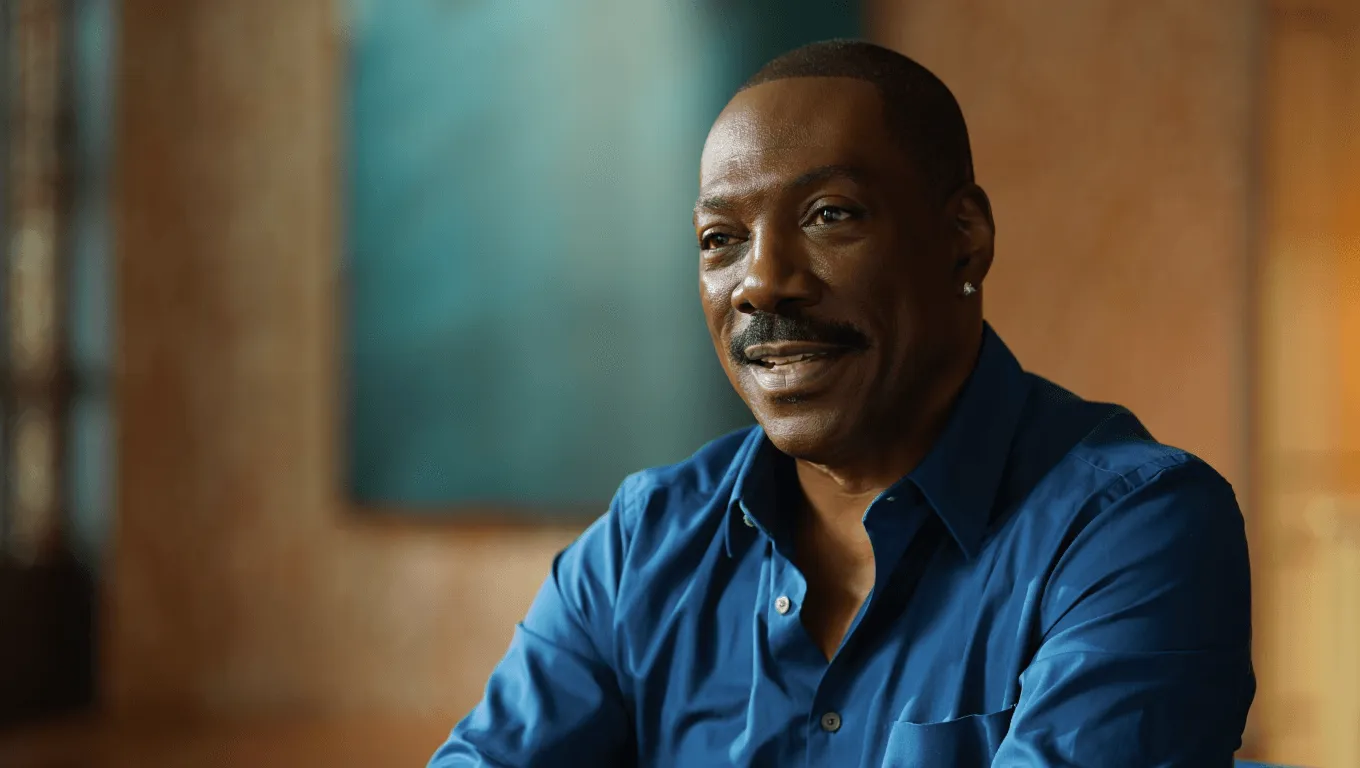

Eddie Murphy is revisiting one of the most painful episodes of his career, saying a single joke on Saturday Night Live about his box office slump was hurtful enough to keep him away from the show for years. In the new Netflix documentary Being Eddie, the comic describes watching David Spade’s 1995 “Hollywood Minute” bit, in which a photo of Murphy from Vampire in Brooklyn appeared and Spade quipped, “Look, children, it’s a falling star. Make a wish.”
Murphy says the gag landed like a betrayal from the place that launched him. He recalls feeling that it was “like your alma mater taking a shot at you,” adding that the studio audience booed and hissed in response. What stung most, he explains, was not just Spade’s line but the knowledge that SNL jokes pass through writers, producers and standards before air, which made him conclude, “That’s what y’all think of me?”
The moment hit during a difficult stretch in Murphy’s film career, when Vampire in Brooklyn underperformed and commentators were questioning his status as a reliable movie star. In a separate interview last year, he said he saw the jab as a cheap shot at his livelihood and said he felt it carried a racist edge, noting that he had been one of the few Black performers to break into mainstream comedy at that scale in the 1980s.
Spade has described the incident in his memoir, writing that he initially viewed the joke as another quick celebrity burn in a segment known for its harsh tone, then realized how personal it felt from Murphy’s side. He recounted receiving an angry phone call in which Murphy demanded to know “who do you think you are,” and later acknowledged that being mocked in such a public way “stings” even when intended as a throwaway gag.
Murphy stayed away from Studio 8H for nearly two decades, skipping major anniversaries and declining hosting offers. The rift started to ease in the 2010s, and he eventually returned to host in 2019, a night he has since called a “great experience” that rekindled his creative energy. Recent coverage of Being Eddie notes that he now stresses he does not hold a personal grudge, saying he is “cool with everybody” and framing the episode as a lesson about how institutional decisions can wound even those who once felt like family members of a show.