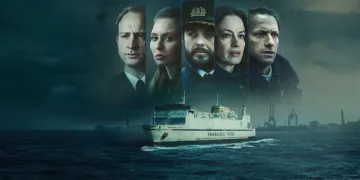


























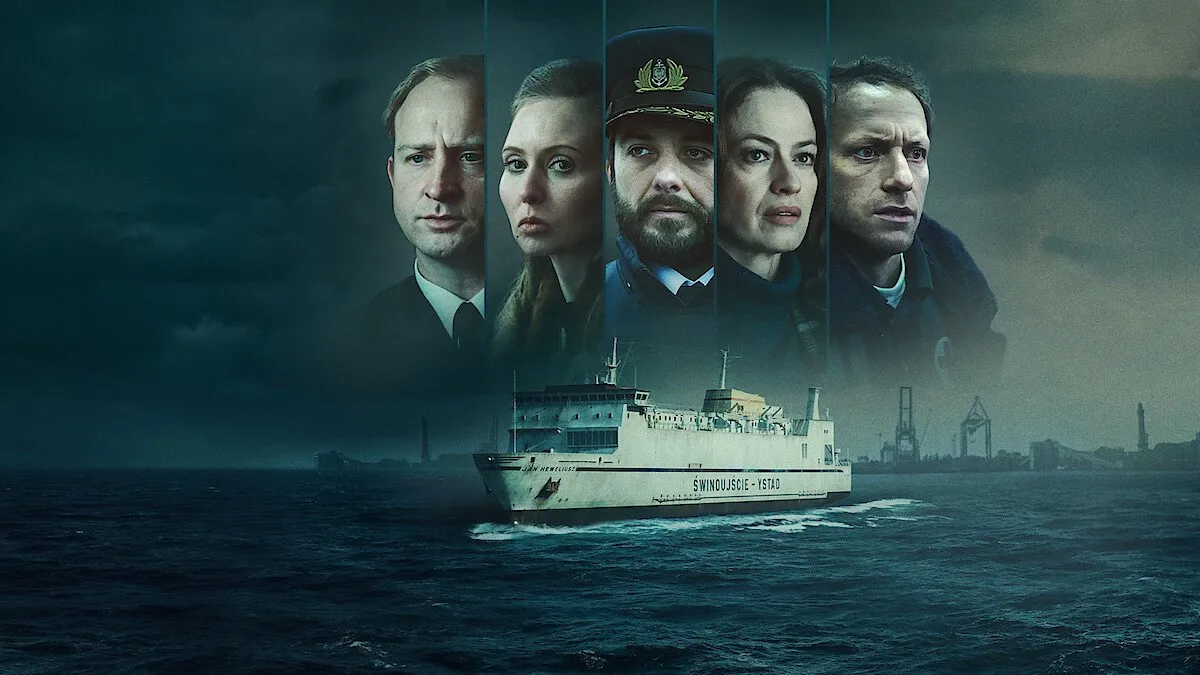

The five-episode Polish limited series Heweliusz reconstructs the 1993 sinking of the MS Jan Heweliusz in the Baltic Sea with a clear eye on memory, mourning, and the pressures that shape public narratives. Directed by Jan Holoubek and written by Kasper Bajon, the show presents the maritime disaster and the loss of life through a rigorous character study of survivors, families, and investigators who live with grief and scrutiny.
The story observes how institutional blame shapes the meaning of a national tragedy, and it signals how streaming commissions now take on difficult historical material with sizable craft resources and a commitment to social inquiry.
The Visceral Language of Disaster Cinematography
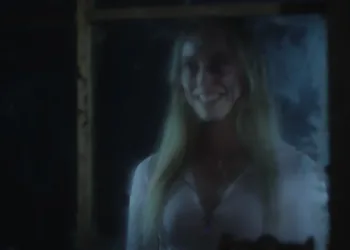
From the first minutes, the storm arrives with a physicality that feels punishing. The opening episodes stage the sinking and the rescue attempts with steady, unsentimental focus. Cinematographer Bartłomiej Kaczmarek builds a world of dense blues and greens that compress space, tightening the frame around bodies and equipment until the screen feels airless.
The visual effects render the Baltic surf with convincing weight, turning each wave into a threat that erases bearings and crushes plans. The spectacle yields to consequence almost immediately. The show observes the fight to stay alive in January waters as hypothermia narrows the timeline for survival, and it records the limits of the German rescue operation under those conditions.
The human toll receives equal emphasis. Piotr Binter’s discoveries during the recovery work arrive with a jolt, and the camera lingers on process, procedure, and the silence that follows. The series treats the event as lived reality rather than a set piece, and the craft choices insist on that perspective from moment to moment.
The Shifting Roles of Responsibility and Grief
Heweliusz builds its argument through performance. Michał Żurawski plays Piotr Binter, an off-duty captain and investigator whose approach retains a technical focus. He moves through interviews and records with the steadiness of someone measuring facts while carrying survivor’s guilt, and the character’s need for precision shapes the investigative spine of the series.

Magdalena Różczka, as Jolanta Ułasiewicz, widens the field to the social cost of loss. Her fight to defend her husband’s reputation places the domestic sphere next to corporate statements and legal maneuvering, and it frames personal grief as a public argument about truth. Borys Szyc’s Captain Ułasiewicz remains layered, with choices and limitations presented without simplification, which keeps the question of responsibility active rather than settled.
This pairing of perspectives, the insider with technical fluency and the widow pursuing recognition, maps the multiple fronts on which accountability is contested. Supporting players such as Jacek Koman and Mirosław Zbrojewicz inhabit the terrain of investigators and officials, adding texture to procedures and meetings where tone and phrasing matter. The flashbacks mark another representational choice, giving the dead presence and specificity. The names on a list gain lives, routines, and expectations, and that shift grants the case moral weight that statistics cannot carry on their own.
Non-Linearity and the Crisis of Pacing
The series uses a non-linear structure that moves among the lead-up, the disaster, and the aftermath. This approach invites the audience to assemble cause and effect through accrual rather than revelation. The five-episode design segments the experience. Early chapters immerse viewers in the storm and the rescue work, while later chapters tighten around hearings and institutional processes where words attempt to contain chaos.

This format reflects a trend in streaming drama that favors depth of inquiry over continuous escalation, and the direction by Jan Holoubek guides viewers across sea sequences, interviews, and courtrooms with transitions that feel purposeful. The pacing is deliberate. Sudden, high-intensity passages give way to procedural scenes where language, paperwork, and jurisdiction set the tempo. That shift places feeling alongside fact.
The sound design carries tension from one mode to another, with the creaking hull and muffled cries pressing on the audience during the disaster, and the quieter rooms of the later episodes holding a different pressure. The show treats tempo as an ethical choice. It lets shock settle into memory and then into testimony, which aligns the rhythm of the series with the lived scale of loss and the slow labor of proof.
Scapegoating and the Failure of Systemic Protection
Institutional behavior sits at the center of the drama. The show presents a rapid move by port authorities and the ferry company to assign fault to Captain Ułasiewicz, and that decision shapes the conflict that follows.

The scripts examine responsibility across several layers, weighing the captain’s actions against maintenance standards and the decision to sail in severe weather. The story studies how organizations protect themselves and how that protection affects truth-finding. Courtroom passages and administrative exchanges place victims’ families in sustained contact with procedural delay, and the camera observes how forms, schedules, and statements define the pace of recognition.
Jolanta Ułasiewicz’s case reframes the issue as reputation, dignity, and record, which turns grief into an ongoing civic effort. By the final stretch, the pursuit of acknowledgment operates as its own narrative engine, carrying equal force to the disaster sequence because it determines how the event will be remembered.
The series argues that justice requires persistence from those least equipped to carry another burden, and it shows how public memory forms through hearings, reports, and the testimony of people who do not let the file close.
Heweliusz treats historical tragedy as a present-tense social question. The series studies images of the sea and images of institutions, and it ties them to the work of families and investigators who keep asking for clarity. That approach aligns with a streaming landscape that supports national stories with exacting craft and room for legal and moral complexity.
The show’s attention to representation operates both on screen, through faces and names that receive time and care, and off screen, through an insistence that systems face scrutiny rather than silence. The result points to a model for future projects that engage with painful history through careful form, performance, and a clear argument about how societies honor the dead and account for failure.
Heweliusz is a Polish historical drama miniseries based on the true story of the MS Jan Heweliusz ferry, which tragically sank in the Baltic Sea in 1993. The series focuses on the catastrophic event itself and, significantly, the bitter aftermath as the victims’ families fight for justice and truth amid suspicions of a corporate cover-up and institutional failure. Touted as one of the largest and most complex Polish series productions in recent years, the five-episode drama premiered globally on Netflix on November 5, 2025, where it is available to stream.
Credits
Title: Heweliusz
Distributor: Netflix
Release date: 5 November 2025
Rating: M18
Running time: 5 episodes, with lengths ranging from 49 to 81 minutes.
Director: Jan Holoubek
Writers: Kasper Bajon
Producers and Executive Producers: Anna Kępińska (Executive Producer, Producer)
Cast: Magdalena Różczka, Michał Żurawski, Konrad Eleryk, Justyna Wasilewska, Borys Szyc, Jan Englert, Magdalena Zawadzka, Jacek Koman, Mirosław Zbrojewicz, Andrzej Konopka, Tomasz Schuchardt, Łukasz Lewandowski, Dariusz Chojnacki, Jacek Beler, Michał Pawlik, Mia Goti, Marcin Januszkiewicz
Director of Photography (Cinematographer): Bartłomiej Kaczmarek
Editors: Rafał Listopad
Composer: Jan Komar
The Review
Heweliusz
Heweliusz is a devastating and essential piece of historical drama. It successfully avoids disaster movie sensationalism, focusing instead on the long-term ethical fallout of institutional failure and the painful quest for truth by the families. While its deliberate, non-linear pacing demands patience, the cinematic quality and the powerful, layered performances from the cast reward the viewer’s attention. This limited series serves as a crucial reflection on accountability in the face of tragedy.
PROS
- Excellent dissection of institutional failure and the corporate "blame game."
- High-quality cinematography and sound design create a chilling, immersive atmosphere.
- Layered, restrained acting, especially from the central cast members.
- Effectively layers mystery and suspense, enhancing the drama.
CONS
- The shift to procedural/legal investigation can feel slow after the intense opening.
- The non-linear structure can be taxing for passive viewing.
- The jumping timelines sometimes slow the emotional momentum.