

























![Kingdom Hearts Collection [I-III] Review](https://gazettely.com/wp-content/uploads/2026/10/Kingdom-Hearts-Collection-I-III-1-360x180.webp "Kingdom Hearts Collection [I-III] Review: KHII Holds Steady as Newer Entries Fluctuate 37")



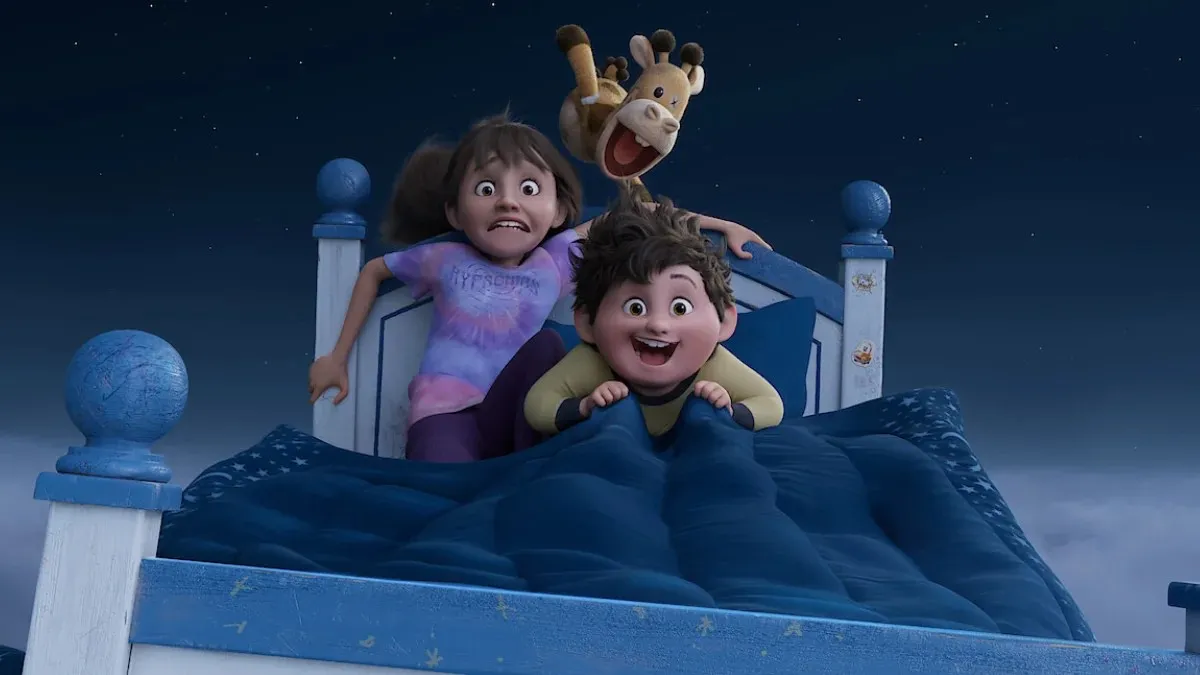

In Your Dreams marks the feature directorial debut of Alex Woo, with Erik Benson credited as co-director and writer, and it arrives from Kuku Studios, a shop formed by veterans of a major animation house. The story tracks Stevie, played by Jolie Hoang-Rappaport, a 12-year-old who treats order like a creed, and her younger brother Elliot, voiced by Elias Janssen, who drifts past trouble with near-total obliviousness. Their household tilts under adult pressures.
The parents, voiced by Simu Liu and Cristin Milioti, wrestle with money worries, career setbacks, and the possibility that geography may pry the family apart. A plain, old book sets the quest in motion, promising access to the Sandman, voiced by Omid Djalili, a mythic broker of the so-called perfect family.
The CGI fantasy that follows reads as a bright, large-scale metaphor for the low, rolling tremors of a child who senses the furniture of home starting to wobble. The film plants its emotional footing in everyday life before opening a door to the dream logic of adventure.
The Unfixable Family Unit
The core device is frank: kids decide to repair their parents. Call it the Stevie Syndrome, a belief that careful planning can tame adult chaos. Her perfectionism propels the plot and quietly loads her with self-authored stress.
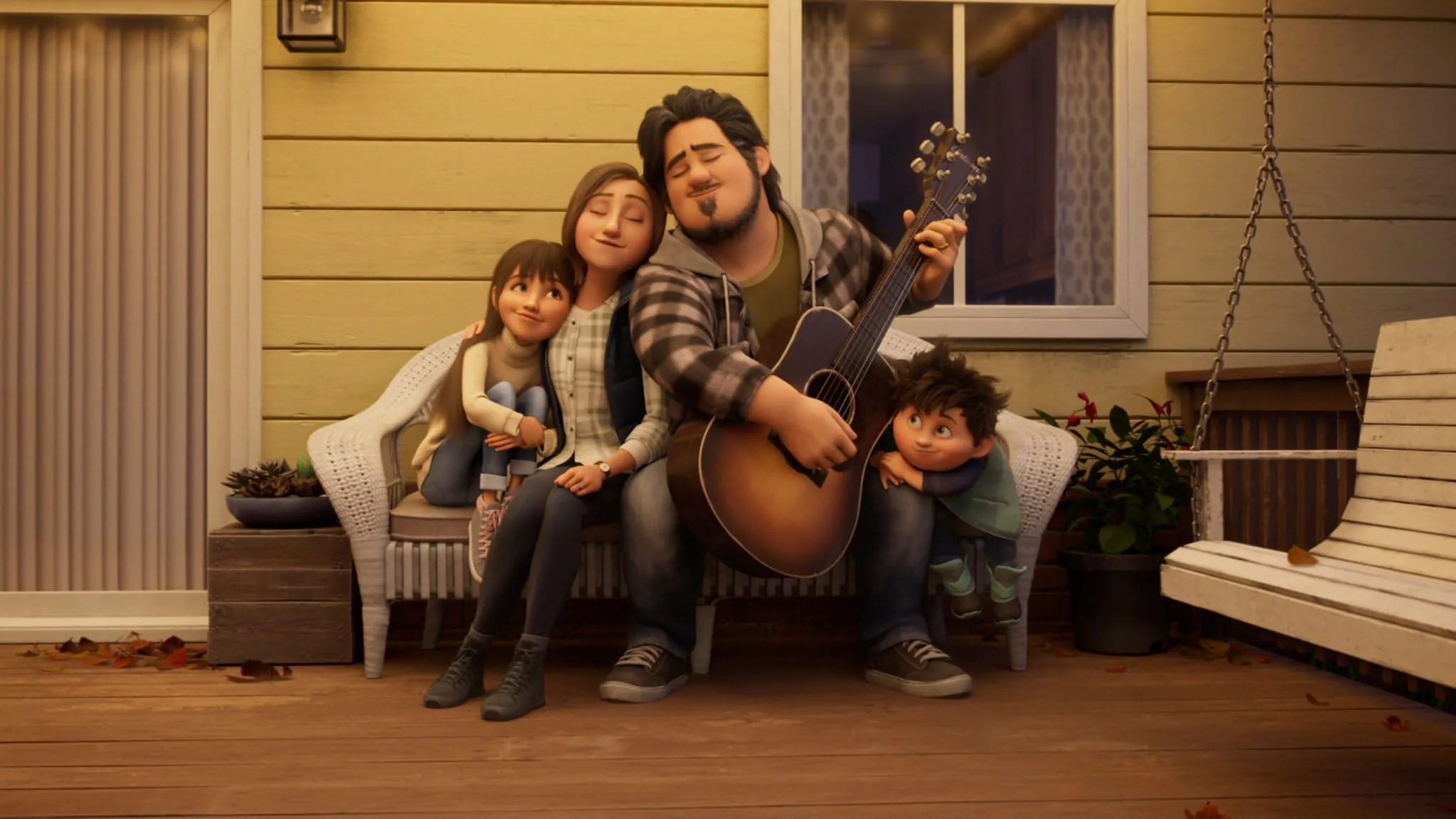
Parental strain arrives in small, precise gestures. The movie favors hushed disputes about paused musical ambitions and a proposed move to Duluth. No one gets painted as a villain. Simu Liu’s father protects the ember of a musician’s hope. Cristin Milioti’s mother takes stock with a realist’s eye. The tone matches how many children process marital tension, less like thunderclaps and more like a room that grows colder over time.
The film engages a modest metaphysics of friction. The quest teaches that family strength includes flaws and hard feelings as ordinary facts of life. The hazard rises from the pursuit of a perfectly curated mood state, a notion that echoes an old ethical split between otium, leisure or calm, and negotium, the work-facing storm of public life.
The dreamland turns gilded and sticky, a comfort that traps. The journey pairs Stevie and Elliot in actual practice. They come to depend on each other, and the patterns that once looked like quirks become a usable architecture, a sibling compact that carries weight.
Iconography and the “Pixar Code”
The film’s visual grammar nods toward what I will call the Pixar Code: glossy CGI, rounded silhouettes, faces that invite trust. Given Alex Woo’s résumé, this lineage makes sense, though the polish risks a familiar echo.
World-building creates sharper edges. Breakfast Town rises as a kingdom of food, a fully edible society with a feudal wink. The Sandman’s stronghold appears like an Escher-style maze shaped from shifting sand. These spaces let the animators stage brief explosions of hyper-reality that play against the steadier look of waking life.
Nightmare passages provide the high-water mark. Fears line up with blunt clarity: teeth falling out, the bad dream of public nudity, and the sight of Breakfast Town turning sour as food sprouts mold and shambles around like a culinary zombie parade.
The screen crackles with creative urgency here. An odd tension surfaces: the film states a preference for reality over escape, yet its most charged images live inside riotous fantasy. The animation as a whole stays assured. Short bursts of 2D, styled with an anime inflection, hint at a richer road the movie only samples, a visual detour that teases a more varied palette.
The Faltering Jester
Adult anxiety carries much of the emotional freight, so the picture needs a deft comic valve. Enter Baloney Tony, Craig Robinson voicing a stuffed giraffe who tags along with Elliot. Robinson brings energy that the journey requires. The jokes, written on the broad side, hit familiar beats and miss the target for a classic sidekick slot. The character functions, yet the timing and punch lines rarely reach the level that the script seems to chase.
Mythic presences hold thematic lanterns. The Sandman and the adversarial Nightmara, voiced by Gia Carides, act as allegorical markers more than fully drawn personalities. The adult leads, Liu and Milioti, ground the film with quiet sincerity, most clearly during the performance of an original song that ties the fantasy to real feeling.
The child performances keep the tempo lively. The movie maintains equilibrium between quest mechanics and emotional plainspokenness, an earnest mix that plays steady and could use a sharper comedic blade in places.
The animated comedy adventure film In Your Dreams was released in select theaters on November 7, 2025, before making its streaming debut on Netflix on November 14, 2025. It is a Netflix Original film produced by Netflix Animation and Kuku Studios, following two siblings, Stevie and Elliot, who journey into the dream world to find the mythical Sandman in hopes of wishing for their family to be “perfect” again after witnessing their parents’ marital and financial struggles.
Credits
Title: In Your Dreams
Distributor: Netflix
Release date: November 14, 2025 (Netflix)
Rating: PG
Running time: 90 minutes
Director: Alex Woo, Erik Benson (Co-Director)
Writers: Erik Benson, Alex Woo, Stanley Moore (Story By), Rita Hsiao (Additional Writing By)
Producers and Executive Producers: Gregg Taylor (Producer), Tim Hahn (Executive Producer)
Cast: Jolie Hoang-Rappaport, Elias Janssen, Craig Robinson, Simu Liu, Cristin Milioti, Omid Djalili, Gia Carides, SungWon Cho
Editors: Ken Schretzmann, Nick Kenway, T.M. Christopher, Greg Knowles
Composer: John Debney
The Review
In Your Dreams
The film possesses polished visuals and a mature emotional core, effectively exploring the burden of childhood anxiety and the fallacy of seeking perfect order. The narrative excels in its subtle portrayal of marital strain, prioritizing thematic depth over superficial conflict. While the creative energy of its nightmare sequences is undeniable, the humor often misses its mark, primarily through the broad characterization of its comic relief. It remains a valuable, if inconsistent, animated entry that offers children a complex lesson about reality.
PROS
- Mature, understated portrayal of parental conflict and financial stress.
- Strong focus on childhood anxiety and the pressure of perfectionism.
- Creative and visually arresting execution of the nightmare sequences.
- Valuable thematic lesson about accepting life’s necessary imperfections.
- Quality, emotionally grounded voice performances from the adult cast.
CONS
- Visually derivative aesthetic that feels overly reminiscent of other major studios.
- Inconsistent imaginative spectacle outside of the nightmare montages.
- Weak and unfunny comic relief character, Baloney Tony.
- Overall tone is sometimes too placid for an adventure film.







