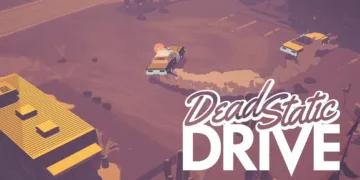




























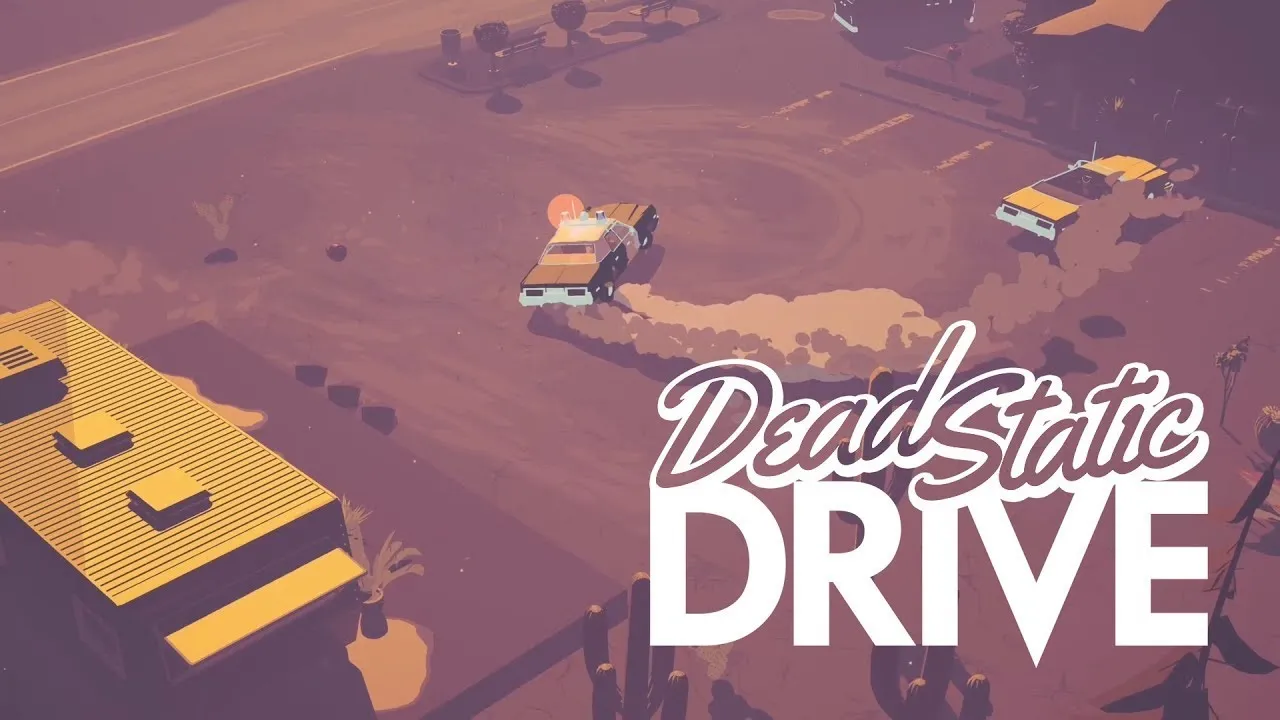

Dead Static Drive is an isometric survival horror game built around a clear hook: “Grand Theft Cthulhu.” You play Hearst, a customizable teen, drifting across a mid-80s American Southwest full of monsters. The loop is simple to describe and easy to picture: steal a car, scavenge supplies, hop between cities, and stay ahead of the things that hunt you.
The low-poly presentation jumps out at first glance, and the pitch pairs open-world roaming with cosmic dread. The promise is strong, yet the moment-to-moment systems keep grinding against that promise and create constant friction.
Aesthetic and Auditory Design
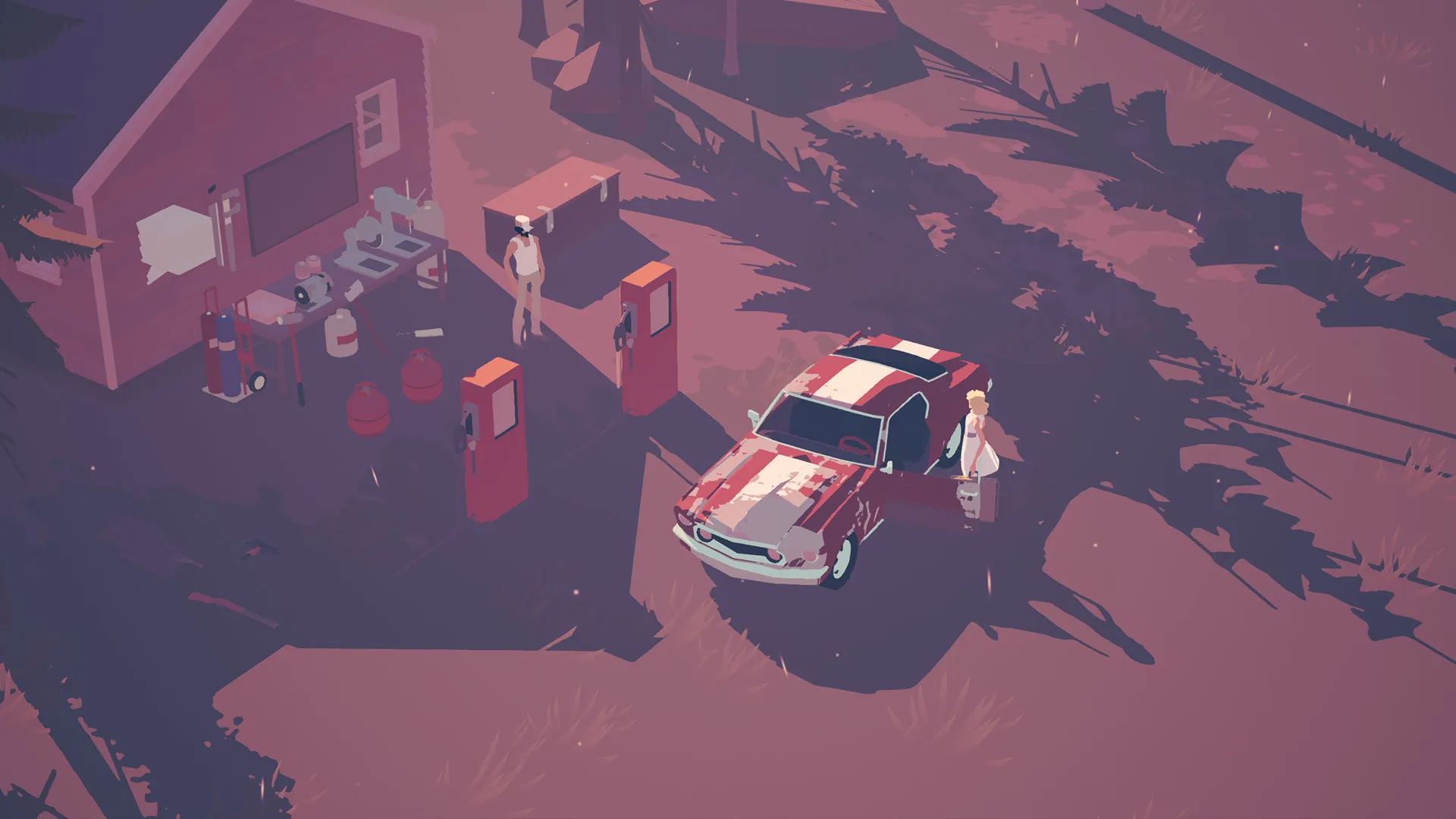
Art direction carries immediate weight. The low-poly look paired with sharp, purposeful lighting builds atmosphere that reads instantly. A streetlamp cutting a cone through the night or headlights sketching trees into silhouettes shows why early previews caught attention. The Lovecraft influence lands visually: eldritch designs like eyeball-tentacle humanoids and ghostlike figures with animal skull heads scatter the roads and ruins.
Sound design starts on the right foot, then stumbles. Driving across long stretches often brings peppy 80s-style synth cues that echo period genre films, and tension flips the mix to eerie ambience when danger creeps close.
That foundation then breaks under inconsistent execution. Cars, the spine of the experience, barely make a sound. Engines lack presence, which drains identity from every vehicle and makes travel feel hollow. Effects drop out or never trigger. A storm can flash and flare without thunder. With so little sonic feedback, the world loses texture and the audiovisual pairing stops working as a unit.
Driving and Direction
The “Grand Theft” side of the concept never comes together because vehicles handle poorly. Steering feels loose across the board, from compact cars to buses. Speed spikes, flips happen with light contact, and clipping a hazard can launch the ride into chaos.
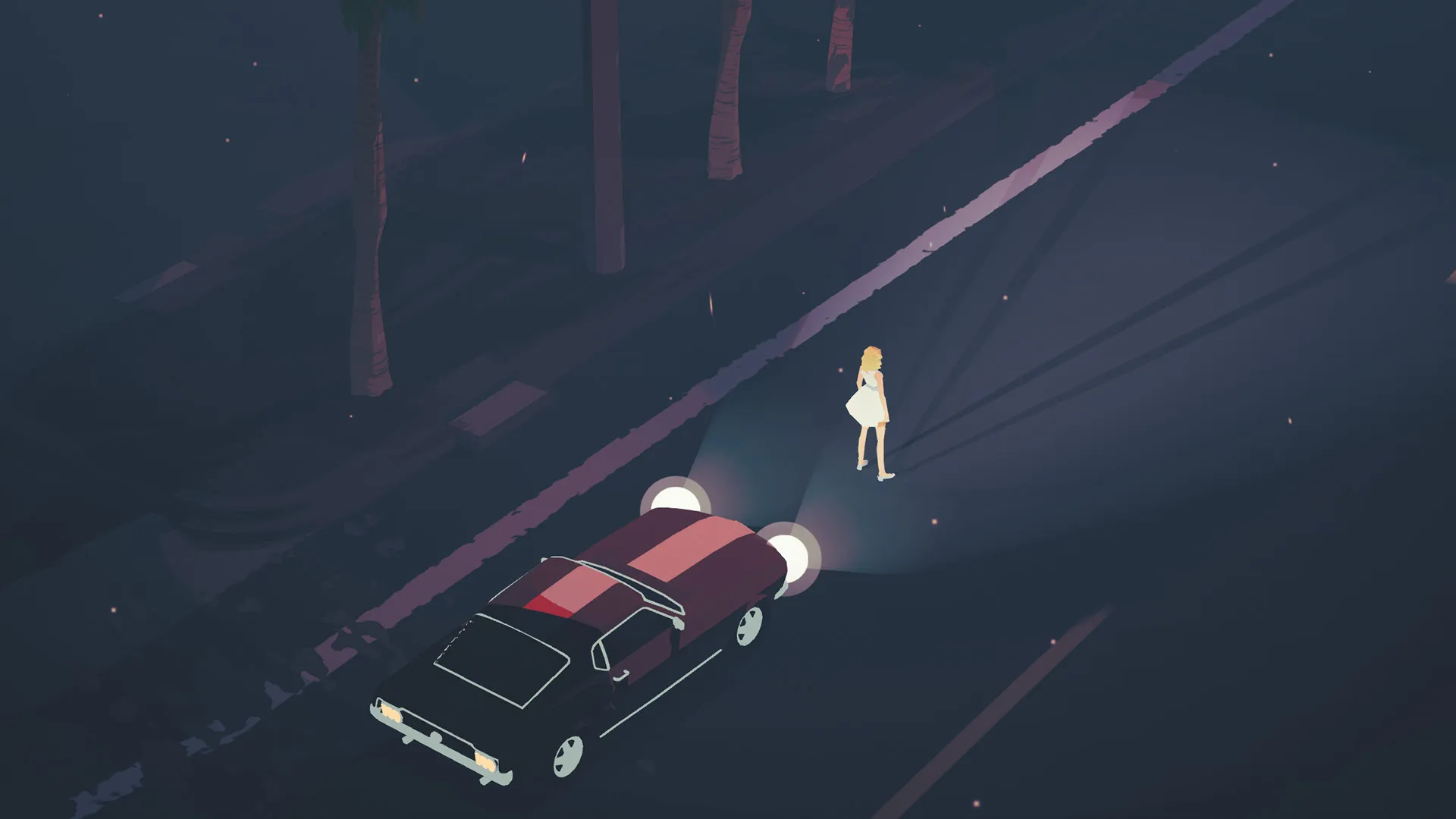
Even a routine corner turns into a fight with the controls. Management layers add upkeep without satisfying payoffs. Fuel and condition matter, but refueling requires grabbing the pump as an inventory item and “using” it, which slows every stop. Repair demands a long, uninterrupted action that burns resources like scrap metal.
Travel sits at the center of the map design, yet the road network feels empty. Regions act as fuel-gated zones with little embedded activity. There are few interactions, events, or personalities that give a stretch of highway character, so progression starts to feel like blasting through “fly-over” space toward the next border.
The isometric camera compounds it. Exploration wants sightlines and landmark clarity; the angle here limits discovery instead. Guidance collapses into a compass that points you to the map edge leading to the objective, which turns navigation into a straight-line chore.
Tutorialization is minimal. That approach works in games that reward curiosity with dense systems and layered worldbuilding, as in Disco Elysium or Baldur’s Gate 3. Here the world lacks comparable depth, so the absence of guidance leaves confusion rather than satisfying self-directed learning.
Conflict, Cohesion, and Technical State
Combat, melee or ranged, lacks snap. Gunplay struggles most. There is no gentle aim assist to anchor shots; the reticle floats under manual control on an analog stick. Small, low, or quick targets become hard to track, and hits feel incidental. Hearst goes down fast, often in a handful of strikes. Certain attacks, like the shadow demon’s puke, erase health in moments, which pushes players toward avoidance or full retreat.
Survival and inventory systems never lock together cleanly. You can scavenge food, alcohol, and medical items, and you can repair or board up windows, yet the game gives little reasoned context for when and why to engage these layers.
Resting in the car restores health quickly, which overshadows many parallel options. The grid inventory feels built for a mouse. Controller use highlights missing conveniences such as a “Quick Move,” so routine management turns into busywork.
World logic frays immersion. Civilians and bystanders barely register the abominations that roam the streets, which leaves the broader situation unclear. Companion characters exist, yet they provide limited perspective on the main thread, and their repeated text lines grate over time. Technical issues cut the legs out from under the loop.
Quests fail to tick after the correct action, vanish from logs, or stop progressing entirely. NPCs get stuck, fire and other critical textures fail to load and kill instantly without visual warning, and hard locks force restarts. The accumulation of breaks and bugs keeps momentum from forming and makes the release feel like something still stuck in an early access state.
The Review
Dead Static Drive
Dead Static Drive traps an appealing premise—a low-poly, cosmic-horror road trip—within a severely flawed execution. The eye-catching aesthetic and evocative 80s synth soundtrack are its only successful elements. Core mechanics like driving and combat are clunky and frustrating, while the world is disappointingly empty and repetitive. The experience is further ruined by persistent, game-breaking technical problems, including failed quests, missing assets, and unstable performance. This title feels fundamentally unfinished and cannot be recommended in its current state.
PROS
- Striking low-poly art style
- Evocative 80s cosmic horror setting
- Solid synth soundtrack and ambiance
CONS
- Unstable, game-breaking technical bugs
- Horrible, uncontrollable vehicle handling
- Empty, repetitive world zones
- Clunky and unresponsive combat
- Missing core audio (silent engines)
- Poor inventory management UI