








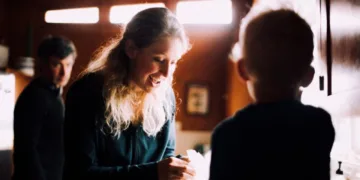






















Dear X, adapted from a popular webtoon, arrives as a psychological thriller saturated with childhood trauma. The story follows Baek Ah-jin, a glamorous and successful top actress whose polished image masks a severe antisocial disorder. The premise stays unflinching: Ah-jin uses manipulation to consolidate power, and her path is marked by multiple deaths for which she bears responsibility.
The structure lands immediately. A chilling moment from her past sets the merciless tone, after which extended flashbacks to her high school years construct a meticulous blueprint for the persona she inhabits now. The pace and complexity signal a sharp turn away from softer television fare.
The Cultural Mirror of Manufactured Cruelty
Ah-jin’s portrait functions as the series’ most pointed commentary, tracking a growing interest in figures shaped by abusive systems. Her origin sits in an abusive home with an alcoholic mother and an exploitative father, Baek Seon-gyu. A pivotal scene shows young Ah-jin leaving her severely injured mother, a moment that forms a doctrine: love becomes transactional and survival requires power.
She calls herself a monster, a figure of calculation whose ambition attaches to a weaponized personal history. Outward beauty operates as a mask for murderous intent. The show builds moral ambiguity by steering her cruelty toward people who bullied or abused her. She targets high school tormentors, a manipulative stepmother, and her violently exploitative father.
The character reads as human through desperation, which invites understanding without asking for forgiveness. Kim Yoo-jung’s casting sharpens the effect. Her familiar sweetness heightens menace, and the performance tracks shifting psychological states with unnerving precision. This representation challenges standard narratives of victimhood and revenge and frames a conversation about the costs of survival and the politics of who gets to be called a monster.
Power Play and the Exploitation Economy
The plot reads like a catalogue of high-stakes manipulation that maps how systemic cruelty breeds interpersonal exploitation. Ah-jin marks people as her “Xs,” a set she decides to destroy, beginning with her mother and continuing through her teen years. The rivalry with Sim Sung-hee becomes a study in social annihilation. Ah-jin frames her for theft.

She also obliterates the family’s standing by exposing the father’s affair. The two devoted male allies in her orbit enter relationships defined by pure transaction. Kim Jae-oh, her lackey in a student loan shark ring, kills his abusive father and takes the fall. He sacrifices his freedom, and she accepts the loyalty without sentiment. Yoon Jun-seo’s lifelong devotion stems from shared trauma.
Ah-jin manipulates his love and secures his confession to her father’s murder to protect her career, then severs the relationship. Her rise to stardom culminates in the planned murder of Baek Seon-gyu. She frames him as a stalker and tricks Choi Jeong-ho into delivering the fatal blow. These events point to a single environment.
The world around these young people is toxic, a network of abusive and self-serving adults that teaches the mechanics of control. The series asks whether monsters come from such conditions and grants Ah-jin’s actions a disturbing relatability that sits uneasily alongside her cruelty.
Streaming’s Edge: Visuals and Disruptive Pacing
Dear X embodies a current streaming trend defined by aggressive pacing and intense visual language. The show starts at full throttle, dropping viewers into a chilling atmosphere and setting stakes without delay. Releasing the initial episodes at once proves effective because the character’s psychopathic nature saturates the experience from the outset.

The production leans into a high-contrast cinematic style that alternates between the outward glamour of Ah-jin’s life and the decay inside her. Reflections and long silences work as design choices that pull the audience into her disordered psychological space. Violence rarely feels gratuitous; it holds structural purpose and charts how repeated cruelty breeds further cruelty.
The viewing experience can be difficult because abuse, neglect, and moral rot sit at the center of the narrative. The drama earns respect for refusing to flatten its characters and sustains a brooding, tightly wound mood. This level of psychological precision points to a possible direction for future projects. Complex, morally bankrupt female anti-heroes could become a fixture, with Dear X positioned as a signal of that shift.
Representation and Industry Weather Report
The series maps representation through both depiction and design. Ah-jin’s image management as a top actress, the transactional ties that carry her upward, and the strategic targeting of abusers build a study in power that fits current conversations about social justice and survival. The show treats victimhood, rage, and ambition as intertwined.
It frames revenge as a learned language inside abusive structures and shows how control can feel like a lifeline even when the methods corrode everything around it. The casting of Kim Yoo-jung aligns with this approach. Her familiar public sweetness intensifies the character’s menace, which turns the performance into a statement about perception and the entertainment industry’s reliance on marketable images.
Form and release strategy amplify the social reading. Flashbacks function as a record of cause and effect, and the immediate immersion into darkness aligns with streaming habits that reward momentum and binge-ready arcs. The design of Ah-jin’s ascent, the calculated use of glamour, and the careful calibration of violence suggest a climate where shows create space for anti-heroes who weaponize charisma.
Dear X treats that climate as the text. It builds a world of abusive adults and damaged teenagers, then watches a young woman master the rules. The series keeps the moral discomfort in view, lets the contradictions stand, and treats power as both protection and poison.
Dear X is a South Korean melo-thriller television series based on the popular Naver Webtoon of the same title by Vanziun. The series premiered on the platform TVING on November 6, 2025, with an initial drop of four episodes, followed by new episodes every Thursday, for a total of 12 episodes. It stars Kim You-jung as Baek Ah-jin, a manipulative top actress whose traumatic past shapes her ruthless present. Globally, the series is available to stream on HBO Max in selected regions and Viki Rakuten.
Credits
Title: Dear X (친애하는 X)
Distributor: TVING, HBO Max (Asia), Viki Rakuten
Release date: November 6, 2025
Running time: Approximately 70 minutes per episode (12 episodes total).
Director: Lee Eung-Bok, Park So-Hyun
Writers: Choi Ja-Won, Ban Ji-Woon
Producers and Executive Producers: Ji Yong-ho, Lee Ji-min, Park Sol-bin (Producers), Kim Ryun-hee, Jang Kyung-ik, Yoo Sang-won, Baek Hyun-ki
Cast: Kim You-Jung, Kim Young-Dae, Kim Do-Hoon, Lee Yul-Eum, Kim Yi-Kyeong, Bae Soo-Bin, Kim Yoo-Mi, Kim Ji-Young, Jeon Kuk-Hwan, Ki So-Yu
Director of Photography (Cinematographer): Kim Woo-Seung
Editors: Oh Joo-Ri
Composer: Gaemi
The Review
Dear X
This psychological thriller excels by refusing to sanitize its abusive themes. It offers a sophisticated, chilling character study of Baek Ah-jin, whose calculated rise forces viewers to confront questions of morality and survival. The series benefits from Kim Yoo-jung's precise performance and a bold, fast-paced structure typical of high-quality streaming content. It stands as a significant example of the genre, signaling an appetite for morally ambiguous female leads who successfully manipulate toxic societal structures. The viewing experience is dark yet essential.
PROS
- Presents a deeply complex, morally ambiguous anti-heroine in Baek Ah-jin.
- Kim Yoo-jung delivers a chilling, precise portrayal of calculated cruelty.
- Utilizes a non-linear, fast-paced structure ideal for the streaming format.
- High-contrast cinematography effectively captures the theme of "glamour and decay."
- Unflinchingly tackles issues of trauma, abuse, and societal exploitation.
CONS
- The grim subject matter (abuse, moral decay) makes for a challenging viewing experience.
- The pervasive toxicity among the adult figures can feel overwhelming.