
























A clause in the Dellacorte Generation Skipping Trust demands a legitimate birth before money moves. That hard condition snaps the season into focus and sets every scheme in motion. The series returns to camp dramedy and social satire with complete confidence. The look remains opulent, from lavish sets to period-faithful wardrobes that gleam under every light.
After the Season 1 disaster, the world sits in disorder. Maxine loses status and faces possible institutionalization for instability, then launches a fierce campaign for social survival. Power players circle the wreckage to rebuild or upend the hierarchy. Energy shifts immediately. The pacing quickens, the tone grows self-aware, and the show leans into absurdity and melodrama with clear intent.
Delusion, Design, and The Problem of Plot
The battle for the Dellacorte fortune drives the narrative, with the trust’s condition acting as the crystal key. Maxine’s push to reclaim standing at the Palm Royale and to prove legitimacy becomes the central motor. This places her directly against Norma, also called Agnes, played by Carol Burnett. Her return reestablishes her as the family’s strategist and chief manipulator, and the stakes remain high.
Ambition often weighs on the structure. The story absorbs an ongoing torrent of subplots, reversals, and inheritance details. Sudden devices, including the arrival of a twin sister and arcane trust rules, stretch the frame until the experience grows tiring. Themes of power, identity, and legacy tumble over one another, and a single commanding idea seldom holds. Another reading of this choice exists. Constant motion supplies a steady current that removes the pacing problems that hurt the previous season, giving the show a relentless beat.
Early episodes stage surreal musical numbers and scenes of institutionalization that glitter and fracture like a cracked mirror, giving a charged window into Maxine’s unraveling mind. The series embraces playful nonsense with delight. Ghost affairs, an alligator sommelier, and bootlegger tunnels arrive with a wink. At times the writing strikes true, pinning the absurd architecture of power with crisp satirical aim. That focus often loosens, and melodrama surges forward, carrying the story into noisy crescendos.
The High-Wire Art of Ensemble
The bond and friction between Maxine, played by Kristen Wiig, and Evelyn Rollins, played by Allison Janney, form the strongest current. Wiig walks a tightrope with precision, pairing her character’s bright chaos with a newly steeled will to recover value and position.
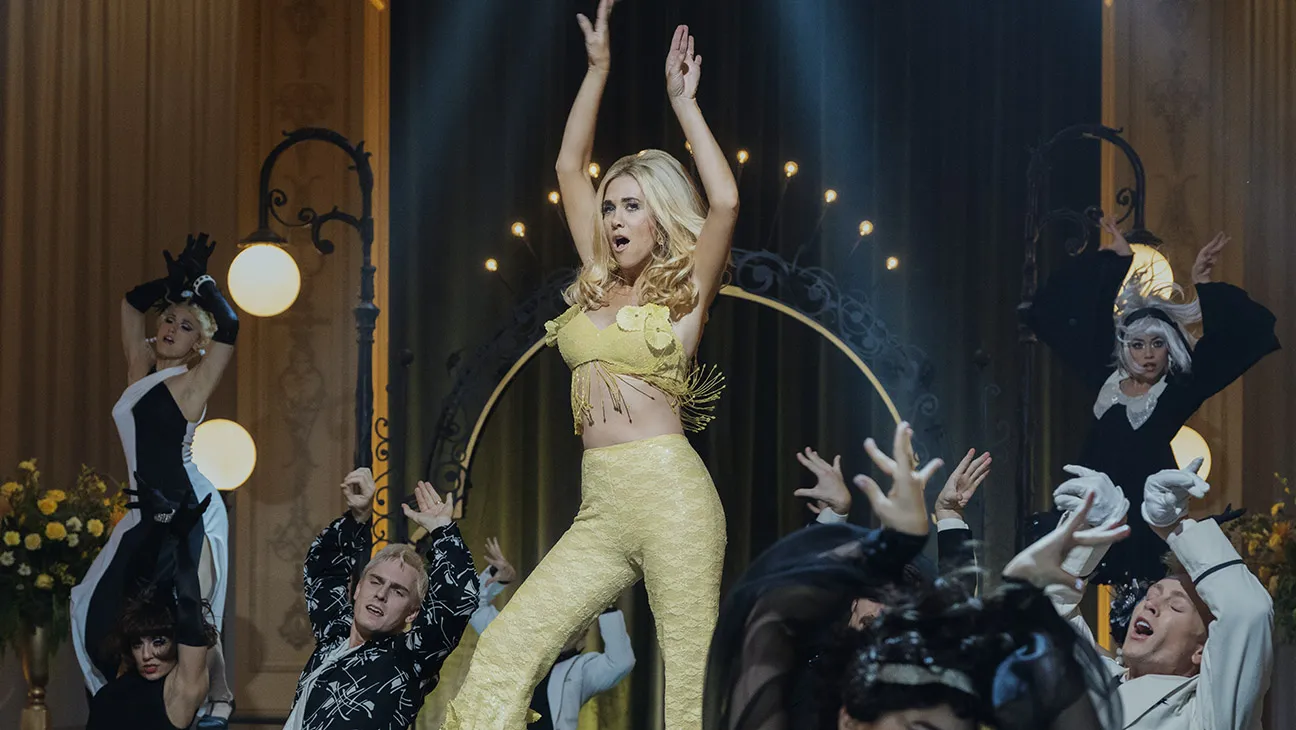
The striver now fights for a permanent place. Janney crafts Evelyn with cool gravity and careful self-protection, resisting caricature and sharpening every exchange. Their movement from clawed rivalry to a prickly, necessary alliance built on shared survival gives the show its closest brush with the promise of prestige dramedy.
Across the ensemble, Norma, played by Carol Burnett, returns as a regal and ruthless presence. She terrifies and invites sympathy in equal measure as she threads new schemes through old grudges. Robert Diaz, played by Ricky Martin, serves as quiet ballast and moral center, pulled between obligation and safety, and his arc carries unexpected tenderness.
Linda Shaw, played by Laura Dern, reaches a political awakening that leads to imprisonment and personal release, yet the season often sidelines her during pivotal turns. Douglas, played by Josh Lucas, completes a turn into full scoundrel. Maxine’s loyalty to him remains puzzling within this landscape.
His new partner, Mitzi, played by Kaia Gerber, reads as the flattest figure in the group, a clean-lined opportunist with one sharp edge. The broader cast sparks to life in clustered set pieces. Mary’s séance lands with screwball snap, and the Donahue home scenes hum with precision timing. Patti LuPone, appearing as Marjorie Merriweather Post, storms through as galvanic mischief and delivers a bright musical jolt.
Spectacle, Satire, and Volume
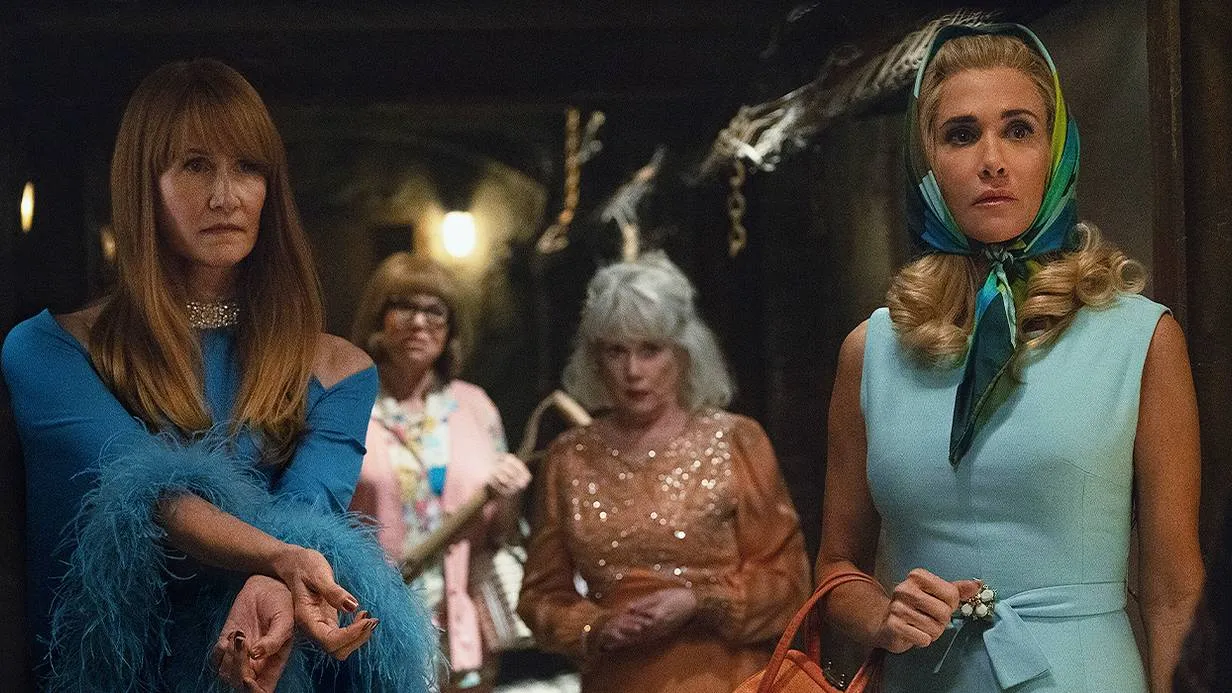
Palm Royale keeps its visual crown. The production ranks among the most striking on television, pairing immaculate, character-led costumes with hair and make-up engineered for impact. The style evokes Slim Aarons images of leisure while threading a Clue-like intrigue through hallways and terraces. The sets breathe with period detail. Even the opening titles spark pleasure.
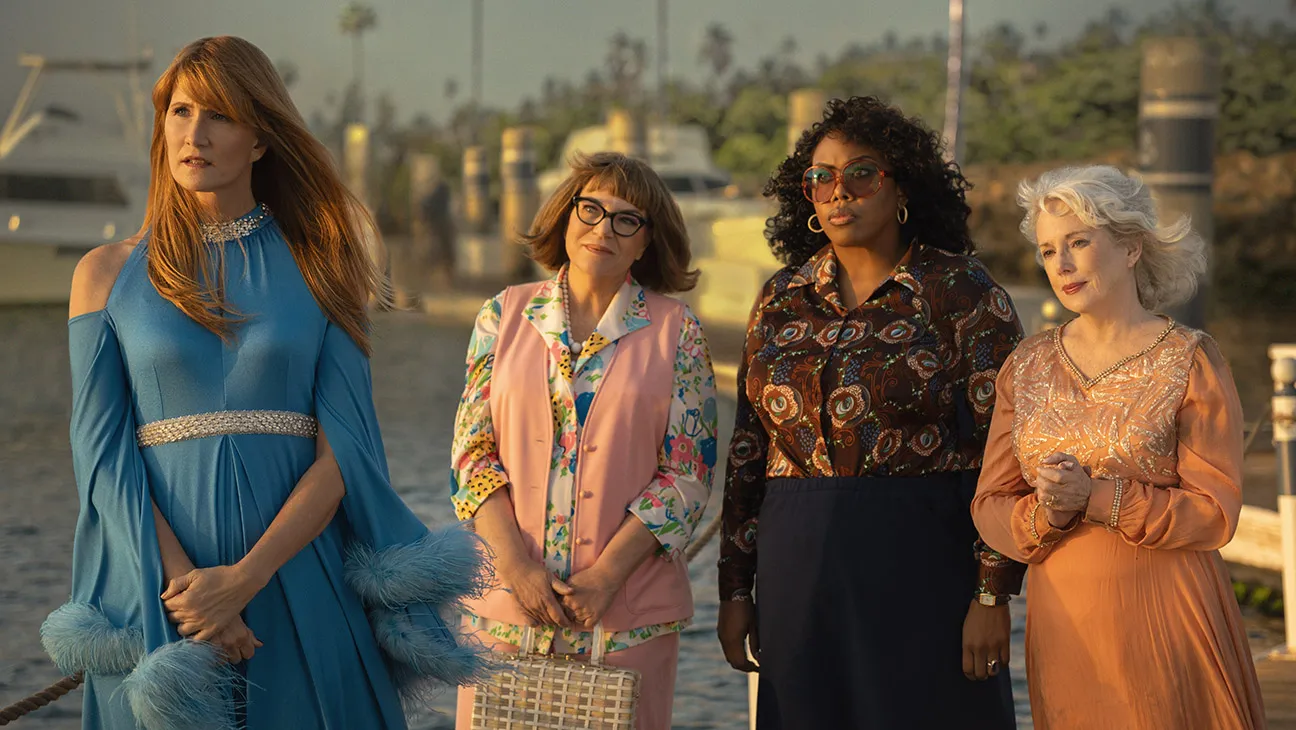
The series pitches high-fashion silliness against scenes of felt emotion. Humor cuts because it sits on the bedrock of misery, with characters clawing for position inside a strict patriarchy that measures their value. Performance becomes the text. Every figure wears a mask, and the thrill lies in the first slip, the accidental revelation that exposes motive or fear.
The season carries real ambition and swings hard. That appetite often buries sharp ideas and standout work under a mountain of incident. The result delivers constant motion and bright surfaces, with peaks of satire and stretches of pure melodrama. Focus wavers, and a singular thematic line rarely holds for long. The show remains watchable, glittering with invention and style, and the noise level keeps the pulse high while the cleanest insights sometimes sink beneath it.
Palm Royale is a period comedy-drama series set in 1969 Palm Beach, Florida, following outsider Maxine Dellacorte-Simmons (Kristen Wiig) as she desperately attempts to cross the line into high society through the exclusive Palm Royale country club. The second season is scheduled to premiere on Wednesday, November 12, 2025, on the streaming service Apple TV+, with new episodes released weekly.
Credits
Title: Palm Royale Season 2
Distributor: Apple TV+
Release date: November 12, 2025
Rating: TV-MA
Running time: Approximately 46–50 minutes (10 episodes total)
Director: Abe Sylvia, Tate Taylor, Claire Scanlon, Stephanie Laing
Writers: Abe Sylvia, Sharr White, Sheri Holman, Becky Mode, Celeste Hughey, Emma Rathbone, Kelly Hutchinson, Logan Faust
Producers and Executive Producers: Abe Sylvia, Laura Dern, Kristen Wiig, Jayme Lemons, Katie O’Connell Marsh, Tate Taylor, John Norris, Sharr White, Sheri Holman
Cast: Kristen Wiig, Ricky Martin, Josh Lucas, Leslie Bibb, Amber Chardae Robinson, Laura Dern, Allison Janney, Carol Burnett, Mindy Cohn, Julia Duffy, Kaia Gerber, Patti LuPone, John Stamos
Composer: Jeff Toyne
The Review
Palm Royale Season 2
The season is a gorgeous, frequently entertaining spectacle, buoyed by exceptional performances from Wiig and Janney. It fully embraces its camp melodrama, providing delightful escapism and sharp satirical moments. However, its relentless need for excess, characterized by too many convoluted subplots, ultimately dilutes its focus. The show's admirable ambition needed more discipline. It remains a visit worth taking for the star power and aesthetic brilliance.
PROS
- Particularly Kristen Wiig and Allison Janney's evolving rivalry.
- Immaculate period costumes, set design, and high production value.
- The series leans into its over-the-top melodrama and unironic silliness.
- Carol Burnett and Ricky Martin deliver compelling supporting arcs.
- Brief but potent insights into wealth and patriarchy.
CONS
- Too many subplots, twists, and schemes stretch the narrative thin.
- The constant shifting of focus can make the season feel exhausting rather than propulsive.
- Key figures like Laura Dern's Linda are sidelined for extended periods.
- Certain character decisions, such as Maxine's continued devotion to Douglas, feel illogical.
- The show fails to settle on a single, powerful theme, diluting its intellectual impact.