

























![Kingdom Hearts Collection [I-III] Review](https://gazettely.com/wp-content/uploads/2026/10/Kingdom-Hearts-Collection-I-III-1-360x180.webp "Kingdom Hearts Collection [I-III] Review: KHII Holds Steady as Newer Entries Fluctuate 37")



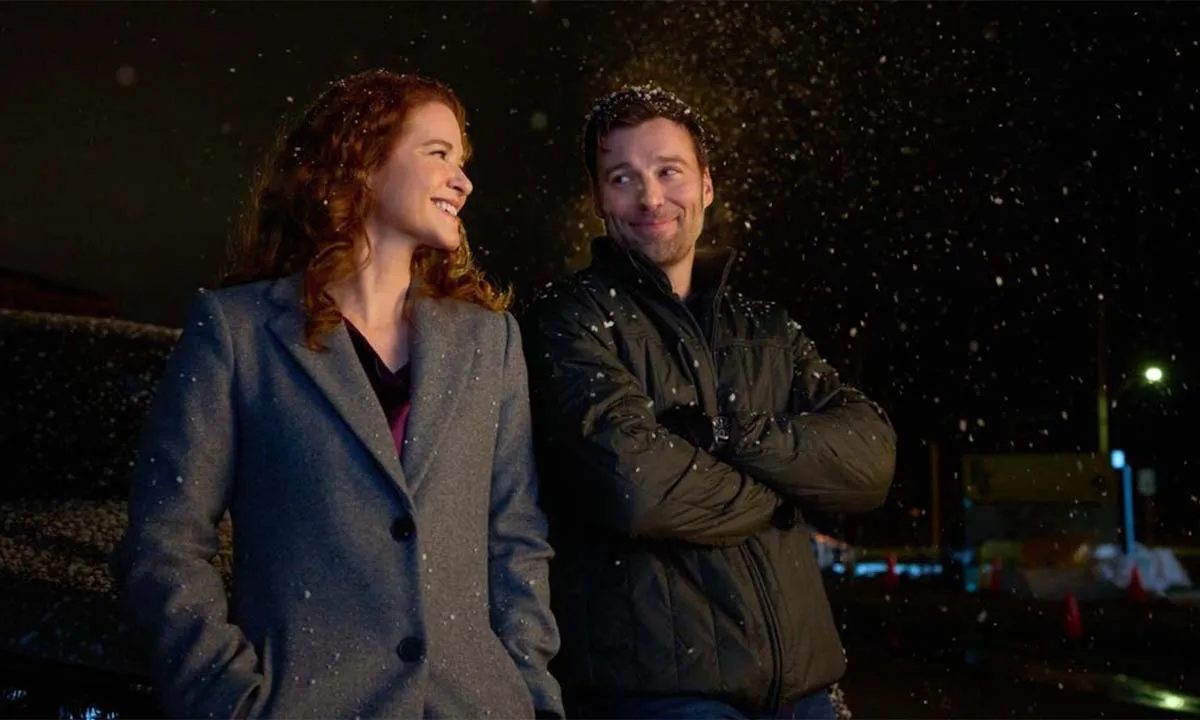

Mistletoe Murders returns for its second season and sets its cozy holiday mystery in Fletcher’s Grove with clear purpose. The show confirms a stable structure around Emily Lane, played by Sarah Drew, who runs a Christmas shop and carries a guarded history that enables her shift into amateur investigation.
The series pairs weekly cases with a serialized thread tied to Emily’s identity and the surveillance-minded group called Chimera. That combination speaks to present-day viewing habits on streaming, where audiences seek immediate payoff from case files and a longer hook from character secrets.
Season two begins by engaging the emotional fallout of the last finale. Detective Sam Wilner, played by Peter Mooney, now knows Emily withholds essential facts about herself. Almost a year passes before the story reunites them through the disappearance and murder of a high school chess coach. Snowy streets and warm storefronts frame a life in danger that never loosens its grip on Emily. The show treats the comfort of holiday ritual as a setting where trust fractures in quiet ways and where fear reshapes daily routines.
The Ethics of Secrecy in Small-Town Dynamics
The standoff between Emily and Sam reads like a contemporary look at romance under surveillance pressures. Sam carries long-running trust issues that guide him to keep distance, a protective practice shaped by his responsibility to his daughter, Violet.
He reacts with gruff restraint and limited communication, which turns hurt into judgment about Emily’s past and obscures who she is in the present. Emily’s silence arises from self-protection tied to the threat of Chimera, not casual preference. The series studies how secrecy inside a close community becomes social risk, and how that risk weakens intimacy.
Their working relationship turns the same tension into procedure. Sam holds the badge and shows clear irritation with Emily’s persistence, yet he relies on her ability to locate what formal steps miss. The show validates unorthodox inquiry alongside official methods, a familiar dynamic in crime television that still lands here because the emotional stakes are so immediate. Violet, played by Sierra Marilyn Riley, anchors that urgency. Sam attempts to separate Violet from Emily, and the effort fails.
The bond between Violet and Emily forms easily and keeps growing through advice and steady presence. That bond affirms the durability of chosen ties in a culture that often questions who counts as family. When Emily risks everything to protect Violet, Sam must face his own judgment and accept a tentative reconciliation. Riley’s casting delivers warmth that offsets the show’s darker notes and creates a humane counterweight to the season’s fatalities.
Genre Evolution and Structural Trends
This season reflects a broader television pattern in which platforms encourage hybrid formats. Mistletoe Murders presents three new two-part mysteries that close loops for each case and still propel the season arc. The schedule suits viewers who pause and resume across workdays while tracking an ongoing story over weeks. Streaming has made space for this kind of design, and the show uses it with discipline.
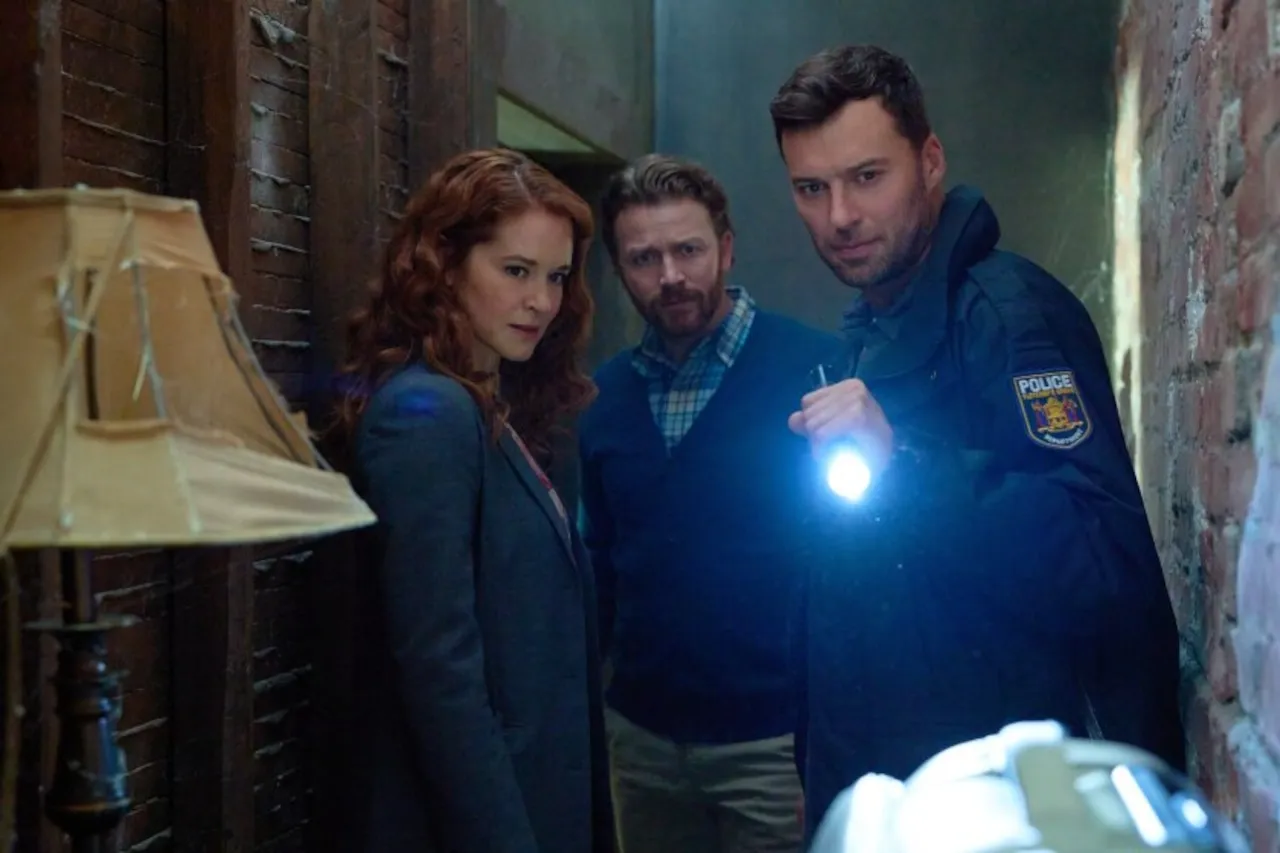
The tone edges into sharper territory than standard comfort mysteries on network schedules. The chess coach case involves a body buried in newly laid concrete, a detail that raises the sense of risk and signals a willingness to show harder consequences. The plot centers a social question around parental protection and its moral limits. Richard Leland’s son kills the coach in a defensive moment, and Richard then commits escalating crimes to hide the incident.
The season pairs that choice with Sam’s protective posture toward Violet as he tries to block Emily’s presence. The parallel ties casework to the central relationship and asks how care can turn punitive when fear runs the show. Clue placement remains efficient.
A golden retriever devoted to the victim guides Emily to the body, a simple device that keeps momentum swift without undercutting the gravity of the crime. The show marries cozy surfaces to stark realities and mirrors current audience tastes for tonal composites that feel familiar and sharp at the same time.
The Shadow of Digital Identity: Emily’s Cryptic Past
The continuing storyline about Emily’s past shifts the series away from single-serving puzzles into a study of identity management in a surveilled world. Chimera functions as a symbol for digital traces that never fade. Emily’s refusal to disclose is a safety protocol in a system that rewards exposure and punishes it too. The series treats that choice as lived strategy rather than melodramatic withholding.
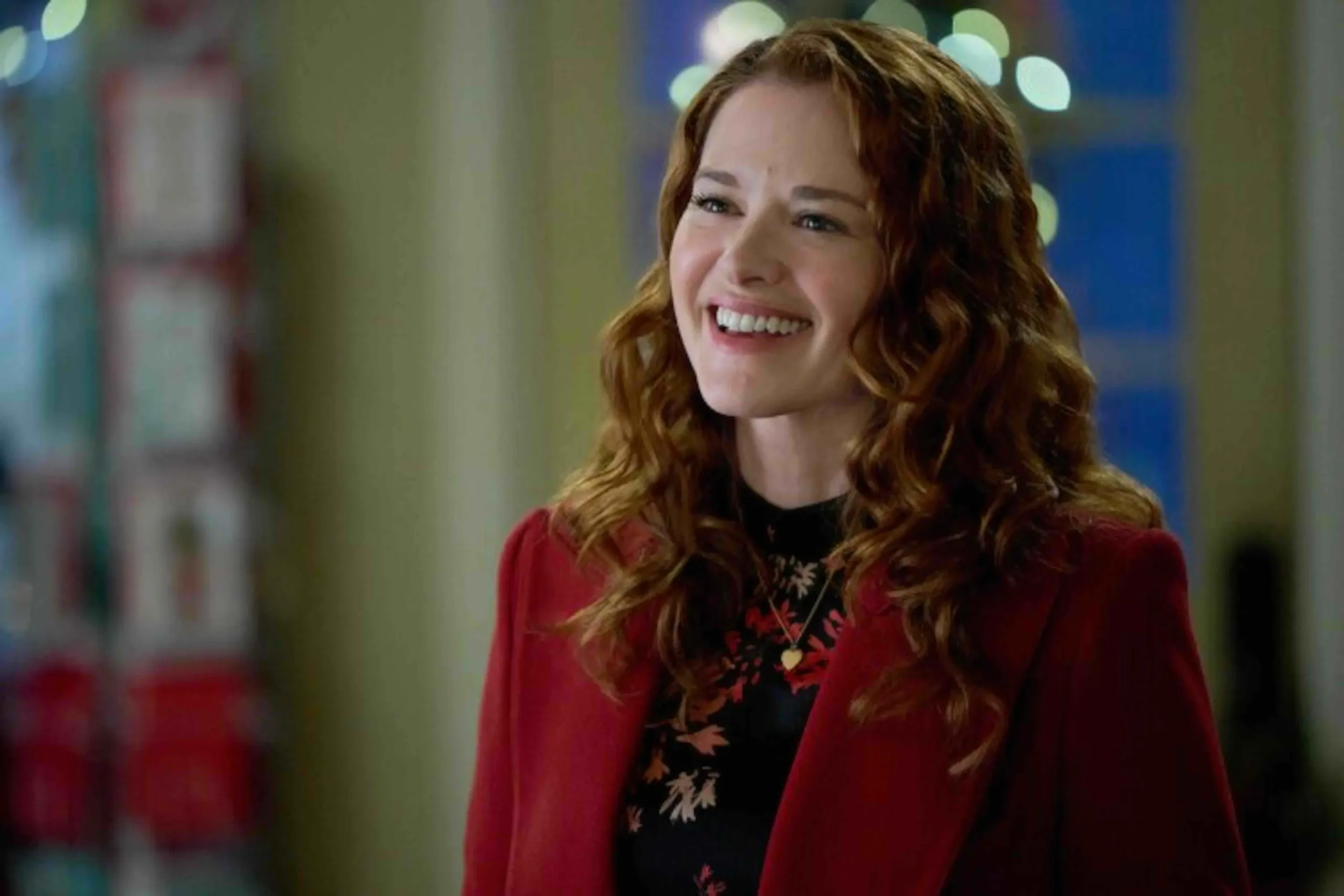
Flashbacks expand the picture. As a teenager, Emily used the name Grace. The season introduces her friend Aaron and a coding club that inspired the Chimera alias. The link to early coding culture places her origin story in a recognizable social moment, where online identity formed both shelter and risk. The show moves slowly on this thread with deliberate pacing.
Each reveal emphasizes consequences and keeps attention fixed on cause and effect, which encourages patient engagement. The approach favors audience speculation and rewards viewers who return weekly to connect the past to the present case load.
Industry Trends and Production Investment
The show’s release path maps onto current distribution tactics. Mistletoe Murders grows first on Hallmark+, then reaches a broader network audience. That route points to streaming as an incubator for tonal tests and structural tweaks, allowing a series to refine its voice before sitting in front of a traditional schedule. It also trains viewers to expect seasonal arcs that travel between platforms without losing rhythm.
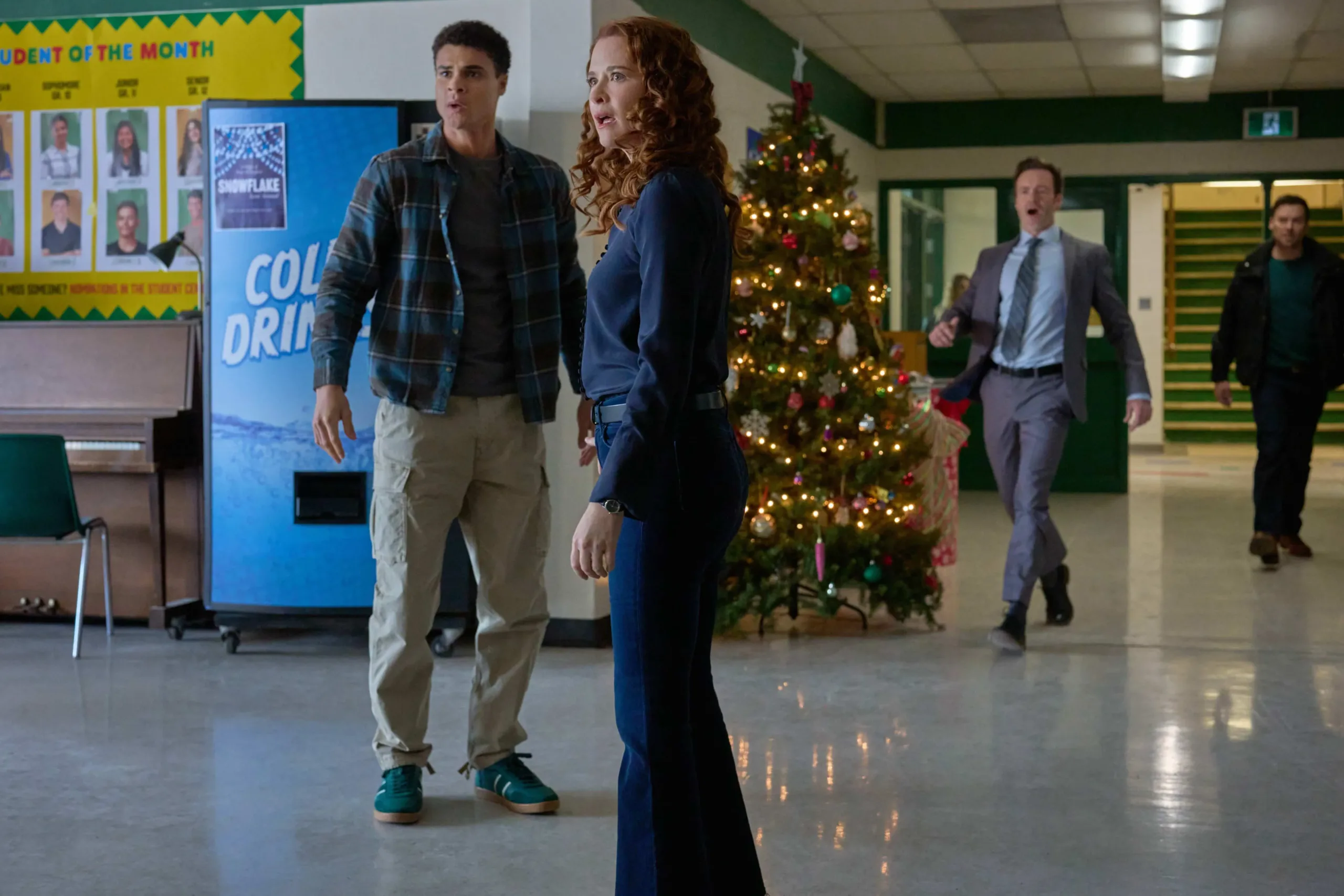
A secondary story gives the season soft texture without draining focus. Violet’s crush on Kyle introduces adolescent hope into a lineup of crimes and secrets. Emily supports Violet through that romance, which hints at a desire to offer the guidance she once lacked. The payoff arrives with a glossy romantic set piece that fits the network’s signature. The result feels designed for audiences who want aspiration with their anxiety, a common programming choice across comfort-forward brands.
Sarah Drew’s presence as both lead actor and producer signals long-term commitment to the show’s path. Her scenes with Peter Mooney carry the weight of estrangement and the pull of unfinished business. The cast’s delivery matches a script that aims for polish and momentum. Performances keep the series grounded in feeling while the cases escalate.
The season’s format and tone speak to where mystery television is heading on streaming and adjacent platforms. Viewers want procedural satisfaction paired with an identity mystery that tracks across episodes. They accept a cozy atmosphere that makes room for harsher crimes. They respond to stories about surveillance, data traces, and the cost of hiding. Mistletoe Murders positions itself inside that shift with three two-part cases, a digital-age backstory for its lead, and a relationship that treats secrecy as an ethical problem rather than a puzzle alone.
The chess coach investigation, the role of a loyal dog in guiding discovery, and the moral spiral that follows an accidental death all point to a series that understands how audience expectations have changed. The show demonstrates how a small town can host stories about privacy, care, and harm that speak to a wider culture. It models how streaming-first releases can nurture format changes and then carry them onto network air with confidence.
The season ends with a stable picture of what this series aims to deliver. Cozy rituals set the stage. Crimes test the limits of loyalty. Technology shapes risk, memory, and exposure. Emily’s secret history, her link to Chimera, and her fragile partnership with Sam keep the narrative tense. Violet and Kyle carry genuine warmth. Sarah Drew and Peter Mooney give the conflicts credible weight. The show’s polished writing and coordinated ensemble turn a holiday mystery into a timely reflection on protection, truth, and the social cost of silence.
Mistletoe Murders is based on the Audible podcast series of the same name created by Ken Cuperus. The series premiered its second season on November 7, 2025, on the Hallmark Channel, with episodes streaming the next day on Hallmark+. The show follows Emily Lane, a Christmas shop owner with a cryptic past, who frequently gets drawn into solving mysterious murders in the fictional small town of Fletcher’s Grove.
Credits
Title: Mistletoe Murders Season 2
Distributor: Hallmark Channel, Hallmark+
Release date: November 7, 2025 (Season 2 Premiere)
Rating: TV-PG
Running time: Approximately 42 minutes per episode (6 episodes in Season 2)
Directors: Grant Harvey, Sherry White, Melanie Orr (Directors for Season 1, likely returning for Season 2)
Writers: Ken Cuperus, Michelle Ricci, Shelley Scarrow (Writers from Season 1)
Producers and Executive Producers: Sarah Drew, Ken Cuperus, Michelle Melanson, Jocelyn Hamilton
Cast: Sarah Drew, Peter Mooney, Sierra Marilyn Riley, Lara Amersey, Kylee Evans, David Hewlett, Jean Yoon, Tom Cavanagh, Steve Lund, Jake Epstein
Director of Photography (Cinematographer): Justin Black (Cinematographer for Season 1)
The Review
Mistletoe Murders Season 2
Mistletoe Murders Season 2 expertly elevates the cozy mystery genre by injecting genuine emotional complexity and higher stakes. The show is an intriguing case study in modern serialized storytelling, where relationship tension and identity crises are as important as the weekly crime. The series successfully navigates the balance between its signature holiday charm and a surprisingly edgy narrative, making it a compelling, must-watch example of streaming-era television.
PROS
- Successfully blends the "cozy mystery" genre with darker, more serious crime elements, offering higher tension.
- Focuses heavily on the fallout of Sam and Emily’s emotional rift, providing a compelling serialized core.
- The two-part episodic format effectively maintains engagement, balancing resolution with long-term narrative momentum.
- Highlights strong chemistry between the leads and a compelling performance from the young actress playing Violet.
- Engages with modern anxieties concerning digital identity and the impossibility of escaping a documented past.
CONS
- The slow-burn approach to Emily's past, while intriguing, might test the patience of some viewers seeking faster reveals.
- The contrast between the extremely "cozy" holiday setting and surprisingly "grim" details (like a body in concrete) may feel jarring to traditional network viewers.
- The year-long emotional avoidance between the leads, while central to the plot, creates prolonged friction that could frustrate viewers rooting for their reconciliation.







