


















The American Revolution is a six-part, twelve-hour document series that recounts the eight-year War for Independence. Produced by Ken Burns, co-directed by Sarah Botstein and David Schmidt and written by Geoffrey C. Ward, it moves with the cadence of an American historical epic. The familiar Burns approach fills the screen as Peter Coyote’s calm narration drifts over carefully arranged static images and reflective location footage. The camera lingers on faded portraits and worn maps, as if time has stained the paper with the memory of an unfinished struggle.
Released near the 250th anniversary of the Declaration of Independence, the series stands as a somber prelude to The Civil War. The Revolution appears here as a raw and disorderly birth, a creation scarred from the first moments by fractures that will later rip the country apart. The film questions the very idea of a clean “beginning,” suggesting that ambition and contradiction mark the founding moment and plant early seeds for conflict still waiting in the soil of the new nation.
Echoes in the Frame: Artistry and Voice
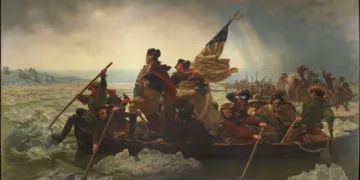
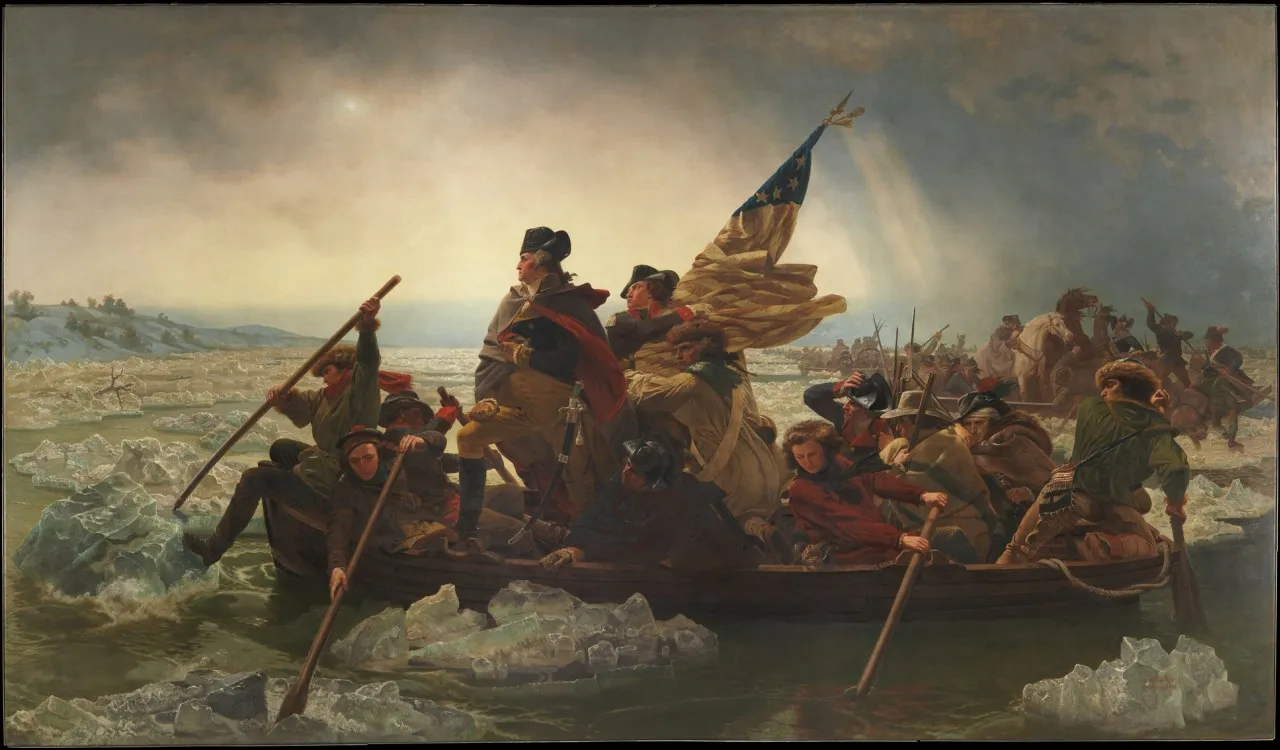
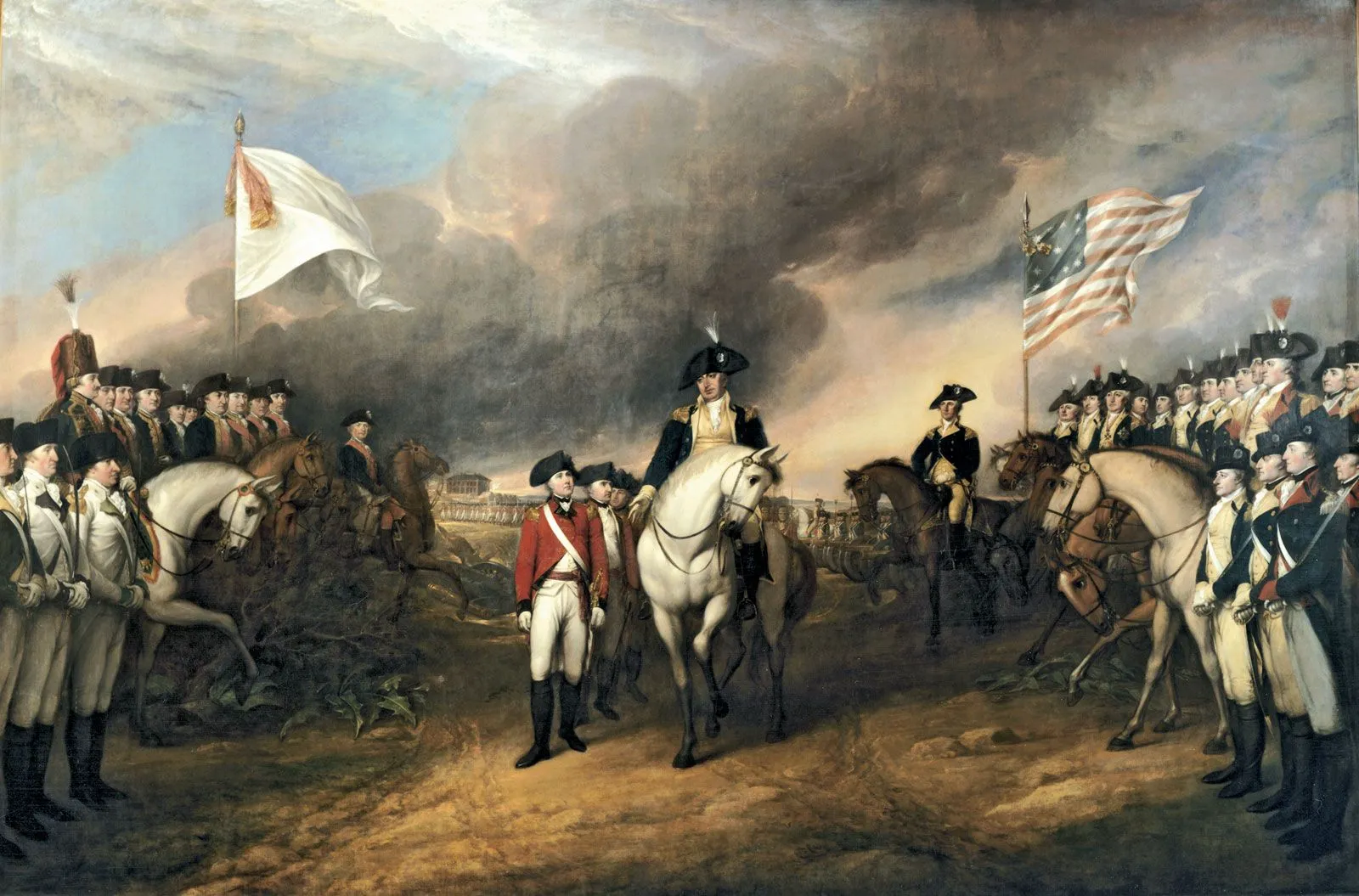
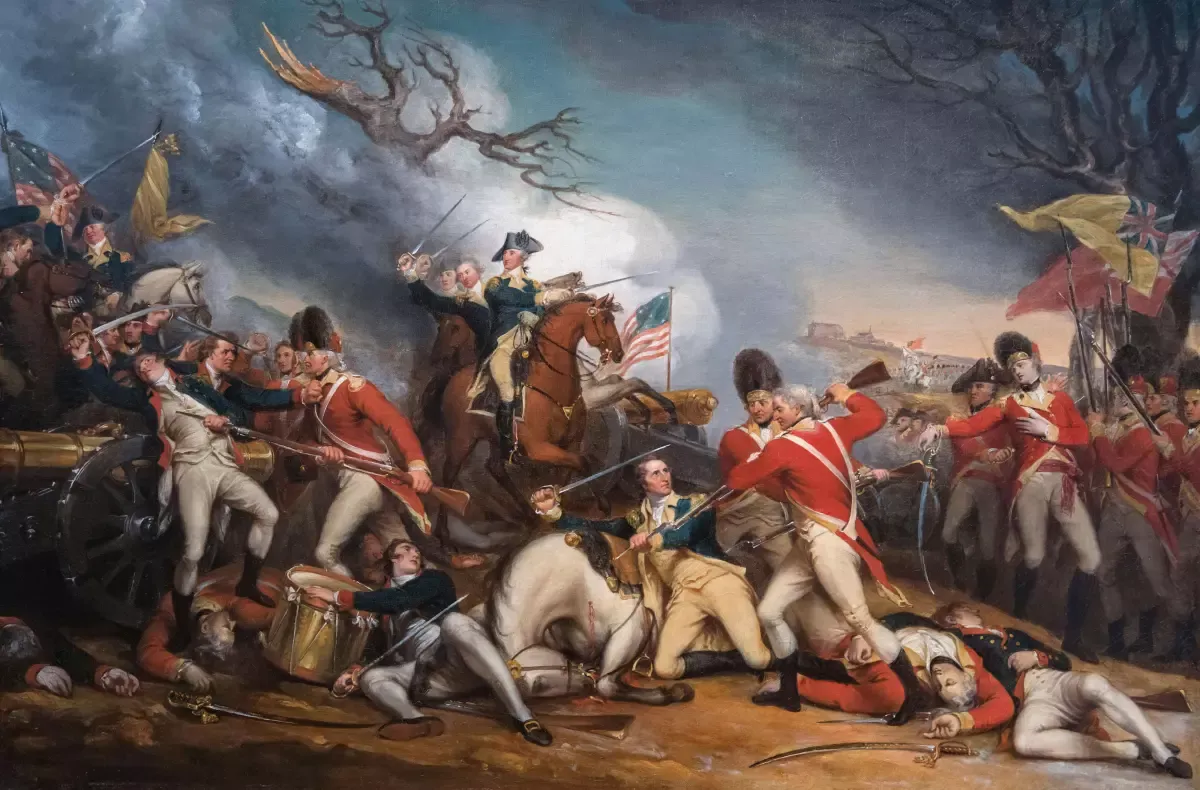
The scale of the project signals a long, patient attention to the past. Years of filming trace authentic locations, from Valley Forge to Mount Vernon, treating the landscape as a mute witness to human labor and suffering. Since photography lay outside the reach of the eighteenth century, the filmmakers turn to a haunted visual language built from contemporary sketches, polished portraits, and sweeping post-war paintings.
When tactical clarity calls for it, the series introduces 3D maps and digital renderings, including an ambush in Canada, which refresh the visual palette while still carrying a sense of historical gravity. Fragile paper and aging canvas begin to feel like a living record, close enough to touch yet separated by centuries of loss.
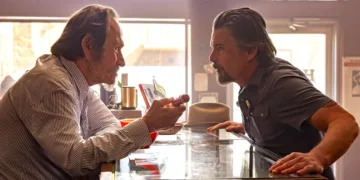
The deepest dramatic charge arrives through the ensemble of well-known voices. Actors such as Tom Hanks, Meryl Streep, Samuel L. Jackson, and Josh Brolin recite letters and memoirs from the period. Their performances give archival documents a fierce intimacy. Washington’s words, spoken by Brolin, leave the cabinet of intellectual relics and sound like a human mind caught between doubt and determination.
History rises into something close to stage drama, a bridge across the gulf between present and past. Alongside this work of performance, a group of historians shapes the intellectual frame. These scholars represent women, Black Americans, and Indigenous Peoples and offer sharply defined areas of expertise. They approach the founding story from many directions and assemble a layered account that no single voice can sustain.
The Shadow of Creation: Contradiction and Chaos
The documentary’s power lies in its willingness to break the comfort of national myth. It strips away the familiar glow around the Founders and exposes the harsh realpolitik that supports the birth of the country. The figures on screen frequently appear as clumsy, damaged individuals who move through events with limited foresight, feeling their way toward an outcome they can barely see.
The war emerges as fragmented, a brutal civil war that sets Patriots against Loyalists and fuels factional conflict in the South. Military incompetence, mutiny, and routine desertion shape the experience of rebel forces, and the story presses the viewer to sit with the fragile and uncertain nature of this historical gamble.
The narrative opens its lens to the experiences of groups often pushed to the margins of this story. For African Americans, the war creates a tormenting decision. Many enslaved people join British forces in search of a better chance at freedom, while others, including the Black Patriot teenager James Forten, choose to fight for the colonies.
For Indigenous Nations such as the Mohawk and Seneca, the conflict forces a grim choice of alliance simply to survive in the face of relentless expansion into their lands. Women emerge in this telling as intellectual figures like Abigail Adams and as practical figures who drag bodies from battlefields and supervise burials, caught in a war that demands both thought and physical endurance.
The portrait of George Washington refuses comfort. His widely acknowledged role as the military “glue” sits beside stark realities. Tactical missteps often require sheer force of personality to steady the cause. The series records his unyielding control of enslaved people, his appetite for land speculation, and his severe commands, including the destruction of Seneca and Cayuga villages. He appears as a man deeply tied to the interests of his class.
The Valley Forge section presents a nightmare of cold, scarcity, and near collapse, a frozen crucible formed from desperation and far from triumph. Benedict Arnold’s betrayal receives a psychologically detailed treatment that makes his step toward British allegiance tragically legible from the angle of his wounded pride and disappointment. Out of these contradictions, the creation of the United States appears as a violent, paradoxical act that raises hard questions about the cost of nationhood.
The Perilous Inheritance: History’s Repetition
The American Revolution appears here as a study in repetition, a reminder that history circles back to its unfinished arguments. The series traces unnerving echoes between the quarrels of the 1770s and the fractures of contemporary American life. Disputes over a standing army in Boston, perceived as an act of aggression, recur in modern anxieties over armed presence in civic spaces. The film forms a dark mirror, reflecting a recurrent struggle to hold together a divided country and hinting that problems of identity and authority rarely find a final settlement.
The War for Independence casts a shadow far beyond the borders of the early United States, shaping European politics and influencing the evolution of Caribbean nations. This sense of scale rejects a narrow, provincial reading and treats the Revolution as an event that shakes the wider world. In its closing movement, the documentary acknowledges the violence, ineptitude, and fierce division that color the founding moment and still stages a kind of celebration.
The film salutes the unlikely survival of the “grand experiment of democracy,” even as that experiment carries the weight of original sins that never quite fade. The series calls for active, difficult engagement with history and asks viewers to face disturbing truths and reject “rosier generalities.” Any future shaped from carefully edited memory rests on unstable ground. The film urges a confrontation with the darkness of the nation’s beginning as a way to see the long twilight in which democratic life seems permanently suspended.
The American Revolution is a six-part, twelve-hour documentary series chronicling the War for Independence and America’s founding struggle. Directed by Ken Burns, Sarah Botstein, and David P. Schmidt, the series premiered on PBS on November 16, 2025, airing over six consecutive nights. The full series is available to stream on PBS.org and the PBS App, although extended on-demand streaming may eventually require a PBS Passport membership. The project was in production for over nine years and uses a blend of static imagery, interviews, and historical correspondence read by a vast ensemble of voice actors.
Credits
Title: The American Revolution
Distributor: PBS
Release date: November 16, 2025
Running time: 6 episodes, 12 hours total (approx. 120 minutes per episode)
Director: Ken Burns, Sarah Botstein, David P. Schmidt
Writers: Geoffrey C. Ward
Producers and Executive Producers: Ken Burns, Sarah Botstein, David P. Schmidt, Julie Coffman (Co-Producer, based on common production team members)
Cast (Voice Actors & Narrator): Peter Coyote (Narrator), Josh Brolin, Meryl Streep, Tom Hanks, Samuel L. Jackson, Laura Linney, Kenneth Branagh, Paul Giamatti
Director of Photography (Cinematographer): Buddy Squires
Editors: Tricia Reidy, Charles E. Horton, Maya Mumma, Craig Mellish
The Review
The American Revolution
The series serves as a profound and essential meditation on the true cost of independence, rejecting sentimental myth in favor of chaotic human reality. By illuminating the moral contradictions and forgotten voices of the era, the film forces a necessary re-examination of the nation's foundation. It is a dense, masterful work, vital for understanding democracy’s precarious, enduring nature.
PROS
- Examines the war as a global conflict, civil war, and battle for Indigenous land.
- Celebrity ensemble reads grant dramatic life and human intimacy to historical figures.
- Unflinchingly addresses the flaws of the Founding Fathers (e.g., Washington's slavery, tactical errors).
- Integrates the complex experiences of Black Americans, women, and Indigenous peoples.
CONS
- Relies heavily on the established Ken Burns style (panning over static images).
- The 12-hour length requires a significant time commitment from the viewer.
- The inability to use period photography makes visual pacing a greater challenge.
- The sheer detail can feel overwhelming at times.