





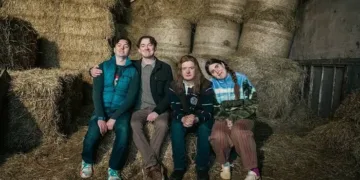

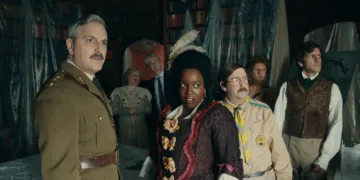





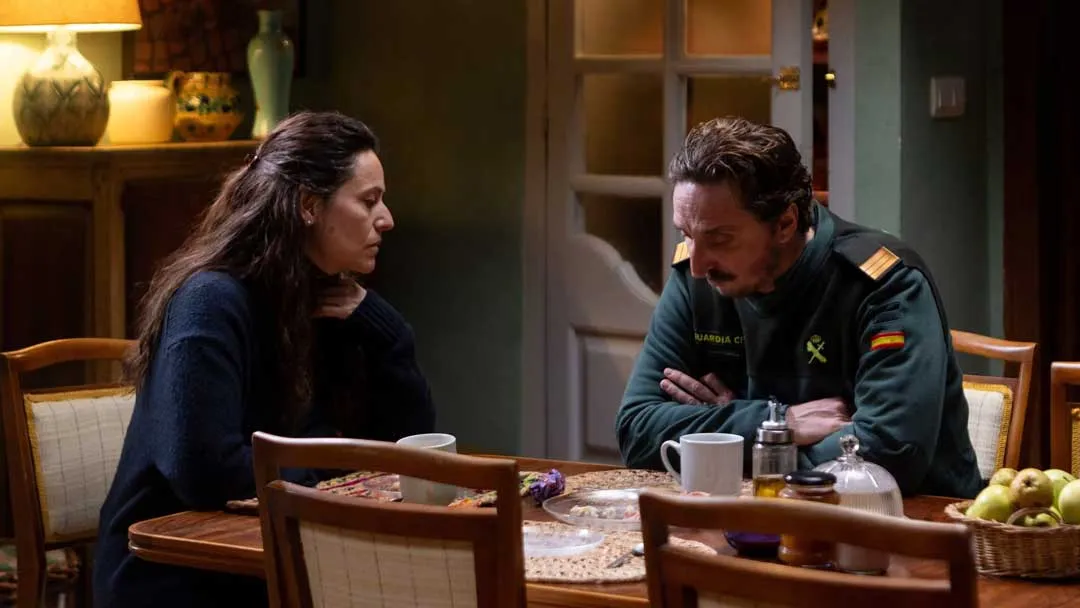

The six-episode Spanish crime thriller The Crystal Cuckoo (El cuco de cristal), adapted from Javier Castillo’s novel, starts from an intimate setup and expands into a dark mystery that stretches across decades. Clara Merlo, a young medical resident, survives thanks to an emergency heart transplant in the present day. Her intense curiosity about the identity of her donor becomes the engine of the plot. That impulse carries her to the remote mountain community of Yesques, where she seeks out the donor’s family.
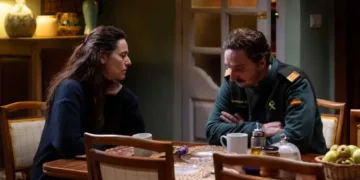
The donor, Carlos, died in an accident linked to his brittle bone disease. When Clara arrives, she meets his grieving mother, Marta, and his brother, Juan. Beneath the picturesque image of the town sits a community shaped by unsolved disappearances and an ongoing pattern of violence against women that reaches back through generations. The series announces its scope through a non-linear structure that moves constantly between Clara’s investigation in the 2020s and disturbing incidents from the early 2000s.
Timelines, Turmoil, and Narrative Leaps
The miniseries builds its central mystery by cutting back and forth between 2023 and 2004/2005. The earlier timeline tracks Miguel Ferrer, father to Carlos and Juan and a committed yet damaged police officer. Miguel’s involvement begins with the death of Luisa, Gabriel’s wife, in a house fire. He discovers an ominous clue: a distinctive wing-shaped necklace that links Luisa’s death to the disappearance of his sister, Magdalena, years before.
Miguel quickly focuses on Gabriel, a man with a clear record of domestic abuse and a trail of ex-partners who raise questions. His fixation on justice consumes him until he vanishes himself in 2005, leaving the case unresolved and his son Juan deeply affected. In the present, Clara’s attempt to pay her respects turns into a dangerous personal investigation. She learns that Carlos had been equally fixated on his father’s disappearance and the town’s grim run of tragedies, which include the recent search for the missing baby Manuela and a history of 11 disappearances over three decades.
Nonlinear storytelling can feel like a gimmick when it lacks purpose. The Crystal Cuckoo labels its jumps in time with clear date stamps, yet the sheer frequency of those shifts can sometimes interrupt the viewer’s emotional investment. The adaptation of a complex novel brings a particular challenge; the on-screen structure can feel fragmented, cutting away just as one thread starts to gain quiet momentum. The series asks the audience to keep faith that each piece, each timeline, and each disappearance will finally clarify the source of Yesques’ enduring darkness.
The Weight of Family and the Outsider’s Gaze
The story’s emotional intensity grows from the damaged bonds inside the Ferrer family, and Clara, as the outsider, steps straight into that emotional storm. Her role functions as a catalyst. Her presence forces buried grief and long-held secrets into the open. Her motivation, tied to the connection she feels to Carlos through her “new heart,” serves as a high-concept device that makes sense of a choice that might otherwise seem eccentric or even reckless. Over time, she forms a sincere bond with Juan, the younger son, which complicates her status as a detached observer.
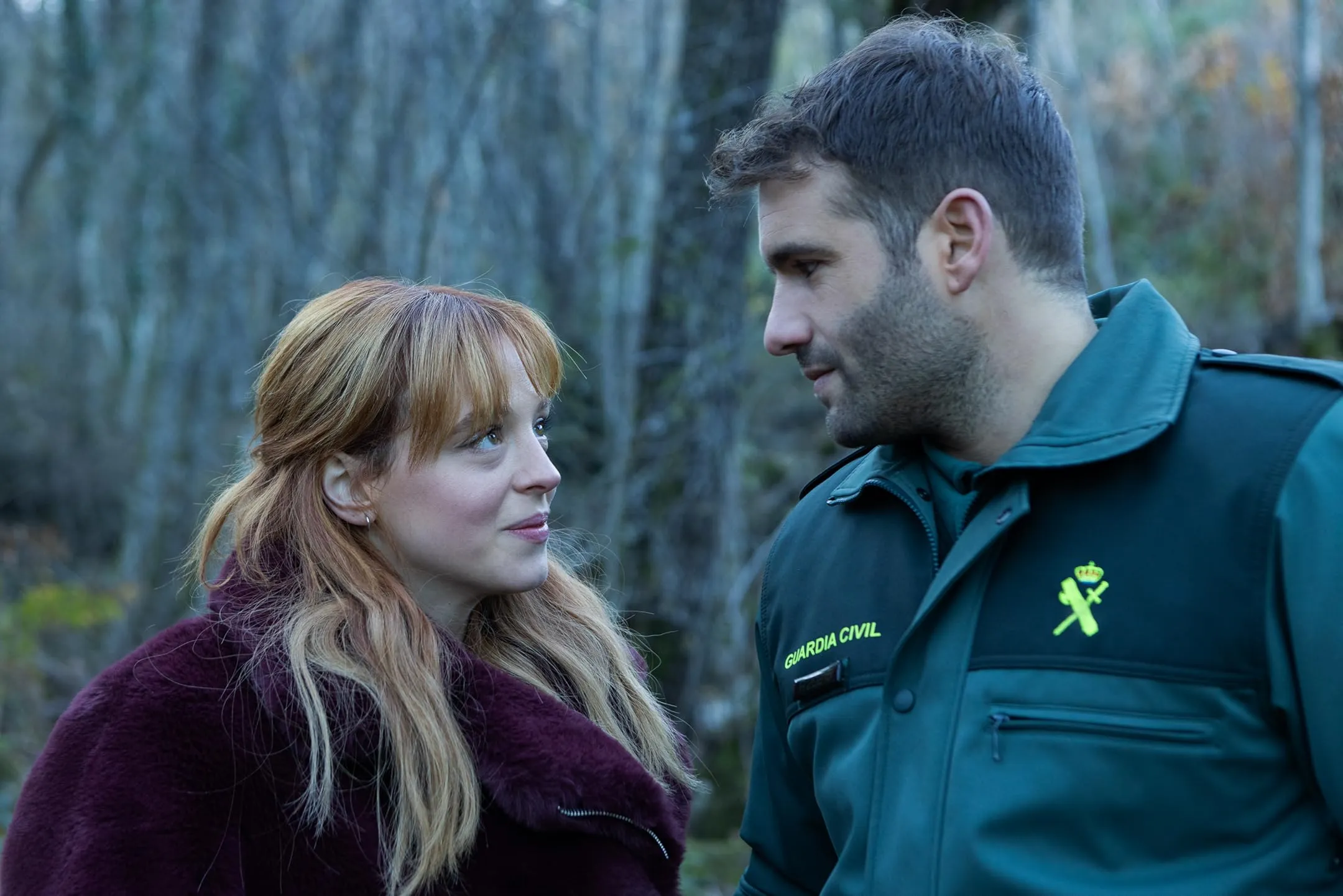
The family itself operates as a furnace of trauma. In 2004, Miguel is a man of fierce moral conviction whose short temper and vigilante tendencies frighten his wife. His rage traces back to earlier wounds, rooted in his father’s abuse of Magdalena. Marta, the mother, appears emotionally fragile. She doted on Carlos and his physical fragility, clearly favored him, and quietly placed blame on Juan for some of his brother’s injuries. Her immediate and nearly obsessive warmth toward Clara suggests an attempt to fill the void left by Carlos. Juan, now working as a police officer, carries his father’s legacy.
He approaches Clara with suspicion at first, then joins her search for the buried truths about his father and brother. Around the edges of this core family, figures such as Maria, Carlos’s former girlfriend who insists that he took his own life because his family failed him, and Paco, the local drunk who becomes a convenient but mistaken suspect in a recent kidnapping, reveal how deeply pain and mistrust run through Yesques.
Style, Symbolism, and Cultural Reflection
The series excels at mood. The images are dark, damp, and unrelentingly bleak. The production leans into the contrast between the scenic, nearly postcard-like mountain setting and the sinister secrets embedded in that landscape. That clash speaks to a familiar cultural fear that systematic violence can grow quietly in small, seemingly peaceful places. The story concentrates on a long-standing pattern of violence against women that the town has either ignored or buried. The repeated disappearances appear as a continuing, untreated sickness that reflects serious social failures.
The title works as a piece of symbolism. The Crystal Cuckoo refers to Gabriel’s fixation on cuckoos and their parasitic behavior. That image becomes a metaphor for the hidden forces inside the community that feed on the unprotected, especially women. The result is an entertaining six-episode thriller that sustains tension across its length.
It sits comfortably inside the mainstream of Spanish Netflix thrillers, a category that leans on atmospheric mystery and high-stakes emotional drama. As someone who spends a lot of time with true crime stories about overlooked victims, I find this slow, atmosphere-driven reveal deeply satisfying. The performances, with Catalina Sopelana’s turn as Clara standing out in particular, keep the tangled strands of the plot grounded and engaging, which makes the experience rewarding for viewers who enjoy moody genre storytelling.
The Spanish crime thriller miniseries, The Crystal Cuckoo (El cuco de cristal), is based on the bestselling novel by Javier Castillo. The six-episode series premiered on Netflix on November 14, 2025. It follows a young doctor who, after receiving a heart transplant, travels to a remote town to learn about her donor, only to uncover a sinister decades-long mystery concerning disappearances and violence. The series is available to stream exclusively on Netflix.
Credits
Title: The Crystal Cuckoo (El cuco de cristal)
Distributor: Netflix
Release date: November 14, 2025
Rating: TV-MA
Running time: 6 episodes (Length is approximately 45-55 minutes per episode)
Director: Laura Alvea, Juan Miguel del Castillo
Writers: Jesús Mesas, Javier Andrés Roig (Based on the novel by Javier Castillo)
Cast: Catalina Sopelana, Alex García, Itziar Ituño, Iván Massagué, Alfons Nieto, Tomás del Estal
The Review
The Crystal Cuckoo
The Crystal Cuckoo offers a compelling, yet occasionally fragmented, journey into the dark history of a seemingly peaceful town. Its use of dual timelines effectively heightens the mystery surrounding the violence against women and the trauma within the Ferrer family. While the non-linear structure can feel abrupt, the atmospheric tension, solid acting, and powerful thematic focus on generational secrets make it an engaging watch for crime thriller enthusiasts. It is a solid genre entry that delivers on its central premise.
PROS
- The 2004/2023 structure builds deep historical context for the mystery.
- Creates a powerful, dark, and eerie mood in the contrasting idyllic setting of Yesques.
- Addresses the serious issue of systemic, generations-long violence against women.
- The central cast, including Catalina Sopelana as Clara, gives committed performances.
- Maintains a high level of tension and intrigue over its six-episode run.
CONS
- Timeline jumps can sometimes feel jarring or premature, disrupting emotional flow.
- Clara's forced insertion via the heart transplant premise feels slightly nonsensical.
- Follows a largely conventional structure for a streaming crime thriller miniseries.
- The initial episodes are vague on urgency, taking time to establish the core mystery and character stakes.