
























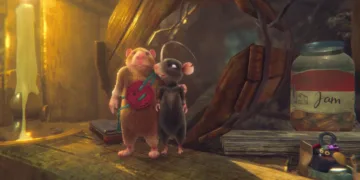






The experience of Winter Burrow, a survival and crafting game from Pine Creek Games, opens with grief. A small field mouse, raised amid the pressures of city life, returns to the woodland after the death of their parents. From the first minutes, the game leans into a feeling of displacement that recalls many international stories about the pull between urban demands and inherited landscapes.
The mouse discovers their childhood burrow in ruins, confronting a forest that their family once traded for an apartment and streetlights. The premise frames the game as a tale of return, reconstruction, and emotional accounting.
Moment-to-moment play revolves around repairing the broken den and preparing for the severe winter that approaches. Beneath these practical objectives lies the search for Aunt Betulina, who carries the weight of a lost familial link. The tone remains fragile and wistful, carried by small acts of gathering, mending, and resting, all driven by the desire to create a protected home.
Shelter and the Mechanics of Softness
The survival systems in Winter Burrow read like a meditative study of self-reliance rather than a trial of constant panic. Four meters define the mouse’s condition: Health, Satiety, Heat, and Stamina. Heat drains quickly once the mouse steps outside the burrow, and this persistent loss represents the immediate environmental danger.
Many survival games lean on harsh outcomes such as permadeath, while Winter Burrow adopts a far gentler approach. When the mouse succumbs to cold or hunger, they faint, lose the resources they were carrying, and then awaken safely at home. That soft failure state, along with the relative ease of replenishing materials, moves the focus away from fear of loss and toward a deliberate rhythm of building.
The den in Middle Wood functions as the primary refuge and recalls the focus on hearth and home that runs through agrarian folk narratives. Progress takes shape through the gradual improvement of this space, organized around three work areas. The Armchair allows the mouse to knit warmer clothing, which becomes vital for longer excursions into the snow. The Workbench creates specialized tools such as axes and pickaxes, necessary to harvest resources from more distant and demanding locations like Gnarled Oaks and White Pillars.
The Stove in the Kitchen turns gathered ingredients into hot meals that grant specific status benefits. Each fixture, from the stove pipe fixed into place to the repaired resting corner, serves a precise mechanical purpose. Decorative upgrades carry practical meaning, so interior design and survival planning operate as the same activity rather than separate layers.
The Aesthetic of the Picture Book
Winter Burrow’s visual language draws clear inspiration from illustrated children’s books, with assertive black ink outlines and a watercolor finish. The art style compresses the mouse’s scale inside the frame, which makes the surrounding world feel vast and hostile. That sense of smallness placed against an indifferent environment echoes the look of European and American storybook illustrations that shrink protagonists into corners of the page.

Color design intensifies this emotional contrast between safety and exposure. Inside the burrow, the palette leans on warm tones: orange firelight, worn brown wood, and gentle shadows. Stepping outside moves the player into a field of bright whites, deep blues, and pale pinks, producing an immediate shift from protection to vulnerability. Sound design deepens this effect.
The soft, muted crunch of the mouse’s paws in the snow underlines its fragility and recalls the way cinema uses close-up shots to stress physical scale. The score stays sparse, leaning on ambient noise and the occasional mournful piano or string phrase while wind and crackling fire shape the emotional temperature of each scene. Even the user interface, with parchment-like menus and hand-drawn icons, supports the idea that the player is paging through a storybook that has been made interactive.
Linearity and the Weight of Community
The narrative of the returning mouse follows a linear path, structured around the emotional steps of repairing the home and searching for the missing aunt. This fixed progression differs from the more open structures of many digital survival titles and ties story advancement to specific encounters in the forest.

Supporting characters form the emotional core of that structure. The player cannot simply ignore them, because meeting these figures and helping them is built into the game’s progression. Key tools and recipes come through NPC quests, so mechanical growth depends on social bonds. This design choice turns the theme of belonging into something concrete, where community ties literally unlock the means to endure the climate.
Assisting Bufo, the gruff toad, and his son Pollywog with their reconciliation, or helping Gnawtusk the squirrel as he deals with his amnesia, lends the routine of gathering wood and food a clear emotional charge. Relationships with these neighbors give purpose to repetitive tasks. The greatest threat in this setting comes from the unrelenting winter environment, while hostile creatures appear rarely and remain easy to avoid or overcome.
Technical Polish and Design Frustrations
From a technical perspective, Winter Burrow presents a refined experience on contemporary hardware. On consoles in particular, performance remains steady, and loading times stay short. The frequent transitions between the snug interior and the unforgiving outdoors feel swift and smooth. Localized dialogue displays equal care. The Italian script preserves the fairy-tale tone of the original writing and underlines the attention given to the cultural voice of the story.
Some of the same decisions that create this gentle mood lead to mechanical irritation. The absence of a searchable map in a landscape coated in near-constant snow results in frequent disorientation. Players often lose collected materials during sudden storms because they struggle to retrace their steps. With no rapid travel system, movement across the forest depends on repeated walking, which promotes a feeling of tedious backtracking as the game progresses and resource trips grow longer.
Over time, harvesting materials starts to feel like a repetitive obligation instead of a satisfying routine. Smaller issues also appear. Furniture in the den only turns into two positions, which restricts interior customization, and the ornate, small font used in menus can create difficulties for some players. These rough edges sit alongside the game’s careful audiovisual work and give Winter Burrow a mechanical profile that feels as delicate and fragile as its snow-covered world.
The Review
Winter Burrow
Winter Burrow establishes a profound synergy between its storybook aesthetic and its forgiving survival systems, crafting a genuine sense of homecoming tinged with loss. The game excels in emotional storytelling and visual artistry, but its linear progression and lack of essential quality-of-life features, particularly the absence of a map, inject unnecessary friction into the core loop. It offers a charming, brief experience best suited for those seeking a gentle, narrative-driven take on the survival genre.
PROS
- Beautiful hand-drawn art and color contrast.
- No permadeath; low-stress resource gathering.
- Touching story and memorable NPC interactions.
- Every home improvement serves a functional purpose.
- Discreet music and detailed ambient audio.
CONS
- Causes frustrating disorientation and backtracking.
- Repetitive late-game resource collection.
- Accessibility issue for menus and inventory.
- Limits player agency and replayability.
- Will not satisfy veteran survival players.