












Contemporary horror often uses the supernatural to probe psychological and social trauma. Recent standouts trade jump scares for sustained interior conflict. Directed by Denis Kryuchkov, credited as Den Hook, The Healing, originally titled Omut, follows that movement with a distinctive entry in Russian folk horror.
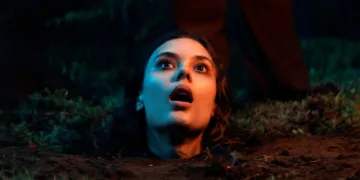
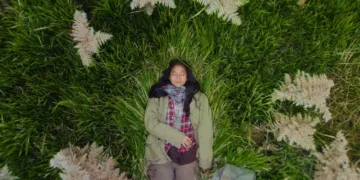
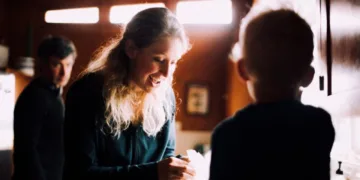
The film introduces Lyuba, who escapes an abusive husband and seeks repair at a secluded retreat in the wilderness with two close friends. A self-help trip shifts into a spiral of archaic rites and possible hallucinations. The story sets a clear problem early: Lyuba faces a buried past that demands confrontation. The tone stays slow and heavy, and the film keeps questioning what Lyuba sees and what the audience can trust. Psychological uncertainty and a closed-in mood define the experience.
Dissecting the Narrative of Recovery
The narrative structure places Lyuba within an unnerving survival scenario. The retreat sits on a remote island or deep within forested land, and that placement establishes dread and confinement from the outset. A shamanic community runs the site and follows ancient practices, marketing an extreme version of spiritual cleansing.
The plot advances through thematic pressure. The film examines generational trauma and domestic abuse, and the rituals reactivate Lyuba’s wounds with startling directness. Control and agency form the real subject. The story tracks Lyuba’s effort to move beyond victimhood and presses her toward a fragile and uncertain strength.
Relationships around her complicate that path. Lyuba remains the point of focus, while Sveta and Zoya display motives that often pull the attention to themselves. Zoya leans into dramatic, attention-seeking behavior. Sveta appears invested in Lyuba’s accountability. These attitudes fracture the idea of a reliable support network. At the center of the screen, Alena Mitroshina delivers a forceful lead turn. She holds the film together and renders Lyuba’s volatility with conviction, carrying the role into a near-feral register by the end.
Aesthetic Tension and the Unreliable Reality
The film’s technique strengthens its folk horror core, combining suspense with psychological unease and occasional body horror. Atmosphere leads every department and presses on the viewer from the opening moments.

The visuals favor grounded, eerie textures. Much of the action plays in dark woods or an endless twilight, often tinted by a striking purple haze. Candlelight, coarse masks, and cryptic rites give the ceremonies a credible, unnerving presence. Practical effects take priority, producing dream imagery and body horror that feel immediate and tactile.
The film introduces The Shadow during its therapeutic rites. The presentation remains carefully ambiguous. Viewers must decide whether The Shadow functions as a spirit, a consequence of mind-altering substances, or a projection of Lyuba’s anger. When the entity draws near, the camera slips into blurred, subjective first person. This choice frames Lyuba as an unreliable observer and makes the psychological torment feel earned. The score deepens the spell with pounding drums and guttural screams, and the sound design locks the audience into the community’s rhythmic world.
Structural Compromises and Lasting Impact
The ambitious design strains to hold a steady shape. Early pacing runs slow, and the middle section grows heavy. The film leans on dense mystical lore and repeats flashbacks to restate Lyuba’s history. Editing choices can scatter the line of events, as mood sometimes takes precedence over clarity. Certain scenes appear misaligned, and progression at times feels intuitive rather than step by step.

English-speaking viewers face a practical hurdle in the form of poorly mixed dubbing, which weakens the intended atmosphere and breaks immersion.
The film earns acknowledgment for ambition within independent production. It builds a chilling mood and treats domestic violence with care and sensitivity. The Healing may test viewers who want a clear, traditional resolution. The visual language carries real force, the atmosphere stands apart, and the film sustains its ambiguity with confidence. Those willing to meet a mood-driven approach will find an experience that lingers after the final image.
The Healing is a Russian folk horror and thriller film that premiered in 2022 but was released digitally and on DVD in the US on October 7, 2025. The movie centers on Lyuba, a woman who escapes her abusive marriage for a remote, mysterious retreat with her friends. There, she encounters a shamanic community and participates in surreal rituals and experiences haunting visions that force her to confront her past trauma. The film is known for its slow-burn atmosphere and ambiguous reality, positioning itself within the contemporary trend of psychological horror. It is available to watch or rent digitally on various platforms.
Credits
Title: The Healing
Distributor: Void Digital, Alliance Home Entertainment (for Digital and DVD)
Release date: October 7, 2025 (US VOD/DVD)
Running time: 95 minutes or 1 hour 35 minutes
Director: Denis Kryuchkov
Writers: Olga Loyanich, Robert Orr
Producers and Executive Producers: Alexander Kalushkin, Olga Loyanich
Cast: Alena Mitroshina, Wolfgang Cerny, Vyacheslav Chepurchenko, Ekaterina Solomatina, Victoria Skitskaya, Maxim Khanzhov, Hermes Zygott, Alexander Shein
Director of Photography (Cinematographer): Hayk Kirakosyan
Editors: Serik Beyseu
Composer: Andrey Kliminov
The Review
The Healing
The Healing is an ambitious piece of Russian folk horror that excels in atmosphere and psychological depth. It thoughtfully explores trauma, abuse, and the difficult path to self-agency through unsettling rituals and strong visual aesthetics. While the film’s structure can be slow, cumbersome, and marred by a poor English dub, its powerful lead performance and willingness to embrace narrative ambiguity are considerable strengths. It is a haunting, mood-driven cinematic experience that rewards viewers who appreciate thematic complexity over straightforward plotting.
PROS
- Powerful lead performance by Alena Mitroshina.
- Strong, atmospheric folk horror tone and constant dread.
- Thoughtful thematic exploration of trauma, abuse, and agency.
- Effective visual aesthetics, including candlelight, masks, and a purple haze.
- Ambitious narrative ambiguity surrounding the supernatural element (The Shadow).
- Good use of practical effects for body horror moments.
CONS
- Slow and cumbersome pacing, especially in the middle.
- Structural incoherence; events often feel scattered and out of order.
- Repetitive reliance on mystical lore and flashback sequences.
- Poor quality of the English-language dubbing.
- Secondary character dynamics are sometimes distracting (e.g., Zoya).