
























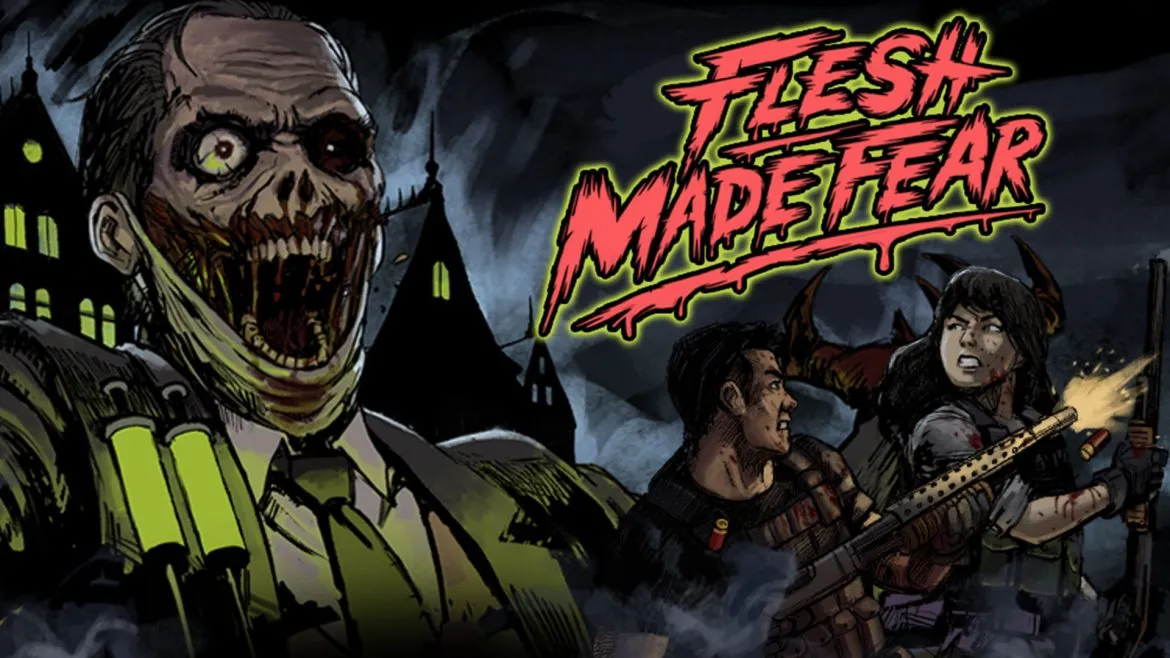

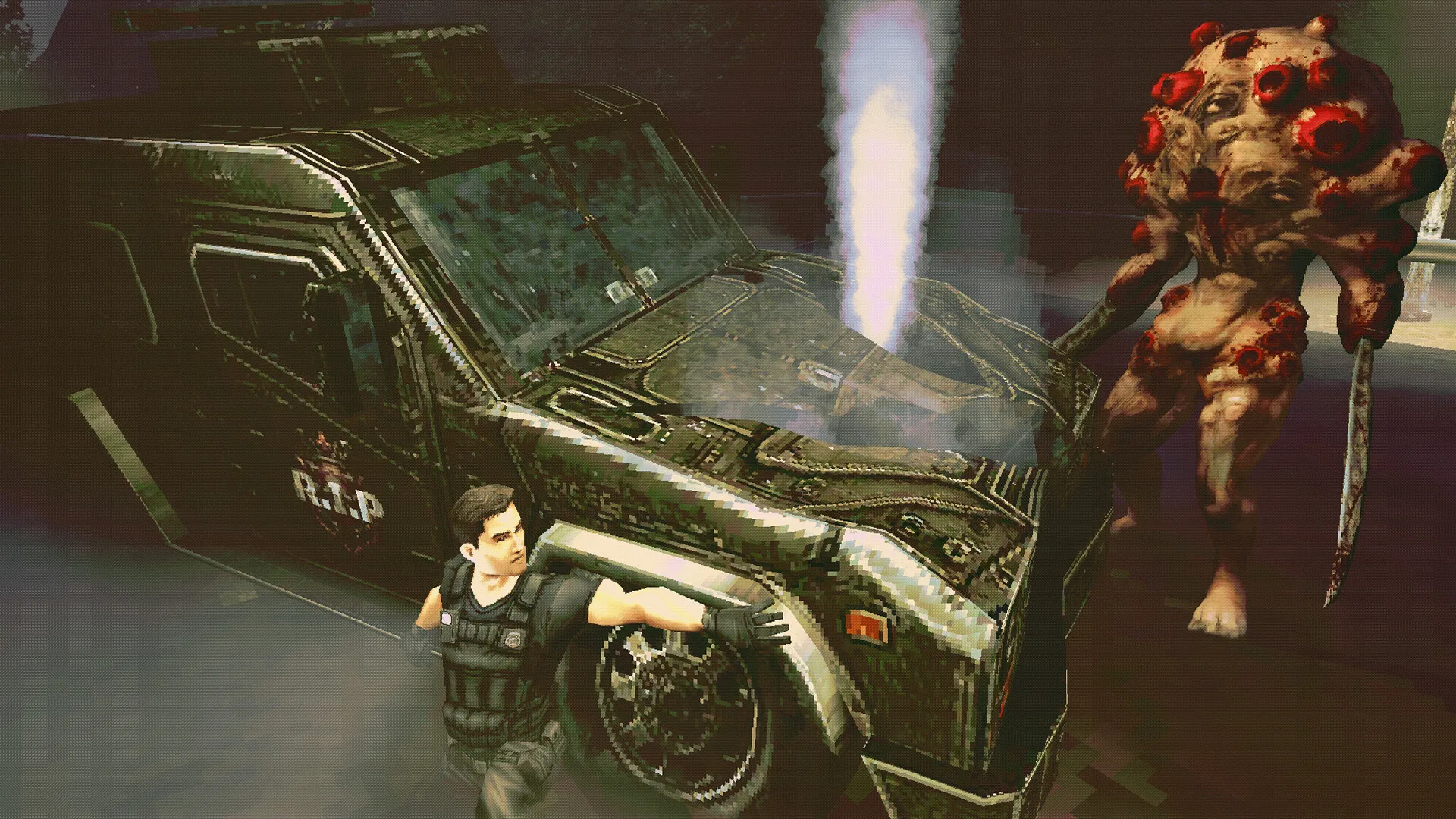
The release of Flesh Made Fear from Tainted Pact Games signals another entry in the modern return to retro-styled survival horror. The design speaks directly to the ’90s titles that shaped the genre, with clear echoes of early Resident Evil. Traditional survival-horror discipline pairs with a visual style that pulls from 80s camp.
The palette leans into dark colors with deep crimson accents, which recalls the comic-book macabre of Creepshow. The setup places the player as an operative from the Reaper Intervention Platoon in the overrun town of Rotwood. The mission targets the grotesque experiments of Dr. Victor Ripper and includes a search for a missing agent. Before deployment the player chooses Jack or Natalie, a selection that sets route differences and alters how resources are managed across the campaign.
Mechanics of Dread: Controls and Survival Design
Flesh Made Fear builds its tension on genre-defining systems, most notably tank controls and fixed camera angles. Movement remains stiff and deliberate, so each turn or step becomes a measured choice that raises the stakes in corridors and choke points.
The handling pushes players to treat every advance as a calculation. Camera placement functions like a director’s tool, holding threats just out of frame until the last second. The structure strips away power and keeps the player on the back foot, which aligns with classic survival-horror fear.
Scarcity shapes every decision. Limited inventory slots force tough prioritization between ammo, keys, and medicine. Ammunition remains short, so direct confrontation carries risk and often feels like a last resort. Saving progress ties to scarcity as well. Save opportunities are restricted and may require a collectible item, which makes every safe room visit a strategic choice and gives each encounter real consequences.
The dual-protagonist format strengthens the game’s planning layer. Both Jack and Natalie move through the same central conflict, yet their routes and encounters diverge. Their traits push different strategies. Natalie carries more but survives less punishment. Jack can absorb more damage but hits tighter resource ceilings. The structure supports replay and invites contrasting approaches to item routing, backtracking, and encounter selection.
Exploration in fully 3D spaces ties directly to puzzle progression. Environmental hints, scattered notes, and careful item placement guide advancement. Keys, puzzle parts, and code fragments live in side rooms and corners, which rewards methodical searches. Route planning and inventory curation become a matched pair, where picking up one item can delay another and shape how far a player can push before returning to storage.
A Gritty Aesthetic: Tone and Setting
Atmosphere stands out as a clear strength. Rotwood reads as a decaying town built from quiet dread and sustained unease. The art direction adopts a low-poly PSX-era look by choice and renders it with present-day clarity. The style channels Resident Evil’s strict gameplay discipline while pulling Silent Hill’s oppressive mood into the frame. The effect feels cohesive rather than nostalgic for its own sake.
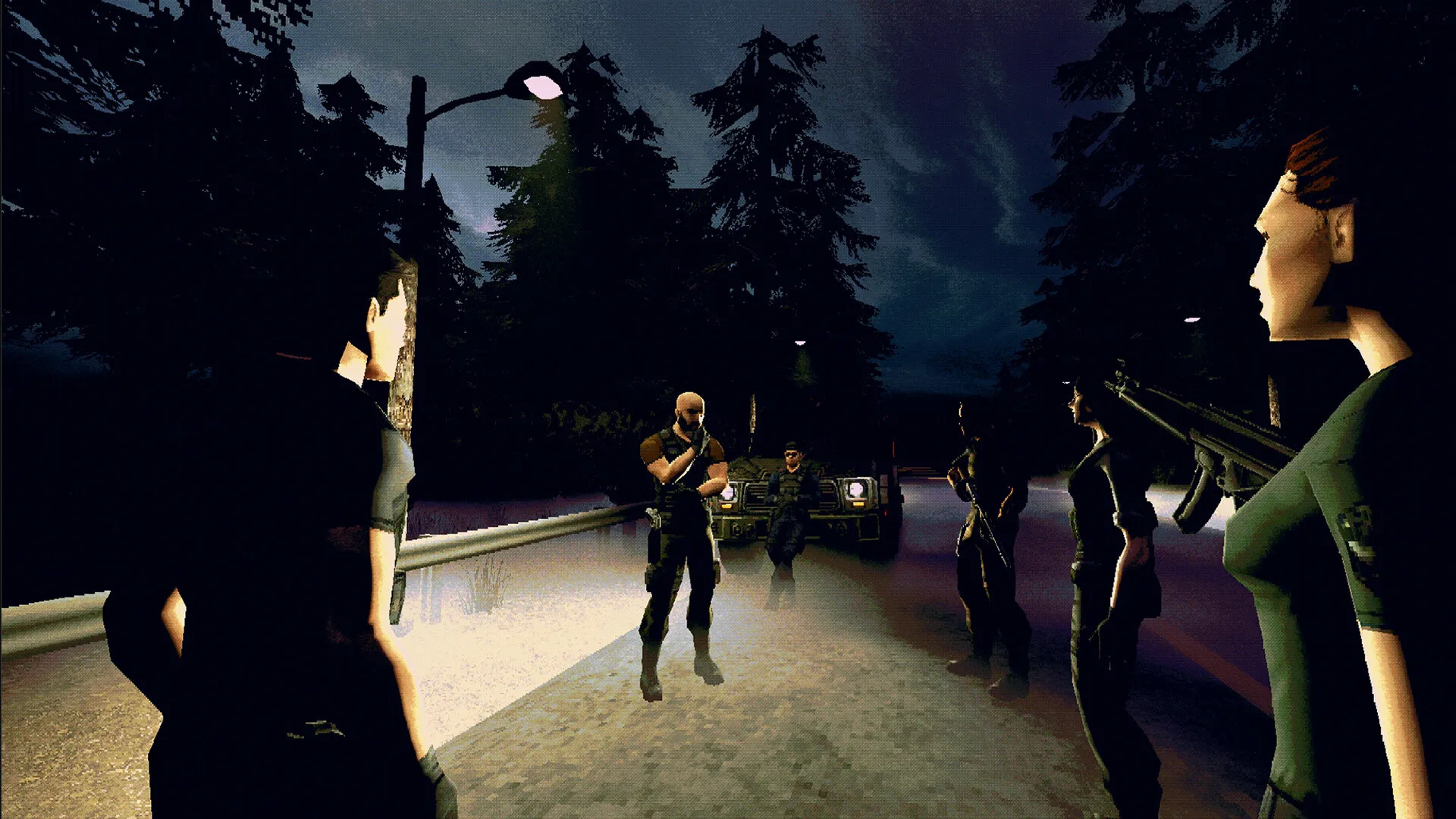
Sound and light complete the structure. Flickering bulbs, creaking floors, and long stretches of silence carry the fear load without leaning on loud jump cues. The music sits low and eerie, which keeps attention on footsteps, distant movement, and the click of a door latch. Horror arrives through Dr. Ripper’s failed creations and warped bodies.
The story leans into grindhouse flavor, with conspiracy threads and body horror stitched to a camp sensibility that leaves the fear intact. Lore pickups, including Ripper’s journals, fill in motivations, document a god complex, and chart the fates of R.I.P. squadmates. The more pages the player gathers, the clearer the chain of events becomes inside facilities and alleyways that shape the town’s layout.
Control and Clarity: Technical Limitations
Design intent and execution do not always align. The control scheme embraces tank movement, yet the lack of remapping for key actions such as running or menu access can make basic navigation feel clunky. A few late-room pivots or multi-input checks would benefit from customization options that match different play styles.
The in-game map undercuts exploration. It marks landmarks but omits floor distinctions and general layouts. Without clearer layering or room shapes, route memory does most of the work. Classic genre maps often served as planning tools for item routing, backtracking, and escape paths. Here the map offers less support, which leaves players disoriented during multi-floor searches and puzzle chains that loop through several wings.
Long-term incentive drops off after credits. A New Game+ option is absent, so a completed file returns to a full reset with no score chase, unlock targets, or progress carryover. Time-attack runs, resource-rank tiers, or bonus modifiers would give the dual-protagonist routes stronger replay pull. The inventory model, while built for tactical tension, can bog down under combat pressure.
Menu swaps during close-quarters fights slow the pace at moments when quick swaps and clean reads would help. Fixed cameras mostly serve the mood, but a handful of rooms reproduce the awkward angles and corner snags associated with older titles. Enemies can land hits from positions that sit just outside the frame, which turns a careful approach into a blind guess in a few sequences.
Systematic Breakdown: Structure, Arcs, and Comparisons
Story structure follows a clean mission loop. The player receives a goal tied to Rotwood’s facilities, scours rooms for notes and keys, unlocks a path, and advances toward Dr. Ripper’s network. Each loop reinforces scarcity and risk by spacing saves and distributing ammo on the margins of danger zones. Character choice intersects with this loop.
Jack’s durability supports riskier room clears with fewer item slots, while Natalie’s carry capacity supports broader puzzle runs and longer search chains at higher personal risk. The loop mirrors early Resident Evil’s mansion logic, where a map, a key ring, and a route plan build momentum.
The mood then leans toward Silent Hill’s psychological weight through lighting and sound, which keeps the player on edge during slow door opens and camera-held hallways. Creepshow’s presence sits in the color accents and B-movie flavor of the lore, which explains Ripper’s experiments and their fallout inside Rotwood’s decayed spaces.
Combat reads as pressure management rather than power fantasy. Ammo scarcity and stiff turning make distance, choke points, and timing more valuable than raw aim. Puzzles link to traversal and inventory shuffling. A key can sit three rooms behind a blocked hall that requires a tool the player cannot carry until they drop medicine. These chains create small route problems that players solve by planning pickups and exits with care.
Technical shortcomings sit where clarity is most needed. Control remapping would smooth movement rhythms. A layered map with floors and shapes would turn scavenging into a strategic plan rather than guesswork. A New Game+ track would extend the life of the dual routes by attaching rewards to faster clears or stricter resource rules. Camera adjustments in a few rooms would remove cheap angles that hide lunges and protect the intended fairness of encounters.
Flesh Made Fear understands the rules that built survival horror and applies them with conviction. The dual-protagonist framework, scarcity economy, fixed viewpoints, and low-poly presentation support each other. The strongest moments come from quiet hallways, measured turns, and a door that opens to a single light source while footsteps echo from somewhere off camera.
The weakest moments come from interface friction, a map that gives too little, missed post-game incentives, and camera traps that revive old frustrations. The result captures the appeal of its influences and leaves clear targets for updates that would reinforce control options, map utility, and replay structure.
The Review
Flesh Made Fear
Flesh Made Fear is a successful homage to PSX-era survival horror. It perfectly channels the dread of limited resources, tank controls, and fixed camera angles, blending the core discipline of Resident Evil with the oppressive mood of Silent Hill. The dual protagonist system is a smart mechanical choice, boosting replay value and strategic depth. However, the reliance on a highly ineffective map and the lack of a proper New Game+ mode diminish the overall package. This title is a compelling experience for genre veterans who appreciate intentional design limitations, even those that bring back some outdated frustrations.
PROS
- Authentic '90s survival mechanics.
- High tension rooted in scarcity and vulnerability.
- Distinct Creepshow aesthetic and campy tone.
- Strategic dual protagonist paths add depth.
CONS
- Map is highly ineffective for navigation.
- Clunky, non-combat control configuration.
- No New Game+ feature.
- Inventory management is cumbersome.