





























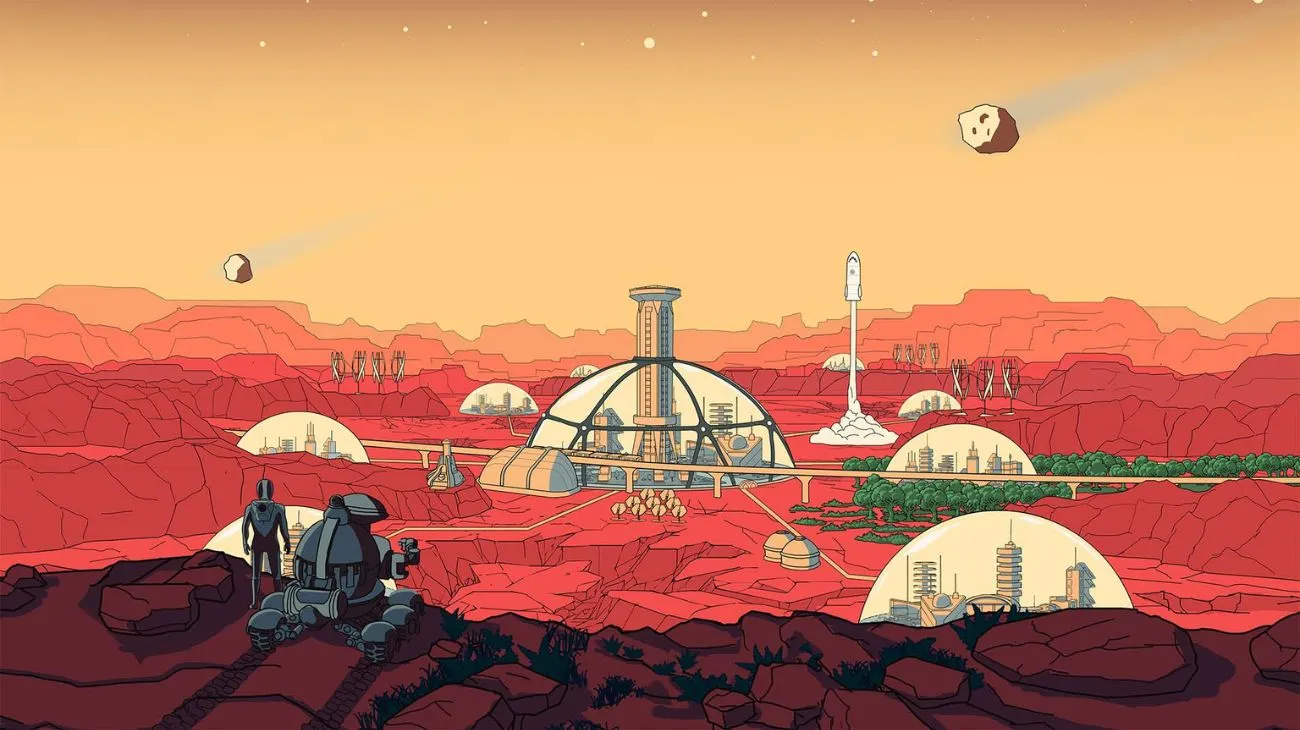

Surviving Mars: Relaunched returns players to the harsh red expanse of the fourth planet and frames itself as the definitive edition of Haemimont Games’ 2018 sci-fi city-builder. The premise carries a long-lived global fascination: establish and sustain a self-sufficient human presence on Mars. The simulation demands precision.
It asks for careful planning and tight control over resources, where power, water, oxygen, and food operate as delicate currencies in a hostile setting. Developed by Haemimont and published by Paradox Interactive, this remaster folds in all prior content, applies wide technical refinements, and adds new systems. The task remains direct and ambitious: lay down core infrastructure and drive growth toward a functional, self-governing Martian city that must carry the weight of human continuity far from Earth.
The Architectural Sincerity of Survival
The opening hours set an immediate tone of scarcity and calculation. The first 50 Sols often play like a sprint toward self-sufficiency, and the pressure reflects a shared, cross-border unease about dependence on technology.
The game’s transparency turns numbers into a living diagram: players see precise consumption and production rates for life support, transforming survival into an audit of inputs and outputs that would feel familiar to engineers, city planners, or mission controllers anywhere. Errors register quickly. A sandstorm or a stray meteor can push a fragile network into collapse, echoing the brittle interdependencies that define real infrastructure on Earth.
Progress grows from survival into civic formation. Players build domes that hold fragile communities, invest in research, manage the rhythms of a growing population, and set their sights on terraforming Mars. The remaster strengthens the aesthetic and functional spine of that climb. Visual and performance upgrades land with restraint and purpose. Sharper textures, more grounded lighting, and shifting shadows communicate time and place with quiet authority.
A move to a new engine raises stability for large colonies and clears out the stutters that once broke flow, turning performance into part of the design language. The cleaner User Interface supports that same ethic. Menus read more clearly, notifications prioritize better, and the result is a more legible control deck for a dense simulation. Efficiency reads as beauty, and clarity reads as power, which suits a project that treats systems as storytelling.
The Assembly: Government and Global Ambition
The Martian Assembly adds a political layer that extends the simulation from engineering into governance. Late-game complexity arrives after the scramble for air, water, and power, and it asks players to manage lawmaking and ideology with the same care they give to pipelines and grids.
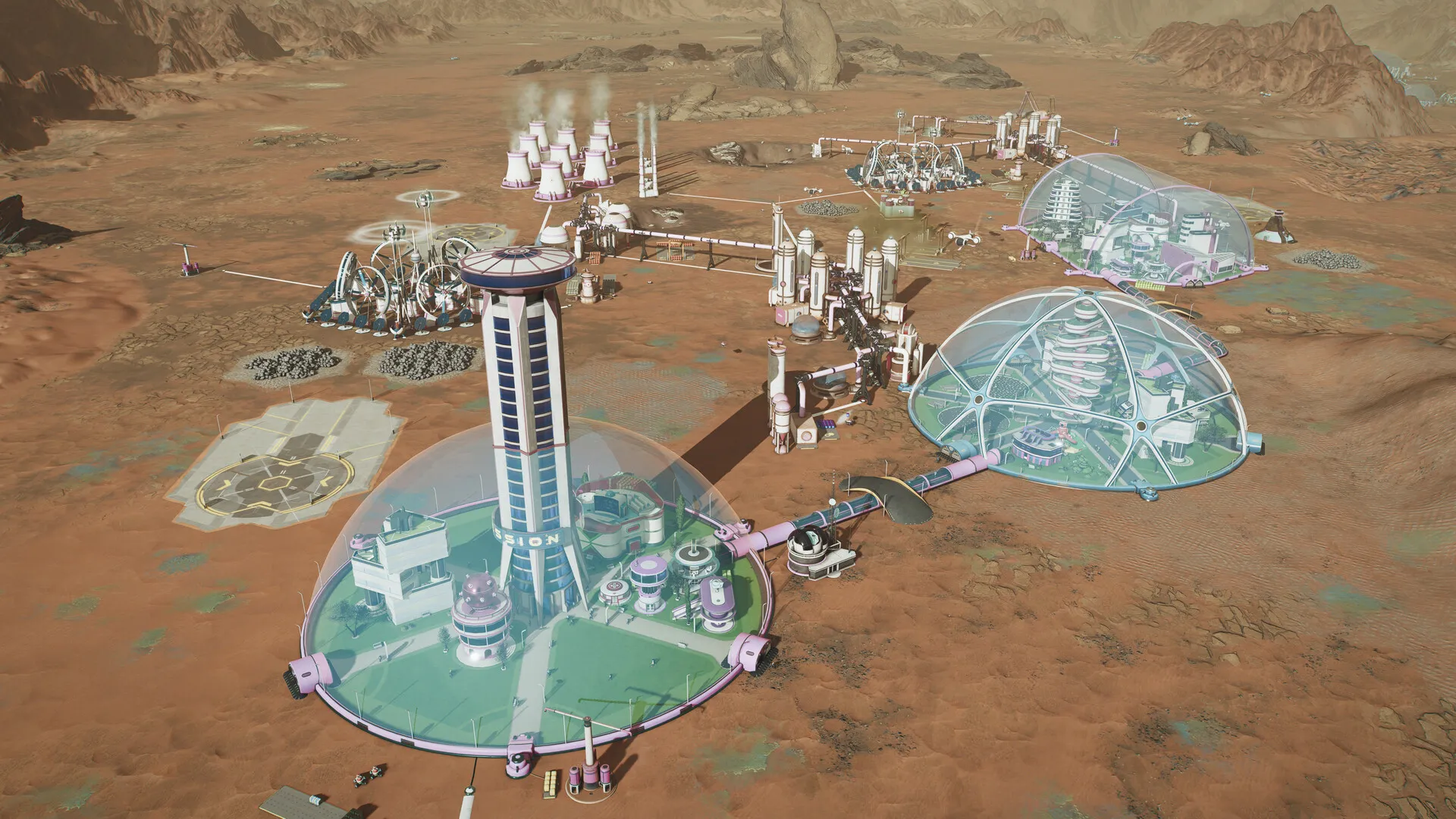
The system unfolds in two stages. First, the Earth Council convenes votes on temporary laws during the early stretch, including measures that can deregulate rockets for higher crash risk or permit dangerous research in exchange for short-term advantages.
Once the Martian Assembly Spire stands, the political simulation opens fully. Players choose a government structure that can sit on a spectrum from theocratic to communal, and that decision sparks the formation of colonist factions such as Eco-Defenders and Corporate Loyalists. The result mirrors the fragmentation of contemporary political identity, re-staging familiar debates on an unfamiliar landscape.
Faction agendas create pressure on policy and can escalate into crises, so city management becomes statecraft. The system also links to long-horizon goals, including a path to declare Martian sovereignty that reshapes research options and diplomatic challenges. Negotiations with rival mission sponsors for votes transform lawmaking into a strategic arena, placing coalition-building alongside supply chains as a core skill.
Definitive Content and Mechanical Synergy
Relaunched earns its label through curation and repair. Prior expansions and DLC live inside the base experience and operate as cohesive parts rather than bolt-ons, which cuts down the fractured feel that often follows post-launch content cycles.
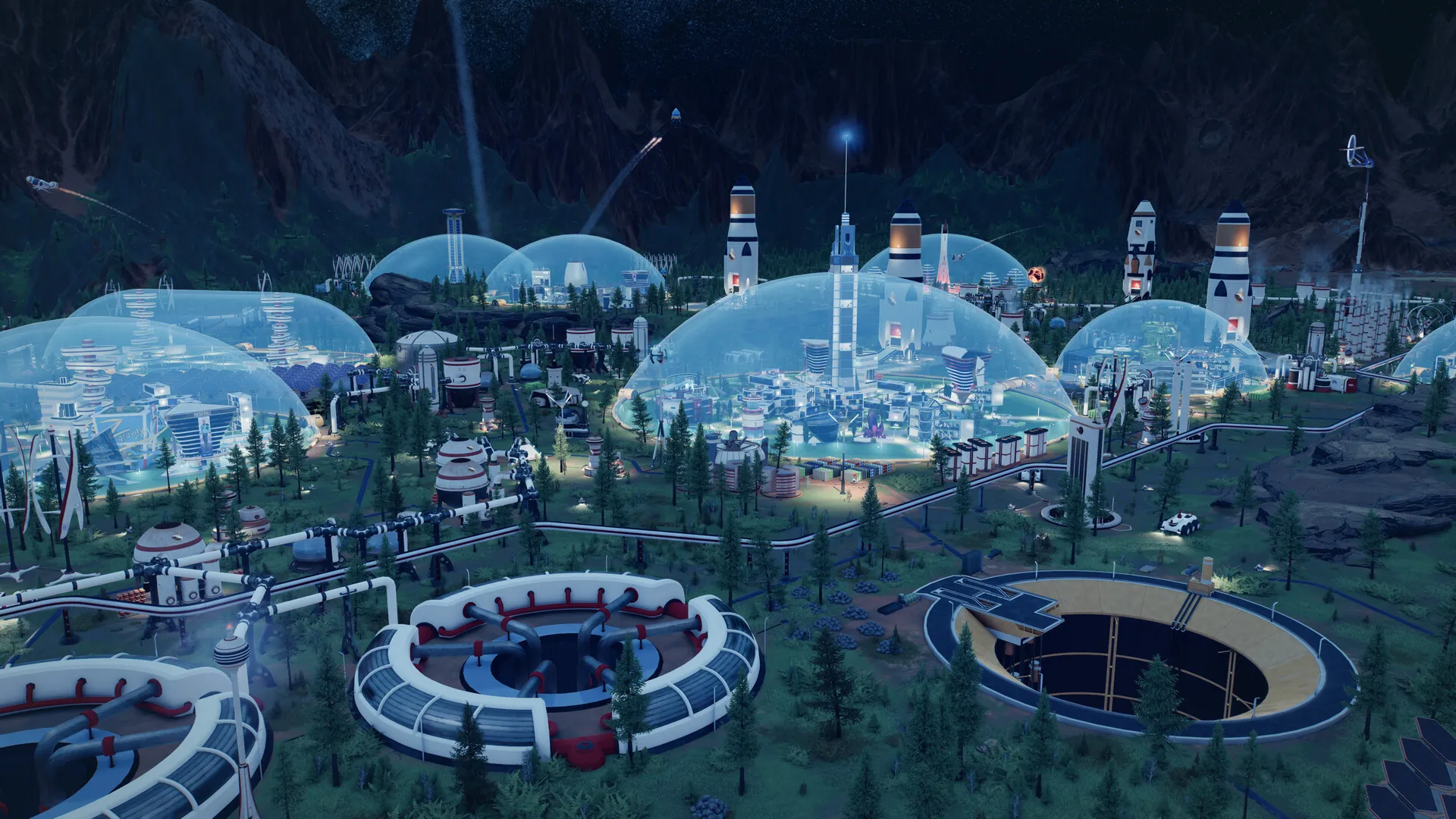
Two once-troubled systems now stand corrected in clear ways. Below & Beyond, which introduced underground colonies and asteroid mining, moves from a buggy past into a reworked state that stabilizes its maps and opens more generous subterranean space for construction. Martian Express, once known for broken pathfinding and technical glitches, now functions as a reliable rail network.
It proves useful for large settlements where many domes and far-flung sites require steady resource transfer. Surface logistics, underground expansion, and rail transport now interlock to support wider planning. The colony shifts from a collection of optimized opening moves into a layered urban project that invites multi-map thinking and longer-term vision.
Across these systems, the game reads as a dialogue between cultural imagination and mechanical design. The transparency of data, the discipline of resource chains, and the emergence of political factions reflect global conversations about technology, scarcity, and governance. The domes stage a familiar story of community formation, while the Assembly gives that story a constitutional dimension that feels timely across regions.
Terraforming sets a collective aspiration that people from many places can recognize, and the technical polish frames that aspiration within a toolset that rewards methodical care. Surviving Mars: Relaunched treats systems as language. It uses production graphs, votes, and transport lines to translate a worldwide fascination with Mars into a play space where survival, policy, and design speak to each other with clarity.
The Review
Surviving Mars: Relaunched
This remaster transcends a simple visual refresh, representing a fundamental architectural stabilization of a beloved colony simulator. Haemimont Games has delivered the definitive Martian experience by resolving the technical failures of prior expansions and integrating them seamlessly. The introduction of the Martian Assembly political system adds essential late-game complexity, challenging players to manage factionalism and aspire to Martian sovereignty alongside their engineering efforts. For veterans, the technical fixes and new depth justify the upgrade; for newcomers, this is the essential starting point for an honest, demanding, and deeply satisfying sci-fi city-builder.
PROS
- All previous expansions and DLC are included and fully integrated.
- Rebuilt on a new engine, resolving major bugs and performance stutters from the original game.
- Adds meaningful political and social management to the late game.
- Previously broken systems (trains, underground colonies) are now polished and functional.
- Refined UI dramatically improves resource tracking and notification priority.
CONS
- While improved, the graphical upgrade is not transformative compared to the original game's strong aesthetic.
- The core survival loop remains identical, offering less novelty for players who mastered the original.