
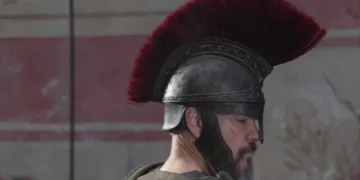
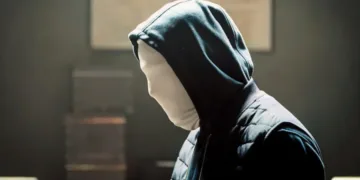















Valley of the Shadow of Death, directed by Sen Lam and Antonio Tam, lays out a moral sinkhole in images lacquered with a dim, greenish cast. The palette seals the mood at once: a cold chamber for a psychological drama fixed on sin and the labor of atonement.
The story follows Pastor Leung (Anthony Wong), a married Protestant minister who teaches the value of suffering and the doctrine of unconditional forgiveness. His composed public posture rests on private pain: the suicide of his daughter, Ching (Sheena Chan), three years earlier after a sexual assault.
The plot ignites when Ah Lok (George Au), a young ex-con newly released, arrives at Leung’s church asking for shelter and a path to redemption. Leung recognizes him immediately as the man who assaulted his daughter. A brutal dilemma locks into place. He must weigh the command to forgive against the urge to avenge. The situation becomes a pressure chamber for his theology and for his identity as a parent. Practice meets pulpit.
The Logic of Vengeance Disguised
The premise strains the claim of unconditional forgiveness to its furthest edge, turning the film into a study of Christian ethics. The extremity of the offense, treated as an unforgivable sin, pushes the question of motive: spiritual cure for both men or a long, private punishment designed by the pastor. Faith stands under cross-examination, along with Leung’s wounded pride.

Leung keeps Ah Lok close and subjects him to a grueling series of secret penances. He withholds his identity at first and uses pastoral authority to stage harsh rites, including a barefoot climb up a Hong Kong slope while hauling a large cross. The pattern signals a path away from grace. Scripture becomes a tool for personal grievance. Leung repeats to the young man that “only God can forgive him,” yet his regimen reads as methodical payback disguised as obedience. Mercy does not govern these scenes. Retaliation does, measured and slow.
The argument loses clarity when the film tries to supply context for Ah Lok’s crime. Flashbacks show Ching’s cruelty toward him, pointing to a motive for the assault. This turn weakens the ethical focus. Explaining the perpetrator’s rage clouds the frame for an audience asked to consider forgiveness. The film opens a gray band where a sharper line might have served the thesis.
A Trio of Anguished Souls
The performances brace the film’s tight emotional wire. Anthony Wong gives a lesson in caged fury, his broad, heavy features holding a storm of private grief. He conveys an inner crucifixion, a devout man policing dark impulses while maintaining clerical calm. His quiet turmoil becomes the picture’s magnet.
Louisa So, as the pastor’s wife, provides the secular counterweight to his spiritual torment. A former nurse with a practical mind and a deadened faith, she refuses the idea of forgiveness. Her low, steady anger functions as a true register for nonreligious bereavement. The charge between So and Wong keeps the marriage scenes tense and convincing, a second conflict plane that never slips.
Across from them, George Au plays Ah Lok with a light, penitent air. He suggests a young man carved out by guilt and hungry for absolution of any kind. His work holds alongside Wong’s seasoned presence, which keeps their exchanges credible even if the balance of power favors the veteran. Ah Lok’s very presence tightens the family vise and threatens to break it.
Expressionistic Lighting and Structural Drag
The film declares its neo-noir inheritance early. Cinematographer Leo Wong Shek-keung composes with darkness and sculpts with shadow, relying on expressionistic framing that recalls classic noir. Chiaroscuro does more than decorate the surfaces; it manufactures dread and assigns moral weight to space.
The score and the editing by J. Him Lee and Philip Chjan keep a measured tempo. Incremental flashbacks parcel out history with controlled pacing, a drip feed that shapes perception and primes anxiety. The sound and the cut act like a metronome for doubt.
The structure falters later. In the second half the tempo slackens, and the film leans hard on exposition through flashback. The earlier tautness loosens. The closing movement causes deeper trouble. The writing cannot hold the pressure of the ethical inquiry it set in motion, and the tension vents in a clumsy way. The final passages shy away from a full confrontation with the central moral question, and the drama falls short of the reach announced at the start.
Valley of the Shadow of Death is a Hong Kong drama film that explores themes of faith, forgiveness, and revenge. The story centers on Pastor Leung, who is consumed by grief after his daughter’s death by suicide following a sexual assault. His faith is severely tested when the young man responsible, Chi Lok, is released from prison and is taken into the care of the pastor’s church, forcing Leung to choose between his vows of forgiveness and his profound desire for vengeance as a father. The film premiered at the Tokyo International Film Festival in 2024 and was released in UK cinemas on November 14, 2025, distributed by Showalker UK / Munro Film Services.
Credits
Title: Valley of the Shadow of Death (Chinese: 不赦之罪)
Distributor: Showalker UK, Munro Film Services (UK Theatrical)
Release date: October 31, 2024 (Tokyo International Film Festival), November 14, 2025 (UK Theatrical)
Rating: 15 (UK)
Running time: 1 hour 24 minutes (84 minutes)
Director: Jeffrey Lam Sen, Antonio Tam
Writers: Antonio Tam
Producers and Executive Producers: Producers: Jacqueline Liu, Executive Producers: Charlie Wong, Louis Koo
Cast: Anthony Wong Chau-Sang, Louisa So Yuk-Wah, George Au, Sheena Chan, Summer Chan, Isabel Chan
Director of Photography (Cinematographer): Wong Shek Keung Leo (HKSC)
Editors: J. Him Lee (HKSE), Philip Chan
Composer: Yusuke Hatano
The Review
Valley of the Shadow of Death
Valley of the Shadow of Death is a visually striking, emotionally fraught psychological drama. Anthony Wong’s performance is a powerful anchor, perfectly complemented by Louisa So’s secular fury. While the film excels technically, using effective lighting and composition to establish a bleak noir tone, its narrative ambition ultimately falters. The attempts to contextualize the crime dilute the core philosophical question of absolute forgiveness. The second half drags, and the ending fails to resolve the intense ethical crisis it meticulously built. It is a compelling failure that warrants viewing for its performances alone.
PROS
- Anthony Wong's powerful, restrained performance.
- Louisa So provides a crucial, secular counterpoint.
- Striking, bleak cinematography (neo-noir aesthetic).
- Provocative, weighty philosophical premise.
CONS
- Narrative momentum drags in the second half.
- Contextualizing the crime weakens the core forgiveness theme.
- The film’s final act and resolution feel badly handled.
- Structural reliance on exposition through flashbacks.