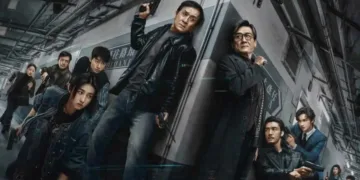

















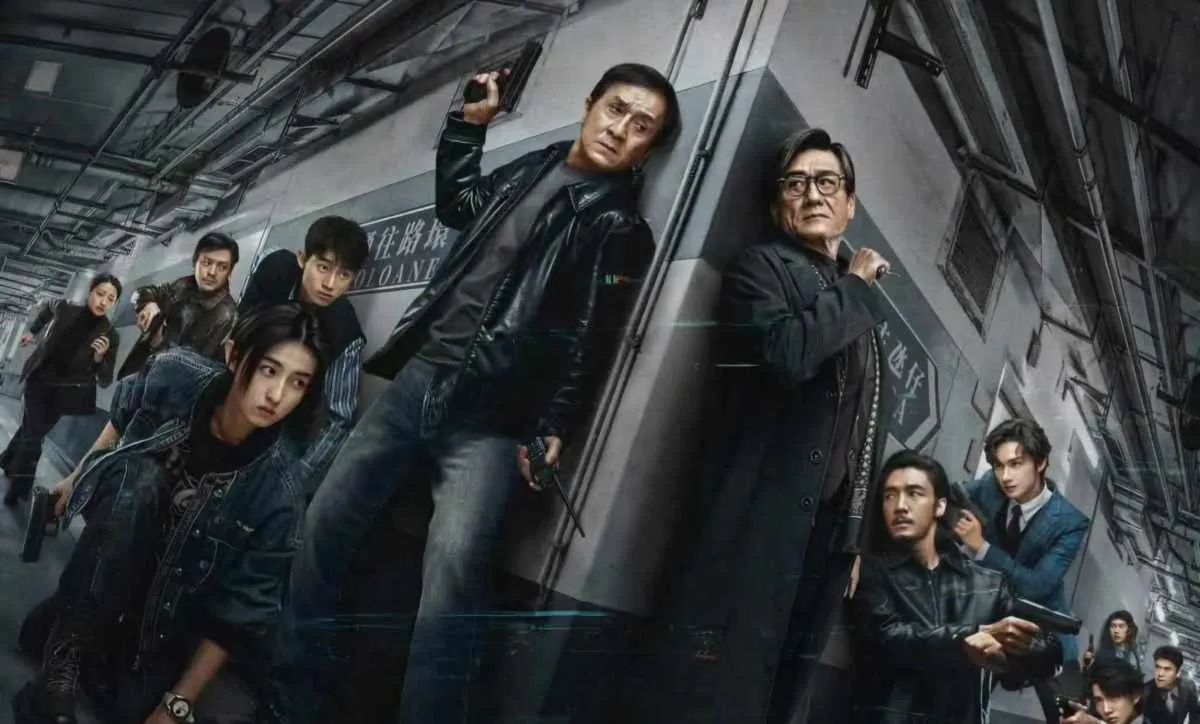

In an age where digital eyes are everywhere, The Shadow’s Edge opens with a chilling question: what if someone could simply vanish from the grid? The film presents a crew of thieves who do just that, executing a massive cryptocurrency heist in Macau by outsmarting the city’s advanced surveillance network. Their methods are clean, their identities unknown.
When the police are left completely baffled, they call upon Wong Tak-Chung (Jackie Chan), a retired surveillance specialist whose methods are decidedly analog. His target is the phantom mastermind of the operation, a man known only as “Shadow” (Tony Leung Ka-Fai). What unfolds on the streets of Macau is a tense and intricate battle of wits, a throwback thriller for a modern world.
The Veterans’ Duel
The film’s energy comes from the magnetic opposition of its two leads, and watching these two screen legends face off felt like a rare treat. This role is a perfect fit for Jackie Chan in this stage of his career. He sheds the familiar persona of the acrobatic clown for something more measured and profound. As Wong, he weaponizes stillness and experience.
His greatest assets are his eyes and his understanding of human patterns, skills that make him feel like a relic in a police force obsessed with technology. Chan’s performance is subtle; he carries the weight of past failures in his posture and conveys a lifetime of watching from the shadows through his quiet intensity. It’s a performance that recontextualizes his physicality, showing how a master of movement can be just as captivating when he is simply observing.
Opposite him, Tony Leung Ka-Fai delivers a masterclass in villainy. His Shadow is not a one-dimensional monster but a charismatic and formidable leader who commands loyalty through a mix of fear and respect. Leung imbues him with a predator’s grace and a philosopher’s intellect. His physical performance is startling, especially a proficiency with knives that he reportedly spent a year training for. The result is a character who is a genuine intellectual and physical match for Wong.
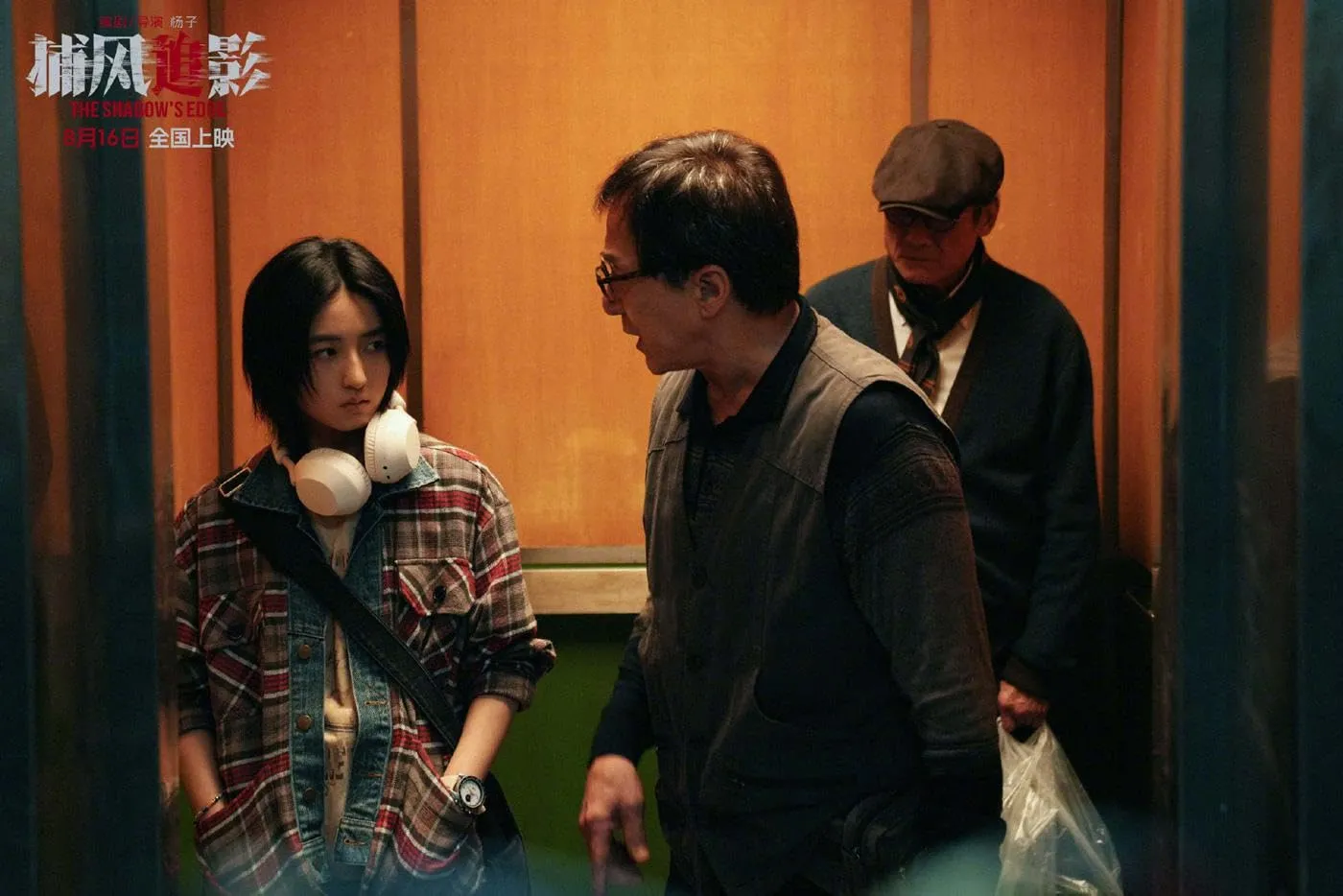
Their dynamic is the movie’s central pillar. Specific scenes, like their first tense meeting in an apartment elevator or a deceptively casual dinner, become masterclasses in building suspense through dialogue and body language. They are two sides of the same coin: aging masters in a world that no longer values their craft, a connection that makes their inevitable conflict feel personal and deeply resonant.
Action, Suspense, and Pacing
Director Larry Yang uses Macau as more than a simple background; the city is a character in itself, and his direction shows a deep appreciation for the power of place. The film’s visual language constantly reinforces its central themes. The cinematography juxtaposes the glittering, almost sterile, modernity of the Cotai Strip casinos against the tangled, historic alleyways of the Old Town.
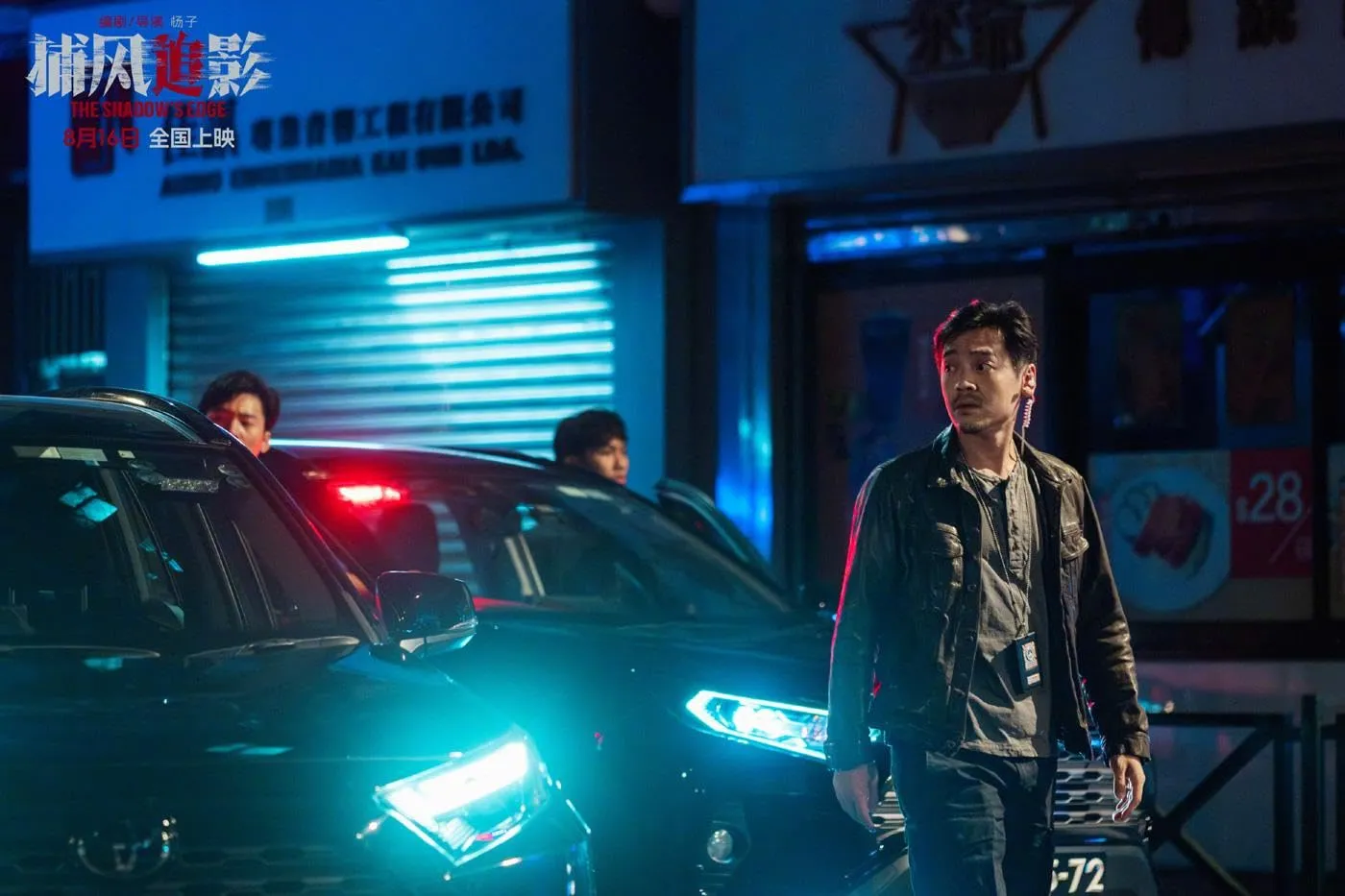
This contrast creates a rich visual texture and turns the city into a sprawling chessboard for the two protagonists. The action sequences are constructed with a focus on realism and impact. I was reminded of the golden age of Hong Kong action cinema, updated with a modern, gritty sensibility.
Chan’s fight choreography is brilliantly tailored to his age. He employs a grounded, Hapkido-influenced style focused on joint locks and brutal efficiency, a stark departure from the fluid, dance-like movements of his earlier work.
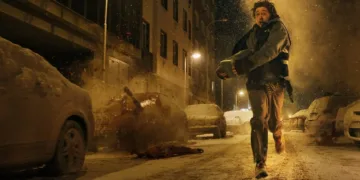
The climactic teahouse fight is a standout, a raw and bloody affair where every blow feels consequential. The editing is sharp and coherent, allowing the geography of the fight to remain clear even in its most chaotic moments. Yang also understands the power of patience. The film builds suspense through the meticulous, slow-burn process of surveillance, making the audience active participants in Wong’s investigation.
Instead of rushing from one set piece to the next, the script invests time in psychological standoffs and quiet moments of observation. This deliberate rhythm makes the film’s nearly two-and-a-half-hour runtime feel earned. It uses its length to build character investment, so when the violence erupts, it lands with genuine emotional weight and narrative purpose.
Supporting Cast and Thematic Depth
While Chan and Leung are the undeniable core, the supporting cast effectively explores the film’s generational fault lines. Zhang Zifeng is excellent as He Qiuguo, the rookie officer under Wong’s tutelage. Her character acts as a crucial bridge between the old guard and the new, her journey from a skeptic of Wong’s methods to his most trusted protégée providing the story with its emotional anchor.
On the opposite side, Shadow’s crew of young criminals, particularly the twin brothers played by Ci Sha, serves as a compelling case study in loyalty and ambition. Their dynamic with their leader is complex, a mix of genuine devotion and simmering distrust that adds another layer of intrigue to the narrative. Some of their subplots could have been more developed, but they serve their purpose in highlighting the different worlds the main characters inhabit.
The film’s most lasting impression comes from its exploration of tradition versus modernity. The central conflict is a direct commentary on our increasing reliance on technology. Wong’s analog human intuition is pitted against the police force’s flawed “Skyeye” AI, a system that can process immense data but lacks the ability to understand context or human nature.
This is not a simple good-versus-evil story. Both Wong and Shadow are men from another time, masters of a craft being rendered obsolete. They share a fundamental belief that personal experience and instinct will always be superior to a machine’s algorithm. This shared ideology deepens their rivalry, transforming a high-stakes crime thriller into a potent and timely meditation on what we lose when we trade human wisdom for digital omniscience.
The Shadow’s Edge is an action crime film directed by Larry Yang, featuring a star-studded cast led by Jackie Chan and Tony Leung Ka-fai. The movie premiered theatrically in China on August 16, 2025, and in select US theaters on August 22, 2025. It has been distributed by CMC Pictures in some regions. The production companies involved include iQIYI Pictures, Tao Piao Piao, and Hairun Pictures Company.
Full Credits
Director: Larry Yang
Writers: Larry Yang
Producers and Executive Producers: Victoria Hon, Victoria Hon, Victoria Hon, Larry Yang, Miles Koules, Oren Koules
Cast: Jackie Chan, Zifeng Zhang, Tony Ka Fai Leung, Ci Sha, Wen Junhui, Zhou Zhengjie, Ziyi Wang, Yueting Lang
Composer: Nicolas Errera
The Review
The Shadow's Edge
The Shadow's Edge is a sharp, patient, and thoroughly engaging thriller anchored by two powerhouse performances from Jackie Chan and Tony Leung Ka-Fai. It successfully blends gritty, grounded action with a thoughtful exploration of tradition versus technology. While some supporting character arcs feel thin, the central cat-and-mouse game is so compelling, and the direction so confident, that the film stands as a remarkable return to form for Chan and a high point for the modern action genre. It is a smart, suspenseful, and deeply satisfying cinematic experience.
PROS
- Stellar performances from Jackie Chan and Tony Leung Ka-Fai, whose on-screen rivalry is electric.
- Intelligent and patient script that builds suspense through character and detail.
- Gritty, well-choreographed action sequences tailored perfectly for an older Chan.
- Thought-provoking theme of human intuition versus technological reliance.
- Assured direction that makes excellent use of the Macau setting.
CONS
- The long runtime may feel slow for viewers expecting non-stop action.
- Subplots involving the younger supporting characters are less developed than the central conflict.