




























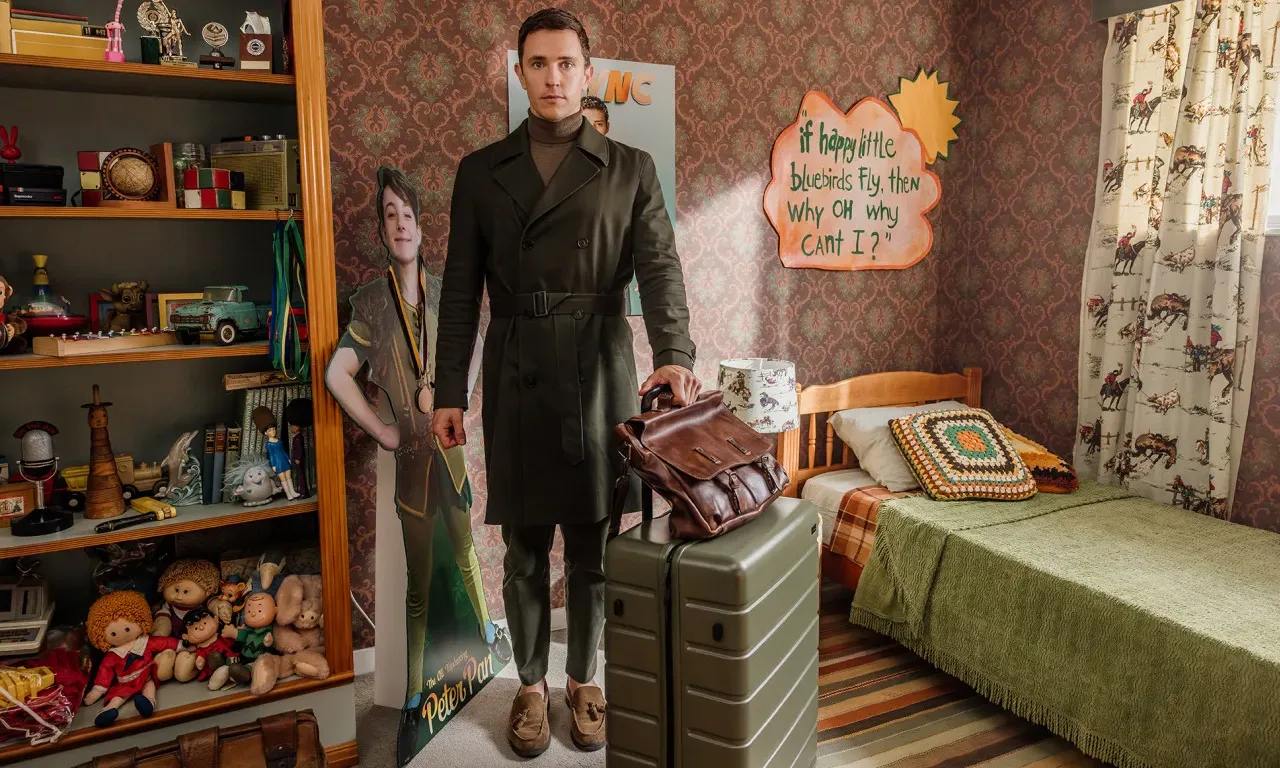

Happiness, a New Zealand musical-comedy, tosses a pretentious New York director into the deep end of small-town amateur theatre and lets him flail for laughs. The series opens on Charlie Summers (Harry McNaughton), whose brief moment of Broadway glory gets scuttled by an unfortunate, NDA-locked incident involving Sally Field. The details stay locked away, and the running joke keeps returning with a tart bite that pins Charlie to his own humiliation.
His forced return to Tauranga, New Zealand, comes courtesy of his effervescent mother, Gaye (Rebecca Gibney), the driving force behind Pizazz, the local musical theatre society. Her welcome is an airport flash mob set to a dated Backstreet Boys song. Charlie, a fan of NSYNC’s Justin Timberlake, takes one look at the “hokey Kiwi charm” and crumples with mortification. Nothing says “welcome home” like being ambushed by a boyband throwback in public.
The series shifts focus quickly after that cringe-heavy start. Charlie’s visa trouble keeps him trapped in town, and the trap leads straight into rehearsals. Soon he is directing Pizazz’s latest original production, The Trojan Horse: A New Musical. The tone stays frothy and feel-good, held together by sharp comedy and an unapologetic streak of theatrical cheese.
Pizazz: A World of Egos and Epics
The show’s strength comes from its concise portrait of the Pizazz troupe, a place where dramatic passion turns into power plays at the drop of a jazz hand. The main emotional conflict sits with Charlie and Gaye. Charlie’s prickly distance reads as a survival mechanism. Gaye moves through life with sunny, people-pleasing momentum. Gibney gives the stage-mum archetype essential warmth, and the series treats the slow repair of their strained relationship as a quiet emotional throughline.
Around them, a set of finely drawn backstage archetypes arrives with brisk efficiency across six 20-minute episodes. Adrian Templeton, the current director, guards his turf with territorial zeal and plays the anti-woke curmudgeon at every opportunity. He looks at Charlie and sees an “ignorant little Nepo baby,” a phrase with enough venom to light up any rehearsal room. Jacqui James, a real-estate agent with boundless confidence, rules as the delusional queen bee who expects the lead (Helen of Troy) and harbors a secret professional envy.
Then the series lines up its underdogs and lets them fight for space. Gloria, the shy music teacher, actually wrote The Trojan Horse, and Adrian tries to steamroll her vision. Connor, the electrician or sparky who gets pressganged into playing Prince Paris, turns out to have a surprisingly angelic singing voice. Mia So’otaga has the best voice in the group and starts out marginalized as Cassandra. The cast delivers performances that give the feuds and romances real substance. The show captures the inherent drama and ballooning egos of amateur theatre with an effortless, dry Kiwi style.
The Original Music Machine
Happiness earns its distinction through its commitment to original material, and that opening boyband flash mob functions as a comedic feint. The true musical engine is The Trojan Horse, a “swords-and-sandals and show tunes epic” that plays like a “delightfully janky” musical-within-a-musical.
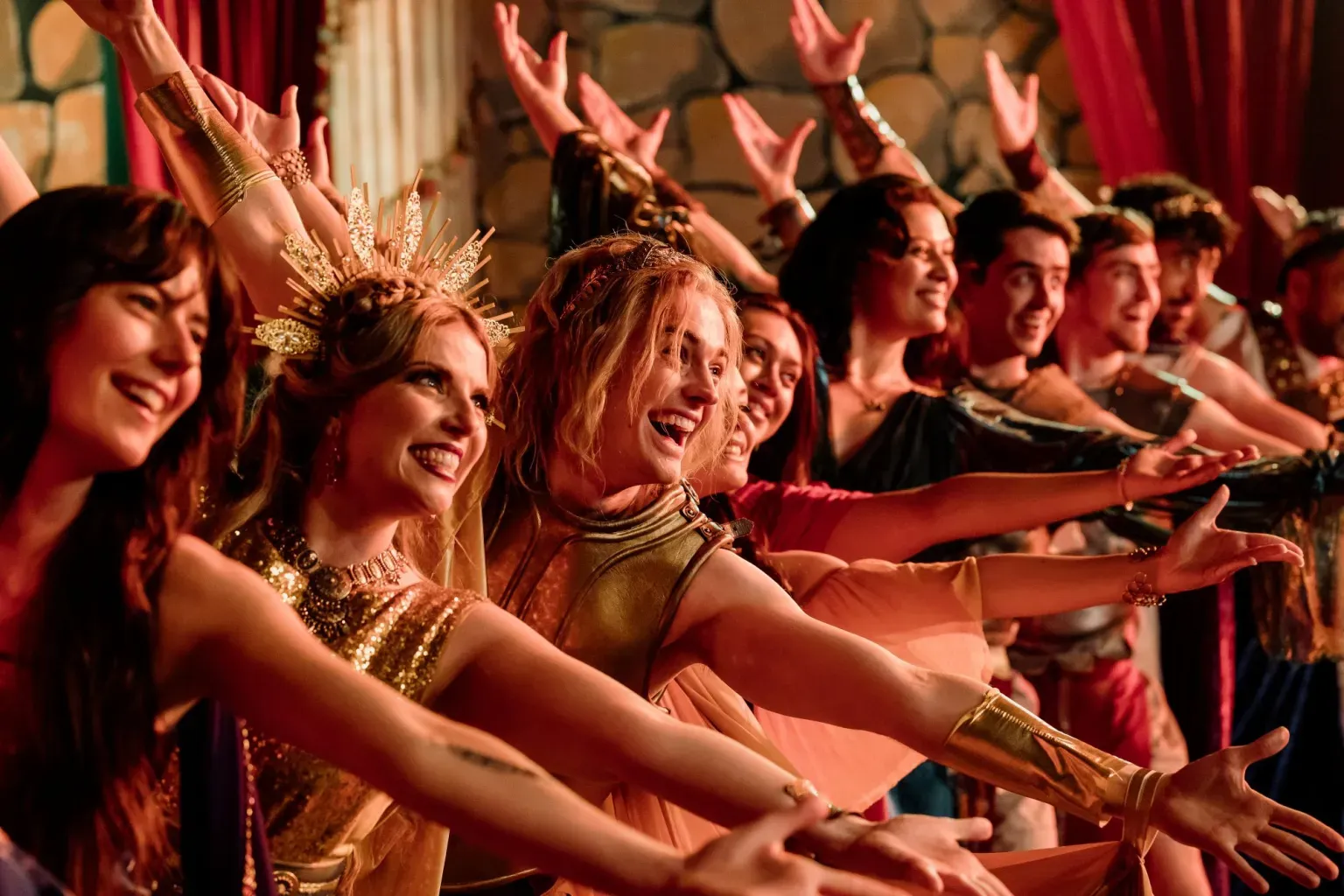
The music and lyrics come across as genuinely cool, with affection for the form and a sharp sense of parody. The songs land as a punchy pastiche of current Broadway styles, recalling the contemporary pop sensibilities of shows like Dear Evan Hansen and Six.
These musical numbers, usually one or two per episode, become the series’ high points and its emotional accelerators. They drive character change and conflict, and they lift the production beyond simple parody. The performances inside these songs become the moments where people get heard.
Mia’s Cassandra number, built around a minor IV chord lament, gives her a voice that Adrian keeps ignoring. That musical force keeps building until Charlie has to face his own pretentious views on art and small-town earnestness.
Precision Pacing and Genre Echoes
The series runs on sharp pacing and snappy direction, and that efficiency keeps the writing economical. Co-writers Kip Chapman and Luke Di Somma fire off one-liners with confidence, and the script knows exactly when to land a joke and move on. A standout is “Our father, whose art is heaven, Sondheim be thy name,” a Broadway prayer delivered with the smug glee of someone who has spent too much time in the foyer.
The comedic style leans into the gossipy humor of am-dram, pairing high-level Broadway references with down-to-earth Kiwi charm in a way that fits current streaming tastes for niche worlds with clear rules and big personalities. The six-part structure helps the story stay lean and keeps narrative bloat away.
The central tension plays out through the clash between high-art, New York sophistication and small-town amateur eagerness. The narrative follows the familiar arc of the prodigal son returning and finding redemption and reconnection with his community through the pursuit of a shared, silly goal.
The feel-good tone draws strength from predictability, letting you giggle ahead of the comic beats dropping. The series echoes genre staples like Schitt’s Creek and Glee. The show feels charming from beginning to end, a sweet triumph of the local stage. One small pity remains: why does a series with such a specific, super-cute quality settle for the generic title Happiness?
Happiness is a New Zealand musical-comedy series that premiered in Australia on HBO Max on November 4, 2025, and subsequently in the United States on PBS starting December 14, 2025. Set in the New Zealand town of Tauranga, the six-episode series follows a cynical, disgraced Broadway director forced to return home and engage with his mother’s amateur theatre society, Pizazz, as they stage an original musical. Its release timing positions it as a late-year feel-good import. Since the date is December 15, 2025, the series has recently premiered across its main distribution channels. You can stream the series on HBO Max or PBS platforms.
Full Credits
Title: Happiness
Distributor: HBO Max (Australia), PBS (United States), ThreeNow (New Zealand)
Release date: November 4, 2025 (Australia), December 14, 2025 (United States)
Rating: TV-PG
Running time: 6 episodes, approximately 20-30 minutes each
Director: Robyn Grace
Writers: Kip Chapman, Simone Nathan, Dan Musgrove, Luke Di Somma
Cast: Harry McNaughton, Rebecca Gibney, Peter Hambleton, Jessie Lawrence, Marshayla Christie, Henry Auva’a, Melody Lui-Webster, Joel Granger, Maaka Pohatu, Bronwyn Bradley, RV Quijano
Director of Photography (Cinematographer): David Paul
Composer: Luke Di Somma
The Review
Happiness
Happiness is a delightful, fast-paced musical comedy that succeeds by embracing the earnest chaos of amateur theatre. The series smartly contrasts its pretentious Broadway director protagonist with the heartfelt, if hokey, charm of his small-town troupe. Bolstered by strong original music and witty writing, it delivers a high-energy, feel-good experience that finds genuine heart in its familiar structure. It is a sharp, funny take on the "backstager" genre.
PROS
- The six, 20-minute episode format is sharp and efficient, preventing narrative drag.
- The original songs from the "show-within-a-show," The Trojan Horse, are genuinely catchy and witty pastiches of current Broadway styles.
- Features clever one-liners and high-low humor that expertly blends theatrical reference with dry Kiwi sensibility.
- Captures the drama and comedy of amateur theatre egos and power plays with authenticity.
CONS
- The generic title Happiness fails to capture the show's specific comedic tone and subject matter.
- While effectively used, the core cast largely relies on established "am-dram" archetypes.
- Charlie's redemption path is highly predictable, though well-executed.
- A key emotional figure whose personal arc only gains focus late in the series.







