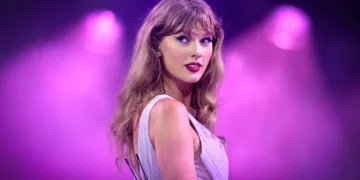























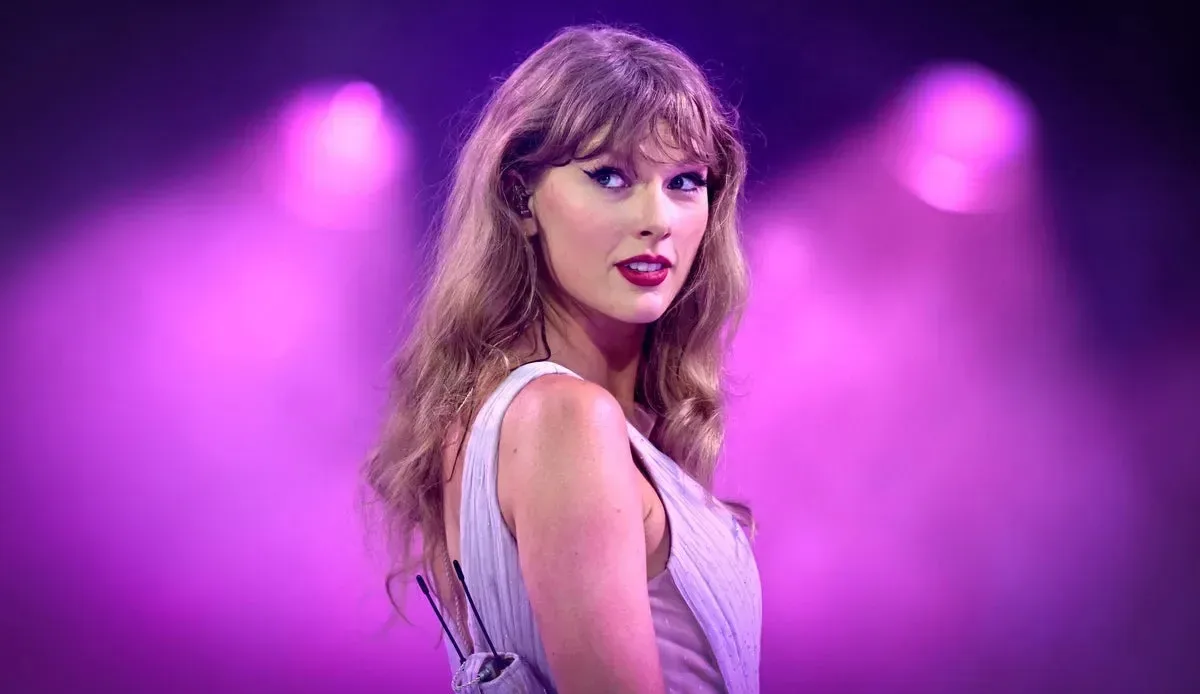

The two-part Channel 4 documentary, Taylor, lands in the middle of a media surge, with timing that tracks closely to the release of the artist’s album, The Life of a Showgirl. It fixes its gaze on Taylor Swift, a global pop icon whose public mythology now operates at stadium scale.
The film is unauthorized and includes no direct participation from Swift or her team. It builds its case through tightly cut archival footage and a rotating lineup of talking-head interviews. That format signals a serious attempt to question how the persona gets built and maintained, even if the series can only work from what is already public.
Moving from Swift’s teen ambition to her status as one of the world’s most influential women, the documentary sets out to separate person from performance. The structure keeps circling one promise from its own title, and the distance from its subject keeps that promise unresolved: who is the real Taylor Swift?
The Architecture of a Global Brand
The series charts Swift’s career through the making of a performer who has chased chart goals from the start, anchored by an early line of intent: “I want a gold record.” It presents her success as design work, built through high ambition and careful community building. One origin story carries special weight here: the documentary points to country artist LeAnn Rimes remembering a young fan’s name, presented as a model for Swift’s approach to fan connection. In the series’ telling, that lesson scales into one of the largest fan communities in history.
A former manager frames the strategy in emotional terms, saying her aim was for people to “feel better when she left than before she arrived.” The documentary treats that as more than a nice sentiment. It becomes a performance principle, a way of turning empathy into a repeatable audience experience. The series links this to a celebration of “girlhood,” and to the permission it gave many people to “yearn,” language that places Swift’s appeal inside shifting expectations about what young women can express in public without apology.
That emotional register lives alongside a sharp business intelligence, and the documentary keeps returning to the friction between intimacy and control. It describes an artist capable of channeling genuine feeling while managing an image with precision.
The series leaves open a pointed implication about modern celebrity: vulnerability can function as storytelling and as professional reinforcement at the same time. The film’s examples keep that idea grounded in career mechanics, including Swift’s ability to flip backlash into narrative fuel. It cites the criticism that followed her 2010 Grammys performance, then frames her response as a reclaiming move that helped generate anti-bullying anthems such as “Mean.”
Conflict, Commerce, and Cultural Power
Taylor treats conflict as a key driver of Swift’s cultural role, using major industry flashpoints to position her inside ongoing public debates about power, ownership, and influence. The 2009 Kanye West feud receives substantial attention, with one manager reducing the moment to publicity logic: “Someone give Kanye a hug! You cannot buy that kind of publicity.” The line lands with a wink, then sits there like an accusation. The documentary uses it to show how the entertainment industry can translate personal conflict into marketing heat, even while the public is asked to read the moment as moral drama.
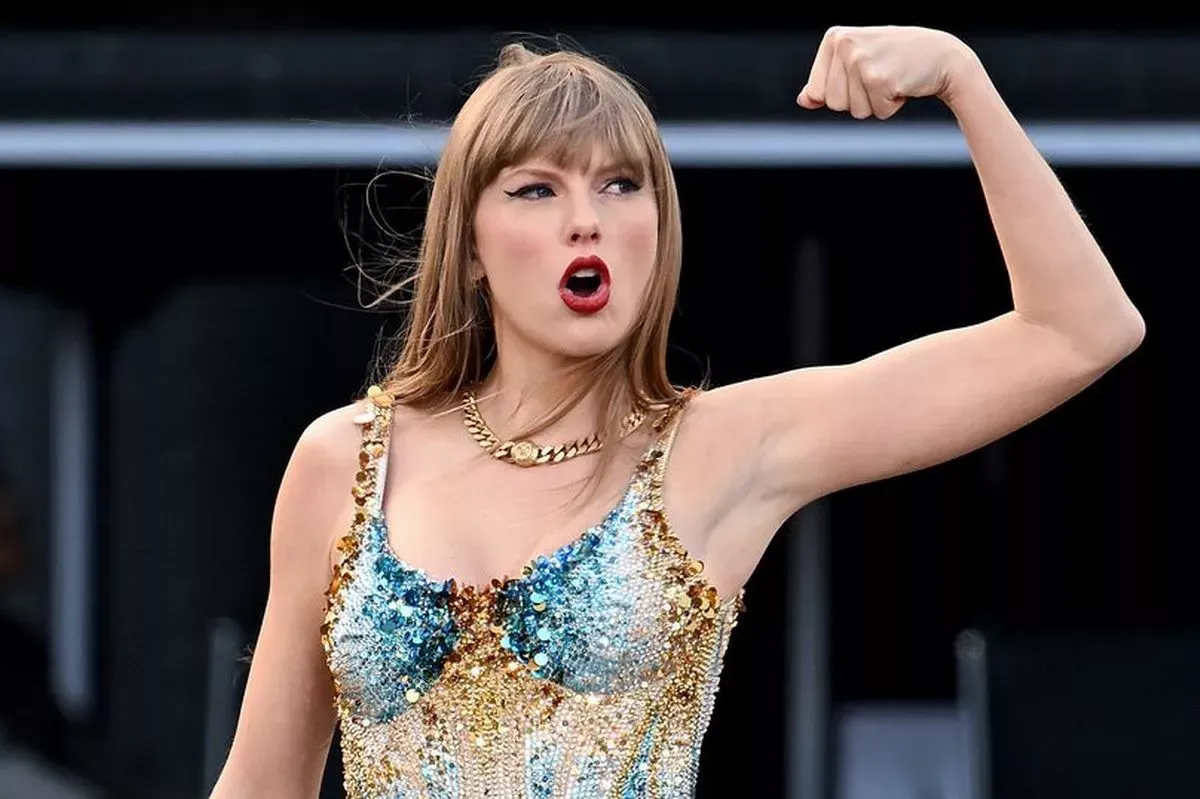
The masters dispute moves the series into a clearer conversation about labor, rights, and control in pop’s corporate infrastructure. The documentary describes the acquisition of Swift’s masters by Scooter Braun and gives space to competing interpretations. It includes a former manager defending Braun with the blunt claim, “No one stole her music,” and calling it a “very good business decision.”
That view collides with the documentary’s framing of Swift’s choice to re-record her music, presented as an assertion of artist ownership in the digital age. The series treats that clash as more than celebrity gossip. It reads like a case study in who gets to define fairness when contracts, catalogs, and platforms shape what audiences hear and what artists can reclaim.
Politics enters through the documentary’s account of Swift’s long public silence and the criticism aimed at her for it, including the charge that she was “too late to the party, too privileged, too white.” The series presents that language as a representation critique directed at a superstar whose cultural footprint reaches far beyond music. It also tracks the moment her stance became explicit: her 2018 US midterm endorsement, which condemned far-right politics. The documentary anchors its claim of impact with a measurable response, reporting that 35,000 people registered to vote in 12 hours.
That number also reshapes the documentary’s portrait of fandom. The Swifties appear here as a political force and a social identity, framed as a community that treats Swift as an artist and as a communal, even spiritual, leader. The series shows how that kind of devotion can turn entertainment into civic action, and it also hints at the discomfort that follows when a pop figure’s influence starts to resemble institutional power.
The Limitations of the Lens
The documentary’s style is described as “popcorny,” with a lighter tone than the polished Miss Americana. It leans on an energetic, sometimes uneven mix of talking heads: music journalists, former industry associates such as Rick Barker and Emily Poe Stumler, and fans including Niamh Adkins and Nina Haines.
The shifting tone is part of the viewing experience, swinging between praise and sharper critique, including a former manager criticizing her handling of the masters dispute. That mix can feel like the series is trying to mirror the contradictions it sees in its subject, then the format occasionally exposes its own seams.
Archival footage does much of the heavy lifting. Early home videos and karaoke clips give the series texture and a sense of timeline. The presentation still leaves room for improvement, and some viewers may want graphics that feel more sophisticated or more colorful. The bigger limitation sits in the documentary’s priorities. It spends far more time on reinvention and image control than on the music and songwriting craft that sustain the phenomenon. It offers only a surface look at her childhood and does little to lay out the conditions that produced her drive.
The title promises intimacy, and the series cannot deliver it. Working at a distance, the documentary keeps returning to the same barrier: a carefully constructed persona that resists entry. Even with 100 minutes of contextualized footage, the “real Taylor” remains out of reach, sealed behind the very system of storytelling the documentary works so hard to map.
The unauthorized two-part documentary series Taylor premiered on Channel 4 in the UK on Tuesday, September 30, 2025. The series explores the 20-year career of the global pop star Taylor Swift, examining her rise from a Nashville songwriter to a cultural icon and analyzing the intense media scrutiny she faces. It features interviews with industry insiders, former band members, journalists, and devoted fans. The series is available to watch on Channel 4’s on-demand streaming service.
Full Credits
Title: Taylor
Distributor: Channel 4 (UK)
Release date: Tuesday, September 30, 2025
Rating: TV-PG
Running time: Two-part series (Approx. 45-50 minutes per episode)
Director: Guy King
Producers and Executive Producers: Jessica Brady, Lina Caicedo (Archive Producer), Susannah Price (Executive Producer), Henry Singer (Executive Producer)
Cast: Taylor Swift, Niamh Adkins, Nina Haines, Zing Tsjeng, Rick Barker, Emily Poe Stumler, Robert Ellis Orrall, Holly Armstrong, Alan Edwards, Elizabeth Scala
The Review
Taylor
Taylor succeeds as a sociological study of modern fame and fan culture, effectively mapping the construction of an iconic, if elusive, celebrity persona. While it offers sharp analysis of her strategic genius in the business realm—especially regarding her fight for ownership—the documentary falters by prioritizing conflict narratives over her artistic process. It fails to access the subject's private life, leaving the core question of "the real Taylor" unanswered and reinforcing the idea that her persona is an impenetrable, controlled narrative. It is a necessary cultural document but an incomplete portrait of the artist.
PROS
- Provides detailed, sharp commentary on Swift's business acumen and her successful strategy of re-recording her masters.
- Adeptly frames Swift's rise within major cultural shifts, especially her political impact (35,000 voter registrations) and fan power.
- Includes the unique and passionate voices of the Swifties, highlighting the sense of community she fostered.
- Features effective use of archival footage and early career clips to trace her ambitious start.
CONS
- Pays too little attention to her actual music, songwriting craft, and childhood background.
- Ultimately fails to penetrate the subject's carefully guarded persona, leaving the central mystery unresolved.
- The series occasionally shifts jarringly in tone, vacillating between overly praising and overtly critical viewpoints.
- Some viewers noted that the graphics/animation felt underwhelming and could have benefited from a higher budget.