






















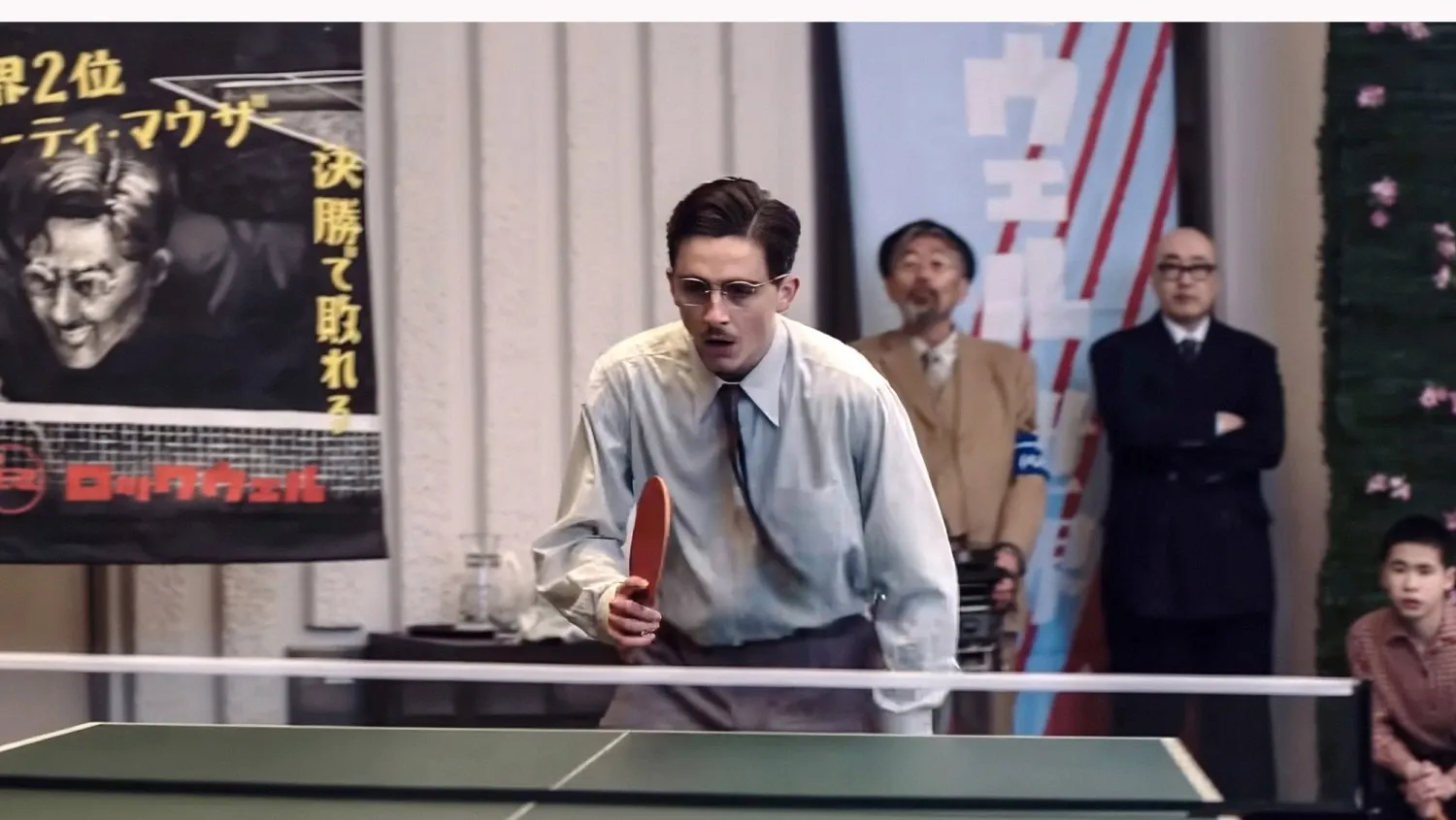

Josh Safdie says the most demanding part of making Marty Supreme was turning table tennis into something a camera can trust. The director, speaking in recent interviews tied to the film’s Christmas release, described the match work as “really intense choreography,” built from months of study of archived footage and then drilled repeatedly on set until each rally landed on precise timing.
That precision was driven by a practical problem: real athletes improvise points, while film crews need repeatability across takes, lenses and angles. Diego Schaaf, a longtime Hollywood table tennis consultant who worked on the film alongside his wife, former Olympian Wei Wang, said Safdie insisted the sport look “serious” and refused to “phone it in.” Schaaf said the production ended up scripting roughly 60 points, rehearsing them first with a real ball, then executing some beats with visual effects in mind for shots where the ball would be added later. “When you later on do VFX and put the ball in there,” Schaaf said, “it’s critical that the player goes to the right place.”
Safdie has credited Timothée Chalamet’s preparation for helping sell that approach. In interviews published around the opening, Safdie said Chalamet entered the process early and trained rigorously, then performed the points through endless repetitions, sometimes “with or without the ball,” timed “down to the microsecond.”
The film’s release has turned that behind-the-scenes craft into part of the marketing story. Chalamet’s press run has leaned into the movie’s orange ping-pong imagery, including a Las Vegas Sphere activation that People said marked the first time a person appeared atop the venue in a promotional video. At the box office, early numbers signaled strong interest for an original studio-backed drama: Business Insider reported a $145,000 limited-release pre-theater average, a benchmark it said was the highest since 2016 and a record for A24.