




















Jamie Adams’ Pose presents a British experiment that plays as a character study framed as a psychological thriller. Adams, known for micro-budget, dialogue-driven projects, chooses a tightly controlled setting and an improvised method that shifts the experience away from conventional plot-driven storytelling and toward moment-to-moment interaction.
The film builds itself around a gathering at a remote, opulent 11th-century manor house, a place described as messy in history and filled with “chaotic energy.” That mood becomes a key part of the story. Into this charged environment, two couples arrive and share the space, which primes the film for simmering tension.
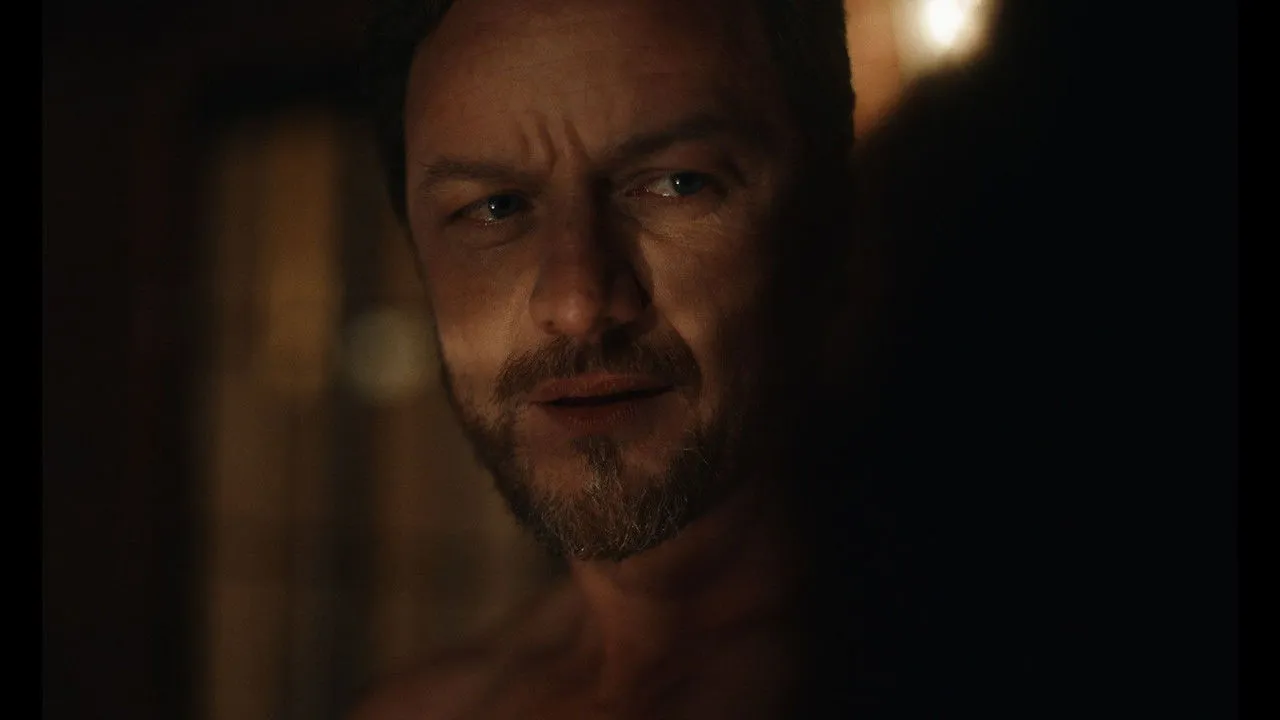
The drama grows from the clash of artistic egos, obsessive desire, and the manipulative designs of Thomas Alexander, a reclusive and celebrated photographer played by James McAvoy. An initially awkward shared residency gradually mutates into an unstable psychological “cat-and-mouse” contest driven by the hunger for artistic validation and control.
The Players and the Psychological Cage
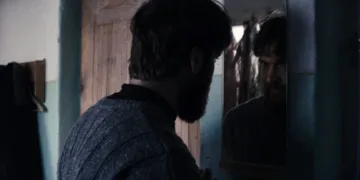
The film leans on the intensity of its small ensemble, especially under the limits of improvised dialogue. Thomas Alexander (James McAvoy) stands as the legendary figure around whom the story orbits. He arrives in the film described as an “artist, romantic, narcissist,” a man who lives with the weight of past triumphs and chases the return of his creative spark. McAvoy delivers an “electrifying” turn as a “subtly menacing” egomaniac who channels the story’s manipulative streak. His sole objective is to capture pop star Patricia in an iconic image that he believes will restore his former stature.
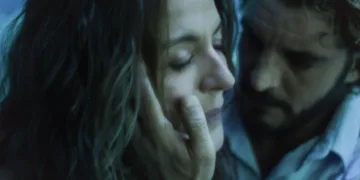
The visitors are Patricia (Aisling Franciosi), a pop singer intent on creating an iconic album cover, and Peter (Lucas Bravo), her aspiring photographer boyfriend. Peter’s fan-like fixation on Thomas is immediately clear, which leaves the visiting pair exposed to Thomas’s psychological games. They function as puppets inside the photographer’s manipulative stage.
The group rounds out with Dolly (Leila Farzad), Thomas’s agent with a tangled past with him, and Jemima (Almudena Amor), Thomas’s “inscrutable” young girlfriend. Each person arrives with specific, self-serving needs, and their interactions form a manipulative ménage à quatre. The distinctions between pawn and strategist keep shifting, and the film uses that constant recalibration to examine idols, the gap between image and reality, and the destructive pull of control.
Improvisation and the Ghostly Aesthetic
Pose ties its cinematic technique directly to its subject. Adams works from outlines with no full script, which produces raw, sometimes “stilted” or “fragmented” exchanges. The method directly reflects Thomas Alexander’s view that genuine photography uncovers truth in “unscripted moments,” so the film’s construction mirrors its thematic interest in spontaneous capture.
The manor house, opulent yet “crumbling,” behaves like an additional character. Dark-paneled rooms, muted light, and damp fog create a ghostly, morbid ambience that feels closer to a “fever dream drama” with its own off-kilter rhythm. This visual inertia matches the emotional paralysis of characters who feel locked inside their histories and obsessions.
The film leans into an unconventional visual language built from blurred images, creeping camera moves, and “off kilter, reactive” editing. This approach reinforces the characters’ pathological entanglements and their subjective point of view, though it can also create a loose, abstract feel. For viewers who favor linear plotting, the film may register as a sequence of charged fragments, and the experience may not feel like a fully coherent whole.
Narrative Flow and the Pursuit of ‘The Shot’
The central thematic interest in Pose circles around the distinction between authentic artistic creation and hollow imitation. The film studies the self-destructive power of inspiration once ego and manipulative control take over the process. Like certain narrative-driven games that prioritize mood and character interaction over fixed goals, the structure resembles a static, elliptical “character play.” The plot loops around the same tensions, at times giving up traditional narrative focus in favor of a hazy, subjective experience.
At the same time, the story maintains tension by continually edging toward “the shot,” the central artistic moment Thomas works to engineer. The intentionally messy, improvised design still gathers its many intersecting strands into a final, intense and harrowing climax.
The payoff hits hard, implying that the climactic moment lands on several levels at once. Pose functions as a loosely told thriller that asks for patience and a receptive attitude. Viewers who engage with its experimental design can find a powerful, idiosyncratic experience, an example of cinema that gains its force from work that strays from the beaten path.
Pose is a British-American psychological thriller from writer and director Jamie Adams. The film, which was previously known as Turn Up the Sun!, premiered at the Tallinn Black Nights Film Festival on November 12, 2025. Set entirely in a remote countryside mansion, the story focuses on two couples whose weekend getaway spirals into a tense game of paranoia and hidden motives concerning art, obsession, and ego. The film received its U.S. release on December 5, 2025, from Vertical. You can currently find the movie available for digital rental or purchase on various platforms.
Full Credits
Title: Pose
Distributor: Vertical (United States), Altitude Film Distribution (United Kingdom)
Release date: November 12, 2025 (Tallinn Black Nights Film Festival), December 5, 2025 (United States)
Running time: 80 minutes
Director: Jamie Adams
Writers: Jamie Adams
Producers and Executive Producers: Shaun Sanghani, Cara Shine Ballarini, Rebecca Miller
Cast: James McAvoy, Lucas Bravo, Leila Farzad, Almudena Amor, Aisling Franciosi, Elektra Kilbey, Maria Therese Bassetti
Director of Photography (Cinematographer): Jan Vrhovnik
Editors: Matt Platts-Mills
Composer: John Meirion Rea
The Review
Pose
Pose is a difficult, deliberately messy character study elevated by James McAvoy's hypnotic performance and Adams' dedication to unscripted tension. It succeeds as an immersive psychological experience, though its abstract visuals and meandering structure sometimes obscure the narrative path. For those who appreciate experimental, performance-driven cinema that favors atmosphere over plot clarity, this film is a compelling artistic endeavor culminating in a powerful, disturbing finale.
PROS
- James McAvoy is electrifying and fully commits to the manipulative character.
- The remote manor setting and subdued lighting create a pervasive, eerie tension.
- Rich exploration of art, ego, control, and the search for authentic inspiration.
- The build-up culminates in an unforgettable and haunting final sequence.
CONS
- The plot meanders and sacrifices clarity for mood, which may frustrate some viewers.
- Non-traditional editing and blurred focus can be distracting or feel overdone.
- The unscripted approach occasionally results in stilted or fragmented conversations.
- The elliptical structure can make the film feel slow or repetitive in the middle section.