
























Cinema often treats memory like a fragile archive. With Mohit Suri directing, memory turns into a surface for operatic tragedy. Saiyaara introduces two newcomers, Ahaan Panday and Aneet Padda, inside a story where creative ambition meets neurological decay. It begins with Vaani Batra, a writer whose life fractures when her wedding is called off at the last moment. The shock sparks a physical collapse, followed by a fight to hold onto memory.
Her path later crosses with Krish Kapoor, a rebellious musician whose volatility masks a deep vulnerability. Their connection grows through songs and private rituals, moving between the bright charge of youth and the grim certainty of a terminal condition. Music becomes the film’s main dialect for intimacy. As a theatrical arrival for its leads, the film leans into the intensity of first love, filtering classic melodrama through the look and pace of contemporary digital life.
The Anatomy of a Tragic Narrative Arc
The opening takes away Vaani’s future in a single stroke. She appears on her wedding day, and her fiancé abandons her. That rupture becomes the spark for her medical crisis, bringing fainting spells and the start of memory loss. She begins carrying a physical notebook, using it to record thoughts and daily events. The notebook functions like a lifeline, a tactile anchor that reads as nostalgic beside digital clouds and smartphone notes. Her handwriting gives the film something textured and human, set against the disorder of what she is living through.
Her direction changes when she interviews for a job at a digital news agency. There she meets Krish Kapoor, a struggling singer who barges into the interview with raw aggression. Their working relationship forms through a bargain: she writes lyrics for his music, and he gives her exclusive content. This phase borrows the quick, “meet-cute” charge of modern romantic comedy setups, paired with the brooding mood associated with Suri’s work. The script tracks their emotional rhythms closely as they discover shared ground through creative drive.
Midway through, the film pivots with the revelation of early-onset Alzheimer’s. The romance becomes a study of inevitable loss, and the tone moves from light pursuit of stardom toward the heavy reality of caring for someone who keeps slipping away. The storytelling angle shifts too. The early stretch stays close to Vaani’s inner life, then the film turns its focus to Krish as he watches her decline in real time. That shift opens space for themes of selflessness and the weight of caregiving, presented through his position as witness and partner.
Family threads fill out the runtime. Krish lives with the damage of an alcoholic father, and Vaani’s mother embodies protective maternal care. These strands place both leads inside a world already marked by wounds. The pacing stays steady, even when the screenplay circles familiar emotional beats to press the gravity of the situation. By the end, the film pulls youth’s optimistic dreaming into contact with the finality of medical tragedy.
Performance Dynamics and the New Face of the Romantic Hero
Ahaan Panday’s debut as Krish challenges the usual action-forward image of the romantic lead. He brings “softboy” sensitivity, letting the character’s bratty outbursts land with visible hurt underneath. His physical presence hits hard in confrontation scenes, whether he is defending his artistic integrity or clashing with his bandmates.

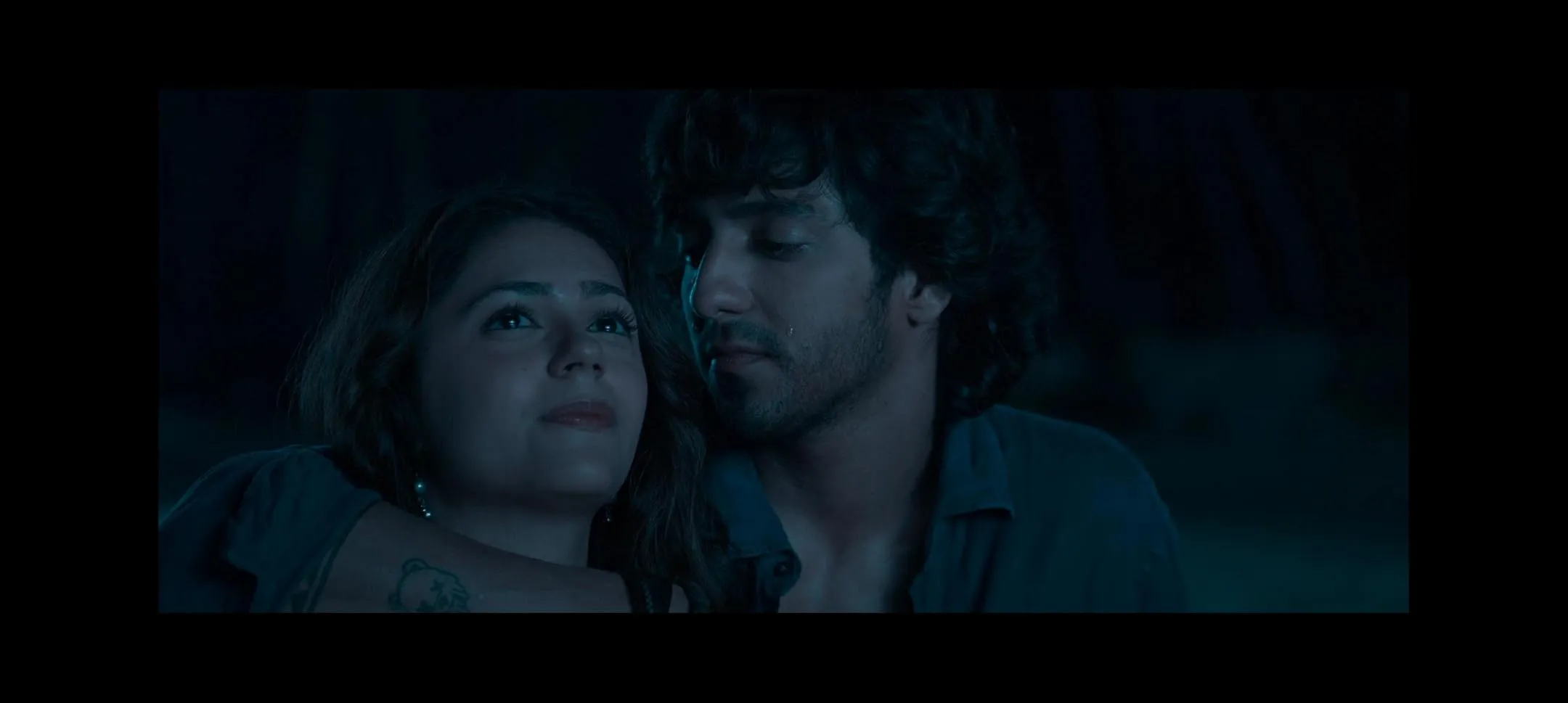
He lands best in the quieter stretches, where the script asks him to yearn for a love that keeps receding. His eyes repeatedly fill with tears, carrying an ache that recalls the tragic musician archetype in cinema. He keeps the character from collapsing into a familiar lover-boy template by making fragility part of the performance’s spine.
Aneet Padda plays Vaani with quiet strength and a sense of agency. The script uses her illness as a driver of plot, yet Padda keeps Vaani present as a person with desires and an intellectual life. She moves from sheltered journalist to a woman staring down a frightening future with sharpness intact. Her approach stays subtle and controlled, keeping the portrayal grounded even while the story leans on the heightened emotions of melodrama. She captures a “good girl” syndrome with sincerity, never turning it into a caricature.
The film’s romantic core lives or dies on the energy between its leads, and their chemistry builds through small gestures and shared secrets. A key moment has Krish using his jacket to tie himself to Vaani as they ride a motorcycle together. The move plays flamboyant and intimate at the same time, turning a romantic impulse into a physical image of attachment. Supporting performances help steady the emotional field. Geeta Aggarwal stands out as Vaani’s mother, shaping protectiveness with understated conviction.
Rajesh Kumar and Varun Badola make brief, memorable marks as father figures who haunt and support the protagonists. Their presence frames love as something that can reshape a life. Krish begins as a “toxic” hero with a no-bullshit attitude and a habit of lighting cigarettes mid-ride. By the final act, devotion to Vaani has rewritten him. The film shows that change through his readiness to set aside ambition and put his energy into caring for the woman he loves.
Cinematic Maximalism and the Visual Language of Emotion
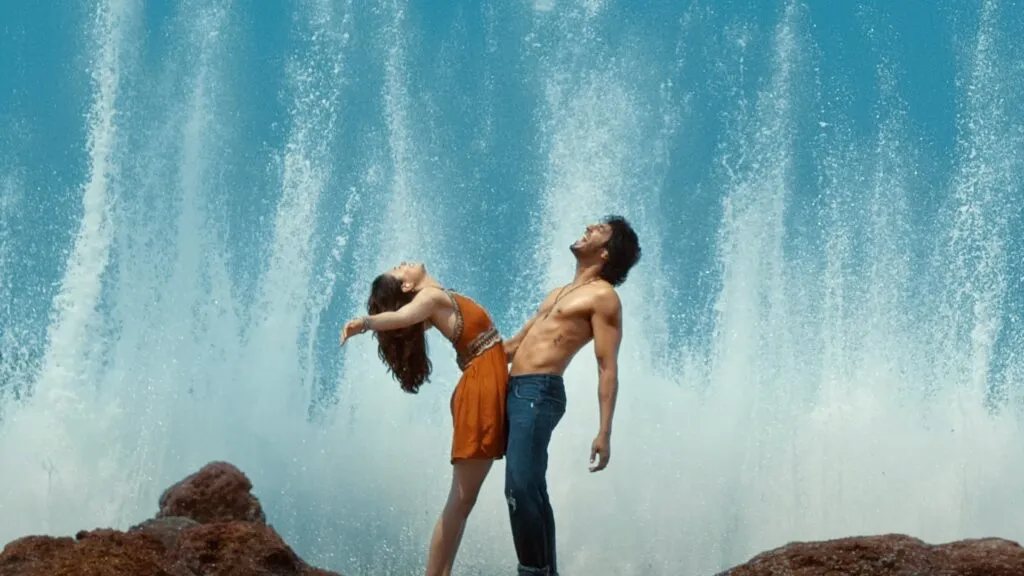
Mohit Suri favors grand settings, and this film continues that taste. His staging goes maximalist to amplify what the characters feel inside. A beachside sequence captures the leads embracing as geysers of water rise into the air, turning a private moment into an environmental spectacle that suggests passion with elemental force. Another romantic image places them on a car, perched to watch the stars, keeping even simple intimacy framed by something larger than life.
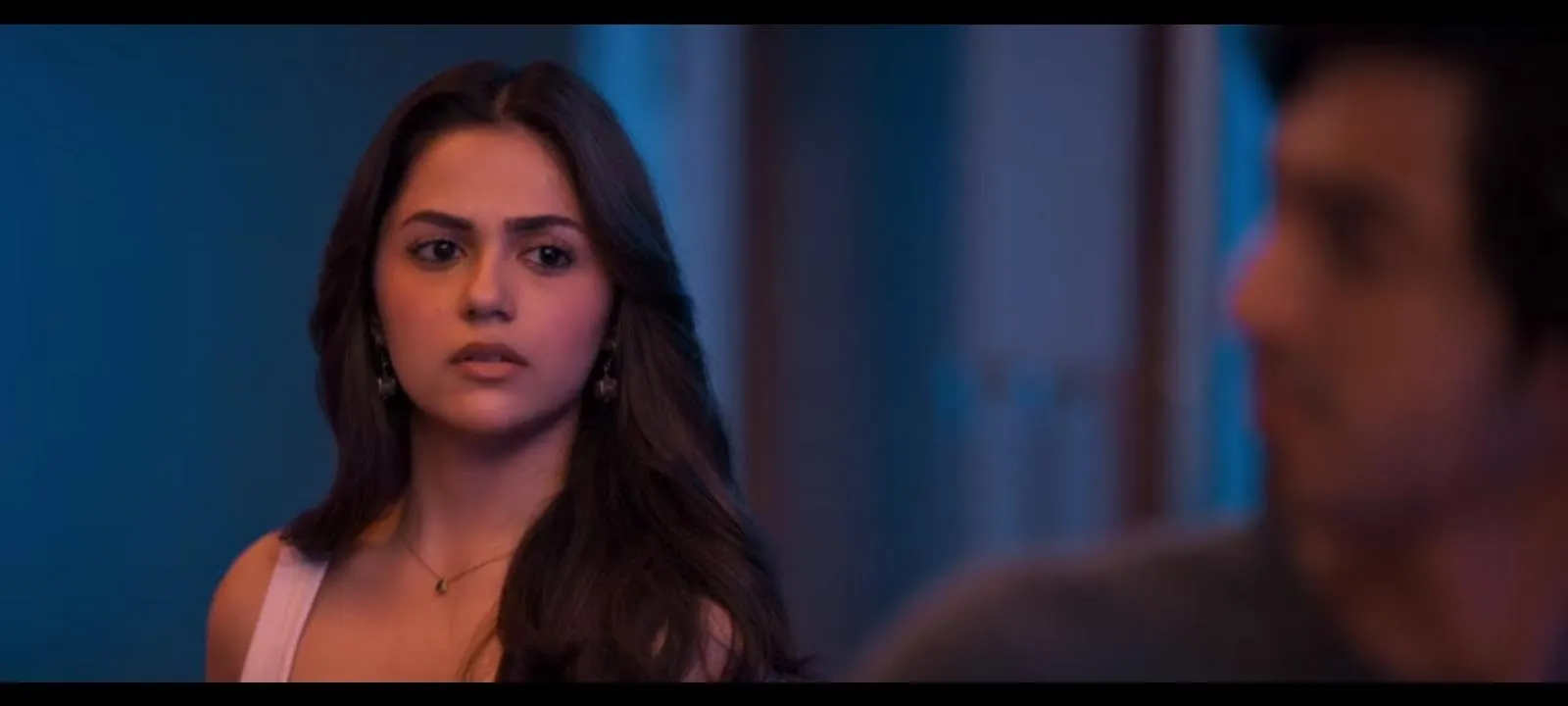
Vikas Sivaraman’s cinematography uses fluid motion and drone work to echo the story’s youthful energy. In the musical numbers, the camera often soars and twists, creating a sense of being inside a live performance rather than watching from a fixed distance. The movement syncs with the soundtrack’s highs, making the visuals feel rhythmic. Even within that motion, framing stays attentive to emotional shifts between Krish and Vaani, placing weight on glances, pauses, and silence.
Production design sets the sleek world of the news agency against romantic, isolated locations where the couple looks for refuge. The “Buzzfeed-esque” office carries speed and competition, while coastal spaces read as timeless and removed. That split draws a line between the public face of their careers and the private reality of the relationship. The environments stay sleek and polished, matching a film positioned as a star vehicle for two high-profile newcomers.
Visual metaphors keep raising the leads toward myth. Giant screens showing Vaani’s face and slow-motion exits for Krish give their emotions an outsized scale. Editing holds a steady pace that keeps engagement high without rushing. Early scenes move quickly through major developments, then later passages get room to breathe, letting the tragedy land with heavier force. The style stays in service of the actors, operating as a frame for their emotional passage rather than competing for attention.
Sonic Identity and the Technical Craft of the Soundtrack
Music functions as the film’s primary form of communication. The soundtrack sits inside the narrative so songs act like extensions of the characters’ inner speech. Tracks such as “Humsfafar” and “Tum Ho Toh” trace the relationship’s evolution, marking shifts in intimacy and need. The lyrics come from Vaani’s notebook, giving Krish the words he needs for his melodies. Their art forms interlock, suggesting they move together as “rhythm and beats” in each other’s lives.
Live-performance sequences for the band Josh pursue musical realism in staging. The instrumentation mixes sitars with pulsating electric guitars, joining traditional texture with modern drive. The film puts clear effort into making the band’s climb feel authentic. Details like the charge of vocal delivery shape the atmosphere of chart-topping success. These numbers operate as big, crowd-pleasing set pieces, offering an exuberant entrance into the film’s world.
John Stewart Eduri’s background score strengthens the story’s most vulnerable moments. It works especially well in quieter scenes where the characters face the reality of Vaani’s illness without the cover of spectacle. The score fills silences and stretches between words, keeping emotional stakes high even in stillness. The soundtrack plays strongly as a standalone album, and its placement inside the narrative gives it its lasting impact.
The bond between lyrics and identity sits at the core of the theme. Vaani’s poetry becomes Krish’s source of inspiration, and his music becomes what she holds onto most clearly as her condition worsens. Their creative link argues for art as a form of survival when memory fails. The film treats music in mainstream cinema as a serious narrative tool, using it for remembrance and as a way to push back against the erosion of self.
Saiyaara was released in theaters worldwide on July 18, 2025, serving as the launch vehicle for debutants Ahaan Panday and Aneet Padda. The film quickly became a significant commercial success, eventually emerging as the highest-grossing Indian romantic film of all time. After its successful theatrical run, the movie premiered on the digital streaming platform Netflix on September 12, 2025, where it remains available for viewers globally as of today, December 31, 2025.
Full Credits
Title: Saiyaara
Distributor: Yash Raj Films
Release date: July 18, 2025
Rating: UA 16+
Running time: 156 minutes
Director: Mohit Suri
Writers: Sankalp Sadanah, Rohan Shankar
Producers and Executive Producers: Akshaye Widhani, Aditya Chopra, Rishabh Chopra, Sumana Ghosh
Cast: Ahaan Panday, Aneet Padda, Varun Badola, Rajesh Kumar, Geeta Agarwal Sharma, Alam Khan, Anngad Raaj, Shaad Randhawa, Shaan R Grover, Govind Namdev, Neil Bhoopalam, Ritika Murthy, Meher Acharia Dar, Mohit Wadhwa
Director of Photography (Cinematographer): Vikas Sivaraman
Editors: Devendra Murdeshwar, Rohit Makwana
Composer: John Stewart Eduri, Mithoon, Tanishk Bagchi, Sachet-Parampara, Rishabh Kant, Vishal Mishra, Faheem Abdullah, Arslan Nizami
The Review
Saiyaara
Saiyaara is a visually lush, musically driven melodrama that thrives on the electric chemistry of its debut leads. While it occasionally leans too heavily on familiar tropes and a polarizing medical twist, Mohit Suri’s signature emotional intensity remains effective. It succeeds as a heartfelt exploration of how art and devotion can anchor a fading reality. The film effectively balances the vibrancy of youthful ambition with the somber weight of tragedy, making it a sincere entry in the genre of star-crossed romance. It is a resonant, if flawed, ballad of first love.
PROS
- Strong debut performances by Ahaan Panday and Aneet Padda.
- Memorable tracks that are deeply integrated into the narrative fabric.
- Fluid cinematography and maximalist staging create a high-impact aesthetic.
- Interesting commentary on fame and the digital media landscape.
CONS
- The handling of early-onset Alzheimer’s feels more like a plot device than a nuanced study.
- Side stories involving family dynamics occasionally dilute the central romance.
- Heavy reliance on "bad boy" and "good girl" archetypes can feel dated.
- The 156-minute runtime leads to some repetitive emotional beats in the third act.