

























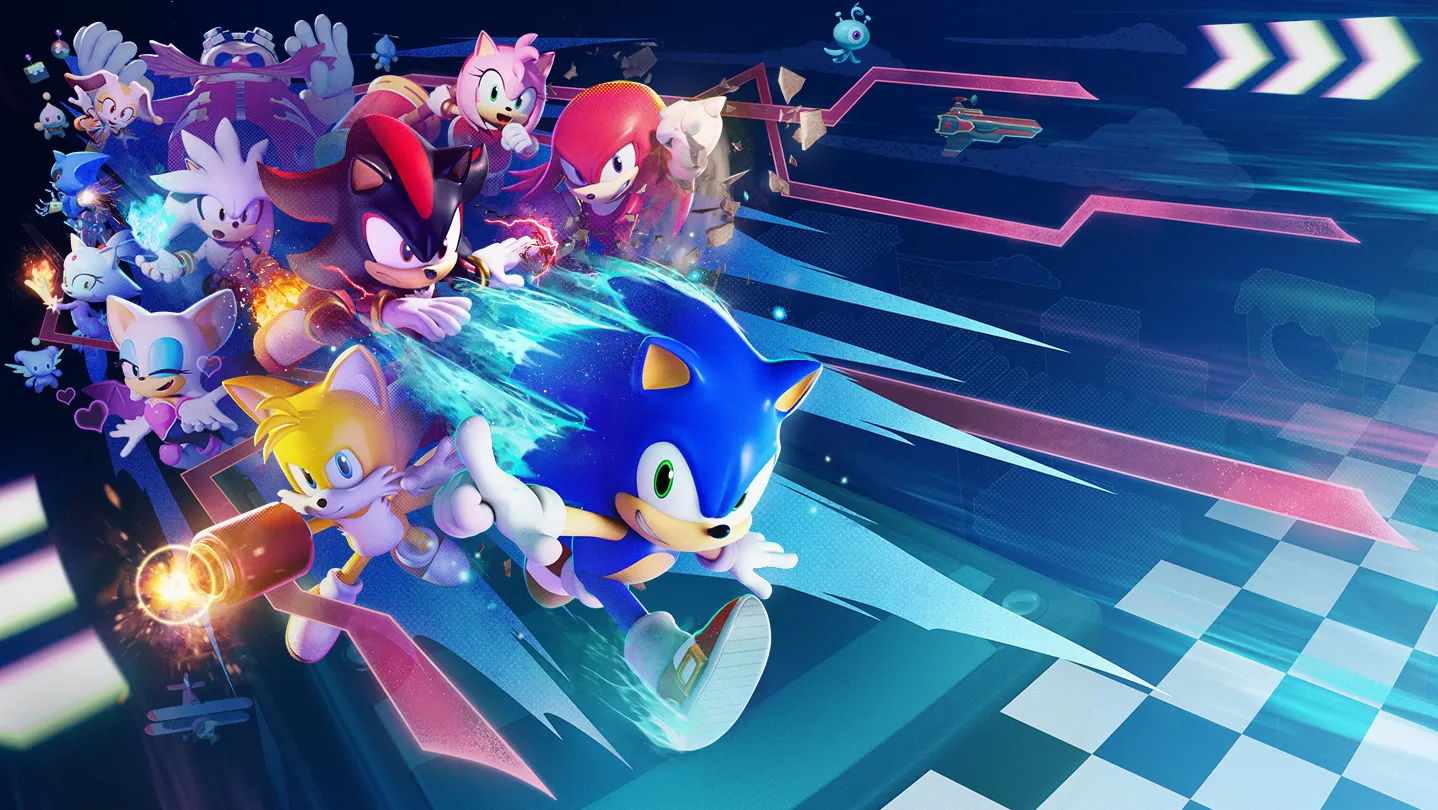

Sonic the Hedgehog has long bounced between high-speed platforming and riskier side projects. Here, that energy gets poured into a 32-player scrum built for short, repeatable matches. Sonic Rumble is the first release tied to the SEGA and Rovio partnership after the headline-making acquisition, and it trades linear speed runs for elimination-focused mini-competitions.
With releases on iOS, Android, and PC via Steam, it steps into an already packed party battle royale lane. Each session asks you to survive three rounds that ramp up the pressure, then enter a final showdown where one thing decides the winner: how many rings you hold when the clock hits zero.
That single scoring rule clarifies the game’s priorities. The design favors quick social play and rapid re-queues, with far less attention paid to long-form story beats that players often look for in RPGs. Rovio’s presence reads as a bet on familiar mobile engagement rhythms paired with classic SEGA branding. In practice, each match leans on spacing and timing more than raw reaction speed. The rules stay simple, the pace stays hot, and the room for mistakes shrinks fast.
Reimagining Icons as Egg Toy Land Playsets
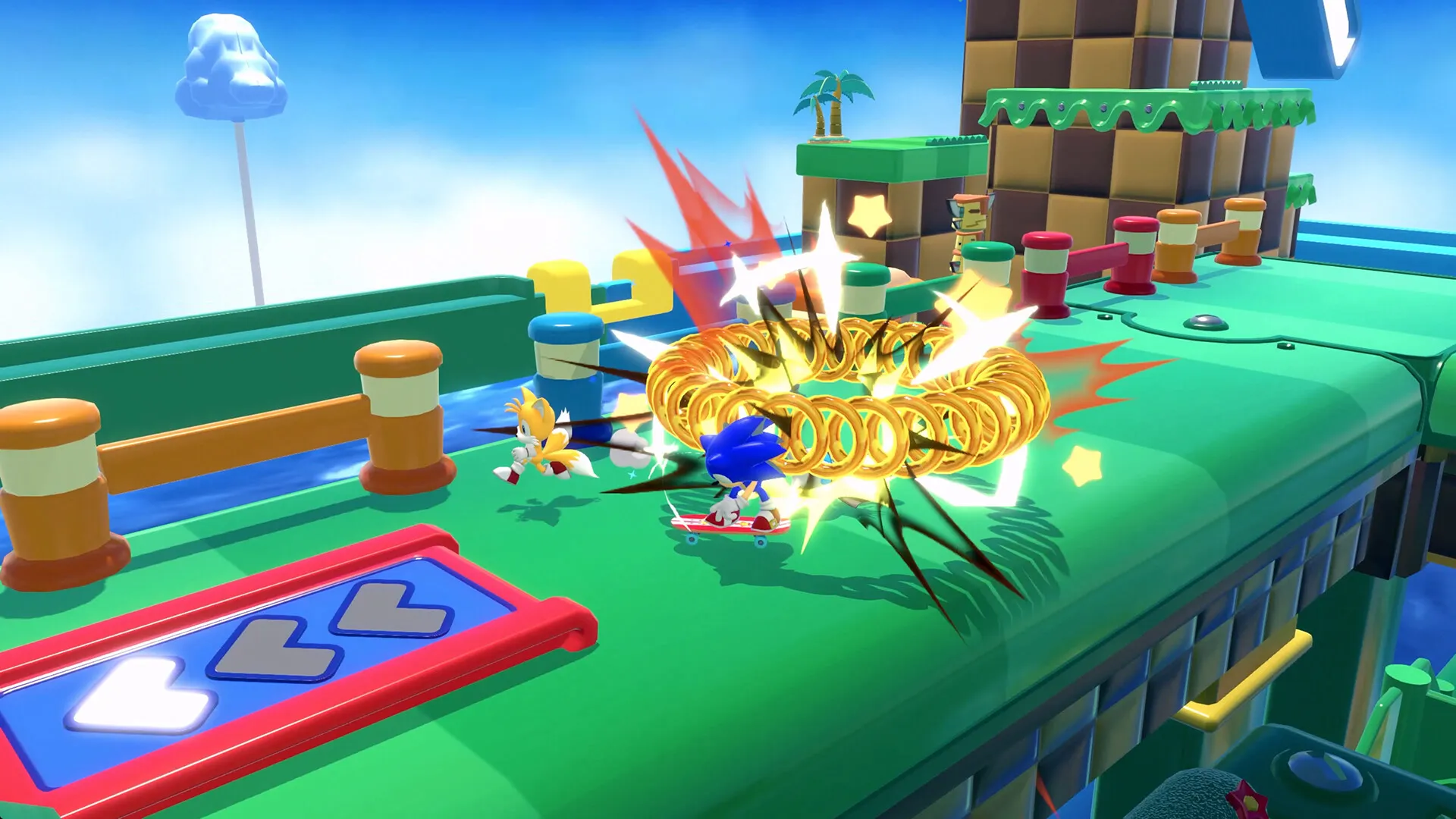
Dr. Eggman sets the stage with a bizarre concept called Egg Toy Land, a battleground presented as a miniature dimension where the cast exists as plastic figures. That framing gives the environments a deliberately artificial look. Familiar locations such as Green Hill and Chemical Plant Zone show up as physical playsets, complete with a plastic sheen on surfaces and hazards that resemble moving parts inside a toy machine. The toy-box logic frees the team to remix layouts without chasing naturalistic world detail, and the result feels cleanly themed from top to bottom.
Green Hill alone gets eight variations, and the differences matter. Some builds emphasize vertical platforming, using fans and springs placed to push players into quick read-and-react jumps. Other versions push speed history through dash panels and steep ramps that reward confident lines and commitment. That rotation keeps repetition in check, a common problem for mobile-focused loops that expect frequent play.
The roster is wide enough to cover the obvious picks and deep cuts. Sonic and Tails sit alongside characters such as Zavok and Vector, with Big the Cat and Blaze the Cat joining the mix. Each model holds onto the familiar character charm while matching the toy framing. Story sits in the background. Cutscenes stay brief and mainly exist to sell the game show format. New players may feel unmoored by the lack of character context, since the game offers no detailed explanations for why these figures are competing in the first place. The design points toward instant action, not lore building.
Most of the narrative flavor comes from the environments. Toy-like buttons and oversized switches repeat across stages, and that consistent visual language reinforces the sense of a controlled experiment. Egg Toy Land reads as a physical box of toys animated into a competitive arena, and the clarity of that idea helps the setting carry weight even with minimal plot.
The Funnel of Elimination and Strategic Ring Scrambles
The tournament structure runs on a strict funnel that manufactures tension through shrinking odds. Every match begins with 32 players, then cuts down through three defined stages. Round one is always Run, a straightforward race where speed and clean movement decide who stays. You need to reach the finish line before half the field gets eliminated, which makes early mistakes expensive.
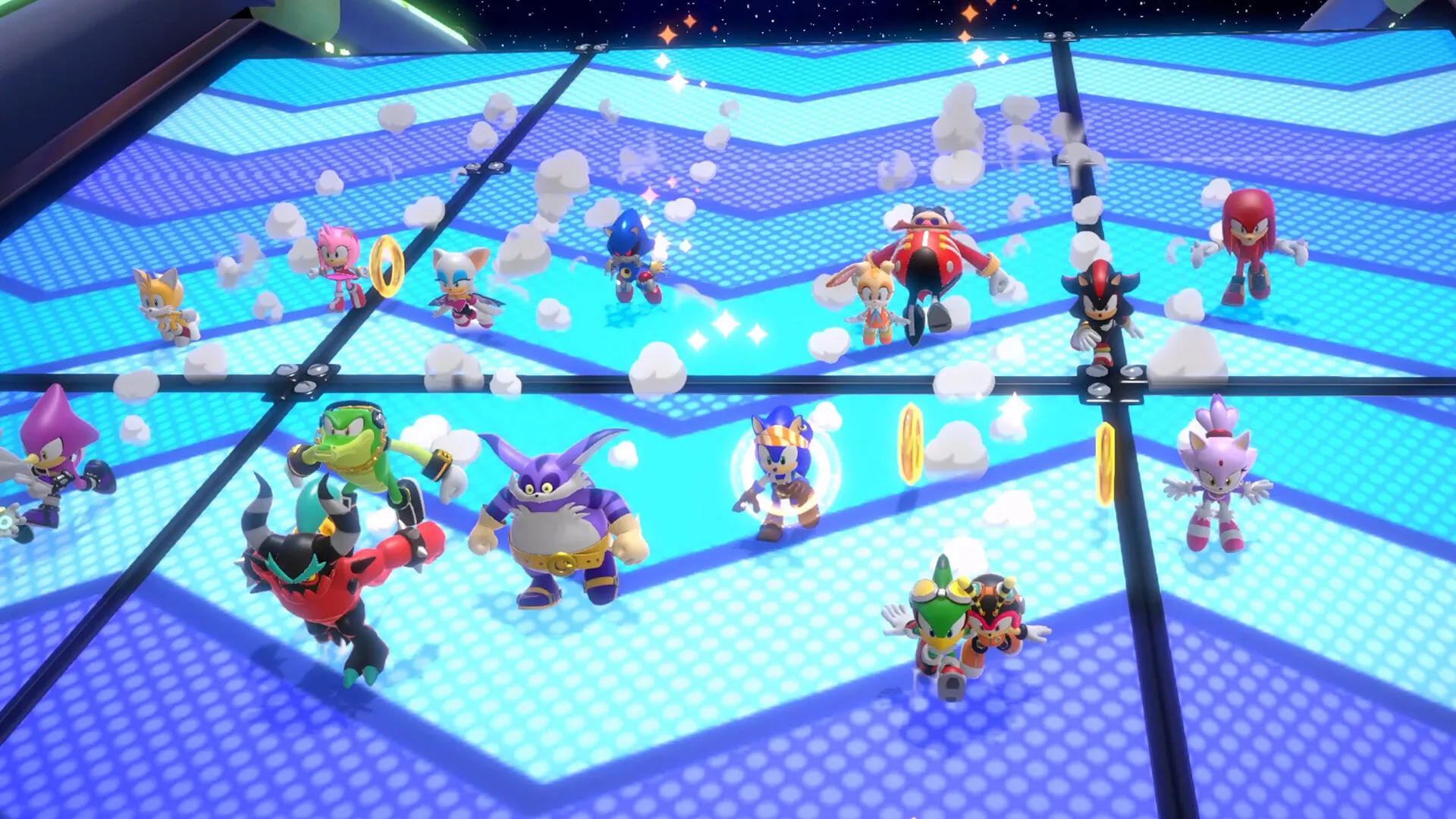
Round two changes shape, pulling from Survival, Hunt, or Team modes. Survival asks players to hold position on a shrinking arena or avoid threats like deadly lasers, with space control becoming the real skill test. Hunt flips priorities toward score gathering, pushing players to break jars or hit targets for points. Team modes split the remaining 16 players into two squads of eight, then require cooperation to roll giant balls or solve environmental puzzles for qualification. Those team rounds create a different kind of pressure, since your personal execution has to coexist with group coordination.
The last round is Ring Battle, and only eight players make it there. The goal is simple: end the timer with the highest ring count. Where that gets interesting is the carryover rule. Rings collected during the first two rounds follow you into the finale, so early performance shapes your starting position in the endgame. A first-place finish in the opening race grants a meaningful ring bonus that can translate into a real head start. A low seed can enter the final round with nothing, and climbing out of that hole is a steep ask once the arena turns into a brawl.
Co-op Battle mode injects a different rhythm by functioning like a large-scale raid against bosses such as the Biolizard. Players work together to drain a large health bar, dodging area-of-effect attacks and coordinating their hits around timing windows. It breaks up the constant head-to-head intensity of the tournament structure. Squad mode also supports playing with friends as a group, which can make the grind feel more social.
Access to those side modes is often gated. They appear during certain windows throughout the day, which can frustrate anyone whose playtime falls outside those peaks. Solo play exists through Stage Challenges, timed runs on specific levels that reward practice and map knowledge. Those challenges act like training drills, and mastering them is a direct way to prepare for the chaos of 32-player matches. The funnel format rewards consistency more than flash, since reaching the final arena requires clean execution across multiple rule sets.
Deliberate Movement and Tactical Skill Integration
The physics here step away from classic Sonic momentum and land on heavier, more deliberate movement. On mobile, jumps can feel slightly floaty, which makes precision platforming harder for players who expect tight, snappy inputs from mainline entries. Every character can run and double jump, and that double jump becomes essential on the wide gaps found in toy-styled versions of City Escape and Sky Sanctuary.
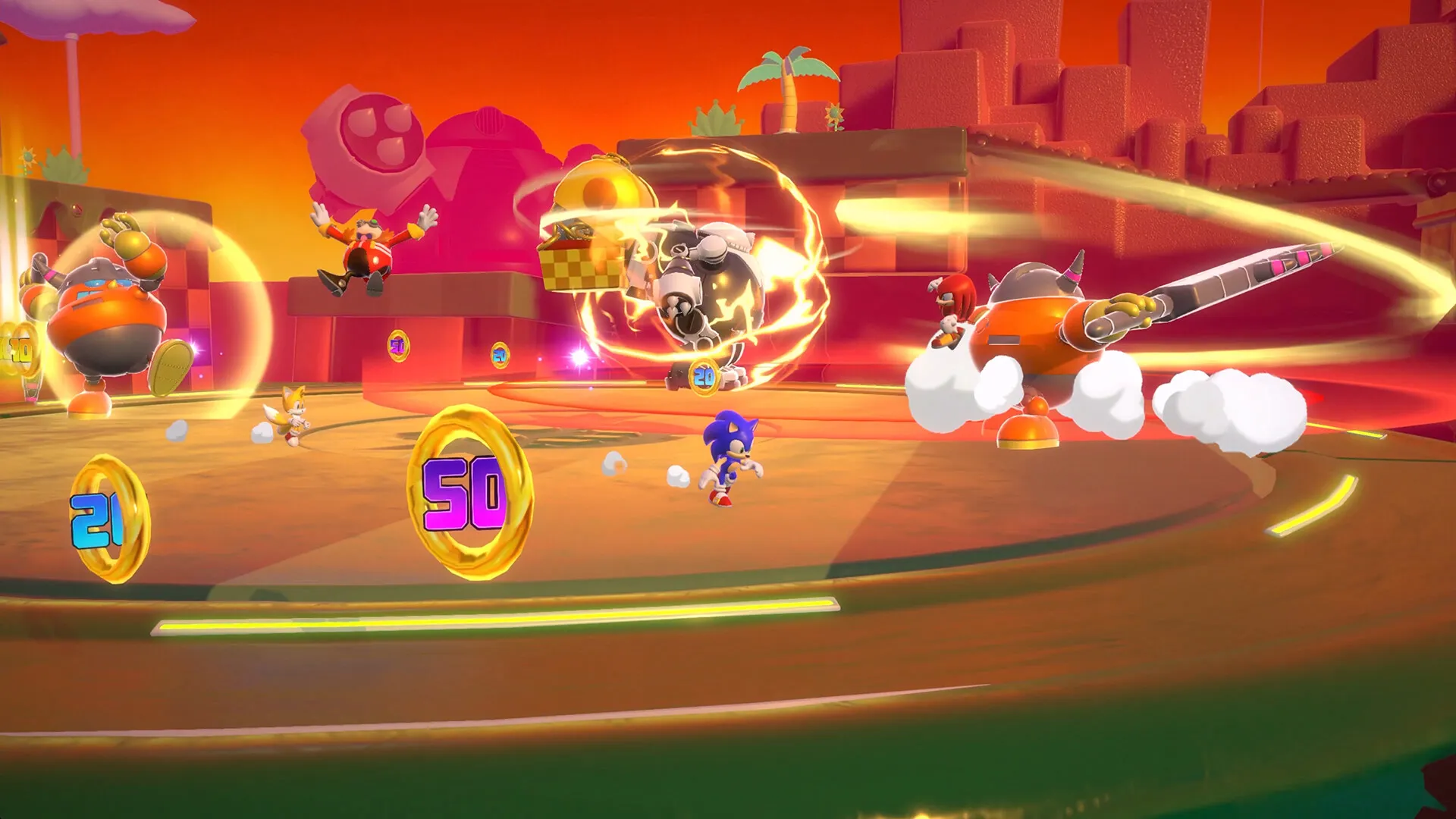
Combat tools are built for utility inside a crowded arena. The attack button performs a homing strike on enemies or objects, and in Ring Battle it becomes a key form of interaction with other players by knocking rings out of opponents. Timing matters. Catching an opponent during a recovery moment can turn a clean lead into a spill of rings across the floor, and those swings feed the match’s tension.
Character skills add another layer. Skills function as active abilities with cooldowns, including options like forward dashes or temporary invincibility shields. Some characters get signature tools tied to their identity. Shadow uses a motorcycle to surge forward, and other characters bring distinct area attacks. These abilities frequently decide the difference between qualifying and getting cut, especially in modes where one mistake equals elimination.
Items complicate the battlefield further. Crates appear across levels, offering temporary boosts like speed shoes. The attack power-up stands out as a huge momentum shifter, since it can steal a large number of rings in one hit. A single successful strike can rip 300 rings from a rival. That kind of swing compresses the match into a final-seconds scramble where positioning and timing can matter more than the scoreboard you had ten seconds earlier.
Controls sit at the core of how that system feels. Touchscreen play works, yet it lacks the precision of a physical controller. Controller support exists and fits players who want serious competition. A controller reduces the latency you feel during double jumps and makes homing attack aiming more consistent. The balancing aims for accessibility while keeping enough mechanical depth for players chasing an edge, and the interplay between skills and item drops creates a tactical layer on top of a straightforward ruleset.
Progression Loops and the Price of Customization
Progression runs on a steady drip of experience. XP comes from final placement and total rings earned, feeding an account level that unlocks cosmetics over time. Free rewards like emotes and basic skins are handed out to keep engagement rolling, and rings sit at the core of the economy.
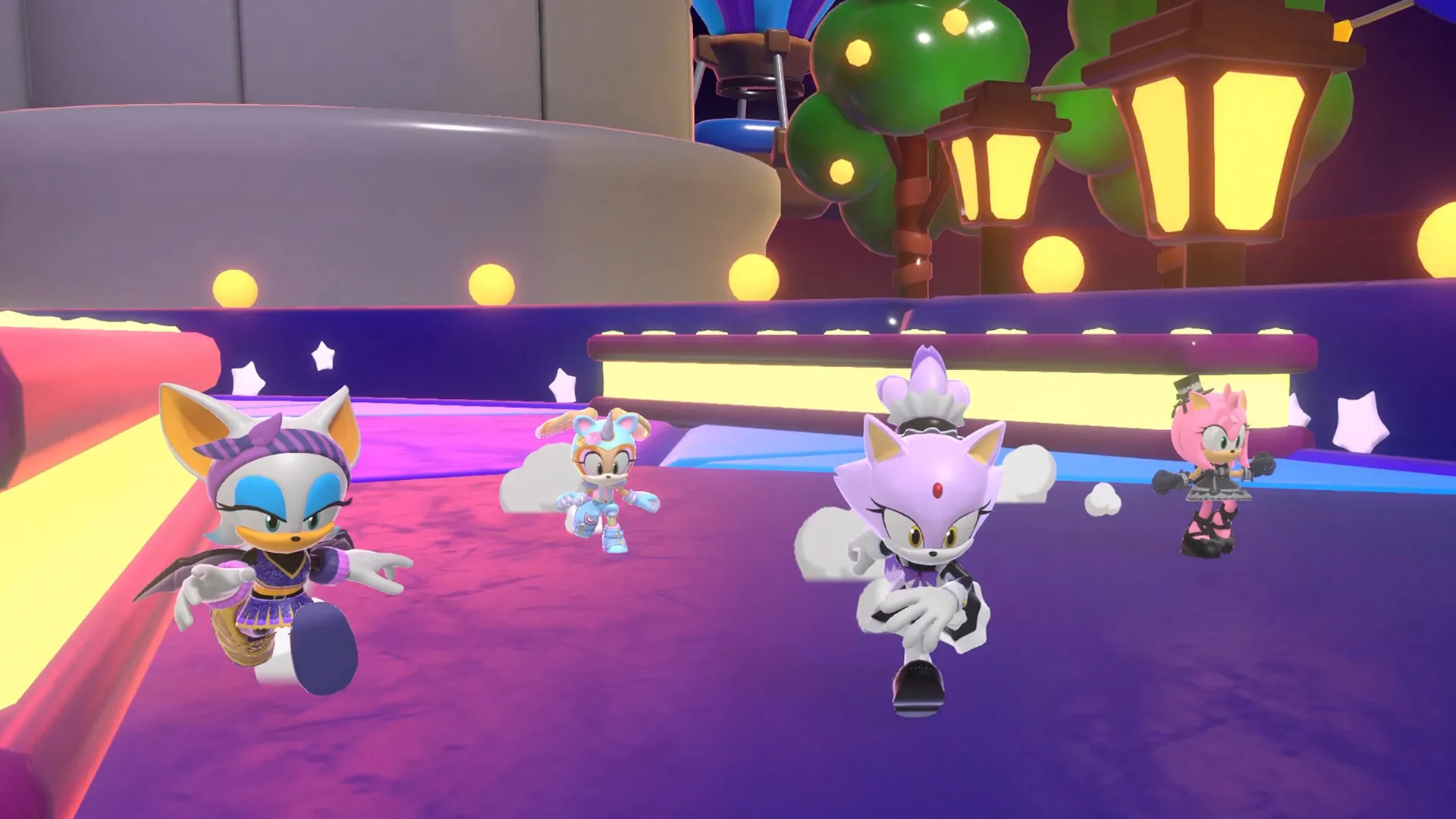
A daily ring cap shapes how fast that economy moves. After you hit the limit, additional matches stop adding to your currency total. The cap reads as a tool for pacing, slowing progression for players who want to grind nonstop and stretching the content across more days. For non-paying players, that also means progress can feel throttled by design, since time spent playing past the cap stops helping the wallet.
Monetization pushes hard. Two paid tracks, the Season Pass and Event Pass, offer exclusive rewards for a fee. The shop leans into high-rarity skins with steep pricing, including cosmetics that reach the equivalent of $60 in real-world money. That number feels outsized for a mobile party battler built around quick rounds.
Skill upgrades add another pressure point. Materials used to improve character abilities appear for sale, which lets players pay to increase the effectiveness of tools like dashes or shields. It does not hand anyone an automatic win, yet it does create a measurable advantage over free players. Anyone looking for a strictly even competitive environment may find that difficult to ignore.
Customization has depth beyond simple palette tweaks. Skins include Movie Sonic and armored Excalibur Sonic, and buddies like Chao can follow you around for visual flavor without shifting gameplay balance. That broad cosmetic pool gives dedicated fans a long-term chase. The constant nudge toward microtransactions can wear on players, especially with pop-up ads pushing new sales. The daily ring cap reinforces that pressure by slowing organic progress and making spending feel like the fastest path forward.
Saturated Visuals and the Impact of Jazzy Audio
Visually, the game leans into bright Sonic energy. The toy framing supports bold colors and sharp contrast, and character models carry strong detail. Animations reference character history through signature movement, like Shadow skating in motion and Tails hovering briefly with his namesake. Even in the loudest moments, the level layouts stay readable enough for players to spot hazards and pick routes through the crowd.
Performance can wobble on older hardware. Matches packed with 32 players can trigger frame rate drops, and some users have reported freezing during transitions between rounds. Those issues land hardest in a game built on quick timing windows, where a hitch can decide an elimination.
Audio stands out as a major strength. The soundtrack uses high-energy jazz takes on iconic themes, and a brass-heavy version of “Escape from the City” adds extra punch to City Escape stages. The main menu theme sets an upbeat party tone, and the sound effects deliver crisp feedback through ring chimes and the pop of destroyed enemies. Voice acting is absent, which leaves some game show energy on the table, since character banter could have strengthened the presentation.
The user interface is the roughest part of the visual package. It packs the screen with icons and notifications, and finding specific menus can require multiple taps through layered sub-screens. Frequent ads for currency packs add more clutter to that layout.
Technical issues exist, and the game’s presentation keeps its charm. The visual style connects modern mobile polish with classic SEGA identity, and the heavy saturation plays well on high-resolution phone screens. The music carries the experience from menu to match without losing energy. Each zone lands as a miniature celebration of Sonic history, filtered through that toy-box lens.
The Review
Sonic Rumble
Sonic Rumble provides a charming, bite-sized competitive experience that successfully adapts the blue hedgehog to the party battle royale genre. While the slower movement and floaty physics might alienate speed purists, the tactical layer provided by the ring-collection system and character skills offers depth beyond simple racing. The aggressive monetization and high price of cosmetics are significant drawbacks that hinder long-term appeal. It remains a visually bright and musically infectious distraction for casual fans, even if it lacks the precision and polish of a mainline entry.
PROS
- The toy-themed reimagining of classic levels is visually distinctive and polished.
- Jazzy arrangements of legendary series themes provide a high-energy atmosphere.
- The ring-retention mechanic makes early rounds feel meaningful for the final outcome.
- A high number of zone iterations prevents the gameplay from feeling repetitive.
CONS
- High prices for skins and the ability to buy skill upgrades create an uneven playing field.
- Frequent frame drops and occasional freezing occur during crowded matches.
- Touchscreen movement lacks the precision required for more difficult platforming sections.
- Restrictions on ring collection bottleneck progress for non-paying players.