

























![Kingdom Hearts Collection [I-III] Review](https://gazettely.com/wp-content/uploads/2026/10/Kingdom-Hearts-Collection-I-III-1-360x180.webp "Kingdom Hearts Collection [I-III] Review: KHII Holds Steady as Newer Entries Fluctuate 37")



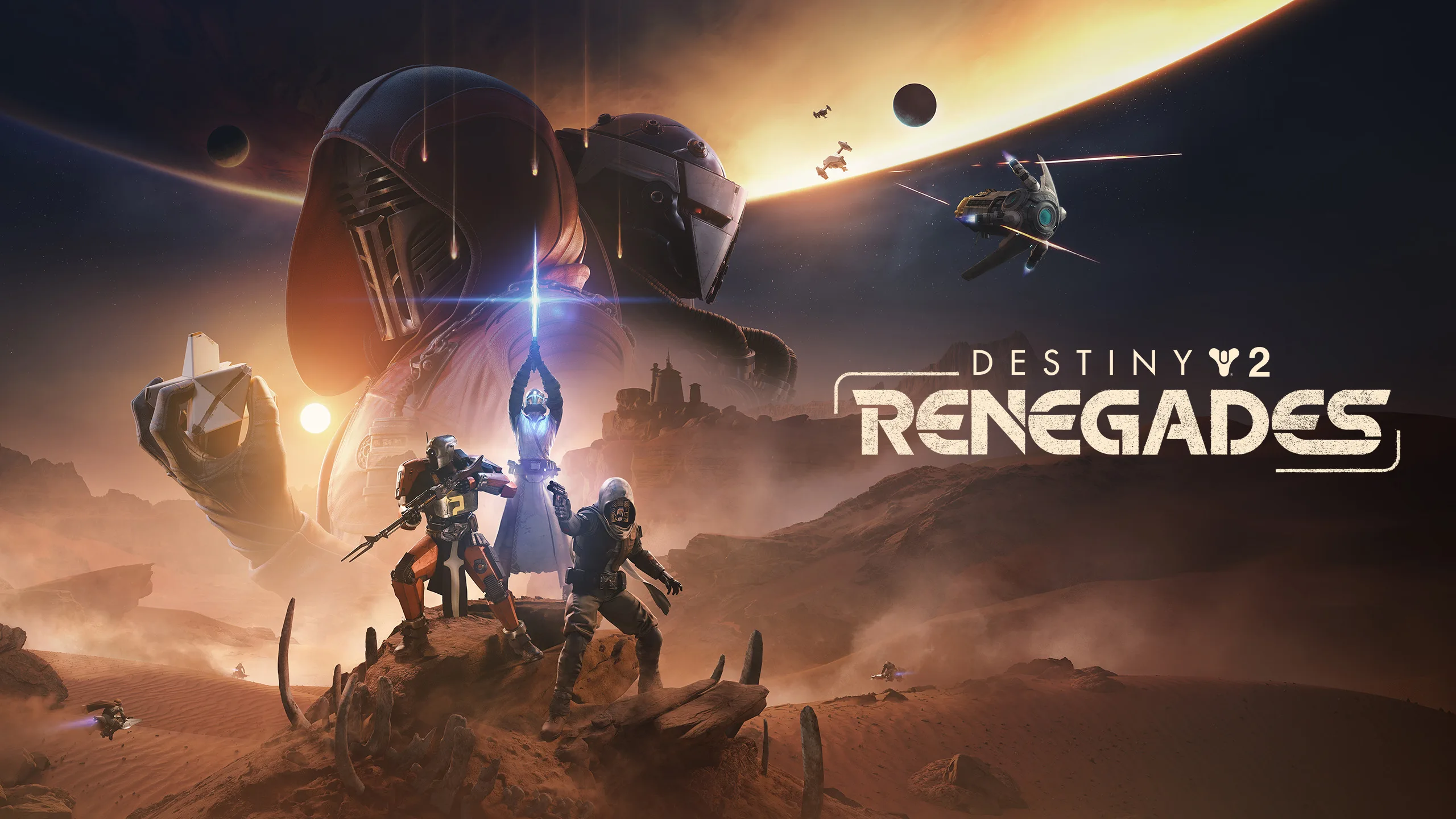

Bungie has pulled off something genuinely strange with Destiny 2: Renegades. This is the franchise’s first licensed crossover, a Star Wars expansion that refuses to actually be Star Wars. You won’t encounter Luke Skywalker or visit the real Tatooine, but you’ll absolutely recognize the DNA. The gamble here is whether wrapping Destiny’s existing framework in Star Wars trappings can feel like anything other than corporate synergy run amok.
The surprising answer is yes, mostly. Destiny has always borrowed from George Lucas’s playbook: space magic users, ancient evils, the eternal struggle between Light and Darkness. These parallels make the crossover feel less like a collision and more like a homecoming. Renegades includes a campaign that runs about eight hours, an extraction-inspired activity called Lawless Frontier, actual lightsabers (officially dubbed Praxic Blades), blaster weapons, and an endgame dungeon. This is a medium-sized offering, not a reinvention.
The expansion lands during a rough patch for Destiny 2. Player counts have dipped, content releases have shrunk, and the last expansion failed to ignite much enthusiasm. Renegades arrives with the energy of a Hail Mary pass, leaning hard into nostalgia and spectacle. It’s undeniably cheesy, but cheese can be delicious if prepared correctly. Here, the kitchen mostly delivers.
A Story That Moves Too Fast to Catch Its Breath
The narrative puts you against Dredgen Bael, a villain who wears his Kylo Ren inspiration on his sleeve. Voice actor Aleks Le delivers an excellent performance, switching between cold calculation and wounded vulnerability within single scenes. Bael leads the Barant Imperium, a Cabal faction decked out in white Stormtrooper armor, and he’s building a superweapon. Thankfully, it’s not another planet-destroying laser, but something that poses a different existential threat to the Destiny universe.
You’re joined by Aunor from the Praxic Order, who is essentially a Jedi without the copyright issues, alongside returning faces like the Drifter, Eris Morn, and Eido. The campaign itself features strong set piece missions that recall Destiny’s better narrative moments. The quest to obtain your lightsaber ranks among the expansion’s highlights, blending exploration with satisfying mechanical challenges. Between major story beats, you’re funneled into Lawless Frontier runs, which serve as both pacing breaks and introductions to that core activity.
The problem is compression. Destiny 2’s current content model has eliminated weekly story missions, the structure that once let plot developments breathe. Here, character arcs that deserve episodes get minutes. Someone gets captured between missions with no buildup or explanation. Motivations flip on a dime. The ending arrives abruptly, resolving Bael’s immediate threat while barely advancing Destiny’s larger narrative. It feels like watching a movie with crucial scenes cut for time, leaving you with whiplash instead of catharsis.
The Star Wars homage commits fully to the bit, for better and worse. The opening mission alone includes a garbage compactor escape, a carbon freezing rescue, a lightspeed jump, and a masked villain watching you slip away. Later, you’ll encounter what’s clearly Jabba’s sail barge hovering over a Sarlacc-like pit. These moments range from charming to eye-rolling, sometimes within the same mission. The expansion’s willingness to embrace Star Wars corniness does provide a tonal shift for Destiny’s typically self-serious universe. There’s liberation in the “screw it” energy here, even when specific references land with a thud.
The Grind Gets a New Coat of Paint
Lawless Frontier forms Renegades’ mechanical backbone. This extraction shooter-inspired mode drops you and two teammates into one of three maps to complete familiar Destiny objectives: defend zones, carry objects under fire, eliminate high-value targets. You’re collecting loot boxes along the way, racing against a timer and finite team revives to extract successfully. Three maps, three mission types, three enemy races create enough combinations to feel varied initially. The enemy density here is remarkable, with runs regularly producing 400 to 500 kills. This makes Lawless Frontier excellent for testing new builds and loadouts.

The three maps transform existing Destiny locations into Star Wars analogues. Europa becomes Hoth, complete with anti-aircraft cannons and frozen bunkers. Mars shifts into Tatooine’s dunes and canyons. Venus morphs into swampland and forests that evoke Dagobah and Endor. These visual makeovers work well for fans of both franchises, creating spaces that feel fresh while maintaining Destiny’s fundamental geography. The enemy variety disappoints, though. Beyond Cabal sporting Stormtrooper whites, you’re shooting the same creatures you’ve fought for years.
Renegade Abilities inject tactical variety into these runs. Exclusive to Lawless Frontier, these support options let you call airstrikes, drop healing domes, or summon the Behemoth, an AT-ST-inspired mech walker. You unlock new abilities by leveling faction reputation, creating a progression system that feels meaningful during these activities. The Behemoth especially can swing difficult encounters in your favor. These tools feel powerful and fun, which makes their restriction to this single mode frustrating. There’s also a control mapping issue: abilities share a button with finishers and Prismatic transcendence, leading to frequent accidental activations when you meant to execute a different action entirely.
The invasion system feels half-baked. Solo players can jump into ongoing Lawless Frontier runs as hostile agents, attempting to score kills across multiple lives while stealing loot. The invaded team receives extra revives to compensate, which immediately deflates any tension. Matches can only be invaded once, typically early in the run, making it a minor speed bump rather than a persistent threat. Rewards for repelling invaders are negligible given how generously loot flows anyway. Invading is efficient for gear farming, but it feels wrong to interrupt PvE-focused players who are already managing waves of AI enemies. The system exists because extraction shooters “need” PvP elements, not because this particular implementation serves the experience. Higher stakes or better incentives could have made invasions meaningful; as implemented, they’re a forgettable footnote.
Repetition creeps in quickly. The three maps and objective types become routine after a handful of runs, and you’ll be doing far more than a handful. The same voice lines and conversations loop endlessly, embedding themselves in your brain whether you want them there or not. This is standard Destiny grinding wearing a new skin. The generous loot rewards help, with complete armor sets dropping after just a few hours of play, but more map variety would have extended the activity’s shelf life considerably.
New Tools for Familiar Problems
Praxic Blades are lightsabers, full stop. Bungie can call them whatever they want, but when you’re throwing your blade like Vader hunting Luke, deflecting blaster fire like a Jedi in the Clone Wars, or closing for melee strikes that hum with that iconic vwooom, everyone knows what you’re wielding. The acquisition quest ranks among the expansion’s best exotic missions, blending puzzle-solving with combat in satisfying proportions.
Once obtained, you can customize blade colors and mods, creating an endgame chase for specific combinations. The weapon feels genuinely powerful, especially when paired with artifact mods that enhance its capabilities. Mechanically, Praxic Blades don’t differ drastically from existing sword archetypes, but the Star Wars fantasy does considerable heavy lifting. There’s something tonally jarring about lightsabers appearing after ten years of Destiny lore that never mentioned them, but the fun factor overwhelms that discontinuity. Sometimes you just want to deflect bullets back at Cabal while making lightsaber sounds, and Renegades understands that.
Heat Weapons represent a more systemic addition. This entirely new weapon archetype replaces traditional ammunition with heat management. Fire continuously and the weapon overheats, forcing a cooling period. This effectively swaps reloading for venting, creating a different rhythm in combat. Available as Pulse Rifles, Hand Cannons, and Heavy Snipers, each variant feels distinct. They’re satisfying to use and make those perfect Star Wars pew-pew sounds that sell the blaster fantasy. For players who find reloading tedious, these weapons offer a welcome alternative playstyle.
The Equilibrium dungeon delivers what Destiny’s raid-lite activities typically do: challenging encounters, beautiful environments, and unique loot worth chasing. The Star Wars aesthetic gives this content fresh energy that the game’s usual grim tone lacks. Boss fights prove memorable, particularly a dual-wielding lightsaber opponent who demands precise execution. Enemy-dense rooms and platforming sequences fill out the experience between major encounters. Equilibrium runs shorter than previous dungeons, completable in under two hours, and feels easier than some past offerings. That brevity works both ways: it’s approachable for less hardcore players but offers less depth for those seeking marathon challenge runs. The loot quality justifies multiple playthroughs regardless.
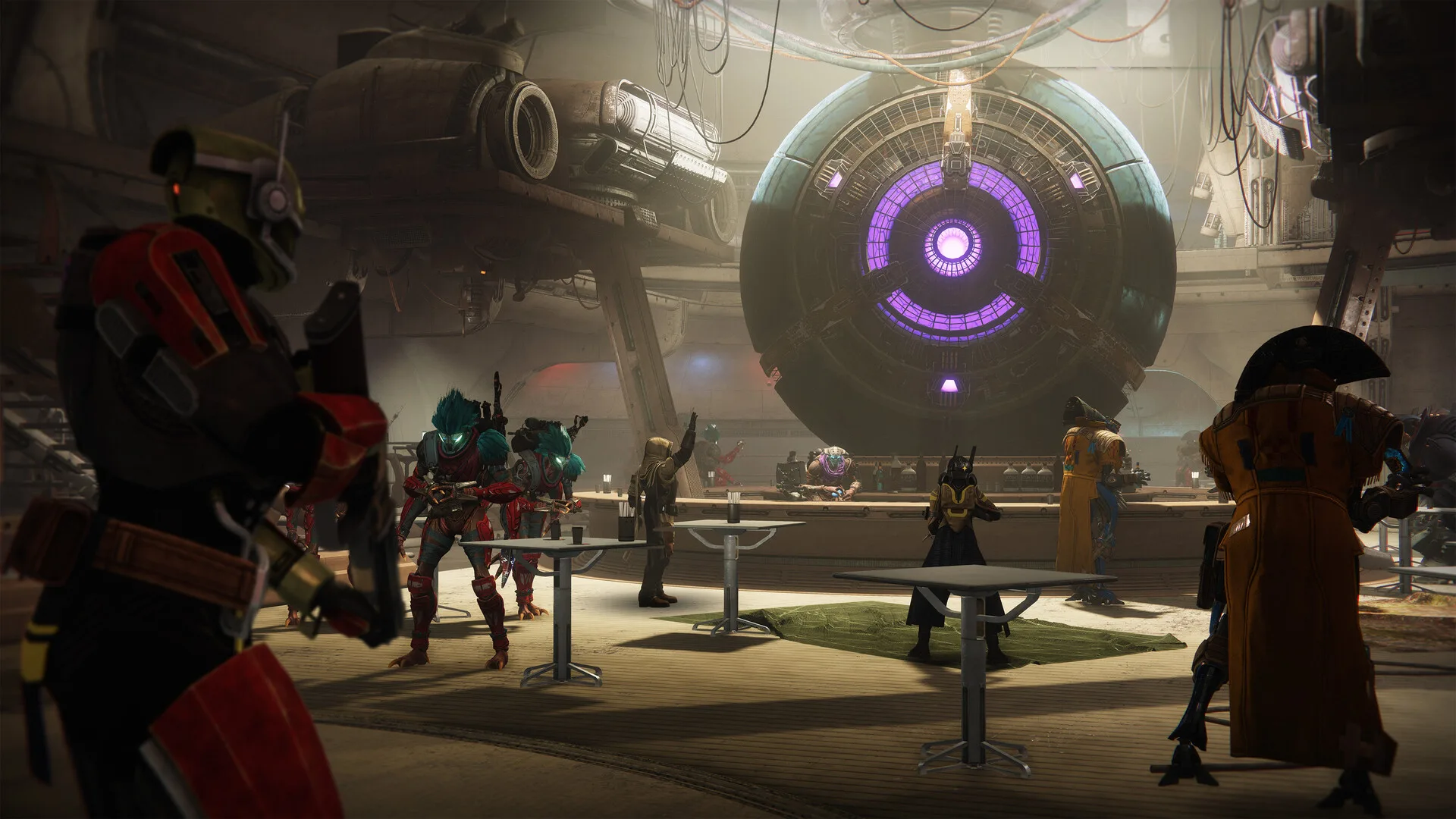
Tharsis Outpost becomes your new social hub, housing three faction leaders representing Cabal, Fallen, and Vex gangs. The factions inject welcome humor into Destiny’s usually stern universe. Vex who’ve gained individuality now obsess over fashion and gambling, wearing ponchos and arguing about aesthetics. The smaller space feels more alive than the Tower’s sprawling emptiness, though the spawn point could be closer to the cantina where you’ll spend most of your time. It’s a minor navigation annoyance that adds up over dozens of visits.
Renegades succeeds as a palate cleanser for Destiny 2, offering breezy fun and solid mechanical additions without solving any of the game’s structural problems. The compressed content model still leaves too much empty space between releases. The activities still become repetitive grinds. The larger narrative still spins its wheels. What you get here is a well-executed experiment that works better than it should, carried by Bungie’s strong fundamentals and a willingness to lean into absurdity. It’s a shallow breath of fresh air, but sometimes that’s exactly what you need.
Destiny 2: Renegades is a major downloadable content (DLC) expansion for the action role-playing, looter shooter, and massively multiplayer online (MMO) game, Destiny 2. Developed and published by Bungie, this expansion was officially released on December 2, 2025, and is considered a part of the “Fate Saga” narrative arc. The content plunges Guardians into a new adventure in the Lawless Frontier to infiltrate Sol’s warring criminal underworld, featuring new story missions, a new three-player dungeon, and high-risk assignments that force players to forge uneasy alliances with rival syndicates. The game is available on multiple platforms, including Windows PC (via Steam), PlayStation 4, PlayStation 5, Xbox One, and Xbox Series X/S.
Full Credits
Director (Creative/Game Director): Tyson Green
Writers (Lead Writer/Narrative Designer): Alison Lührs, Robbie Stevens
Producers/Studio Leadership (Producers, Executive Producers, and Key Studio Heads): Justin Truman, Jonny Ebbert, Jason Jones
Lead Voice Cast: Nolan North, Keith David, Todd Haberkorn, Morla Gorrondona, Aleks Le, Stephanie Kerbis
Art Director/Lead Artist: Dave Samuels
Composer/Sound Director: Pieter Schlosser, Josh Mosser, Rotem Moav, Brendon Williams, Laryssa Okada
Developer, Publisher: Bungie
Release Date: December 2, 2025
The Review
Destiny 2: Renegades
Destiny 2: Renegades proves that a Star Wars crossover can work within Bungie's framework, delivering enjoyable lightsaber combat, satisfying blaster weapons, and a refreshing tonal shift. The Lawless Frontier activity provides solid loot-driven gameplay despite repetition, while the Equilibrium dungeon maintains the series' endgame standards. However, rushed pacing undermines the campaign, and half-baked invasion mechanics feel obligatory rather than inspired. This expansion won't convert skeptics or fix Destiny 2's deeper issues, but it offers enough fun for existing players and Star Wars fans seeking something different.
PROS
- Lightsabers and blaster weapons feel fantastic to use
- Strong set piece missions and exotic quests
- Equilibrium dungeon delivers quality endgame content
- Generous loot rewards reduce grind frustration
- Renegade Abilities add tactical depth to encounters
CONS
- Campaign pacing feels rushed and poorly edited
- Only three Lawless Frontier maps become repetitive quickly
- Invasion mechanics lack meaningful stakes
- Star Wars references sometimes feel forced