


























• Latest
  • Trending
Simogo Legacy Collection Review

Simogo Legacy Collection Review: The Essential Archive of Experimental Design

Orbitals Review

Orbitals Review: Two Players, One Very Cozy Corner of Space

A Long Winter Review

A Long Winter Review: Desire and Grief Beneath the Colorado Snow

The Box Review

The Box Review: Chaos Comes Without Instructions

Father Joe Review

Father Joe Review: Al Pacino Meets His Most Violent Confessor

Oasis Don’t Look Back in Anger Review

Oasis: Don’t Look Back in Anger Review: Reunion Without Revelation

Serious Sam: Shatterverse Review

Serious Sam: Shatterverse Review: Five Sams Enter the Roguelite

It Will Happen Tonight Review

It Will Happen Tonight Review: One Great Dance in a Wobbly Love Story

Primetime Review

Primetime Review: Chris Hansen Meets the Monster of Celebrity

Diane in the Loop Review

Diane in the Loop Review: Who Owns Another Generation’s Trauma?

Eklipse Review

Eklipse Review: AIDS Stigma Seen Through a Child’s Eyes

Crimson Moon Review

Crimson Moon Review: Soulslike Combat Finds a Faster Rhythm

Our Share of Sand Review

Our Share of Sand Review: Privilege Has a Price

  • Home
  • Privacy Policy
  • Terms and Conditions
  • Gazettely Review Guidelines
Monday, September 7, 2026
GAZETTELY
  • Home
  • Movie and TV News
    Lilly Wachowski

    Lilly Wachowski Steps Back From ‘Matrix’ Franchise: “I’m Kinda Done”

    Ink

    Netflix Bets Big on ‘Ink’ as an Oscar Contender

    Susan Sarandon

    Sarandon Says She’s Losing Roles Over Palestine Support

    Nicolas Cage

    Nicolas Cage Says ‘Spider-Noir’ Cancellation Feels ‘Perfect’

    Tokyo Film Festival

    Tokyo Film Festival Adds Awards for Women, New Talent Competition

    May el-Toukhy

    Director Stops Her Own Venice Premiere Over Subtitle Error

    You Can See Everything

    Nathan Fielder’s Secret Elizabeth Holmes Doc Revealed at Telluride

    Ernest Harden Jr.

    Ernest Harden Jr., 73, Wins First Emmy for ‘The Pitt’

    Spider-Noir

    ‘Spider-Noir’ Wins Five Emmys Days After Cancellation

  • Movie and TV Reviews
    A Long Winter Review

    A Long Winter Review: Desire and Grief Beneath the Colorado Snow

    The Box Review

    The Box Review: Chaos Comes Without Instructions

    Father Joe Review

    Father Joe Review: Al Pacino Meets His Most Violent Confessor

    Oasis Don’t Look Back in Anger Review

    Oasis: Don’t Look Back in Anger Review: Reunion Without Revelation

    It Will Happen Tonight Review

    It Will Happen Tonight Review: One Great Dance in a Wobbly Love Story

    Primetime Review

    Primetime Review: Chris Hansen Meets the Monster of Celebrity

    Diane in the Loop Review

    Diane in the Loop Review: Who Owns Another Generation’s Trauma?

    Eklipse Review

    Eklipse Review: AIDS Stigma Seen Through a Child’s Eyes

    Our Share of Sand Review

    Our Share of Sand Review: Privilege Has a Price

  • Game Reviews
    Orbitals Review

    Orbitals Review: Two Players, One Very Cozy Corner of Space

    Serious Sam: Shatterverse Review

    Serious Sam: Shatterverse Review: Five Sams Enter the Roguelite

    Crimson Moon Review

    Crimson Moon Review: Soulslike Combat Finds a Faster Rhythm

    Gallipoli Review

    Gallipoli Review: Every Bullet Changes the Battlefield

    Aggelos 2 Review

    Aggelos 2 Review: Old-School Adventure Finds a Second Form

    Box Knight Review

    Box Knight Review: Corporate Hell Has Excellent Art Direction

    NBA 2K27 Review

    NBA 2K27 Review: The NBA Experience Still Travels Well

    Aliens: Fireteam Elite 2 Review

    Aliens: Fireteam Elite 2 Review: Four Marines Against an Old Threat

    Nioh 3 Hell Rising Review

    Nioh 3 Hell Rising Review: Building New Paths Through Edo

  • The Bests
No Result
View All Result
  • Home
  • Movie and TV News
    Lilly Wachowski

    Lilly Wachowski Steps Back From ‘Matrix’ Franchise: “I’m Kinda Done”

    Ink

    Netflix Bets Big on ‘Ink’ as an Oscar Contender

    Susan Sarandon

    Sarandon Says She’s Losing Roles Over Palestine Support

    Nicolas Cage

    Nicolas Cage Says ‘Spider-Noir’ Cancellation Feels ‘Perfect’

    Tokyo Film Festival

    Tokyo Film Festival Adds Awards for Women, New Talent Competition

    May el-Toukhy

    Director Stops Her Own Venice Premiere Over Subtitle Error

    You Can See Everything

    Nathan Fielder’s Secret Elizabeth Holmes Doc Revealed at Telluride

    Ernest Harden Jr.

    Ernest Harden Jr., 73, Wins First Emmy for ‘The Pitt’

    Spider-Noir

    ‘Spider-Noir’ Wins Five Emmys Days After Cancellation

  • Movie and TV Reviews
    A Long Winter Review

    A Long Winter Review: Desire and Grief Beneath the Colorado Snow

    The Box Review

    The Box Review: Chaos Comes Without Instructions

    Father Joe Review

    Father Joe Review: Al Pacino Meets His Most Violent Confessor

    Oasis Don’t Look Back in Anger Review

    Oasis: Don’t Look Back in Anger Review: Reunion Without Revelation

    It Will Happen Tonight Review

    It Will Happen Tonight Review: One Great Dance in a Wobbly Love Story

    Primetime Review

    Primetime Review: Chris Hansen Meets the Monster of Celebrity

    Diane in the Loop Review

    Diane in the Loop Review: Who Owns Another Generation’s Trauma?

    Eklipse Review

    Eklipse Review: AIDS Stigma Seen Through a Child’s Eyes

    Our Share of Sand Review

    Our Share of Sand Review: Privilege Has a Price

  • Game Reviews
    Orbitals Review

    Orbitals Review: Two Players, One Very Cozy Corner of Space

    Serious Sam: Shatterverse Review

    Serious Sam: Shatterverse Review: Five Sams Enter the Roguelite

    Crimson Moon Review

    Crimson Moon Review: Soulslike Combat Finds a Faster Rhythm

    Gallipoli Review

    Gallipoli Review: Every Bullet Changes the Battlefield

    Aggelos 2 Review

    Aggelos 2 Review: Old-School Adventure Finds a Second Form

    Box Knight Review

    Box Knight Review: Corporate Hell Has Excellent Art Direction

    NBA 2K27 Review

    NBA 2K27 Review: The NBA Experience Still Travels Well

    Aliens: Fireteam Elite 2 Review

    Aliens: Fireteam Elite 2 Review: Four Marines Against an Old Threat

    Nioh 3 Hell Rising Review

    Nioh 3 Hell Rising Review: Building New Paths Through Edo

  • The Bests
No Result
View All Result
GAZETTELY
No Result
View All Result
Simogo Legacy Collection Review

Black Rabbit, White Rabbit Review: Mokri's Meta-Puzzle and the Logic of the Long Take

Juliette Binoche Urges West to Hear Arab Women’s Stories at Red Sea Panel

Home Games Reviews Games

Simogo Legacy Collection Review: The Essential Archive of Experimental Design

Coby D'Amore by Coby D'Amore
9 months ago
in Games, Nintendo, PC Games, Reviews Games
Reading Time: 5 mins read
A A
0
Share on FacebookShare on TwitterShare on PinterestShare on WhatsAppShare on TelegramSummarize with ChatGPTSummarize with Perplexity

The life of a mobile game tends to be brief, often cut short by operating system changes and shifting platform priorities. The Simogo Legacy Collection pushes against that fragility and behaves like a curated museum for the formative period of one of indie gaming’s most celebrated studios. Before the studio delivered the high-energy rhythmic action of Sayonara Wild Hearts and the layered narrative puzzles of Lorelei and the Laser Eyes, Simogo built its reputation by examining how players physically interact with a touchscreen.

This collection gathers seven of the studio’s earliest titles, capturing the first half-decade of its development history. It offers a rare chance to study inventive design, strong visual identity, and mechanical experimentation that first tested the team’s ideas. The games here feel distinct, ranging from score-chasing arcade pieces to dense narrative experiences, and together they read like a course in how strict hardware constraints can shape creativity.

Mechanics of Experimentation and Narrative Form

The seven titles share a central Simogo principle: input is never an afterthought and always defines the game’s personality. Across this set you can trace the studio’s shift from simple physics-driven action toward complex, tightly integrated narrative puzzles.

The early arcade projects concentrate on turning physics and motion into satisfying play rhythms. Kosmo Spin gives a first case study, limiting player control to rotating a tiny planetoid. The player guides a character around the curved surface, dodging a UFO and its projectiles while collecting items.

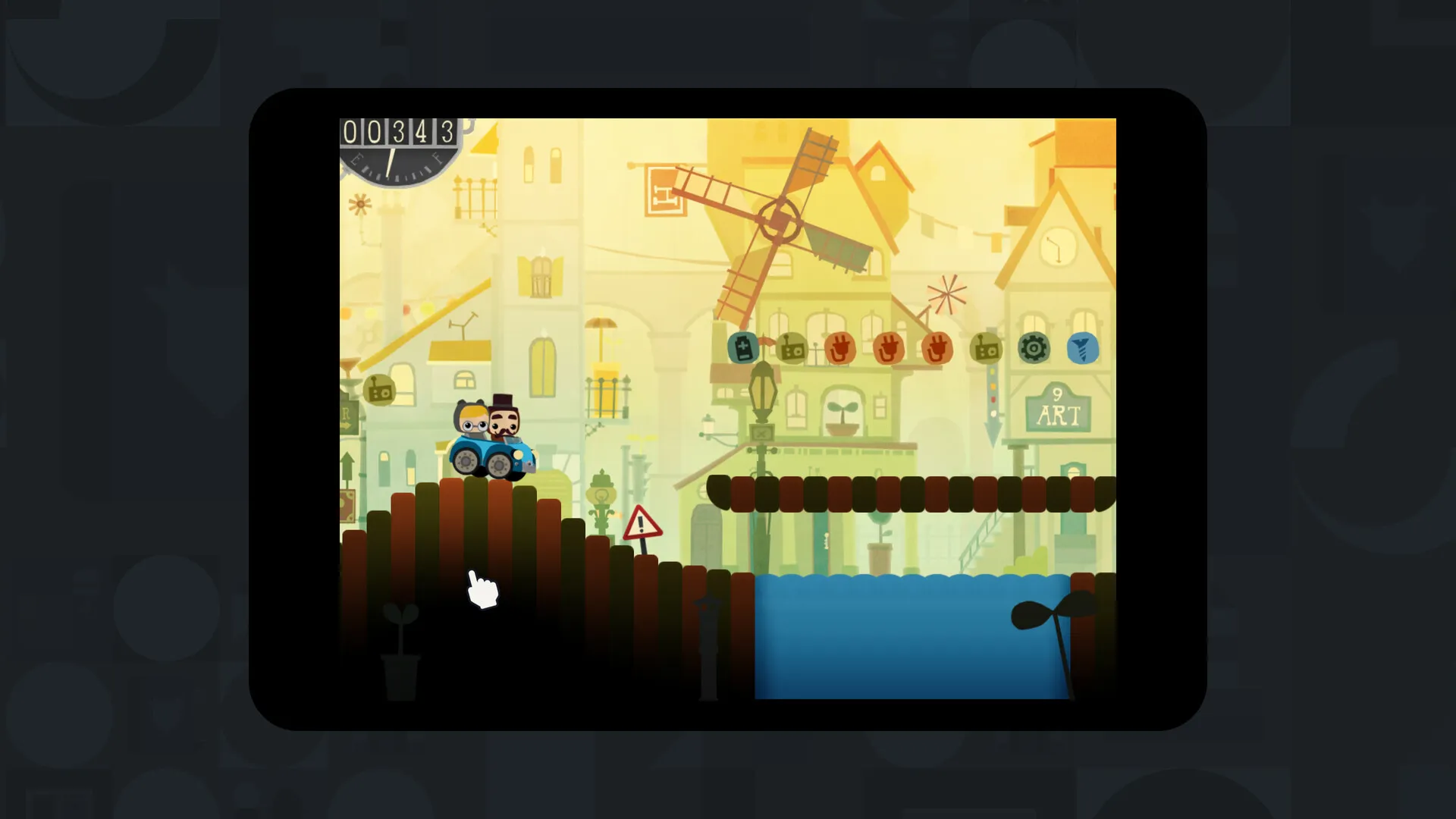
The basic act of rotating the world shows the studio’s first careful experiments with tactile, screen-based control. Bumpy Road raises the stakes mechanically. It sets a straightforward objective, guiding a car across a landscape, yet players act by deforming the road beneath the vehicle with touch input. Control shifts away from the car and into the environment itself, which the player reshapes with each touch.

Constant attention to timing and positioning turns the road into the real main character, and the game becomes a study in indirect control. Beat Sneak Bandit then treats rhythm as a hard rule for movement. This hybrid rhythm, stealth, and puzzle title allows the protagonist to move only when the player taps in time with the beat. Success depends on combining precise musical timing with deliberate spatial planning to move past security and collect items, which creates a satisfying loop where every decision about when to step carries weight.

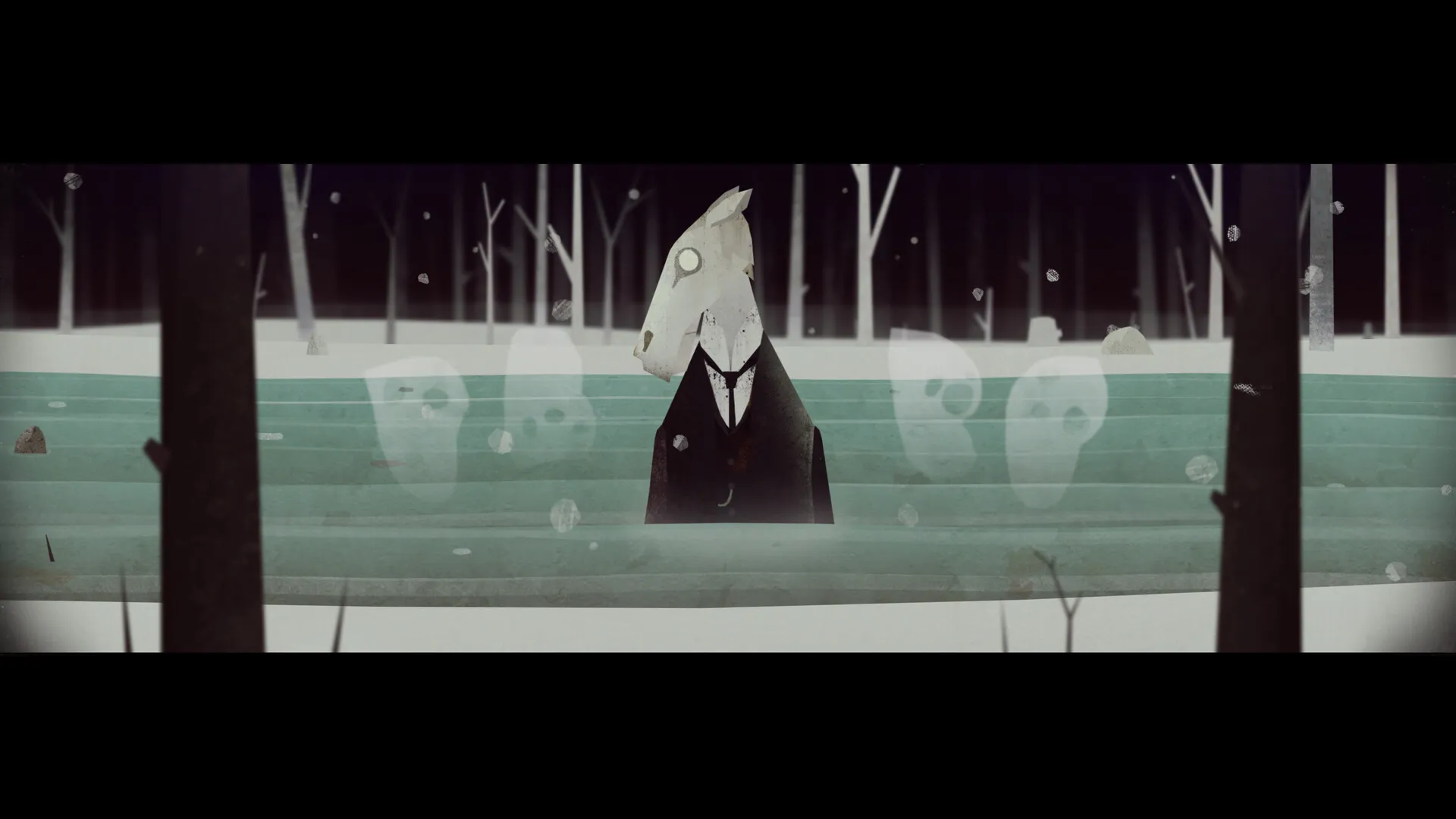
The collection’s narrative ambitions crystallize in the later games, which build on the same experimental mindset. Year Walk presents an atmospheric adventure rooted in cryptic Scandinavian folklore. The game unfolds in first-person, with the player swiping to move between screens in an unsettling forest that always feels close and strange.

This swipe-based transition method keeps the “walking” structure tied directly to touch. Its puzzles lean on abstract environmental clues and sometimes require knowledge from outside the game. The included Year Walk Companion supplies key folklore context that players must absorb to reach the game’s true ending. Device 6 stands as a formal showcase for interactive fiction.

The story’s prose becomes a literal space to cross, with text laid out as a map, its paragraphs and sentences twisting and branching across the screen to represent movement through rooms and paths. Solving its layered audio and logic puzzles demands that players rotate their device to follow the flow of the text, turning the hardware into part of the story’s architecture and making every physical adjustment of the screen feel like a narrative choice.

The Sailor’s Dream shifts focus toward peaceful, open exploration. Narrative fragments and character histories emerge as the player visits locations scattered across a calm ocean. The story’s delivery is tied to real-world time, with certain radio broadcasts available only on specific days or hours, so the player’s decision to return at particular moments becomes another form of participation in the narrative.

SPL-T finishes the set by returning to pure puzzling with a stripped-down surface and significant depth underneath. The core action asks the player to tap the screen to create splits that divide the grid into smaller pieces. Strong play grows out of planning each split, managing the shrinking space, and thinking ahead to the moment when older segments disappear based on their numerical counters.

The Archive and Adaptability of the Port

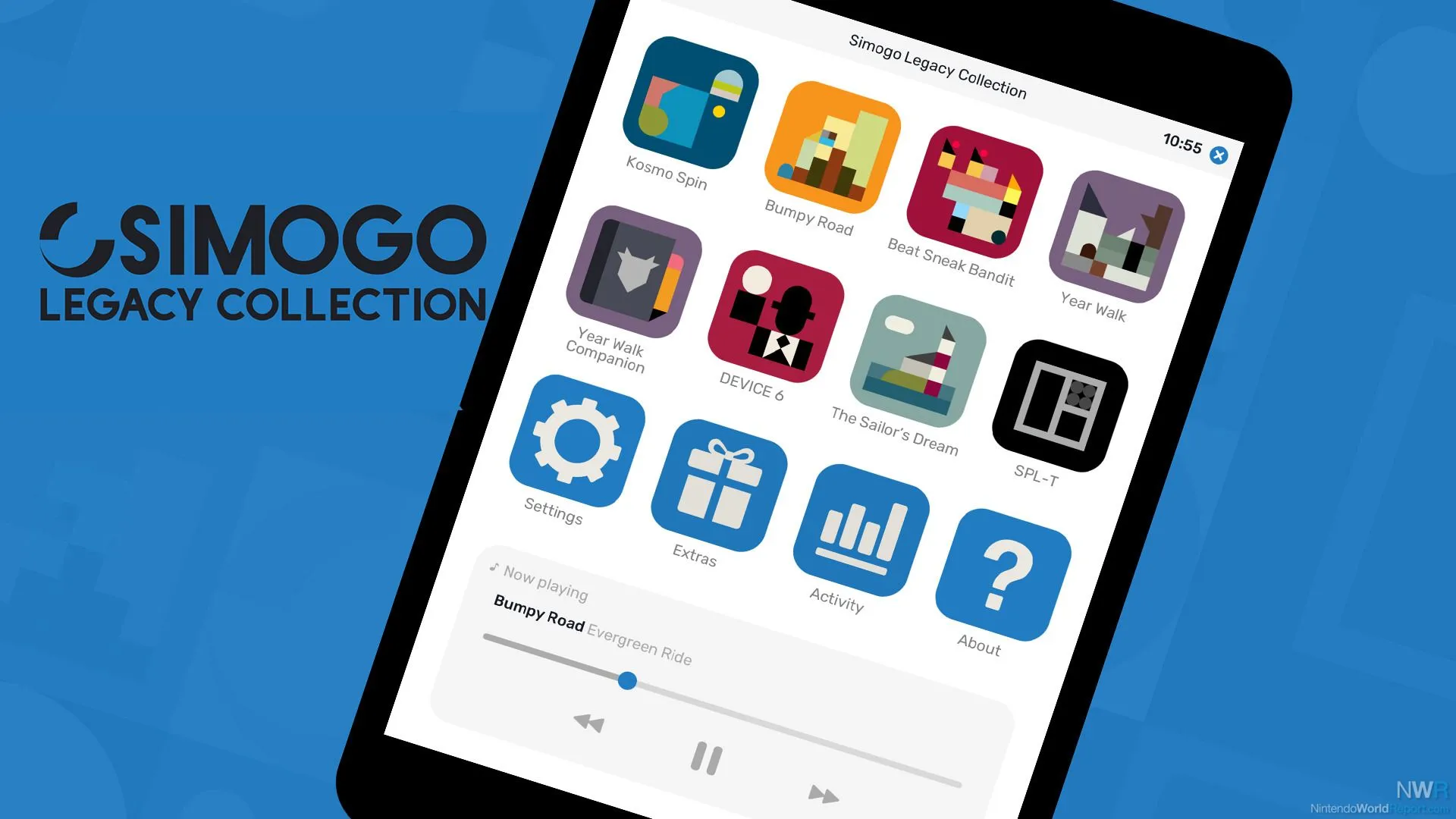
The collection’s structure acts as a clear argument for digital preservation. It presents a clean, curated interface styled after a mobile home screen, with the seven games arranged as app-like tiles. This presentation respects how these projects originally lived on phones and tablets. The archival value grows through a generous slate of extras that surround the main games. Playable prototypes, unreleased music tracks, design art, and developer notes sit beside the finished titles and build a concrete, accessible record of the studio’s creative process.
Simogo Legacy Collection Review

Moving these touch-first games to a hybrid console puts all of Simogo’s input thinking under a new lens, so the control work matters a great deal. The collection makes handheld play with touch controls the preferred way to experience it. This setup keeps the direct physical interaction that shapes Bumpy Road’s terrain manipulation and Device 6’s rotation of the screen.

The developers also adapt the controls for TV play through a set of sophisticated virtual cursors that respond to analog stick input, gyro motion, or mouse control on the Switch 2. That range of options shows a serious attempt to support different play styles, including combinations of touch and stick control in certain games. Docked play still carries trade-offs.

Games that depend on rotating the screen in the player’s hands or on tight multi-touch actions, such as specific sequences in Year Walk or Device 6, feel less natural when filtered through a cursor, which underlines how hard it is to move a mobile-first design onto a television. On the visual side, the games receive crisp updates for modern high-resolution displays and maintain steady performance.

Legacy, DNA, and the Preservation Standard

The Simogo Legacy Collection reads as a thesis on creative growth. It lays out the studio’s early design DNA and shows how it feeds into later, more complex console releases. The cryptic environmental puzzle logic of Year Walk, for example, clearly connects to the atmosphere and hidden systems that players encounter in Lorelei and the Laser Eyes. Device 6’s experimental use of the screen, with players physically shaping the path of the text, set a model for later projects that question established storytelling conventions in games.
Simogo Legacy Collection Review

This archive also proposes a meaningful standard for game preservation. Each of these works uses touch and screen orientation with a level of care that has become less common on current mobile platforms, which makes them especially vulnerable to disappearing with hardware and software shifts. By gathering them in a single package with sharp ports and extensive bonus material, Simogo secures access to these early experiments.

Every game in the set, regardless of length or apparent simplicity, carries specific value and offers insight into the studio’s first phase of ideas. The collection provides a vital historical snapshot for players interested in experimental game design, complex narrative structures, and a carefully curated record of digital history.

The Review

Simogo Legacy Collection

9 Score

The Simogo Legacy Collection is an essential archive, preserving a crucial period of experimental game design. While the quality across the seven titles varies, the high points like Device 6 and Year Walk are masterpieces of interactive narrative. The collection's presentation, bonus material, and sharp visual updates set a new standard for game preservation. The only true drawback is the occasional clunkiness when forced to play docked instead of using the intended handheld touch controls.

PROS

  • Device 6 and Year Walk are highly original and required playing.
  • High-quality ports, dedicated interface, and extensive bonus materials included.
  • Seven distinct games demonstrate Simogo's mechanical evolution.

CONS

  • Early titles (Kosmo Spin, Bumpy Road) are simple score-chasers that lack depth.
  • Controls feel less intuitive when not using handheld touch input.
  • The Sailor's Dream is notably slow and lacks the tension of the other narrative games.

Review Breakdown

  • Overall 0
Tags: Action gameAdventureCasual gameFeaturedIndie gameSimogoSimogo Legacy Collection
Previous Post

Black Rabbit, White Rabbit Review: Mokri’s Meta-Puzzle and the Logic of the Long Take

Next Post

Juliette Binoche Urges West to Hear Arab Women’s Stories at Red Sea Panel

Try AI Movie Recommender

Gazettely AI Movie Recommender

This Week's Top Reads

  • Is This Seat Taken? Review

    Is This Seat Taken? Review: A Satisfying Mental Workout

    1113 shares
    Share 0 Tweet 0
  • Trust Review: Squandered Potential and an Incoherent Plot

    6 shares
    Share 0 Tweet 0
  • Just Play Dead Review: Samuel L. Jackson Takes It Easy in the Canary Islands

    0 shares
    Share 0 Tweet 0
  • The Airport Chaplain Review: Melbourne Airport Finds Its Resident Fixer

    0 shares
    Share 0 Tweet 0
  • Four Hands, Two Sonatas Review: Rivalry Sounds Better With Four Hands

    0 shares
    Share 0 Tweet 0
  • A Tale of Two Cities Review: Dickens Rewritten for Prestige TV

    0 shares
    Share 0 Tweet 0
  • The Gentlemen Season 2 Review: Eddie’s Empire Loses Its Balance

    1 shares
    Share 0 Tweet 0

Must Read Articles

Oasis Don’t Look Back in Anger Review
Movies

Oasis: Don’t Look Back in Anger Review: Reunion Without Revelation

6 hours ago
Primetime Review
Movies

Primetime Review: Chris Hansen Meets the Monster of Celebrity

7 hours ago
By Any Means Review
Movies

By Any Means Review: Sunlit Noir With Blood on Its Hands

2 days ago
Fall 2 Deadpoint Review 1
Movies

Fall 2: Deadpoint Review: The Sequel Climbs Into Busier Territory

3 days ago
Ink Review
Movies

Ink Review: The Newspaper Revolution That Changed the Rules

4 days ago
Loading poll ...
Coming Soon
Which of Alfred Hitchcock's 1960s thrillers is your all-time favorite?

Gazettely is your go-to destination for all things gaming, movies, and TV. With fresh reviews, trending articles, and editor picks, we help you stay informed and entertained.

© 2021-2026 All Rights Reserved for Gazettely

What’s Inside

  • Movie & TV Reviews
  • Game Reviews
  • Featured Articles
  • Latest News
  • Editorial Picks

Quick Links

  • Home
  • About US
  • Contact Us
  • Advertise with Us
  • Review Guidelines

Follow Us

Facebook X-twitter Youtube Instagram
No Result
View All Result
  • Gazettely | Movie, TV & Game Reviews, News, and Rankings
  • Movies
  • Entertainment News
  • Movie and TV Reviews
  • TV Shows
  • Game News
  • Game Reviews
  • Contact Us

© 2024 All Rights Reserved for Gazettely