

























Showrunners Ian Deitchman and Kristin Robinson move away from the high-concept sprawl of their earlier work and land on something smaller, closer, and sharper in this suburban Georgia drama. The series focuses on two neighboring families anchored by parents who are quietly coming apart. Pastor Malcolm Jeffries is a year past the death of his wife, Jenny, from cancer.
He is trying to lead his congregation while his own house holds together by tired, thinning strings. Across the driveway, Lori Soto is trying to steady herself after her husband, David, ended their seventeen-year marriage with almost no warning.
Streaming on the Wonder Project via Prime Video, the show plays like a character study that prizes emotional honesty. It skips the shiny, attention-grabbing tricks that many streaming dramas lean on. The emphasis stays with the small, practical acts of rebuilding.
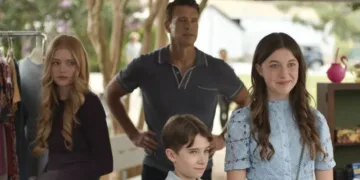
Malcolm and Lori’s bond gives the story its stabilizing spine, especially with an ensemble that includes five kids. Each child carries a specific struggle tied to social standing and identity. The series watches what happens when the life you expected collapses, and you have to assemble a new one with whatever is left in your hands.
Leading Men, Leading Women, and Lingering Shadows
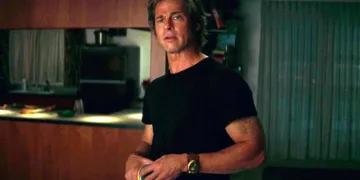
Scott Foley gives Malcolm Jeffries a lived-in empathy. He plays a man whose job requires him to project hope even while his private faith feels emptied out. There’s a steady tension in watching a pastor try to offer spiritual language to his children while he cannot find language that works for himself. His return to the pulpit plays as a careful step forward, not a victory lap, which keeps the show’s emotional temperature honest and its pacing patient.
Erinn Hayes matches him as Lori. She drops the “sitcom wife” energy and plays someone reintroducing herself to her own life. Lori has to juggle the logistical chaos of divorce while grieving Jenny, who was also her best friend. That double weight lands with real force. The series uses Jenny’s absence with precision: she becomes a constant presence through the everyday evidence of loss, like a messy kitchen or a child refusing to cut their hair. The Jeffries house feels shaped by what is missing.
David Soto, played by J.R. Ramirez, functions as the variable that keeps this domestic arrangement from settling into easy comfort. David left his family to “find himself,” then keeps circling back and stirring confusion. He sells his kids on a version of a fresh start that feels thin next to the steady work Lori is doing. He comes across as frustrating and recognizably human, and the friction he brings throws Malcolm’s steadiness into clearer focus.
Small Shoulders and Heavy Burdens
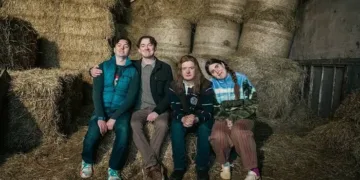
The series works because it treats the kids with the same attention it gives the adults. Flora and Merritt carry the pressure of being the oldest. Flora questions her belief in God after her mother’s death. Merritt bristles at the idea of his parents moving on with new partners. Their scenes together feel like some of the show’s truest air. They find a pocket where they can stop performing “fine” for the adults, and the writing lets those pauses land without rushing to patch them up.

The middle kids, Casey and Penelope, bring a clean, uncomfortable look at adolescence and loyalty shifts. Casey joining the wrestling team plays like a pointed break from the cheerleading orbit Penelope wants so badly. The choice opens a rift that the show earns through pacing and accumulation, not sudden blowups. It captures that exact age where friendships start to wobble under status anxiety, self-definition, and the need to be seen.
Justin Jeffries, the youngest, carries the most quietly devastating angle. He clings to domestic rituals like baking as a way to stay close to his mother. His silence about school bullies lands as a sharp reminder of how easy it is to miss the kid who takes up the least space. The scripts keep the children from sounding like pre-packaged TV teens. They’re awkward, reactive, and genuinely overwhelmed. That grounded approach makes the smaller wins hit hard, like Casey taking a match or Flora finding a way to speak through writing.
Faith Without the Fire and Brimstone
The show treats faith with an unusually gentle hand for contemporary drama. Malcolm’s church plays more like a community hub than a place ruled by rigid dogma. The religious dimension sits in the background as lived culture, not as a lecture. The story frames faith as a private struggle, then asks a question with real bite: how do you keep believing in a higher power after a loss like this? That framing keeps the spiritual material accessible, even for viewers who don’t share the characters’ religious vocabulary.
The writing draws a clear line between death’s finality and the ongoing ache of divorce. Both families grieve, yet Lori’s “living loss” with David carries a different kind of sting. The series finds its strength in domestic realism, where major emotional turns happen in a car’s front seat or over a plate of meatloaf. These moments gain weight through restraint, with humor and tenderness showing up in the timing of a glance or the choice to let silence sit for a beat longer than expected.
Courage is framed as quiet internal motion. It looks like Flora agreeing to see a therapist, or Casey facing a bully even while fear is still present. The show argues that community forms through shared vulnerability, through people admitting they are not okay and staying in the room anyway. That makes its idea of support feel earned, not sentimental.
Chemistry Behind the Camera and on the Screen
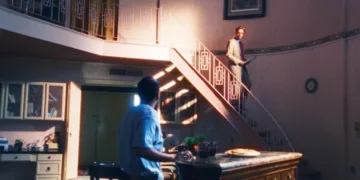
Director Brad Silberling shoots the Georgia suburbs with a warm palette that makes these spaces feel lived-in, familiar, and gently inviting. The look echoes the comfort-TV feel of classic family dramas, and that visual softness pairs well with a story built on private implosions. Music swells appear at the right moments to lift emotional peaks without flattening the quieter scenes. The pacing gives conversations room to breathe, which matters here because so much of the payoff lives in performance beats and the unspoken things between lines.
Foley and Hayes supply the engine. Their rapport reads as easy and unforced, the kind of connection that makes a scene feel like it has history even before the script spells it out. When the show finally allows a moment of physical tension, it lands as a natural extension of the bond they’ve built. The “will they, won’t they” energy is grounded in mutual respect, not cheap soap-opera heat.
The ensemble stays balanced, and the younger actors hold their ground opposite seasoned performers. Editing stitches the subplots together cleanly, keeping the emotional thread intact as the show moves from house to house. Flashbacks appear sparingly, giving quick contrast between a brighter past and a quieter present. That choice reinforces the theme of loss without hammering it. The production values look polished, yet they keep their place behind the characters.
The Art of the Gentle Lean
In an era crowded with cynical antiheroes and high-stakes mysteries, a series built around people choosing kindness can feel strangely daring. This drama understands the appeal of a “soft landing,” and it speaks to anyone who has cared for others while barely holding themselves together. It finds tension in everyday life, the same lane occupied by shows like Parenthood and This Is Us, where the big questions hide inside small domestic decisions.
It plays as uplifting without pretending pain disappears, and it keeps returning to the idea that a life plan can break and still be rebuilt into something stable. The show seems most confident when it trusts the quiet, trusts the pauses, and trusts the audience to sit with unresolved feelings. If this is the tone it’s setting now, how much tenderness can it sustain once the next rupture arrives?
It’s Not Like That is a contemporary family drama that premiered on January 25, 2026, as a flagship original series for the Wonder Project. It is available to stream exclusively on Amazon Prime Video, where it launched with a two-episode premiere. The story follows two families in a Georgia suburb as they navigate the complexities of faith, divorce, and the loss of a loved one, centered on the evolving relationship between a widowed pastor and his recently divorced neighbor.
Full Credits
Title: It’s Not Like That
Distributor: Wonder Project, Amazon Prime Video
Release date: January 25, 2026
Rating: TV-PG
Running time: 45–50 minutes
Director: Brad Silberling, Rosemary Rodriguez, Peter Sollett, Valerie Weiss
Writers: Ian Deitchman, Kristin Robinson, Abdi Nazemian, Danielle DiPaolo, Jesikah Suggs, Adria Baratta
Producers and Executive Producers: Ian Deitchman, Kristin Robinson, Jon Erwin, Justin Rosenblatt, Kelly Merryman Hoogstraten, Alex Goldstone, Scott Foley, Garrett Lerner, Brad Silberling, Jon Gunn
Cast: Scott Foley, Erinn Hayes, J. R. Ramirez, Caleb Baumann, Cary Christopher, Leven Miranda, Cassidy Paul, Liv Lindell, Tyner Rushing, Michaela Russell
Composer: Caleb Chan, Brian Chan
The Review
It’s Not Like That
The series is a masterclass in domestic sincerity. It avoids the typical traps of modern melodrama by focusing on the quiet, messy reality of rebuilding a life. With exceptional leads and a refreshing approach to faith, it offers a grounded and deeply human experience. It is the television equivalent of a long, honest conversation.
PROS
- Natural and mature chemistry between Scott Foley and Erinn Hayes.
- Authentic portrayal of adolescent grief and social pressures.
- A balanced, non-preachy exploration of faith and community.
- Strong ensemble performances from the child actors.
CONS
- The mid-season pacing occasionally slows to a crawl.
- Certain school subplots lean into familiar "mean girl" tropes.