


























A weathered eviction notice flutters against a tenement door as Samuel Murphy returns from church, his young daughter Penny gripping his hand. That scrap of paper lands like a verdict, a quiet announcement that stability has already been rationed away. The Weight plants itself in 1933 Oregon with an airless sense of scarcity, a setting where working people stare down a choice shaped by hunger and state power.
After a desperate act of self-defense, Murphy is sealed inside a brutal labor camp, punished as though survival itself were a crime. A path back to his child arrives through Warden Clancy’s devil’s bargain: to see Penny again, Murphy must lead a crew of prisoners on a covert run, hauling heavy gold bars through lethal back country.
The job sits outside legal protection, designed to slip past government confiscation. What follows strips people down to instinct, with the natural world offering cold indifference and the social order offering even less compassion. The story reads like an elemental contest between battered souls and a system that has learned to treat mercy as waste.
The Stoic Soul and the Corrupt Sentinel
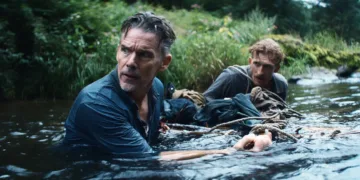
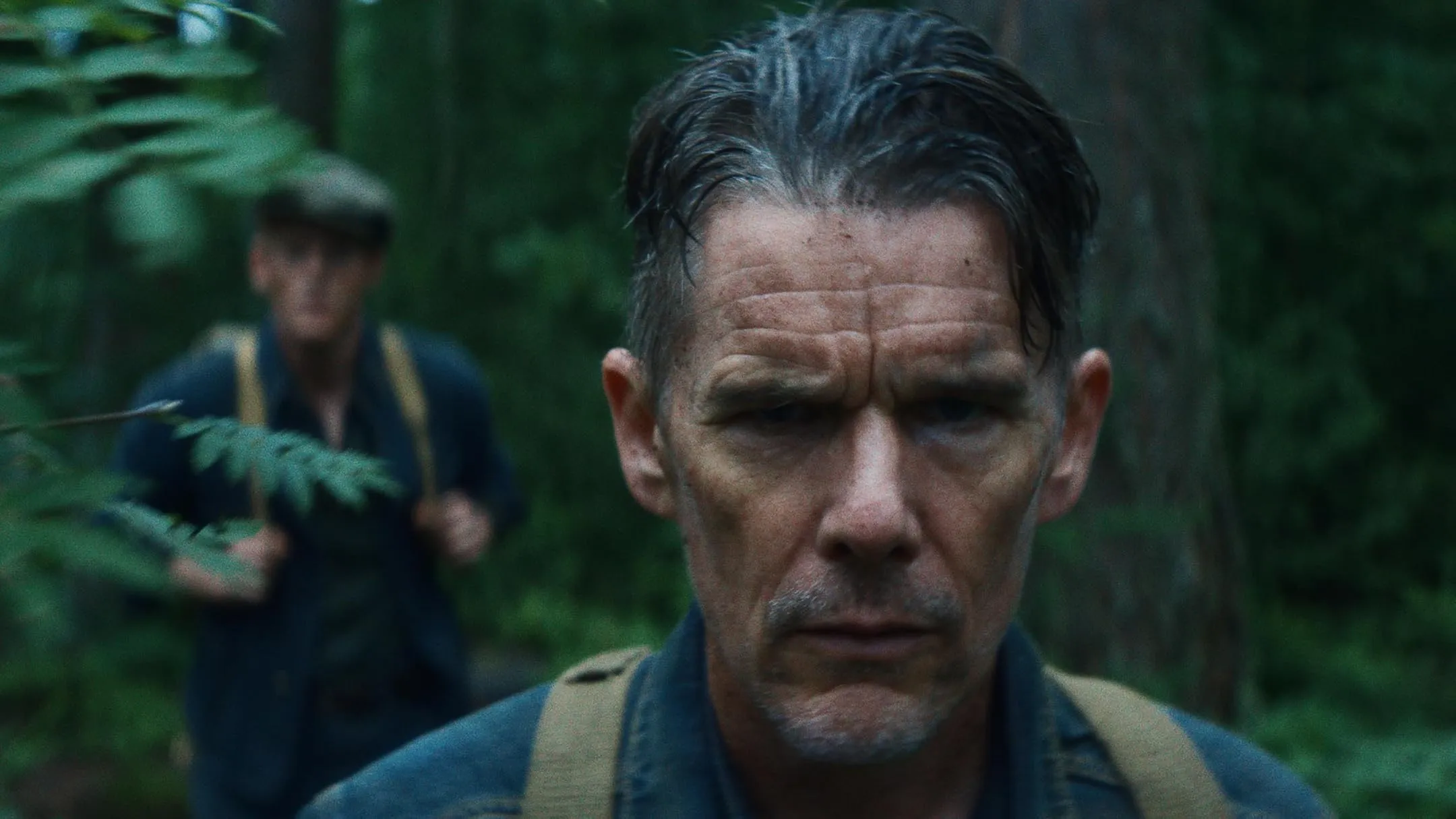
Ethan Hawke builds his performance from physical restraint and a roughened, gravelly texture. His Samuel Murphy speaks sparingly, letting a stare carry years of fatigue and a father’s ferocity. Hawke leans into a low, growling register that suggests a veteran who has absorbed too much and trained himself to expect very little. Murphy’s courage arrives through alert judgment, quick problem-solving, and a quiet steadiness that never asks for applause.
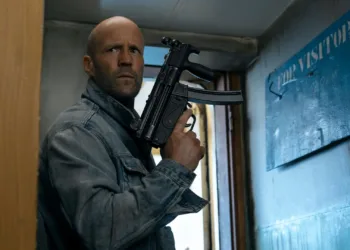
Russell Crowe answers with a chill steadiness of his own as Warden Clancy. The character avoids cartoonish menace because Crowe plays him with compact focus and casual cruelty, the sort that treats suffering as routine administration. A glint of opportunistic malice sits behind the warden’s calm, embodying a system that processes human lives as disposable material.
Also Read






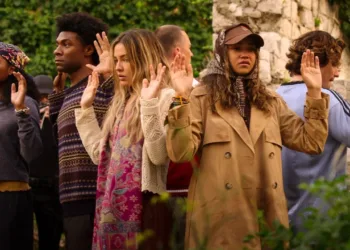
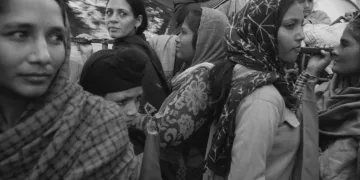
The supporting players widen the film into a study of people pushed outside the boundaries of respectability. Julia Jones stands out as Anna, an Indigenous woman escaping an abusive domestic training school. She carries herself with steel-edged defiance and proves the group’s most resilient presence, complicating the Western’s usual masculine posturing through sheer endurance and refusal to be diminished.
Avi Nash brings needed intellectual gravity as Singh, a socialist inmate whose presence exposes the group’s buried prejudices. Alongside them are Rankin, volatile and cagey enough to keep conflict simmering, and the young Olson, whose Scandinavian optimism throws the surrounding cynicism into sharper relief. Together, they move as a ragtag unit held together by a truce that can crack at any moment.
The Physical Burden of Survival
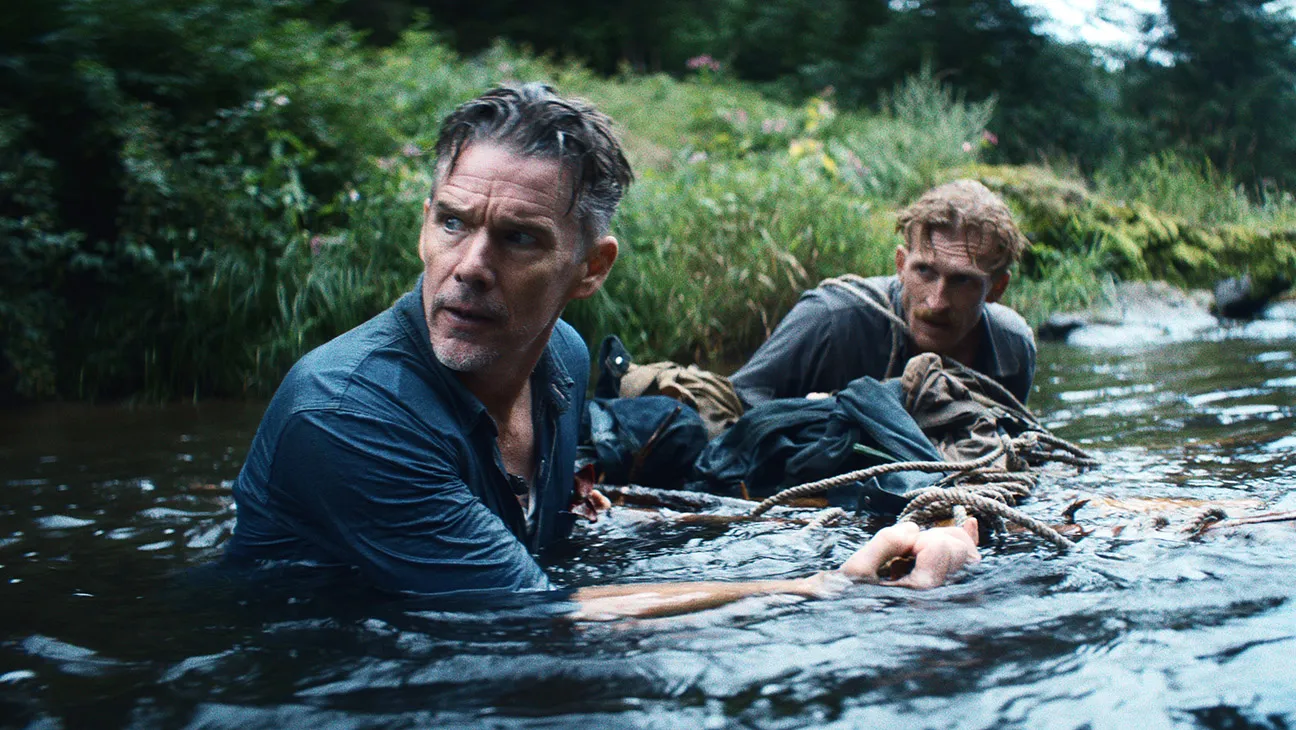
The trek stretches across six punishing days, and the gold becomes both literal cargo and a mental shackle. Each man lugs a backpack packed with bullion, a load that dictates posture, stamina, and every decision made under strain. Padraic McKinley stages action with pared-back intensity, placing emphasis on the bodily price of forward motion.
One especially harrowing set piece unfolds on a tattered rope bridge strung above a deep gorge. Murphy steps onto the precarious middle of the swaying structure, catching gold bars tossed from behind and throwing them onward to the far side. The sequence sustains tension through sound and space: creaking wood, the rush of water below, and the sense that one wrong shift of weight turns survival into a drop.
The men face environmental traps in constant rotation, freezing rivers, steep trails that refuse stable footing, and terrain that punishes hesitation. They are also hunted by mountainfolk and desperate prospectors who see the gold as escape from poverty.
The clashes are explosive and frightening, breaking out with blunt violence that can turn a moment into catastrophe. The pacing cultivates looming dread, as if the forest itself is pressing inward, tightening the margins for error. McKinley keeps setbacks tethered to practical reality, so danger feels immediate and physical. The mission plays like a slow war of attrition against the land, with human cruelty arriving as a companion threat.
A Tactile Vision of the Past
McKinley’s background as an editor shows in the film’s sharp rhythmic control. The storytelling favors precision and momentum, choosing a raw, scrappy look that fits the period’s hard edges. European locations are reshaped into a fog-soaked, untamed American West with convincing roughness, the kind that suggests damp rot in the wood and cold that seeps into joints.
Matteo Cocco’s cinematography leans into atmosphere, using moody light to catch the textures of wet earth and weathered boards. Wide framing repeatedly shrinks the characters against an immense wall of forest, reinforcing nature as a formidable presence that never negotiates.
Sound carries equal weight. Latham and Shelby Gaines supply a clattering, propulsive score built from mechanical elements and clanging drones. The music reflects the prisoners’ internal pressure and introduces a restless anxiety inside the 1933 world. Production design avoids the polished sheen that often sanitizes historical drama, favoring grit in the labor camp barracks and the crude survival gear meant to keep bodies moving. That commitment to realism gives the struggle a tactile immediacy, the kind that makes cold air and rough metal feel close enough to touch.
Recognition Among Wounded Souls
The violence is driven by a clear emotional engine: Murphy’s determination to save his daughter from a state system poised to erase him from her life. That paternal bond gives shape to his extremes and turns endurance into a moral act, even as the film refuses easy comfort.
The story tracks small human figures moving through a landscape ruled by powerful men who treat people as paperwork. Gold functions as a reflective object in this world, throwing greed and desperation back onto anyone who gets close enough to touch it, and setting the stage for sudden betrayals and deadly turns. Honesty becomes an expensive commodity, yet Murphy holds to an honorable code without drifting into sanctimony.
Murphy’s connection with Anna is handled through restraint and attentiveness. The relationship builds from quiet recognition, a sense of shared injury and shared endurance, and it rests on mutual respect and tenderness. That thread of human regard steadies the film’s harshness and gives the brutality something to argue with.
As the story surges toward its chaotic climax, the focus stays trained on those inner stakes, on what freedom costs when every institution in view is designed to collect its price. The final stretch carries an emotional force that hangs on after the credits, leaving the lingering sense of what it takes to keep a self intact in a world determined to grind it down.
The Weight had its world premiere yesterday, January 26, 2026, at the Sundance Film Festival in the Premieres section. As a co-production between the United States and Germany, this period survivalist thriller has generated significant buzz following its debut. While it is currently making the festival rounds, it is expected to be available for wider audiences through theatrical release and eventually on streaming platforms like Mubi later this year.
Full Credits
Title: The Weight
Distributor: Mubi, A24, Fields Entertainment
Release date: January 26, 2026
Rating: R
Running time: 112 minutes
Director: Padraic McKinley
Writers: Shelby Gaines, Matthew Chapman, Matthew Booi
Producers and Executive Producers: Ryan Hawke, Simon Fields, Nathan Fields, Jonas Katzenstein, Maximilian Leo
Cast: Ethan Hawke, Russell Crowe, Julia Jones, Austin Amelio, Avi Nash, Sam Hazeldine, Lucas Lynggaard Tønnesen, Avy Berry
Director of Photography (Cinematographer): Matteo Cocco
Editors: Padraic McKinley, Matthew Woolley
Composer: Shelby Gaines, Latham Gaines
The Review
The Weight
The Weight is a stark, muscular revival of the survivalist thriller that trades in sweat and silence rather than spectacle. While the pacing occasionally mirrors the heavy burden of its protagonists, the film is anchored by Ethan Hawke’s soulful, weathered performance. It successfully strips the Western down to its primitive roots, offering a harrowing look at the cost of fatherhood and the corrosive nature of greed. Though it lacks traditional narrative polish, its atmospheric grit and emotional honesty make it a resonant, high-stakes journey into the heart of a pitiless wilderness.
PROS
- A masterclass in physical acting and understated emotional depth.
- Exceptional cinematography and sound design create a palpable sense of dread.
- The rope bridge sequence is a standout moment of practical, high-stakes filmmaking.
- A grounded exploration of paternal desperation during the Great Depression.
CONS
- The narrative occasionally feels as sluggish as the trek it depicts.
- Some members of the supporting posse remain underdeveloped archetypes.
- Viewers familiar with the Pacific Northwest may find the European filming locations distracting.