




























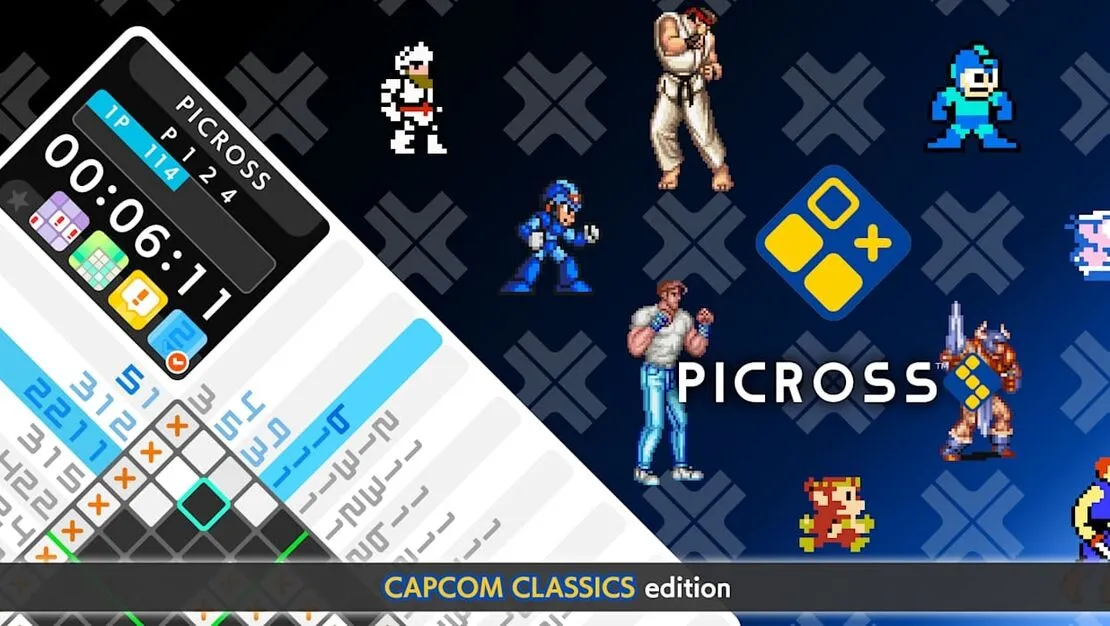

Picross S: Capcom Classics Edition lands as a focused installment in Jupiter’s long-running puzzle line. The partnership pairs the studio’s disciplined nonogram format with Capcom’s back catalog, built around numerical grids that resolve into pixel images drawn from decades of game history. It plays like a small digital tribute to old arcade and console eras, with puzzles that steadily turn blank squares into familiar silhouettes and artwork.
Capcom’s presence shows up in the reward loop. Clearing a board reveals sprites and images tied to landmark series, including Street Fighter, Mega Man, and Ghosts ’n Goblins. Nostalgia drives the framing, yet the moment-to-moment play stays tied to clean deduction. Each grid asks for careful counting, steady elimination, and the patience to commit only when the math supports it. The result reads as a mental workout that keeps pointing back to the 8-bit and 16-bit years that shaped Capcom’s identity.
Diverse Methods of Deduction
Picross S: Capcom Classics Edition leans on mode variety to keep its logic tests moving. Standard Picross anchors the package with classic grids from 5×5 up to 15×15, using number clues to guide filled squares and X marks for confirmed blanks. The rules are familiar, and the satisfaction comes from how quickly uncertainty collapses once a few lines lock into place.
Mega Picross shifts the mental model by introducing larger numbers that stretch across two rows or columns at the same time. That single change alters how you read the board, pushing experienced players to track overlap, spacing, and shared constraints with more care. Color Picross adds its own layer by asking you to account for specific shades during fills, which changes how you interpret a “solved” line and how you plan the next move.
Clip Picross frames progression around assembly. You clear multiple smaller puzzles that stitch together into one large image, turning each solve into a visible step toward a bigger payoff. Time Attack changes the stakes by making speed part of the problem, with mistakes carrying penalties that can snowball in a tight run. The Extra category serves the longest-haul challenge, offering five massive grids built for maximum difficulty and maximum patience. Taken together, these systems keep the core act of marking squares active and varied, with regular shifts between monochrome logic and color-based deduction for players who start to read standard boards too quickly.
Retro Presentation and Audio Landscapes
Capcom’s branding comes through immediately once the software boots. Scrolling backgrounds carry classic characters across the screen, adding constant motion around the puzzle space. The option to disable these backgrounds sits in the menu, which helps when you want the grid to stay visually quiet during a tricky solve.
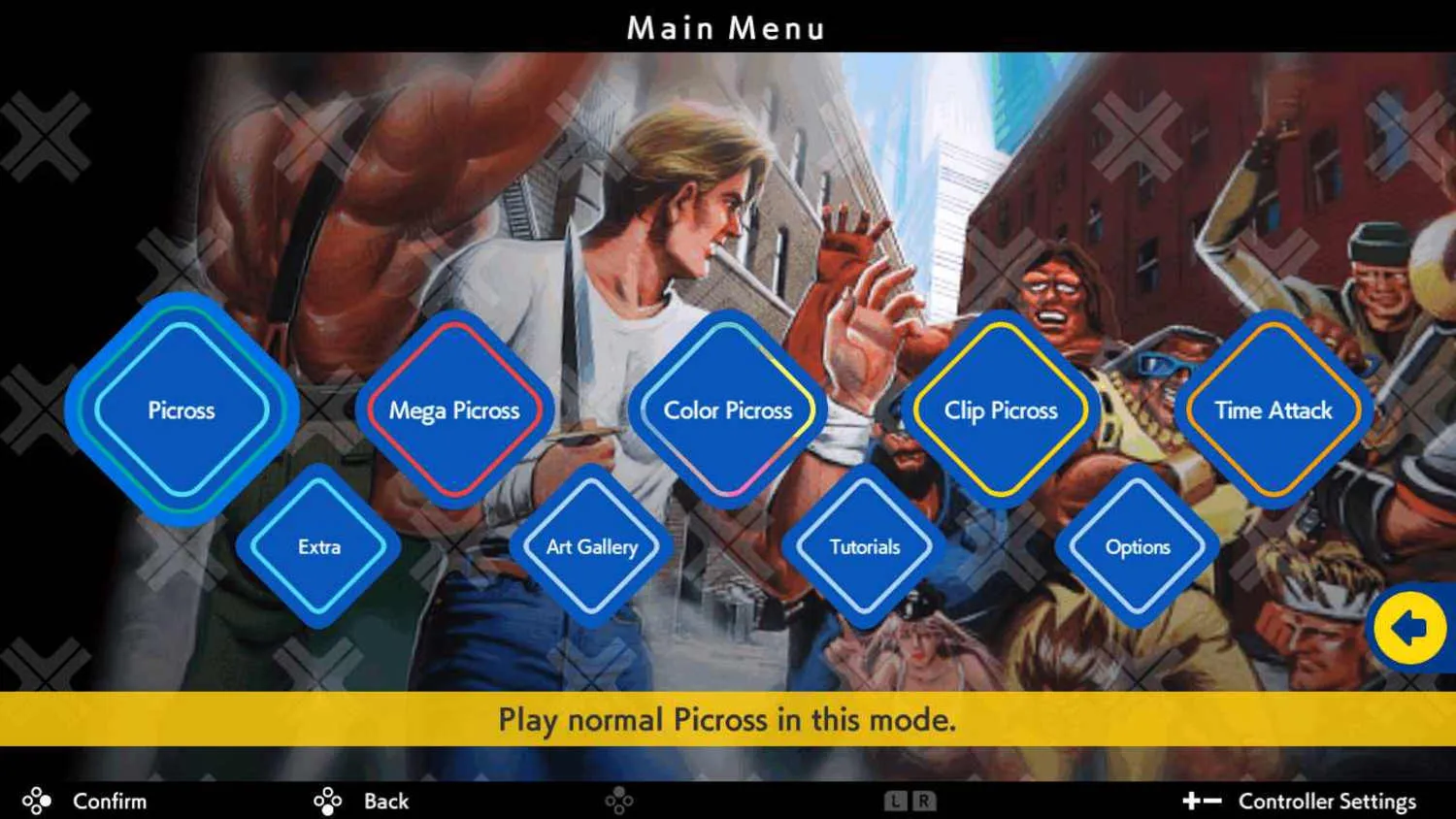
The included art pulls from a wide slice of Capcom history, calling out titles such as Final Fight, Commando, and Code Name Viper. Finishing a grid lands with a clean payoff, revealing high-quality sprites or official artwork tied to the completed image. That reveal matters because it turns every solved board into a tiny archival find, a reward that sits outside pure score chasing.
Music comes in the form of eight chiptune tracks labeled BM1 through BM8. The tones sell the vibe of an arcade cabinet or an older home console, and they fit the steady rhythm of deduction. The limited track list can wear thin across extended 20 minute sessions, with repetition becoming easier to notice over time. Even so, the package keeps attention on the visual unlocks. The gallery collects what you’ve earned, functioning as a straightforward archive of images gained through logic and persistence.
Accessibility and Precision Tools
Jupiter equips the game with options that welcome different skill levels and play styles. Controls support traditional button inputs, plus touch screen play in handheld mode. That choice lets you lean into tactile taps or tighter placement, depending on what feels best in the moment. Tutorials lay out the basic rules for newcomers, making the first set of grids feel readable instead of intimidating.
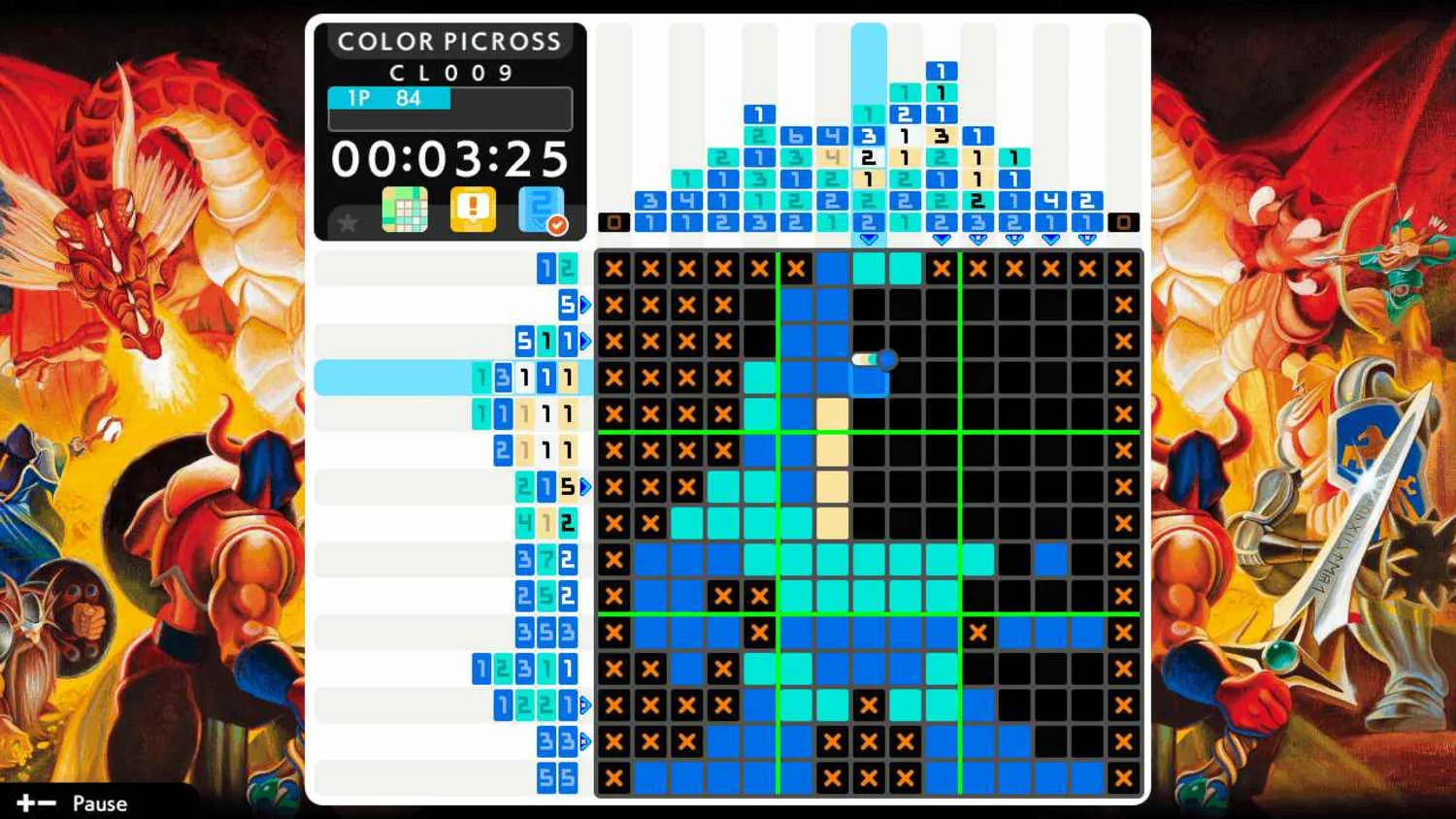
Assist tools push that approach further. Hint Roulette fills in a random row and column at the start, giving you a foothold in a stubborn puzzle without rewriting the rest of the solve. Auto-check flags mistakes immediately, which keeps an early error from infecting the next ten minutes of decisions. A rewind feature adds another layer of control, letting you correct missteps without restarting the entire board.
Local co-op supports up to four players working on the same grid at the same time, turning a quiet solo activity into a shared problem-solving session. Cursor speed settings help match the interface to your reaction time, keeping input friction low during larger boards. The end effect is a toolset that keeps the focus on deduction, with the challenge living in the grids and the images they hide.
The Review
Picross S: Capcom Classics Edition
The game provides a reliable and satisfying loop of logic puzzles. Integrating a legendary visual history provides a specific charm that standard entries lack. New modes provide fresh tension for veterans. While the music and gallery options feel limited, the mechanical polish remains high. It is a solid purchase for anyone seeking a familiar mental challenge flavored with arcade nostalgia.
PROS
- Extensive variety of puzzle modes
- High-quality Capcom pixel art
- Flexible and helpful assist tools
- Enjoyable four-player local co-op
CONS
- Limited and repetitive music tracks
- Minimal background information in the gallery
- Busy backgrounds can hinder concentration