



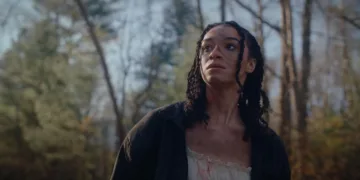






The film opens with a close, unforgiving gaze: the camera catches each bead of sweat on Kara Chase’s brow as she plants herself in hostile brush and treats the wild like a territory to be claimed. To her followers, she is a social media survivalist. To the television competition she signs up for, she is a contestant on Solitude, arriving with one clean objective and a million-dollar target.
The setup is blunt and modern. Production deposits her in a remote wilderness and asks for a very specific kind of endurance, one that requires her to document her own unraveling while still handling the basics that keep a body moving. She has a small set of tools, a large supply of ambition, and the awareness that the lens is part of the job.
For a stretch, the storytelling leans into procedure. The early days track the rhythms of self-sufficiency: snare traps, a primitive shelter, the steady repetition of labor that turns survival into a checklist. It’s a familiar structure, closely aligned with the high-stakes reality formats that fill contemporary screens, where hardship becomes a performance and competence becomes a narrative beat. Then the film introduces a structural pivot that lands with quiet menace.
The isolation begins to feel crowded by something that does not fit the category of wildlife. Strange incidents interrupt the predictable cycle of foraging and fishing. Kara starts treating the darkness past her campfire as a problem to solve, scanning shadows like they might answer back.
The prize stops being the organizing principle. Her goal tightens into something simpler and far more urgent: staying alive in the face of a predatory presence. The forest, once a stage for skill, turns into an unblinking witness as Kara shifts from confidence to extreme tactical defense. The story’s engine changes with her, moving from a test of capability to a punishing test of nerves.
Technical Pedigree and Authentic Scars
The craft carries the stamp of filmmakers who know horror grammar and trust it. Directors Jeremy W. Brown and Mick Strawn build a visual approach that plays clean and grounded, letting the environment do much of the intimidation. Strawn’s background as a production designer on franchises like A Nightmare on Elm Street and Texas Chainsaw Massacre shows up in the discipline of the design: the wilderness suggests threat through presence and placement, not through flashy signals begging for attention. The film’s tension is guided as much by what stays restrained as by what appears.
Harry Manfredini’s score adds a steady pressure, drawing on his experience from the Friday the 13th series to shape a soundscape that underlines the emptiness of the woods. The audio does not crowd scenes with noise; it frames silence as an active element, the kind that makes small sounds feel like warnings.
Visually, the movie keeps a polished look and avoids the common shaky-camera habits of many low-budget survival stories. That steadiness matters because it keeps the viewer’s attention on concrete detail: the layout of Kara’s camp, the physical logic of her routines, the minor failures that accumulate into dread.
The realism is reinforced through the use of survival experts Larry Roberts and Nicole Apelian, brought in as consultants and performers to make the bushcraft credible. That choice pays off in texture. The frustration of damp wood and the disappointment of failed snares land as lived-in problems, tied to actual wilderness experience rather than screenwriting convenience. The result is a foundation that feels practical and specific, which makes the later supernatural turns hit with sharper force. The film earns its grounded footing first, then lets the ground tilt.
The Physicality of Despair
Sam Wren Vincent holds the film together by treating Kara’s ordeal as something that happens to a body before it happens to a plot. Her performance roots the story in sweat, hunger, and the slow erosion of comfort. Kara reads as a capable outdoorswoman, and Vincent keeps that grit visible even as vulnerability creeps in through another defining detail: she is a mother separated from her child. The film tracks her decline in plain physical terms. Hunger steals strength piece by piece, and her reactions to eating insects and decaying food register as genuinely visceral, the kind of discomfort the camera does not let you politely avoid.
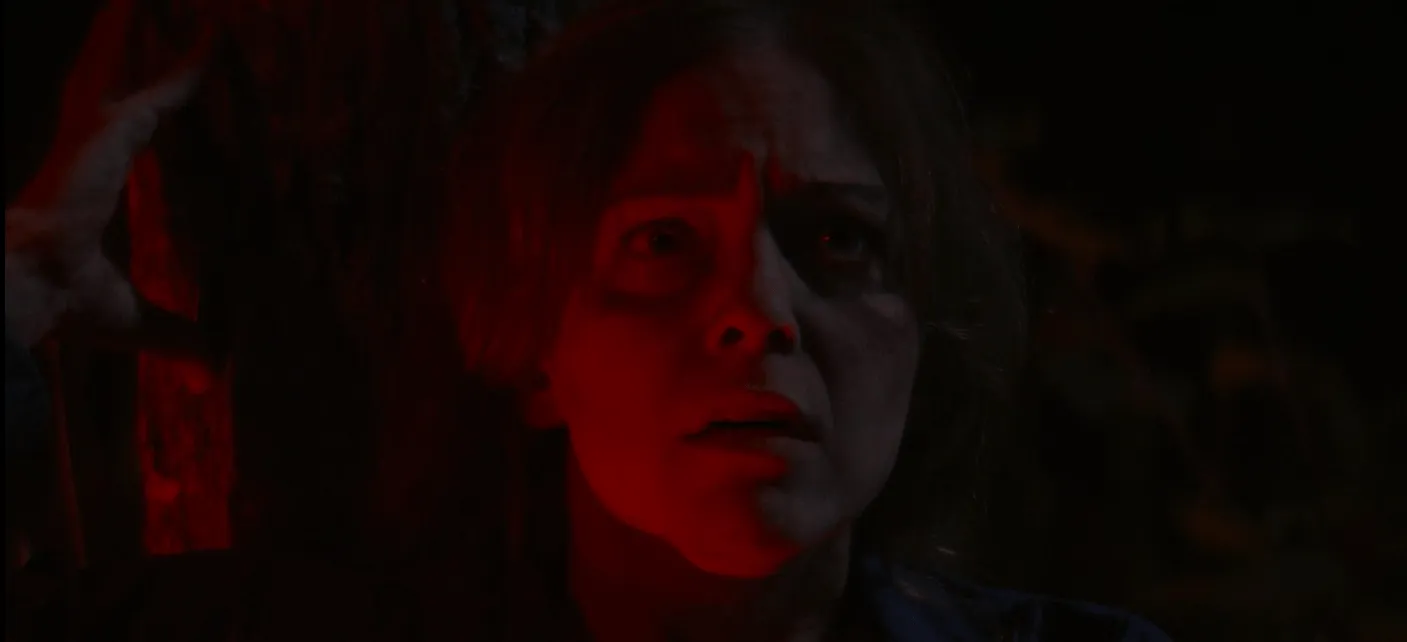
Vincent also makes exhaustion feel like a narrative force. Kara’s energy fades, her patience shortens, and the act of continuing becomes a decision she has to remake each day. A photograph of her daughter becomes a central motivator, a small object with outsized emotional weight. It’s the thing she returns to when her body is signaling surrender, a reminder that endurance can be fueled by something quieter than ego. As the story advances, Kara changes from a weary competitor into a figure of fierce defiance, driven less by the game’s rules and more by the need to outlast what is stalking her.
The script toys with fracture as a possibility, suggesting that isolation may be splitting Kara’s perspective under pressure. The film positions the viewer as an active judge: is Kara a reliable narrator, or is fear taking shape through starvation and fatigue? It keeps both explanations in play. Vincent threads that uncertainty through frantic expressions and the way she talks to her camera, performing competence for an audience while sounding increasingly like someone trying to convince herself. That direct address creates intimacy, pulling the viewer into the private corner of her headspace and making the isolation feel sharply personal.
Folklore in the Frozen Woods
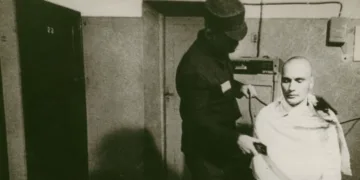
The story gains historical weight through a discovery that reframes Kara’s struggle as part of something older. She finds a journal dated 1811, a diary that records the starvation of a family who once lived on the same territory. The film visualizes those accounts with black-and-white flashbacks that give the writing a harsh, immediate presence. These sequences do more than supply backstory; they run in parallel with Kara’s present, echoing her hunger and turning it into a repeating pattern tied to place.
Wendigo mythology becomes the narrative frame for that repetition, shaped around the idea of a curse born from the consumption of human flesh. The folklore steers the film away from a simple creature chase and toward a dread that feels generational, like the land itself remembers. The filmmakers commit to restraint by keeping the primary threat out of view for a long stretch, trusting tension built through silence and ambient noise. The pacing follows a slow burn, giving the atmosphere time to settle and letting the viewer sit with the monotony and isolation that wear Kara down.
By the time the supernatural elements turn undeniable, the film has already made loneliness feel heavy and specific. The structure ties its horror to hunger and loss, aligning Kara’s present-day fight with the diary’s recorded suffering. The resolution lands with a sharp impact, linking the historical flashbacks back to Kara’s modern struggle for life in a way that feels designed, not accidental.
The film Solitude arrived on digital platforms on May 13, 2025, after an initial festival screening in 2024. This production is currently accessible through streaming services such as Tubi and Amazon Prime. It presents a survival story involving a social media figure who faces an ancient entity while filming a reality contest. The narrative emphasizes the physical strain of hunger and the mental pressure of remaining alone in the wilderness.
Full Credits
Title: Solitude
Distributor: Mill Creek Entertainment, Brownspace Films
Release date: May 13, 2025
Running time: 87 minutes
Director: Jeremy W. Brown, Mick Strawn
Writers: Jeremy W. Brown, Stacy Brown, T.C. De Witt, Stephen Morgan-MacKay
Producers and Executive Producers: Jeremy W. Brown, Mick Strawn, Blair Smith, Reagan Heller, Jeff Burr
Cast: Sam Wren Vincent, Nicole Apelian, Larry Roberts, Jon A. Ravenholt, Reagan Heller, Russell Shealy
Director of Photography (Cinematographer): Zak Rivers
Editors: Jeremy W. Brown
Composer: Harry Manfredini
The Review
Solitude
Solitude succeeds by grounding its supernatural elements in the grueling reality of wilderness survival. The collaboration between horror veterans and survival experts creates a sense of dread that feels earned. Sam Wren Vincent provides a raw performance that keeps the emotional stakes high. While the middle act moves slowly, the atmospheric buildup pays off. It serves as a solid entry for fans of slow burn genre pieces.
PROS
- Authentic survival details and bushcraft techniques.
- Strong physical performance from the lead actress.
- Unsettling sound design that emphasizes isolation.
- Effective use of history through the 1811 journal parallels.
CONS
- Deliberate pacing that slows in the middle act.
- Limited character depth for supporting roles.
- Restrained action that might disappoint some genre fans.