















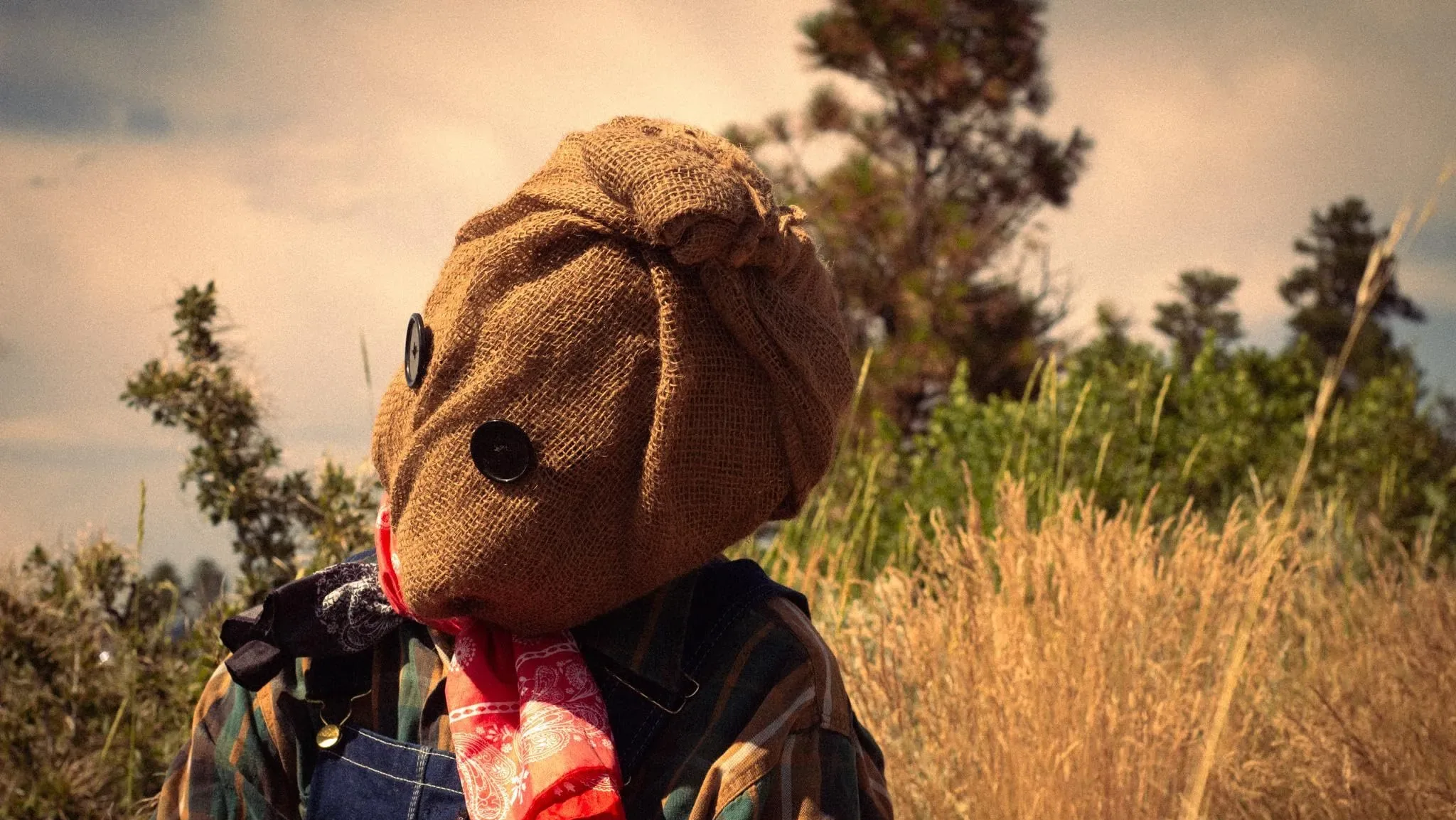

The 2025 release Field of Screams opens on a remote property with a small, crushing moment: an elderly farmer collapses and dies right in front of Billy, a scarecrow animated through rural mysticism. The film plants its rules early, treating “farm magic” as something tangible and lived-in, part of the land like weather and rot. That prologue hit me with a familiar chill. I still remember visiting my uncle’s barn in late October, standing in that hushed air where everything feels paused, like the world is waiting for permission to start moving again.
From there, the story pivots to the farmer’s grandson, Allen, who learns the property now belongs to him. Allen opts to sell immediately, and that decision sets the narrative in motion. He heads to the farm with his partner, Justin, and they bring a small group meant to help clear the estate, shaping the setup into a cabin-in-the-woods scenario with a moving truck’s worth of emotional baggage.
The early stretch stays heavy and subdued, letting grief and logistics share the same space. The film keeps its attention on death, inheritance, and the messy work of turning a family legacy into something liquid, letting the soil sit undisturbed for a while before it finally takes blood.
Character Dynamics and Personal Conflict: Tensions in the Tall Grass
The film puts interpersonal strain at the front of the frame. J. Jordan Parsons plays Allen as intensely sensitive and visibly overwhelmed by what he’s inherited and what it asks of him. That volatility bleeds into his relationship with Justin, whose connection to the farm carries its own history of trauma. Justin left this rural world years earlier, and the return drags him back through the community’s judgment and the prejudices he associates with Allen’s grandfather.
That homecoming functions like a second haunting. The film treats “ghosts” as memory, resentment, and the fear of being seen in the wrong way by the wrong people. Friends like Luke keep the pressure high, taking open shots at Justin and making every group interaction feel like a test he didn’t agree to take. Their idea of bonding runs on moonshine and verbal swipes, a social ritual that turns the farmhouse into a cramped arena.
Jessica Shepard, as Allen’s mother, brings a steadiness that the rest of the group lacks, and her grounded presence matters as the environment grows more volatile. The movie spends a long stretch, about an hour, living with these fractures. The approach is slow-burn, and it keeps circling the interior lives of its queer leads, treating identity and personal history as the engine of dread.
That emphasis tracks with a current in independent horror where fear grows out of character, not just circumstance. The isolation of the setting becomes a visual echo of what the characters already carry, making loneliness feel like part of the property’s inheritance.
The Scarecrow and Slasher Mechanics: A New Breed of Straw Man
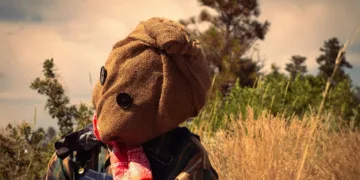
Billy, as a slasher figure, comes across with a strange specificity. He moves in a floppy, cartoonish way, like animation that has somehow turned physical. Watching him, I kept thinking about the stop-motion shorts I inhaled as a kid, where bodies seemed to obey a private set of rules and gravity looked negotiable. That movement style gives Billy personality even when he’s still, because the film makes you anticipate how he’ll lurch and wobble into the next action.
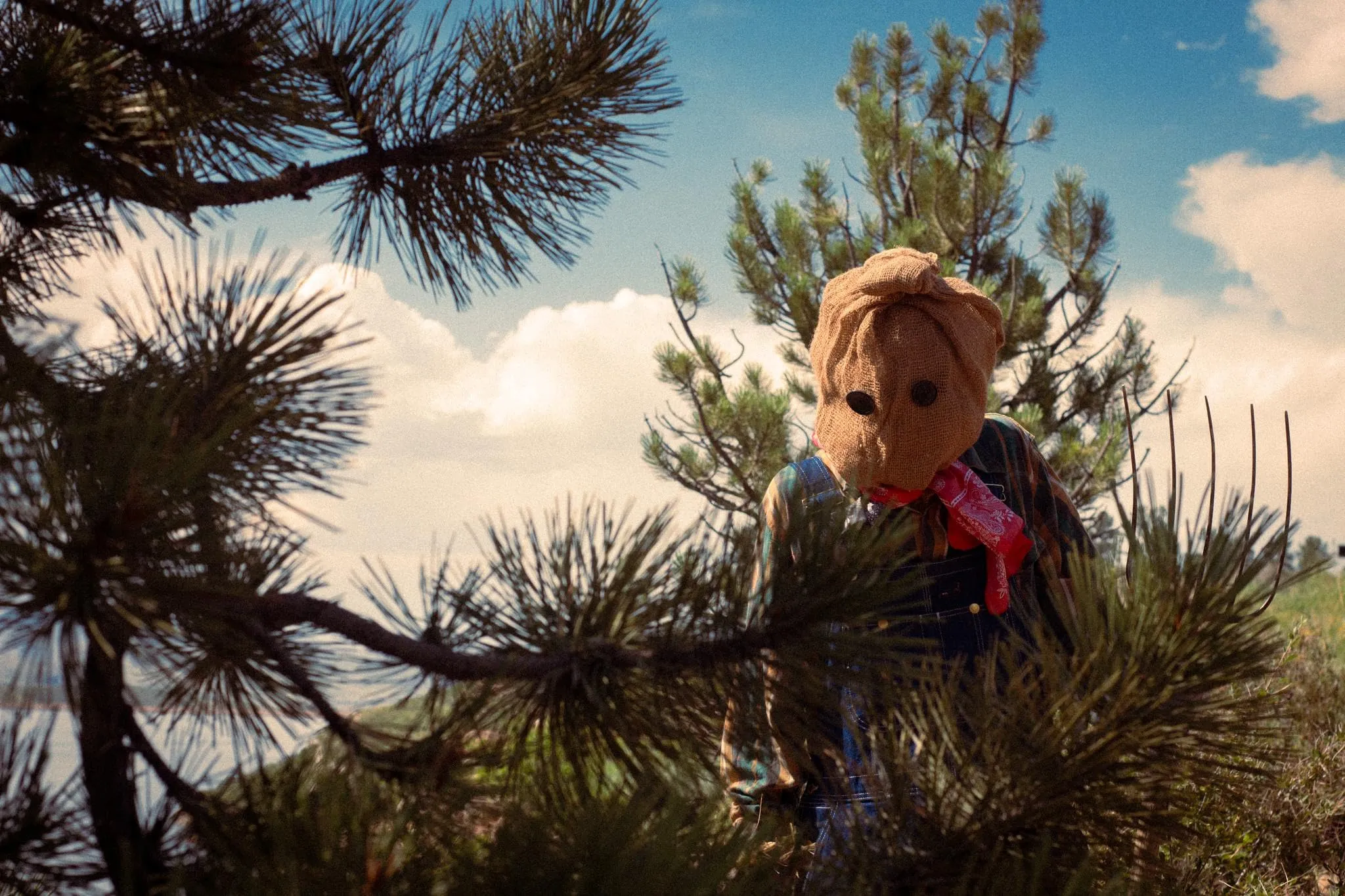
His motivation is rooted in abandonment and grief. He wants the farm preserved as it was, and he hungers for new companions to replace the master he lost. When the violence arrives, it arrives sharply: after a night of heavy drinking, one guest gets shoved into a woodchipper. The moment flips the film’s mode from tense drama to explicit horror, with the machinery doing the punctuation.
A supernatural response appears through a character who identifies as a witch. She attempts a protective ritual, and it fails, underscoring the durability of Billy’s old magic. From there, the film expands its threat by having Billy convert victims into new animated straw figures. That idea turns the farmhouse into a production line for monsters, each one a rough echo of the last.
Even with the body count rising, Billy keeps a tragic shading. He reads as sulky and lonely, and that emotional framing shifts how the slasher rhythm lands. The scarecrow designs lean on practical effects with a tactile, handmade feel, and the awkward bobbing heads and jerky limbs give the creatures a consistent, recognizable look.
Technical Quality and Pacing: The Echoes of the Independent Screen
Field of Screams wears its low-budget identity openly. The production feels raw, and the film’s ambitions sit right on the surface, tied to a clear commitment to telling this story outside a studio polish. That roughness fits the material’s exploitation lineage, since the imagery leans gritty and unvarnished.
The biggest technical obstacle comes from the sound design. Dialogue frequently drops into near-whispers while environmental effects spike hard enough to sting, and subtitles become essential if you want to track the plot without strain. That imbalance keeps pulling attention away from performance beats, especially in scenes where the film wants quiet intimacy.
At 97 minutes, the pacing can feel stretched. The extended stretches of reflection start to ask for tighter editing to keep the forward pull intact, and some emotional moments in the script land with a slightly forced quality, with dialogue that reads a bit unnatural in the mouth.
The creature work introduces an accidental comedy that bumps against the story’s seriousness. Those goofy, awkward movements can clash with the film’s grief-heavy themes, and the push-pull creates a tone that recalls older exploitation pictures where camp and bleakness share the same frame. The result frames underrepresented voices inside familiar horror architecture, keeping grief and reclamation as the guiding concerns, even when technical imperfections and tonal friction intrude.
The movie premiered on May 6, 2025. Audiences can view the film on Tubi or purchase it via digital retailers. This slasher centers on a man who receives a farm from his deceased relative and encounters a living scarecrow. It provides a look at grief while using practical horror effects. The filmmakers shot the project on a farm in Colorado.
Full Credits
Title: Field of Screams
Distributor: Gravitas Ventures
Release date: May 6, 2025
Running time: 97 minutes
Director: Alix Moad, Evan Runkle
Writers: Alix Moad, Evan Runkle
Producers and Executive Producers: Alix Moad, Evan Runkle, Calvin T. Shepherd, Jeffrey Ault, James Canny, Sara Canny, Matt Gray
Cast: J. Jordan Parsons, Jared Chandler, Randy Rochford, Savanna Steinhoff, Calvin T. Shepherd, Charlize Delenn, Justin Heinz, Jessica Shepherd, ZEWJ, Justin Marxen, Bill D. Russell
Director of Photography (Cinematographer): Garrett Brady, Dorathea Deforest
Editors: Alix Moad
The Review
Field of Screams
Field of Screams succeeds as an earnest exploration of grief and identity. It chooses emotional weight over constant action. While technical flaws like inconsistent audio create hurdles, the tragic nature of Billy makes for a memorable antagonist. It remains a sincere project for fans of independent horror who appreciate character over polish. The film prioritizes heart and raw storytelling over high production values.
PROS
- Sincere focus on queer identity and personal trauma.
- Practical effects for the scarecrows feel tactile and physical.
- Tragic motivation for the villain adds depth beyond simple malice.
- Strong supporting performance from the character of Allen’s mother.
CONS
- Inconsistent sound design makes dialogue difficult to hear.
- Pacing feels slow for a traditional slasher movie.
- Goofy monster movement sometimes clashes with the serious tone.
- Low production values limit the visual impact of the setting.