

























![Kingdom Hearts Collection [I-III] Review](https://gazettely.com/wp-content/uploads/2026/10/Kingdom-Hearts-Collection-I-III-1-360x180.webp "Kingdom Hearts Collection [I-III] Review: KHII Holds Steady as Newer Entries Fluctuate 37")



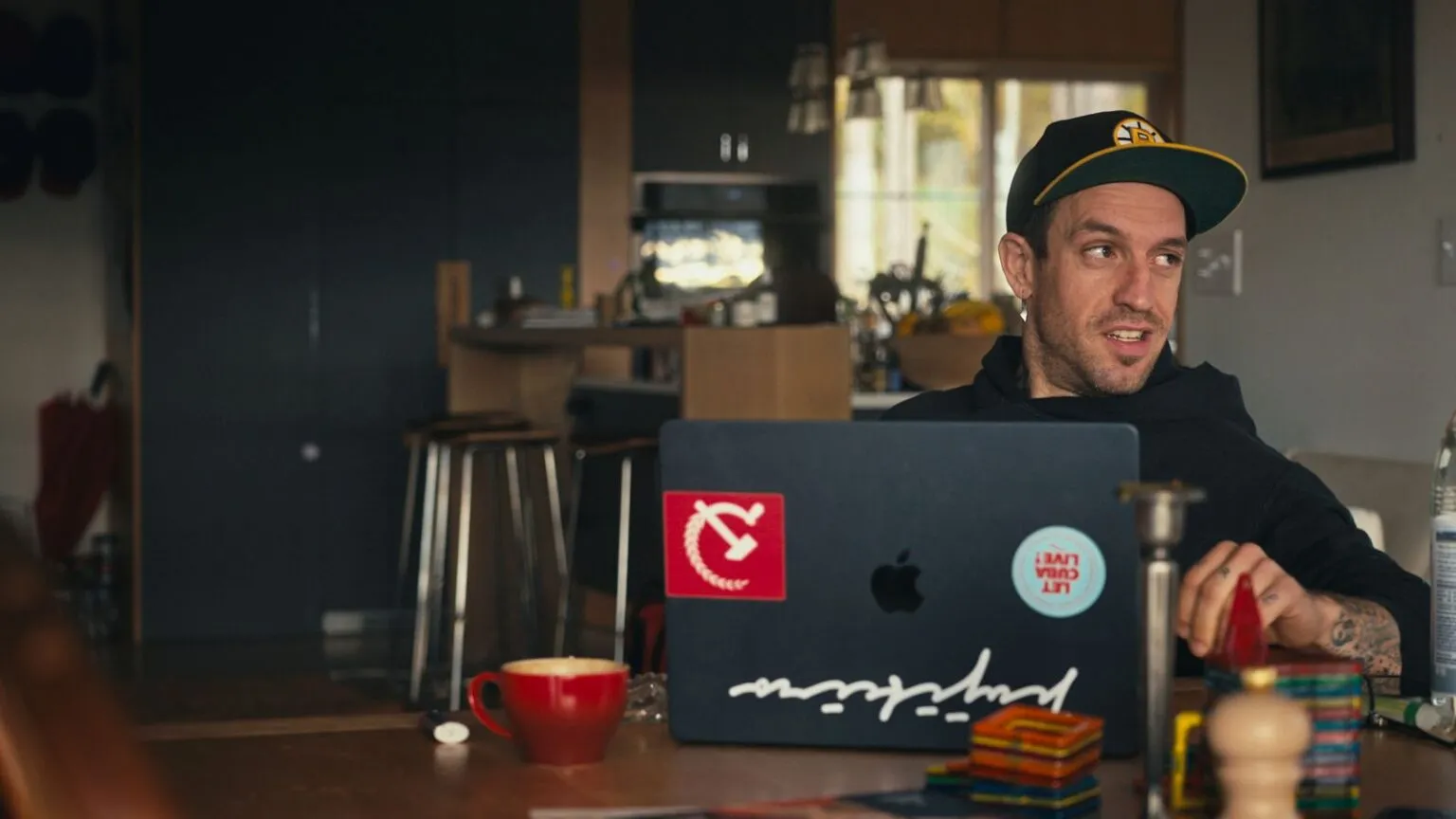
James “Fergie” Chambers serves as the central figure in Sinéad O’Shea’s documentary. He comes from the Cox family, a lineage tied to American industrial wealth through Cox Enterprises. Chambers cut himself loose from that inheritance and took a $250 million payout. The film follows what he builds with that money as he adopts a radical communist identity, framing his project as an attempt to form a Marxist-Leninist community in Massachusetts.
O’Shea films him over multiple years, tracking his political organizing alongside changes in his private life. Her presence stays quiet and watchful, guided by gentle questions that press for motive rather than spectacle. The portrait that emerges is of a man with vast resources who speaks about tearing down the system that produced his fortune.
The documentary keeps returning to the collision point between extreme wealth and radical politics, watching privilege operate inside anti-capitalist spaces. Chambers’ revolution carries a paradox that never leaves the frame: a nine-figure safety net underwriting the rhetoric of struggle.
The Gilded Commune of Alford
Chambers’ experiment takes shape in Alford, Massachusetts, where the Berkshire Communists project settles into a rural Berkshire landscape. The property holds six houses and a large barn converted for communal use. That barn functions as a training space for revolutionaries and a gym, built around the idea that political change demands physical readiness and a willingness to prepare for conflict.
The decor turns the interiors into a curated archive of 20th-century revolutionary imagery. Portraits of Stalin and Mao hang over the residents, and posters of Che Guevara line shared rooms. The setting stays calm and scenic outside, and that calm sits beside an interior world of militant iconography and disciplined rehearsal.
People such as Paige Belanger live there without paying rent. Chambers covers housing and provides a monthly income. He also pays for basic needs and political education, shaping the collective through patronage that reaches into everyday survival. The arrangement sets up an irony that the film does not let the audience ignore. A group committed to dismantling capitalism relies on a billionaire to keep the lights on.
The resistance becomes something funded, administered, and maintained through the same kind of wealth the residents claim to reject. That dependence gives the commune the feel of an orchestrated trial run, less a movement rising from shared need than a project sustained by a single benefactor. Alford’s isolation amplifies that tension, placing sweeping revolutionary aims in a quiet corner of the American landscape where the surrounding world remains largely untouched by the rhetoric inside the houses.
Radical Shifts and Legal Disparities
The collective’s tone shifts after October 7, 2023. Chambers and his circle move into a period of sharper radicalization, and the film records how money begins to flow toward direct action. Chambers provides significant financial support to Palestine Action US and bankrolls efforts aimed at disrupting defense manufacturing.
One incident becomes a hinge point: a smoke bomb attack on the Elbit Systems office in New Hampshire. The action triggers immediate legal fallout, and the documentary tracks how punishment and protection distribute themselves across class lines inside this supposed shared struggle.
Paige Belanger absorbs the heaviest consequences. She receives a 60-day jail sentence for participating in the protest. Chambers sidesteps comparable accountability. He draws on his resources to leave the United States and relocates to Tunisia, a destination framed as strategic because Tunisia has no extradition treaty with the American government. The disparity in risk becomes blunt.
The person financing the project finds refuge across borders, while followers with fewer options stay behind to face prison time. The Alford project collapses under the strain of that exit. The film treats the breakdown as more than logistical failure; it reads as a fracture in the idea of collective sacrifice. The promise of shared danger dissolves at the first real test, and the documentary presents that moment as a clear signal of where Chambers’ protection truly comes from.
The Shield of Infinite Capital
O’Shea follows Chambers to Tunisia as he adopts another persona. He converts to Islam and begins studying Arabic, repositioning his identity through religious practice and language study. His political energies shift again, now channeled into sports.
He invests heavily in the Club Africain soccer team, tying his sense of purpose to a different kind of institution, one rooted in public identity and mass spectatorship. His personal life changes quickly during this period abroad, including his marriage to Stella Schnabel. Through each transformation, the documentary keeps the same fixed variable in view: the $250 million fortune that cushions every reinvention and absorbs every failed attempt.
That money shields him from the wreckage left behind in the United States. Later, he moves to Ireland and meets O’Shea in a luxury hotel suite for the film’s closing interviews. In those scenes, he tries to bend the documentary to his will. He offers to pay the full production cost if the film is suppressed, aiming to keep the footage from ever reaching an audience. The gesture lands as a final confirmation of the film’s underlying argument. Wealth operates as insulation from consequence, including the consequence of being seen clearly.
Chambers moves between ideologies and personal identities with the confidence of someone who can fund the next version of himself at any time. The documentary frames that freedom as the most revealing political fact about him. The system he claims to oppose continues to protect him, turning failure into a manageable expense and accountability into something he can attempt to purchase away.
All About the Money premiered on January 25, 2026, at the Sundance Film Festival as part of the World Cinema Documentary Competition. Directed by Sinéad O’Shea, the film offers a startling look at the life of James “Fergie” Chambers, a multimillionaire heir to the Cox family fortune who uses his inheritance to fund a communist revolutionary base in rural Massachusetts. The documentary was made available for online public viewing through the Sundance platform in early February 2026 and is currently navigating the international festival circuit before its wider digital and theatrical release.
Full Credits
Title: All About the Money
Distributor: SOS Productions, Real Lava
Release date: January 25, 2026
Running time: 95 minutes
Director: Sinéad O’Shea
Writers: Sinéad O’Shea
Producers and Executive Producers: Claire McCabe, Harry Vaughn, Katie Holly, Sigrid Dyekjær, Sinéad O’Shea
Cast: James “Fergie” Chambers, Stella Schnabel, Paige Belanger
Director of Photography (Cinematographer): Enda O’Dowd
Editors: Enda O’Dowd
Composer: George Brennan
The Review
All About The Money
This film exposes the friction between radical ideology and inherited privilege. O’Shea captures the hollow nature of a movement funded by the very capital it opposes. The result is a clinical look at how wealth provides a permanent exit strategy. It leaves the viewer questioning the sincerity of revolutions bankrolled by the elite. The director remains an observer while the subject attempts to manage his public image. The film effectively demonstrates that for some, rebellion is a luxury supported by the systems they claim to hate.
PROS
- Provides access to a secretive and polarizing subject
- Highlights the class disparity within modern radical activism
- Avoids taking sides while presenting uncomfortable truths
CONS
- Leaves questions about the subject’s childhood trauma unanswered
- The narrative feels disjointed as the location shifts between continents







