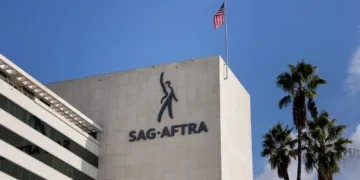


















After a first week of bargaining conducted under a strict media blackout, SAG-AFTRA and the Alliance of Motion Picture and Television Producers closed their initial round of 2026 contract talks without public comment, a familiar early-stage posture as the sides begin trading proposals and narrowing priorities.
Negotiations opened Feb. 9 and target a new agreement covering film, television and streaming work ahead of the contract’s June 30 expiration. The parties agreed in advance to limit statements while talks proceed, leaving guild leaders, studio executives and rank-and-file members reading tea leaves from scheduling and process rather than sound bites.
The agenda is shaped by familiar pressure points from the 2023 work stoppage—pay, residuals and safeguards around artificial intelligence—now filtered through a slower production economy. Shoot days in Los Angeles fell sharply in 2025 compared with pre-strike levels, tightening competition for jobs across crafts and on-camera roles. An AMPTP spokesperson has said the companies want “thoughtful” engagement on the challenges facing the business and expressed optimism that the sides can reach a deal that supports performers while promoting stability.
Inside the union, leadership framed the opening week as the front end of a longer, member-driven campaign. Sean Astin said the board’s bargaining package grew from months of member feedback about changing work and livelihoods, and he cast the union as unified and ready to press for protections that match current realities. Chief negotiator Duncan Crabtree-Ireland described the proposal set as the product of extensive analysis and debate, with AI policy positioned as a central issue in bargaining and public policy.
The current timetable runs through March 6, with room to extend if momentum builds; if talks stall, the sides could pause while Writers Guild of America and the Directors Guild of America move through their own bargaining windows.