




















![Kingdom Hearts Collection [I-III] Review](https://gazettely.com/wp-content/uploads/2026/10/Kingdom-Hearts-Collection-I-III-1-360x180.webp "Kingdom Hearts Collection [I-III] Review: KHII Holds Steady as Newer Entries Fluctuate 37")



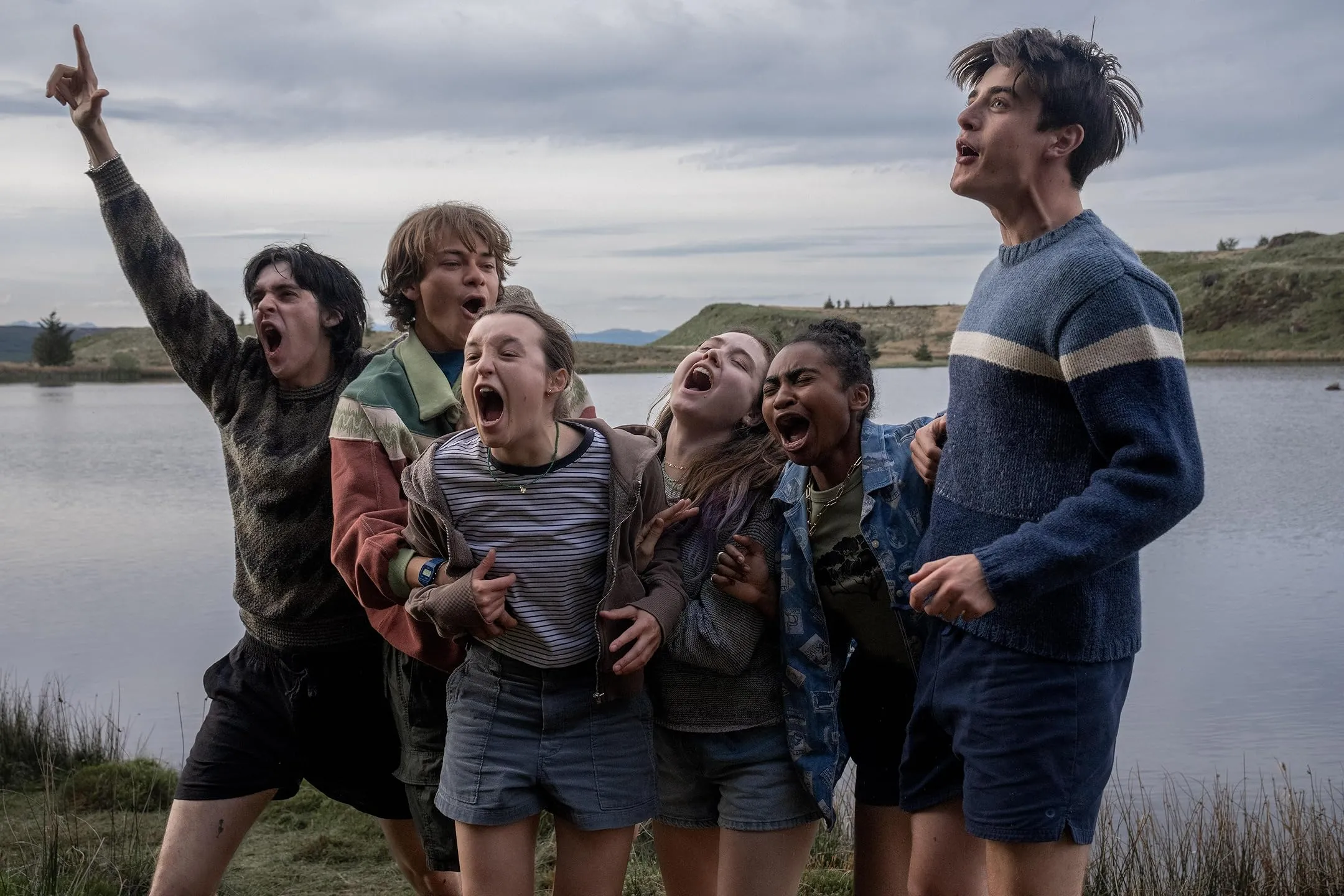

Ivy sits in her bedroom like a relic from a war she lived through and still cannot exit. She is seventeen, ten months into remission from leukemia. She inhabits “post-vulnerability,” that odd stretch when the body stops being an emergency and the mind refuses to lower its guard. Ivy swats away the patronizing “Make-A-Wish” sentimentality with sharp, defensive insularity. Her mood settles into moroseness, and she treats any attempt to package her survival like a sales pitch she never agreed to endorse.
Karen and Bob, her parents, become the well-meaning architects of displacement. They fear a second infection has set in, reclusiveness with symptoms that look like safety. So they drop her at Children Run Free (CRF), a “chemo camp” based at the Auchengillan Outdoor Centre near Loch Lomond. The Scottish wilderness turns into the film’s key aesthetic hinge. Those open, green Highland horizons cut hard against the sterile grey confinement of hospital corridors, like the image itself is trying to widen Ivy’s lungs.
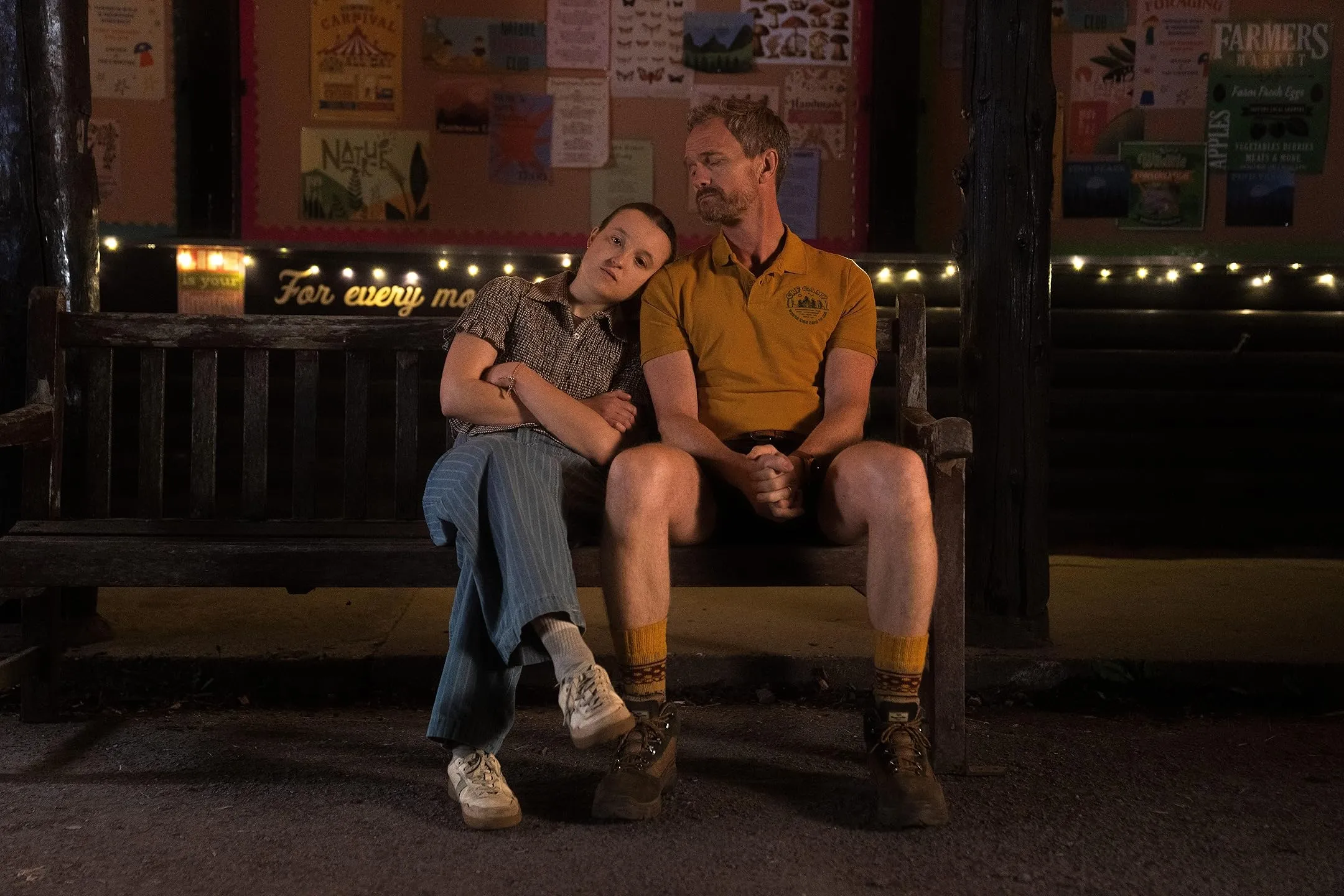
Patrick, the camp’s leader, runs the place with a persistent sunniness that never seems to tire. He embodies institutional optimism, the sort that arrives pre-approved and laminated. Ivy finds it repulsive at first. The tension registers fast, a clash between her grounded cynicism and a program built to manufacture joy on schedule.
Kinetic Chemistry and the Social Microcosm
Bella Ramsey holds the film in a performance rooted in what remains unsaid. Ramsey works with a lexicon of scowls and guarded glances that map Ivy’s inner terrain without spelling it out. It becomes a masterclass in “reactive acting,” where silence carries more weight than the script. When Ivy finally drifts toward the camp’s “cool kids” elite, the film tilts from a solitary character study into an ensemble that breathes and bickers like a self-contained ecosystem.
Ella, played by Ruby Stokes with chaotic fervor, acts as the group’s high-frequency pulse. Her fixation on losing her virginity reads as a grab for normalcy in a life shaped by the abnormal. Jake enters with a different register. Daniel Quinn-Toye gives him a quiet, dreamy energy, and his chemistry with Ivy develops in an unintrusive way that feels earned.
Ralph, played by Earl Cave, becomes the group’s “gallows-anchor,” planting pitch-black humor in the middle of shared trauma like a flag that says: we are still here, deal with it. Archie and Maisie fill out the circle with shy sincerity and tarot-fueled whimsy, small notes that keep the microcosm from turning monochrome.
The adults serve as counterweight and context. Neil Patrick Harris brings his familiar television wit, then pivots into sudden gravity when the film asks for it. His Patrick understands cheer as a survival strategy, less a personality trait than a tool you keep in your pocket. Jessica Gunning and James Norton make strong use of limited screen time. Gunning, especially, carries sharp maternal ferocity that throws light on the domestic anxiety of raising a survivor, the kind of fear that smiles politely and then stays awake all night.
Subverting the Glucose of the Genre
George Jaques sidesteps the traditional “emotional glucose” common to adolescent medical dramas. He leans into a British sensibility shaped by dry jabs and a refusal to wallow. The dialogue lands because it favors snark over sentiment, and the film’s attitude toward illness refuses the tidy arc that culture loves to sell. These teenagers come across as people who have seen too much, with tragedy present in the room without getting to claim the whole space.
Jaques directs with an unintrusive style that keeps the focus on performers. He gives the cast room to improvise, producing “interludes of unscripted texture” that feel closer to lived conversation than polished screenplay cadence. The humor goes dark, often fast. Ralph delivers a particular joke that functions as a litmus test for the audience, a burst of “radical honesty” that binds characters and viewers through shared shock. You can almost hear the theater deciding, in real time, what kind of story it agreed to watch.
The film also takes aim at a social expectation that rarely gets named directly. Society likes the ill to perform a certain kind of grace, a curated gratitude that reassures everyone else. This story refuses that contract. It draws a line to modern culture’s struggle to look at mortality without reaching for pity as a filter. Jaques keeps the rough edges in frame, and the result becomes a grounded, sharp-witted account of being young and fragile in a culture that wants its survivors saintly, photogenic, and endlessly inspirational (preferably by Monday).
The Velocity of the Horizon
Remission becomes “permanent pending.” The fear of recurrence creates a strange temporal urgency among the campers, and they live at full throttle. Flirtations and friendships hit with an intensity that healthy people might find overwhelming. The film names it the “intensity of the finite,” that urge to consume experience before the clock resets, like time itself might yank the rug back at any moment.
The story argues these kids deserve to “take up space,” and it frames that as a philosophical shift from surviving toward living. The technical choices echo the idea. A warm color palette paired with the Scottish landscape suggests horizons that keep going, a visual metaphor for the life Ivy begins to reclaim.
The score from Este Haim and Zachary Dawes keeps momentum high, and pop tracks from Scissor Sisters and Goldfrapp act as “peppy armor” against heavier themes. The pacing stays quick, matching the characters’ frantic energy without turning it into a gimmick.
Jaques also pulls off a clever “misdirection-twist” around the expected tragic arc. It challenges the viewer’s instinct to search for a sacrificial lamb, that familiar demand for the story to prove its seriousness with a body. The film’s commitment to originality shows itself there. It becomes a story about the people you meet making the journey worth it, even when the destination stays uncertain.
Sunny Dancer had its world premiere yesterday, February 13, 2026, at the 76th Berlin International Film Festival, where it opened the Generation 14plus strand. Directed by George Jaques, the film is a poignant coming-of-age comedy-drama that follows Ivy, a teenager in remission from leukemia who is reluctantly sent to a summer camp for young people affected by cancer. In the United Kingdom, the film is slated for a wide theatrical release in the summer of 2026 through True Brit Entertainment. Audiences can currently catch it on the international festival circuit as it seeks further global distribution.
Full Credits
Title: Sunny Dancer
Distributor: Embankment Films, True Brit Entertainment
Release date: February 13, 2026 (Berlinale Premiere)
Rating: 14plus (Berlin International Film Festival Classification)
Running time: 106 minutes
Director: George Jaques
Writers: George Jaques
Producers and Executive Producers: Ken Petrie, George Jaques, Hugo Grumbar, Tim Haslam, Herbert L. Kloiber, James Cabourne
Cast: Bella Ramsey, Daniel Quinn-Toye, Ruby Stokes, Neil Patrick Harris, Jessica Gunning, James Norton, Earl Cave, Jasmine Elcock, Conrad Khan, Louis Gaunt, Josie Walker, Shalom Brune-Franklin
Director of Photography (Cinematographer): Oliver Loncraine
Editors: Caitlin Spiller
Composer: Este Haim, Zachary Dawes
The Review
Sunny Dancer
Sunny Dancer is a refreshing departure from the saccharine traps of the "sick-teen" subgenre. By trading "emotional glucose" for a jagged, British wit and a vibrant Highlands backdrop, George Jaques captures the frantic velocity of youth in remission. Bella Ramsey’s internalised performance anchors a film that understands survival is not a static state, but a loud, messy reclamation of space. It is a poignant, high-throttle celebration of life’s "liminal geography" that prioritises the person over the pathology.
PROS
- Bella Ramsey and the ensemble cast deliver grounded, naturalistic portrayals.
- The script features dry, self-deprecating British humor that avoids sentimentality.
- The Scottish setting and warm color palette provide a striking contrast to the typical "hospital grey" of medical dramas.
- It effectively avoids genre clichés and the "victimhood" narrative.
CONS
- Some sequences lean into adolescent fantasy that can feel slightly uneven.
- The concept of an American-style summer camp in Scotland may feel unrealistic to some UK viewers.
- While the core group is strong, some supporting campers remain less developed.