













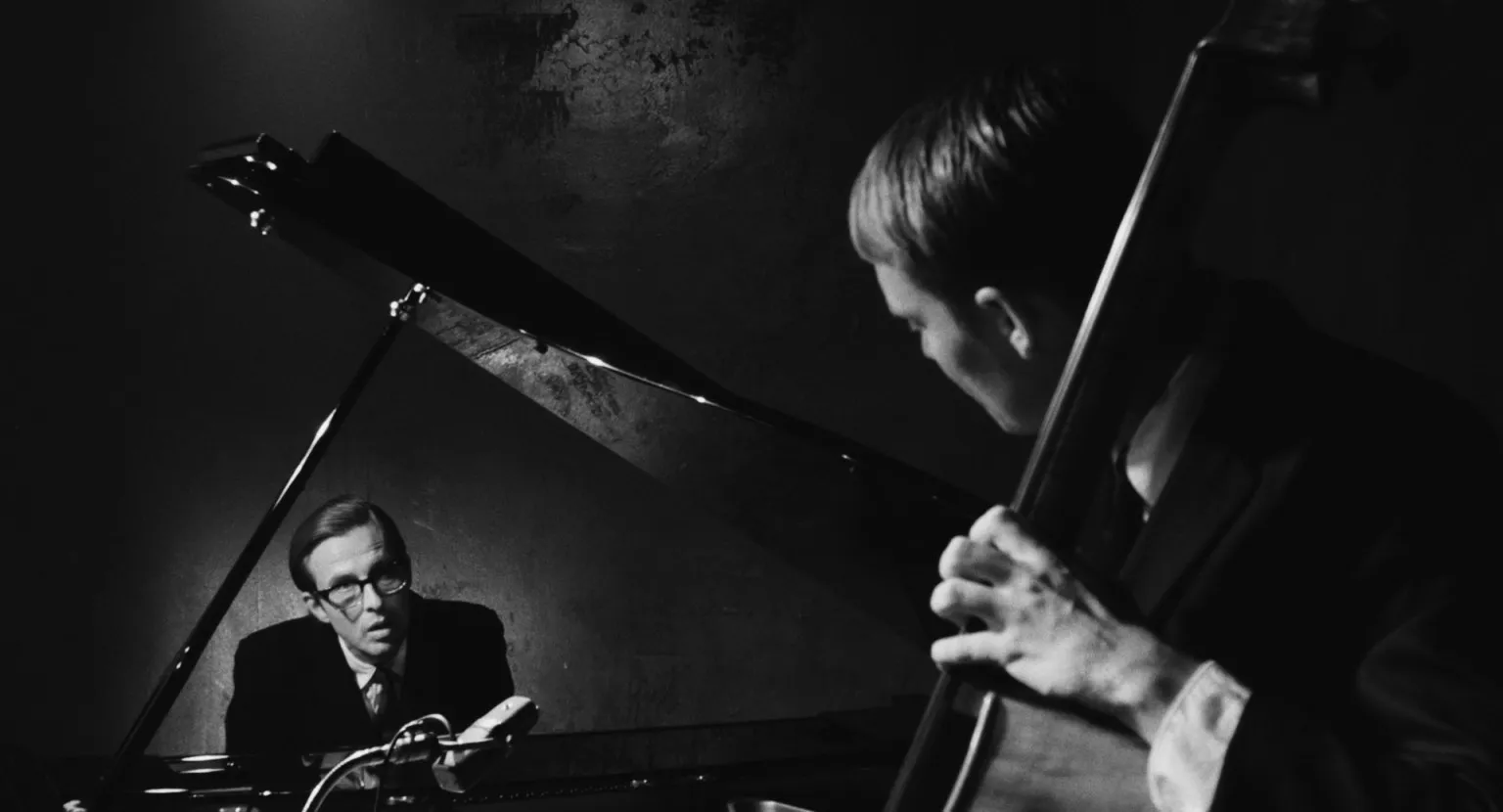

Grant Gee’s film opens on absence. It stays with the four months in 1961 when Bill Evans stops functioning as a musician. Scott LaFaro’s sudden death breaks the “perfect conversation” captured at the Village Vanguard, and the loss hangs in the air like an unfinished phrase. This 102-minute study, adapted from Owen Martell’s novel Intermission, treats music as a haunting presence. The “quiet fire” that Evans once carried dims into a flickering pilot light, heat without reach.
The story moves between spaces that feel like states of mind. A cramped, grimy New York apartment presses in with claustrophobic weight. Florida arrives as blinding sterility, a retirement community washed in harsh brightness. Grief plays here as a dissociative fugue, a mind slipping away from its own measures.
Evans turns to heroin, and the habit reads as both shield and shroud, a way to dull sensation and a way to vanish inside it. He lingers like a living negative, a figure defined by what he no longer gives the world. The film proposes artistic genius as a fragile tether. Once it snaps, the remaining man meets himself as a stranger. Gee makes a dirge for a season of silence.
Masks and Mirror Images
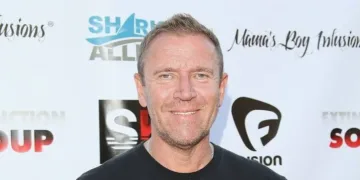
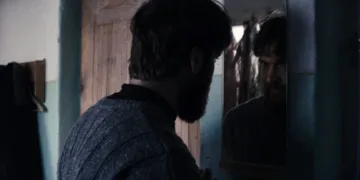
Anders Danielsen Lie plays Evans as someone receding behind his own spectacles. The performance stays gaunt, distrait, always close to disappearance. Those thick glasses become a literal mask. They hide eyes that find the light only near the film’s end. Lie catches a precise kind of verbal inarticulacy, guarded and halting, so that the eventual return to the piano lands like a desperate confession.
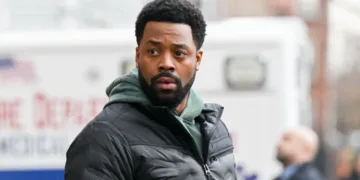
Lie performs “Waltz for Debby” himself, and the keyboard becomes the single place where presence holds. Around him, the family registers as a set of reflections, each one throwing his fractures back at him from a different angle. Barry Ward’s Harry Jr. lives with the ache of a “genetic lottery” that handed out talent unevenly. He works as a music teacher, supportive toward Bill, and that support carries the bitter tang of self-defeat.
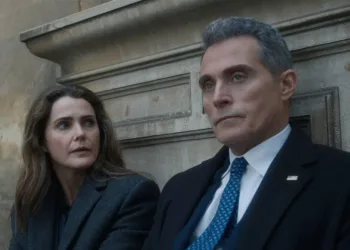
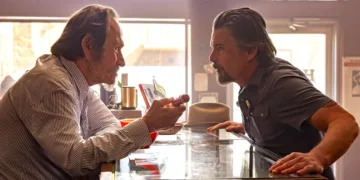
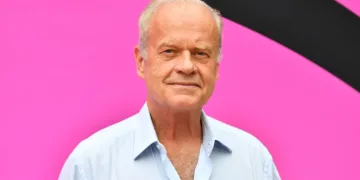
In Florida, Bill Pullman’s Harry Sr. fills rooms with bluster and chatter, garrulous in a way that feels practiced. He treats leisure as a prize earned through effort, and his eyes still carry a trapped look, imprisoned in a life scaled too small for the hunger beneath it.
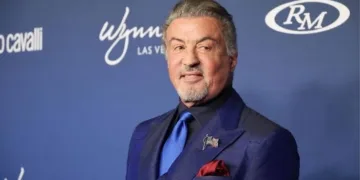
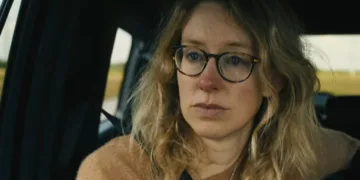
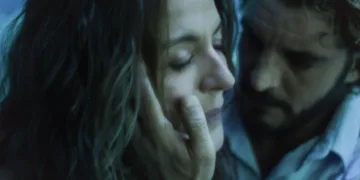
Laurie Metcalf, as the mother, offers a quiet counterpoint. She understands intermission as structure, necessary and painful, a pause that costs something and still must happen. Valene Kane, as Ellaine, completes this circle of sorrow. Her addiction twines with Bill’s, and the shared dependency forms a spiral where love and self-destruction blur into the same motion.
Chromatic Shards of Time
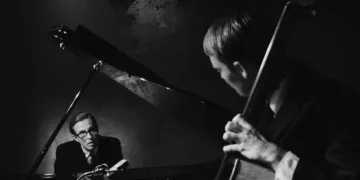
The visual approach from Grant Gee and cinematographer Piers McGrail refuses the warmth expected from a biopic. The 1961 timeline lives in smoky, high-contrast monochrome. It holds onto the bebop cool of the era and keeps a stubborn patina of grime in every frame. That “wintry melancholy” sits heavy in the New York passages, then gives way to Florida’s scorched, bleached whiteness. The sun does not clarify anything there. It erases, turning light into something that strips rather than reveals.
Editor Adam Biskupski lays down a complex time signature. Impressionistic montages and jagged jump cuts interrupt the flow, making time feel unstable, as if the film itself cannot settle into a steady meter. The ruptures are punctuated by flash-forwards to 1973, 1979, and 1980, shot in saturated, near-garish color.
They hit like chromatic shocks, jolts that refuse comfort. These glimpses point toward the later deaths that follow LaFaro’s car crash, a chain of endings echoing from that first impact. Gee shapes the film like unresolved chords. Resolution never arrives. Texture takes its place, a set of sensations that map what it feels like to drift through a life that has lost its rhythm.
The Longest Suicide
Underneath the surface of this jazz biography sits a meditation on social mobility and the “all-consuming vocation” of art. The Evans men move through a specific Welsh-American story, rising from blue-collar origins into the creation of a figure tied to a quintessentially American art form. The ascent brings poison with it: jealousy within the family, depression that seems shared and contagious.
Bill’s heroin use becomes a private cage, a slow-motion unraveling that reads as intimate and inexorable. Someone once called his life the “longest suicide in history,” and Gee honors that phrasing by paying attention to rests, the pauses where the body keeps going and the spirit seems to recede. Silence carries weight equal to sound.
The title holds a sharp irony. Evans appears as a diffident, antisocial man, often a stranger even to those who “dug” his work. He serves as a conduit between Black musical innovation and white American audiences, and his own life remains trapped in a segregated world of golf courses and lonely retiree bars. Grace sits near him, and he cannot live inside it. Gee stays with that dissonance: a man fluent in beauty, losing the ability to speak to his own soul.
Everybody Digs Bill Evans is a lyrical biographical drama that made its world premiere at the 76th Berlin International Film Festival on February 13, 2026, where it competed for the prestigious Golden Bear. The film is currently making its festival rounds, with an upcoming screening at the Dublin International Film Festival on February 21, 2026. Distributed by Break Out Pictures in the UK and Ireland, the movie is expected to transition to a wider theatrical release later this year following its successful festival run.
Where to Watch Everybody Digs Bill Evans
Full Credits
Title: Everybody Digs Bill Evans
Distributor: Break Out Pictures (UK/Ireland), Mister Smith Entertainment (International Sales)
Release date: February 13, 2026 (Berlin International Film Festival World Premiere)
Rating: 15A (IFCO classification)
Running time: 102 minutes
Director: Grant Gee
Writers: Mark O’Halloran, Owen Martell
Producers and Executive Producers: Janine Marmot, Alan Maher, Albert Berger, Ron Yerxa, Dyveke Bjorkly Graver, Andrea Ottmar
Cast: Anders Danielsen Lie, Bill Pullman, Laurie Metcalf, Barry Ward, Valene Kane, Katie McGrath, Will Sach
Director of Photography (Cinematographer): Piers McGrail
Editors: Adam Biskupski
Composer: Roger Goula
The Review
Everybody Digs Bill Evans
This film is a haunting meditation on the stillness that follows a creative collapse. It avoids the typical crescendos of the musical biopic, opting instead for a quiet, existential study of grief and the burden of talent. While its pacing mirrors the protagonist’s own inertia, the visual artistry and raw performances create a portrait of a man drowning in his own grace. It is a somber, beautiful piece of cinema that respects the silence as much as the sound.
PROS
- Anders Danielsen Lie’s internalized and musically authentic lead performance.
- Stunning high-contrast monochrome cinematography by Piers McGrail.
- A sophisticated, non-linear structure that avoids genre clichés.
- Strong supporting turns from Bill Pullman and Laurie Metcalf.
CONS
- The deliberate pacing may feel stagnant or overly muted for some viewers.
- The heavy, melancholic tone offers little emotional reprieve.
- The "garish" color flash-forwards might feel jarring against the primary aesthetic.