





























Inheritance from Duke Leon gives your expansion a personal starting point. Choosing a title such as Lord, Lady, or Liege lands as a real decision, one that defines your identity from the opening minutes. Mischa, Judith, Alberic, Isobel, Eike, and Rowena form your first circle of advisors, and each one helps frame the work ahead through a distinct backstory.
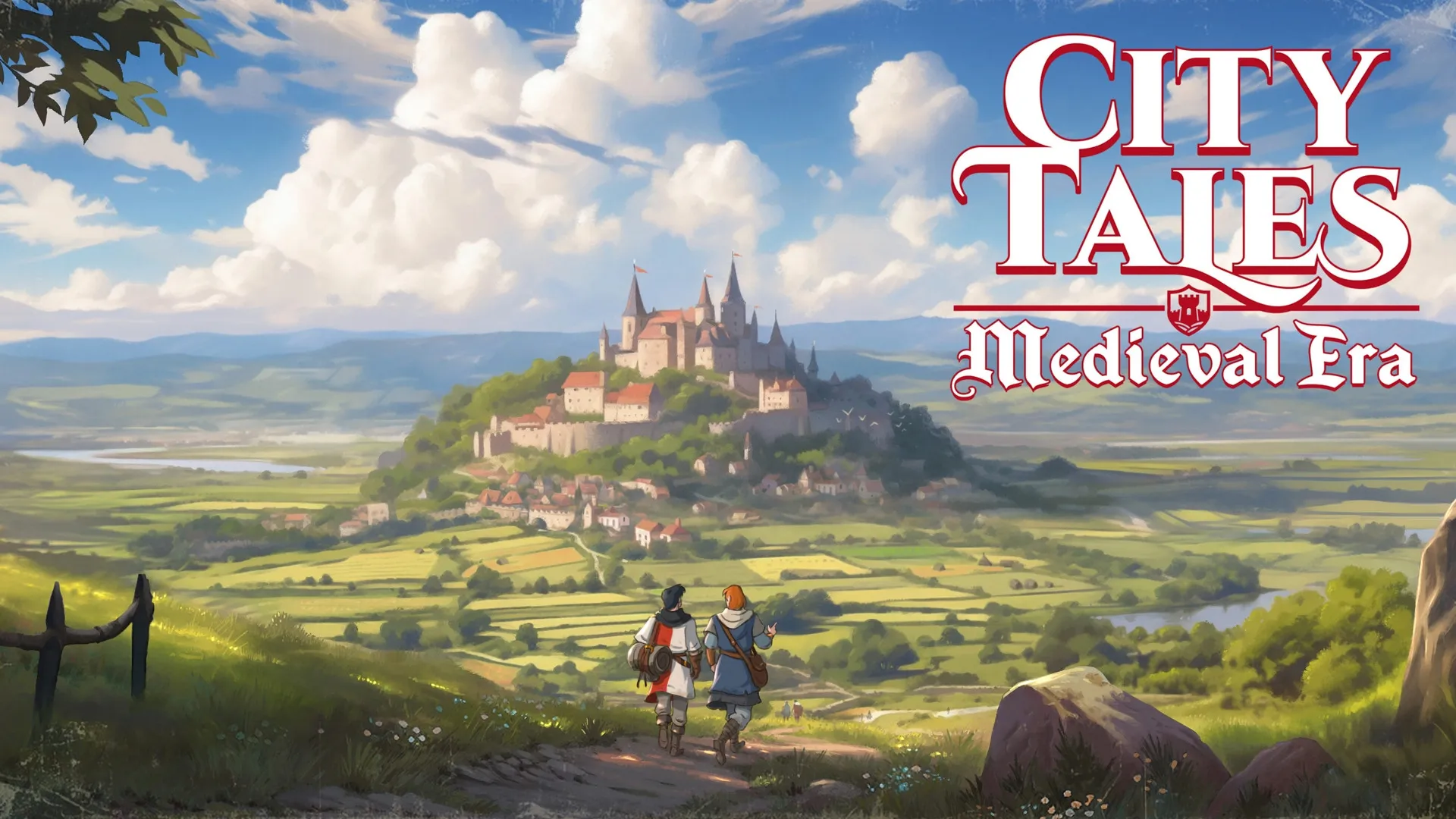
The art style leans into fairytale illustration, with soft meadow scenery setting the tone early. You start with a modest town hall and work toward a sprawling civilization, and the climb from a small settlement to a massive castle carries a strong sense of scale. The story tracks the growth of your domain while your companions’ personal threads run alongside your administrative tasks.
The visuals keep the mood calm, and the pace supports that calm. Your decisions guide the transformation of your father’s legacy, and the shift to stone manors and tall spires becomes a clear marker of progress. The game gives you time to settle into the role, and the move from simple town to kingdom feels earned. Your chosen title shapes how the world addresses you, and the companion cast keeps the management grounded in people.
The Living Architecture of the District System
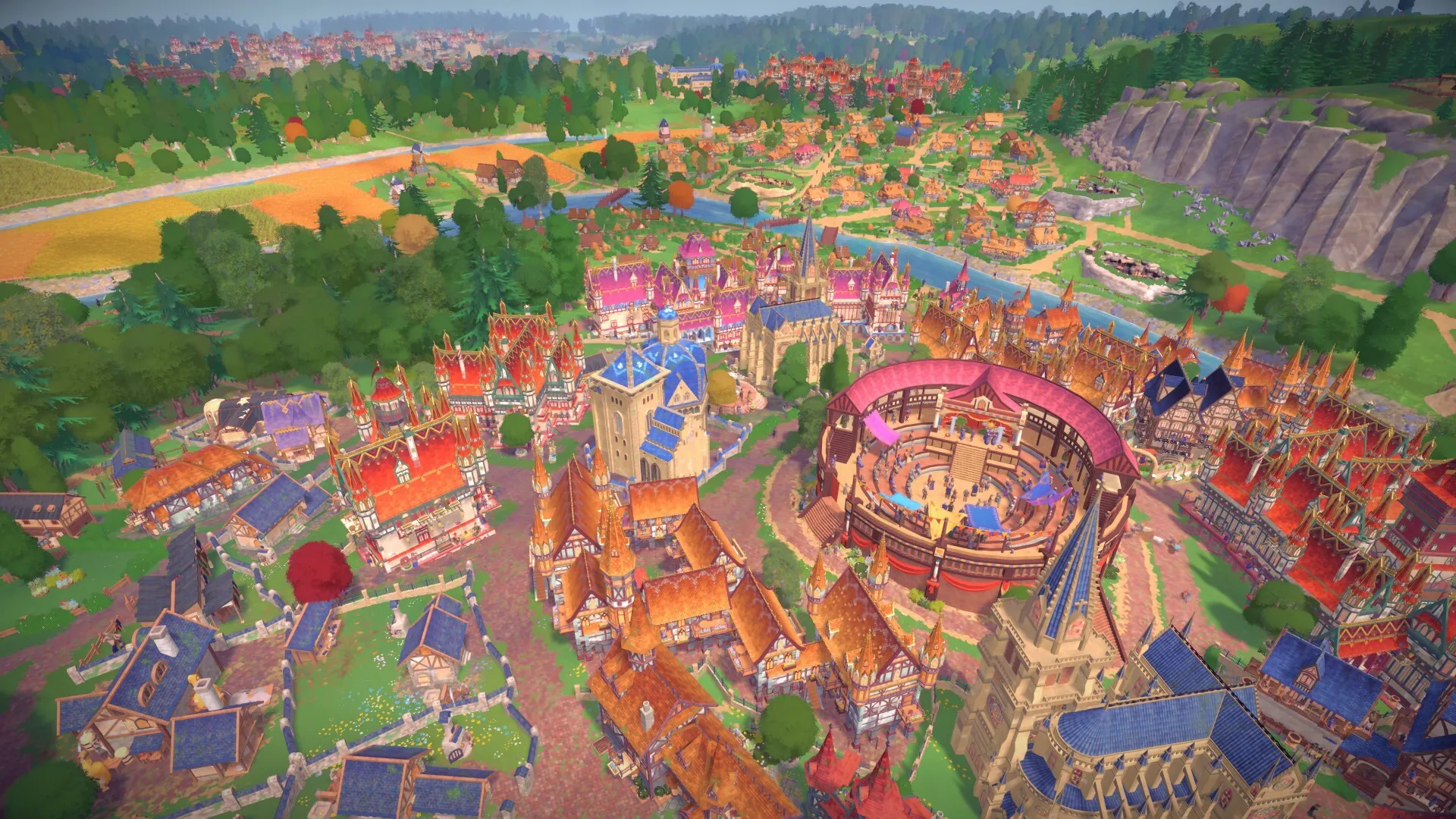
City Tales builds its urban expansion around pins and planned districts. You claim an area, then the AI develops the space into housing, producing a layout that feels like it grew over time. Road building follows the same philosophy. Manual road tools are not part of the process, because paths form through the repeated movement of your subjects.
Heavy foot traffic carves clearer trails, and those routes improve automatically as nearby structures upgrade, shifting from rough tracks to sturdier surfaces without constant micromanagement. The city ends up feeling inhabited, with growth that reads as lived experience inside the simulation.
District rules add structure to that organic flow. Each district supports exactly two civil buildings, so placement carries weight. Wells, churches, taverns, and pharmacies become deliberate commitments, and each one needs to sit close enough to homes to trigger upgrades. That turns planning into a spatial problem you solve district by district. You weigh service coverage against the demand for more housing, and you do it while thinking about adjacency, since nearby districts affect one another.
The game echoes the organic settlement feel of Manor Lords while keeping the tighter logistics mindset associated with the Anno series. You plan ahead because the district caps prevent a simple “add everything everywhere” approach. A pharmacy’s reach or a school’s coverage can raise prosperity across a wide area, which makes parcel mapping one of the defining skills in efficient building. The steady visual feedback of a village growing into a larger settlement stays rewarding through the full loop.
Economic Mastery Through Human Capital
Companions drive the production engine, and the system treats them as the spark that brings buildings to life. A mill, iron mine, or tailor shop begins idle until you assign a companion to train the local workforce. Training continues until the building reaches its first autonomous level.
Keeping a companion stationed there keeps the upward curve going, since they continue improving the site and gaining experience in skills such as craftsmanship, farming, and gathering. Skills cap at level eight, and higher levels speed up the training of future staff. That creates an economy built on people and expertise, with your role tied to shaping talent alongside placing structures.
Expansion widens that management layer. You can establish hamlets and baronies later, extending your reach to resources like clay and stone. A skilled companion leading a barony provides broad bonuses to buildings within its borders, turning leadership assignments into long-range decisions with clear payoffs. The financial model also ties progress closely to construction.
Gold comes as a flat reward when a house gets built or upgraded, so wealth tracks your kingdom’s physical growth rather than a tax cycle. The pressure point shifts into logistics and space. Food and health crises are not the main concern here. Complexity comes from production chains and the movement of materials, and growth depends on keeping those chains fed.
Companions become the tightest resource in that loop because they sit at the intersection of story and economy. Their quests pull attention away from training and leadership duties, so you keep making tradeoffs, adjusting assignments as priorities change. Personalities come through during these placements, and specialization matters. Mischa or Alberic excel in certain trades, which makes their roles feel like strategic necessities instead of flavor text. The economy ends up feeling human, anchored in subordinates you develop over time, and the system rewards patient investment in their skills.
The Sensory Balance of a Kingdom Simulation
The interface stands out for clarity and function. It tracks forty-eight resources with clean organization, and it lets you check supply chains and consumption trends with minimal clicks. That transparency supports decision making, because you can spot a bottleneck quickly and respond without digging through cluttered menus. The UI keeps information readable while still offering depth for players who want to follow the full web of inputs and outputs.
Audio work supports the same calm tone. Iris Roche delivers haunting vocals, and Benoît Vanhoffelen’s score leans on lutes and flutes. The music reacts to growth, starting simple and adding complexity as the city expands, which reinforces the sense of development without pushing you into stress. Sound effects add texture, including environmental details like tavern noise, though a few buildings such as the pig farm miss those cues. The gap stands out because much of the package feels carefully tuned.
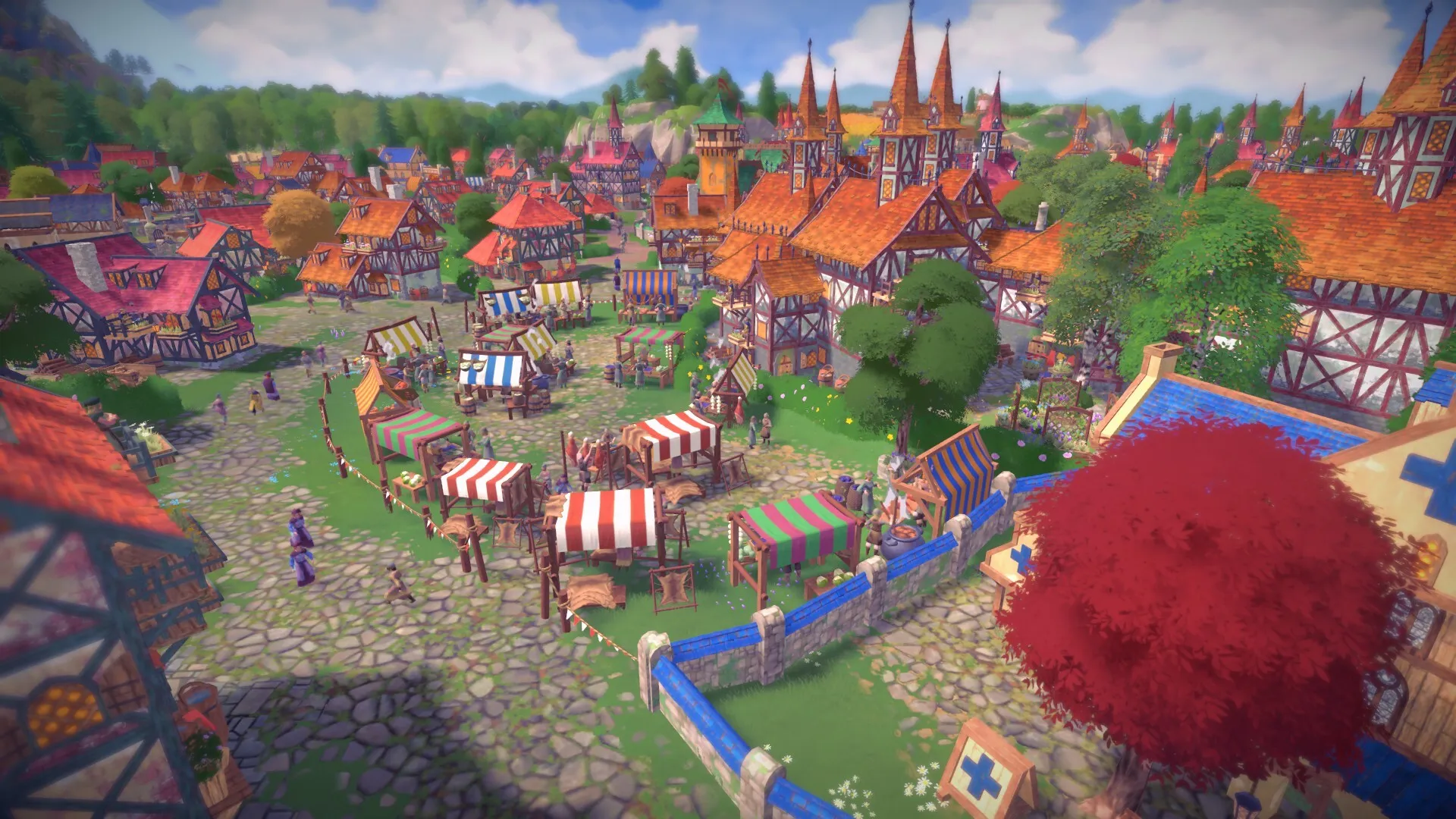
Technical issues appear once you look closely. The stylized art reads beautifully from a distance, yet zooming in reveals low-resolution textures. Villagers can clip through solid objects at times, and those moments disrupt immersion for players who like to linger on the details. Story presentation has limits too.
There is no voice acting, so companion conversations play out through text boxes, and following the narrative means reading many pop-ups. Difficulty options help shape pacing. Easy, Standard, and Hard adjust speed and economic pressure, giving you control over how tightly the systems squeeze. Through all of it, the game maintains a relaxed, idyllic atmosphere, and the combination of readable data and reactive music supports the management loop from session to session.
The Review
City Tales: Medieval Era
City Tales: Medieval Era provides a serene experience for fans of peaceful expansion. The district mechanics and companion systems provide a fresh perspective on resource management. While the narrative remains thin and the close-up visuals lack polish, the atmosphere stays delightful. It prioritizes relaxation over high-stakes challenge. This makes it a perfect choice for people who want to build without the stress of survival. The interface design sets a high standard for the genre. It offers a cozy, thoughtful world that stays with you.
PROS
- Organic growth mechanics
- Strategic companion skills
- High interface clarity
- Reactive audio design
CONS
- Low texture quality
- Silent dialogue scenes
- Uninspiring story beats
- Occasional visual clipping