








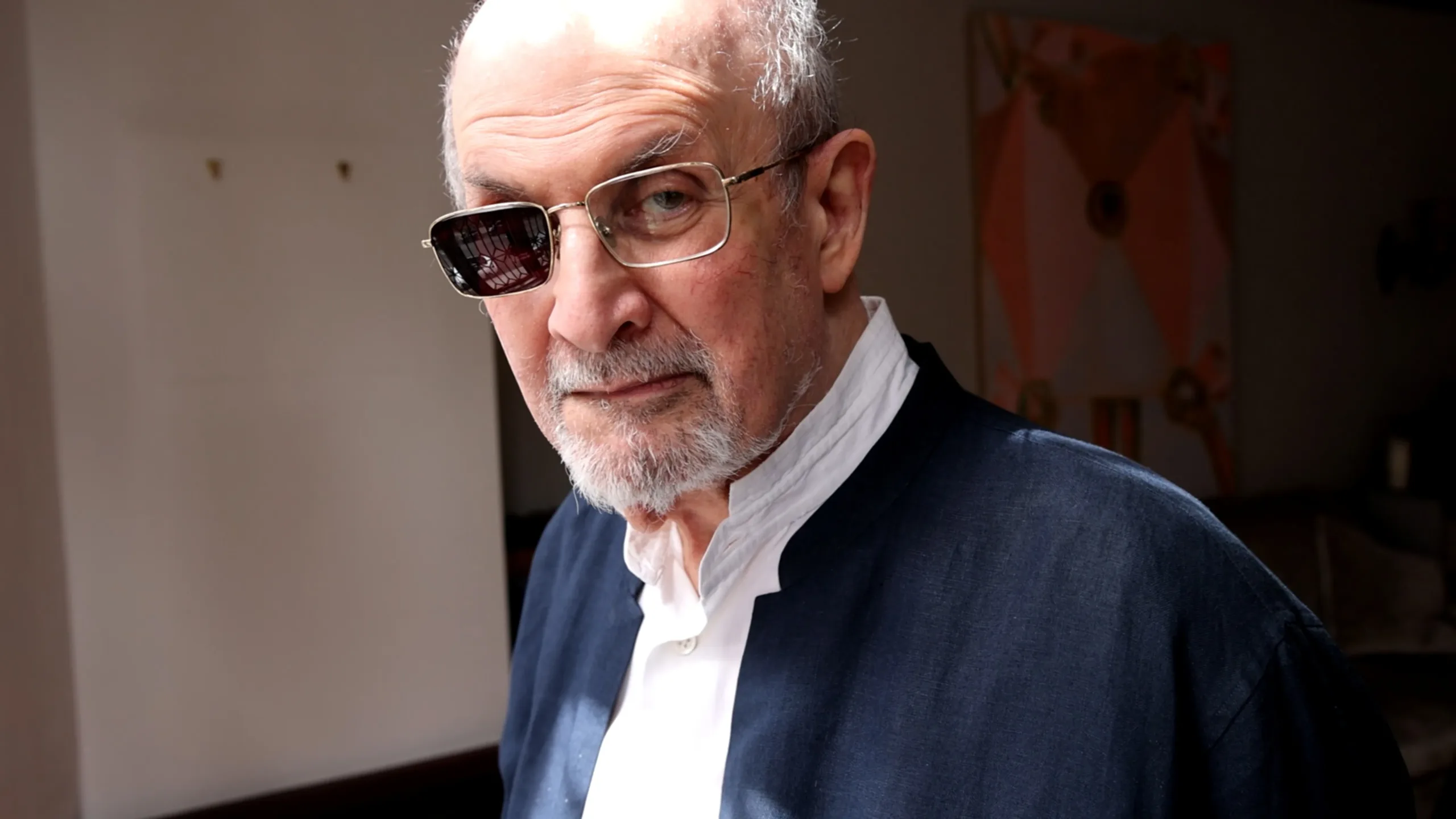

Alex Gibney’s documentary answers the 2022 assassination attempt on Salman Rushdie with a film that treats a public attack as the start of a long, private reckoning. It revisits the moment at the Chautauqua Institution when a young assailant rushed the stage and stabbed Rushdie fifteen times, then builds its structure on Rushdie’s 2024 memoir.
That choice gives the story a first-person spine. Rushdie narrates his own near-death experience with calm control and a dry wit that lands like a survival skill. The voiceover keeps the film anchored to his point of view, so the event does not swallow the person.
The opening leans into the visceral horror of the attack, then shifts to the slow medical struggle in a Pennsylvania hospital. The documentary spends real time with the recovery, the procedures, and the daily reality of rebuilding a body that has been violently reorganized.
That focus changes the film’s emotional geometry. Violence remains the catalyst, yet the sustained subject is persistence. Gibney frames Rushdie’s survival as an artistic and civic stance, with free expression treated as something lived through muscle, pain, and choice. The result plays as a record of someone who refused silence, even while confronting a version of hatred designed to feel absolute.
The Visual Language of Recovery
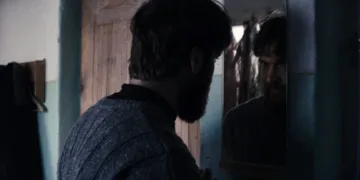
The film leans heavily on the intimacy of Rachel Eliza Griffiths’ cinematography. She is both Rushdie’s wife and a primary cinematographer, and the access that comes with that relationship shapes the documentary’s visual ethic. Her camera stays close to the hospital room, where the physical toll is shown without softening.

We see the long line of staples across Rushdie’s stomach. We see the severed nerves of his left hand. The presentation of injury is plainspoken and unsparing, with special attention paid to his right eye. Rushdie compares the ruined organ to a large soft-boiled egg, an image so specific it feels like the mind grabbing a metaphor that can carry the weight of damage.
Because footage of the actual stabbing does not appear until the final act, Gibney turns to constructed imagery to represent what the camera did not catch. Animated line drawings recreate the attack in a minimalist style, tracing chaos through spare marks and motion. The approach fits a story shaped by memory, especially memory under stress. It creates a visual bridge between an event and the way an event returns later, in fragments and flashes.
Gibney also reaches outward through clips from classic cinema. Scenes from The Seventh Seal and Psycho appear as metaphors for Rushdie’s internal state, using familiar images to map fear, dread, and the sense of being watched by forces that feel both personal and mythic. These references pull the documentary into a larger film vocabulary, linking one man’s trauma to a long tradition of cinematic symbols that translate anxiety into light, shadow, and rhythm.
Global Echoes of a Private Trauma
The narrative ties itself to the 1988 fatwa issued after the publication of The Satanic Verses, and Gibney uses archival footage to show the unrest that followed. Book burnings and firebombings appear across locations from London to New York, placing Rushdie’s story inside a sprawling geography of reaction and retaliation. The film presents the threat as a constant presence that stretched across years, shaping daily life long after headlines moved on.
It details the decade Rushdie spent in hiding under British police protection, then tracks his move to New York City and the return of public visibility. In New York, he begins living as a public figure again, rebuilding a sense of normalcy that the film treats as earned through time and risk. That stability fractures with the arrival of the attacker, referred to as “The A,” a figure who punctures the illusion of distance between past decree and present danger.
One of the documentary’s sharper points comes from the attacker’s place in time. “The A” was not even born when the original death sentence was declared. Gibney uses that fact to argue for a shift in how radicalization travels. The film notes that “The A” was influenced by digital content, not the direct political movements of the eighties. The threat changes shape, moving through modern media while keeping the same appetite for punishment. The Chautauqua attack becomes a collision between an old decree and a contemporary pipeline of online influence, with decades compressed into a single rush toward a stage.
Writing as a Weapon of Truth
A significant portion of the film follows Rushdie’s intellectual resistance through imagined dialogues. He writes fictional encounters with his attacker, choosing prose as the arena for confrontation. The decision is presented as a way to hold narrative control, since the page allows him to set terms, pace, and framing. In these sequences, writing functions as a tool for dismantling the ideology that targeted him, reducing fanatic certainty into language that can be questioned, answered, and reshaped.
The documentary argues that art can challenge orthodoxy and pursue truth, and it expresses that idea through a blunt metaphor. Writing becomes a figurative knife cutting through the noise of fanaticism. It is a line that could sound grand in another film, yet it fits here because the documentary keeps returning to the body and what was done to it. Language becomes part of recovery, a way of refusing to let violence dictate meaning.
The emotional peak arrives on day 401, when Rushdie and Griffiths return to the Chautauqua theater. Standing in the exact spot where he fell, he offers a quiet, physical assertion of presence, turning a site of trauma into a location he can occupy again. The final stretch shifts to a vacation in Jamaica set to the music of Bob Dylan. The soundtrack choice brings a peaceful, contemplative energy to the closing moments, and the film closes on endurance and a deliberate pursuit of joy. The last image left behind is of an artist who survives catastrophe with his spirit intact.
Knife: The Attempted Murder of Salman Rushdie premiered at the Sundance Film Festival on January 25, 2026. This harrowing yet deeply moving documentary chronicles the author’s recovery after the 2022 attack in Chautauqua, New York, where he was stabbed fifteen times on stage. Directed by Oscar-winner Alex Gibney, the film features intimate home footage captured by Rushdie’s wife, Rachel Eliza Griffiths, and is based on Rushdie’s 2024 memoir. Viewers can currently watch the documentary through the BBC or at select international film festival screenings as it continues its global distribution rollout.
Full Credits
Title: Knife: The Attempted Murder of Salman Rushdie
Distributor: BBC One, Jigsaw Productions
Release date: January 25, 2026
Running time: 107 minutes
Director: Alex Gibney
Writers: Salman Rushdie
Producers and Executive Producers: Alex Gibney, Erin Edeiken, Sruthi Pinnamaneni, Rachel Eliza Griffiths, Mahak Jiwani
Cast: Salman Rushdie, Rachel Eliza Griffiths
Director of Photography (Cinematographer): Benjamin Bloodwell, Rachel Eliza Griffiths
Editors: Andy Grieve
Composer: Will Bates
The Review
Knife: The Attempted Murder of Salman Rushdie
Gibney delivers a profound exploration of survival that balances visceral trauma with intellectual defiance. By blending intimate home movies with archival history, the film transforms a horrific act of violence into a meditative study on the resilience of the human spirit. While the shifting tones and academic musings occasionally create a sense of detachment, the documentary remains a powerful testament to the necessity of free expression. It is a vital, haunting, and ultimately hopeful portrait of an artist who reclaimed his life through the very medium that made him a target.
PROS
- Intimate access provided by Griffiths’ footage.
- Effective use of animation to depict the attack.
- Deeply personal and witty narration by Rushdie.
- Strong historical context regarding the fatwa legacy.
CONS
- Disorienting shifts between visceral reality and philosophy.
- Some sequences feel slightly overlong.
- Occasional dissonance in tone between humor and horror.
- Relies heavily on the viewer's interest in literary theory.