


























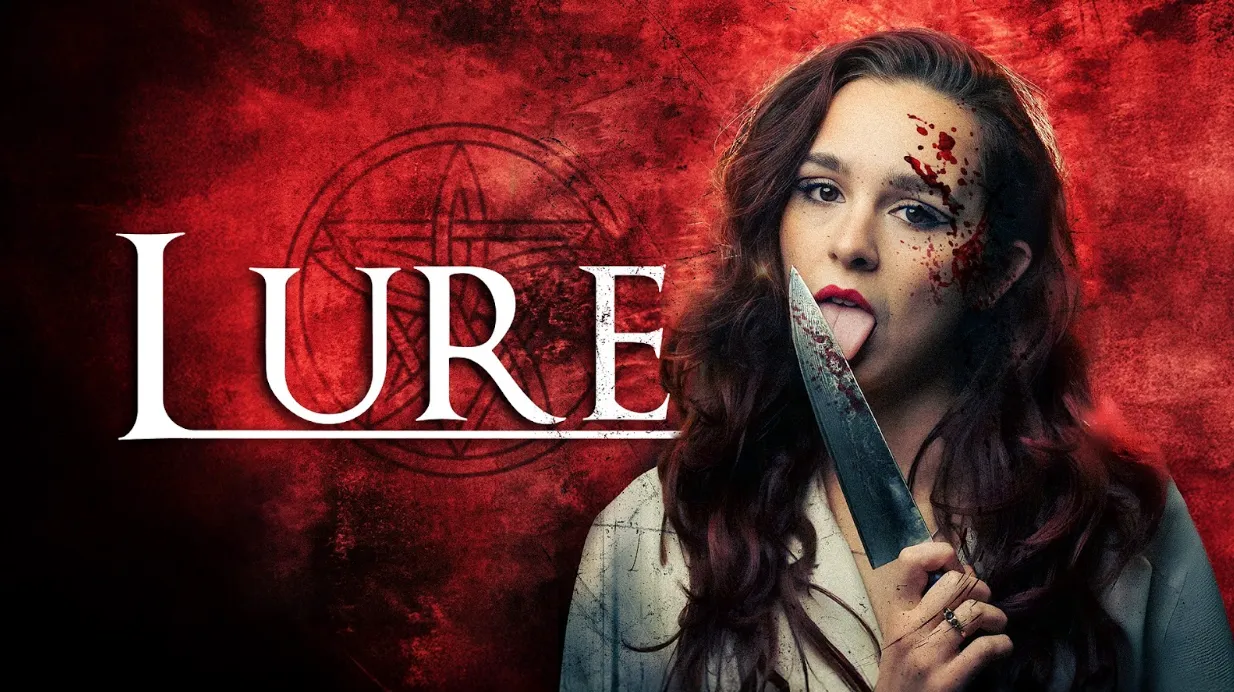

The story opens on a drive that feels comfortably familiar, rolling through the British countryside. Tom, a young man from London, rides with his father to a secluded country estate. He anticipates an exclusive social gathering, a chance to network, and maybe the start of a new circle. Once he arrives, he meets Islay, a wealthy heiress who says she is hosting her birthday party.
Five other men are there too, each pitched as a certain kind of social or physical ideal. The mood pivots fast, moving from polished upper-class hosting to something that plays like a sealed-room nightmare. Islay admits the “party” functions as a selection process. The men must face a run of lethal games that will decide who has the traits she wants as the father of her future child.
The ritual sits inside a dark family legacy shaped by lunar cycles and ancestral expectations. The film makes its stakes plain early: a first failure triggers a sudden, violent execution. From that moment, the estate’s luxury reads like set dressing for a grim premise, and status turns into a costume that can be stripped away at any time.
The Brutal Reality of the Modern Search
Director Oliver Cox uses survival horror as a direct lens on contemporary dating, taking the familiar language of “the dating game” and turning it into an actual bloodbath. People become checklists. Desires become metrics. The men are sorted into tidy archetypes, including the doctor, the investor, and the fitness enthusiast, then evaluated for utility in a way that echoes the quick, shallow judgments of swiping through digital profiles. Islay’s role pushes against older genre habits in a pointed way.
The film presents her as a fully human architect of cruelty, operating through wealth, planning, and cold intention, with reproduction treated like strategy. Her interest in these men plays as acquisition, with bodies and traits handled like inventory for a genetic legacy. Tom functions as the emotional anchor. The script gives him backstory and weight, and that choice pulls the viewer into his survival as something personal rather than abstract.
The setup also highlights a specific blind spot around safety: these men walk into a stranger’s home with a confidence that reads, in hindsight, like a social training error. Their hunger for connection, plus the temptation of upward mobility, dulls their ability to clock danger. That shift in perspective lands as one of the film’s sharper cultural observations, especially in a moment where dating culture so often encourages presentation over protection.
Crafting Dread Within Four Walls
Cox leans hard on the single-location setting to create a suffocating claustrophobia. The mansion’s interior carries dark, earthy tones and elegant décor, and the longer the story runs, the more that elegance feels like architecture designed to confine.
The film keeps the audience unsteady by sliding between horror modes. The opening carries the flavor of folk-horror mystery, then the story locks into the mechanical tension of a game-based thriller. The dread holds because the rules of Islay’s challenges stay easy to track, which makes each punishment feel like a foreseeable outcome instead of random cruelty.
The craft stands out, especially given the modest budget. Costume design does heavy character work: Islay’s monochrome outfits mirror her clinical coldness and control. The violent sequences hit with the visceral force of practical effects, giving the gore a physicality that many digital splatter jobs fail to capture. One of the film’s best moves is scale. A simple blackjack game becomes as nerve-racking as the more graphic torture scenes, because the tension comes from structure, stakes, and the knowledge that Islay keeps the house advantage.
Editing supports that pressure, shifting into quick cuts during high-stress moments to echo the captives’ disorientation. Pacing can wobble during transitions between styles, yet the focus on psychological dread keeps the film watchable. The movie argues, through technique, that effective horror comes from atmosphere and clear stakes, not expensive set pieces.
Performances That Anchor the Chaos
Silvia Presente delivers the standout turn as Islay, combining high-society charm with a disciplined, terrifying mania. She carries herself like someone who enjoys designing the maze and watching people learn its shape the hard way, and that confidence makes the character feel magnetic and repellent in the same breath. Presente’s energy also keeps the film alive through dialogue-heavy stretches inside the mansion.
The six men offer a range of responses to the pressure cooker, from panic to attempts at rational problem-solving, and the friction among them adds credibility to the survival element. Islay’s parents appear as well, and their presence gives her behavior a chilling frame. Their casual acceptance of violence suggests depravity as inheritance, passed down through generations with the same calm pride people reserve for heirlooms.
That normalization becomes one of the film’s most unsettling notes, because it drains the events of shock value and replaces it with routine. Some minor characters remain lightly sketched, yet the central conflict between the captives and their hostess holds steady. Small acts of rebellion from the men provide needed catharsis against Islay’s absolute control. The performances avoid big melodramatic swings, which helps the premise feel plausible inside the film’s own reality, even as the situation spirals into calculated absurdity.
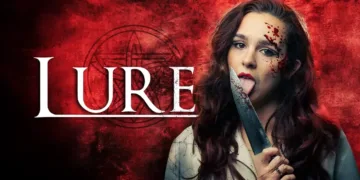
Lure is a blood-soaked British survival horror film that officially premiered in the United Kingdom on February 2, 2026. Directed and written by Oliver Cox, the movie blends the tension of high-stakes social competition with the visceral terror of the “torture porn” subgenre. The narrative centers on Islay, a ruthless heiress who invites six bachelors to her family’s remote estate under the guise of a birthday celebration, only to force them into a series of lethal games to determine which man is worthy of continuing her high-class legacy. Having been released just over a week ago, the film is currently available to watch on major digital on-demand platforms, including Amazon Prime Video and Apple TV.
Full Credits
Title: Lure
Distributor: Reel 2 Reel Films
Release date: February 2, 2026
Running time: Approximately 85 minutes
Director: Oliver Cox
Writers: Oliver Cox
Producers and Executive Producers: Oliver Cox
Cast: Silvia Presente, Kit Esuruoso, Joey Lockhart, Paul David-Gough, Gregory Fung, Samy Elkhatib, Reece Henderson, Joshua Dowden
Editors: Oliver Cox
The Review
Lure
Lure is a sharp, low-budget survival thriller that successfully reimagines the "dating game" as a literal arena of life and death. While it struggles with occasional tonal shifts and a limited budget, the film excels through its subversion of gender roles and its cold, calculated lead performance by Silvia Presente. It is a cynical but insightful reflection on how we commodify partners in the modern world. For fans of high-stakes psychological horror who appreciate a feminist twist on the "torture porn" subgenre, this is a journey worth taking.
PROS
- A commanding and theatrical turn as the villainous Islay.
- A clever and relevant metaphor for the anxieties of modern dating and reproductive pressure.
- Tom is a well-developed protagonist who avoids typical horror tropes.
CONS
- Jumps between folk horror, comedy, and torture porn without a smooth flow.
- Some sets and props feel flimsy, occasionally breaking the suspension of disbelief.
- The narrative loses some steam when transitioning toward its final act.