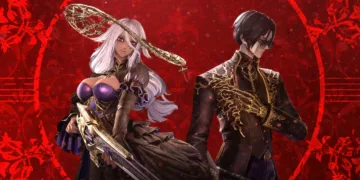




























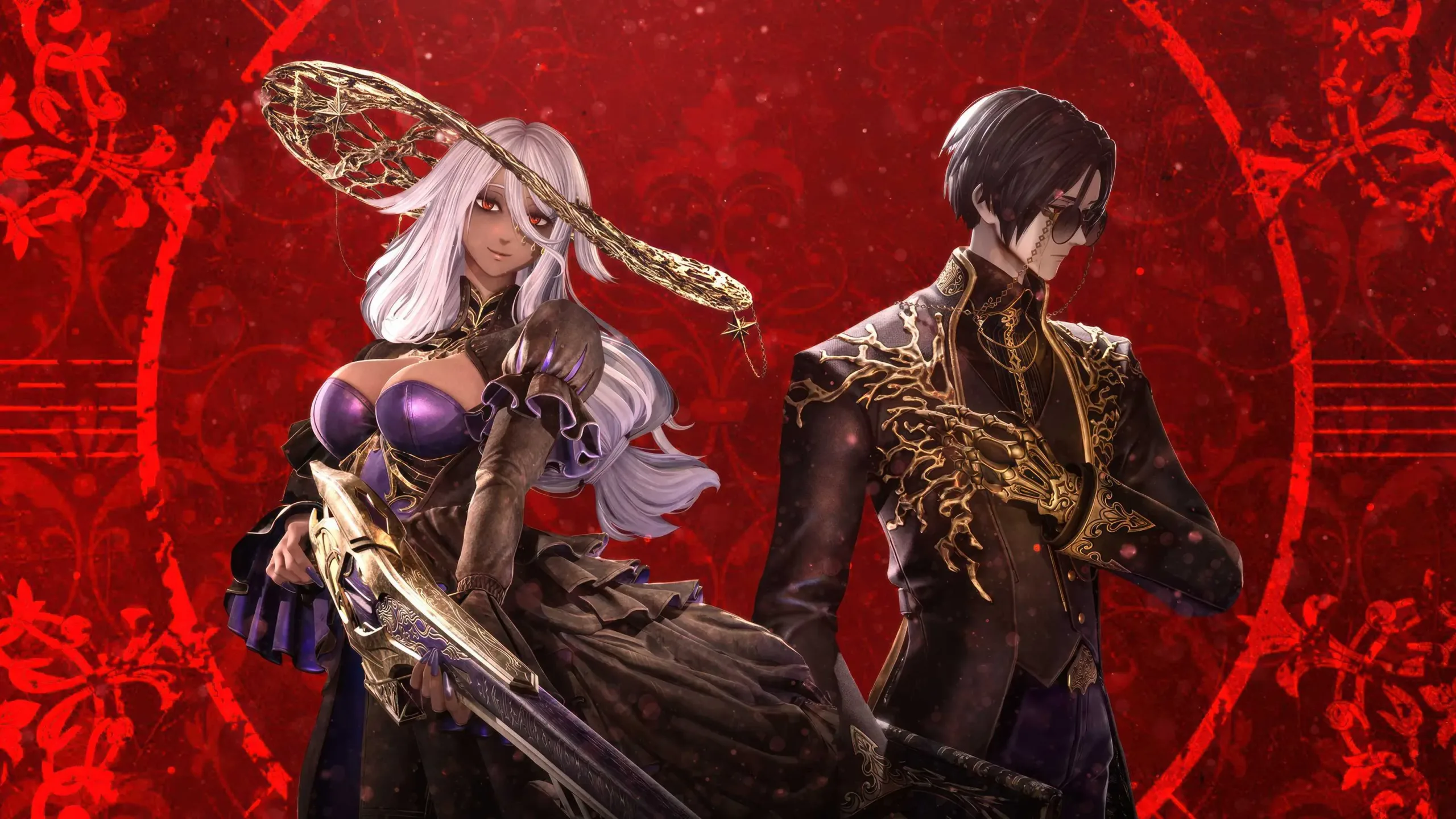

The Frontier frames a civilization at the edge of collapse, and it does so with a confident visual identity. Art deco lines sit beside rot and gothic decay, giving the world a polished silhouette that still feels sickly and doomed. You play as a Revenant, a vampiric survivor with full control over appearance and presentation.
The looming danger is the Resurgence, an event that signals the world’s final end if the cycle continues unbroken. From Magmell Island, Lady Lavinia delivers the mandate: track five legendary heroes across time and figure out how to change what keeps repeating.
That premise drives the core loop. The game repeatedly sends you back 100 years to meet these figures during their prime, then returns you to a present-day wasteland shaped by what came before. The structure creates a clear split between a living past and the hollowed remains of the current era, and the story keeps pressure on you by framing the mission as a race to prevent a double apocalypse. The presentation sells that urgency. Environmental detail communicates the weight of a dying society while keeping the series’ stylized flair in view.
Open Vistas and Mechanical Friction
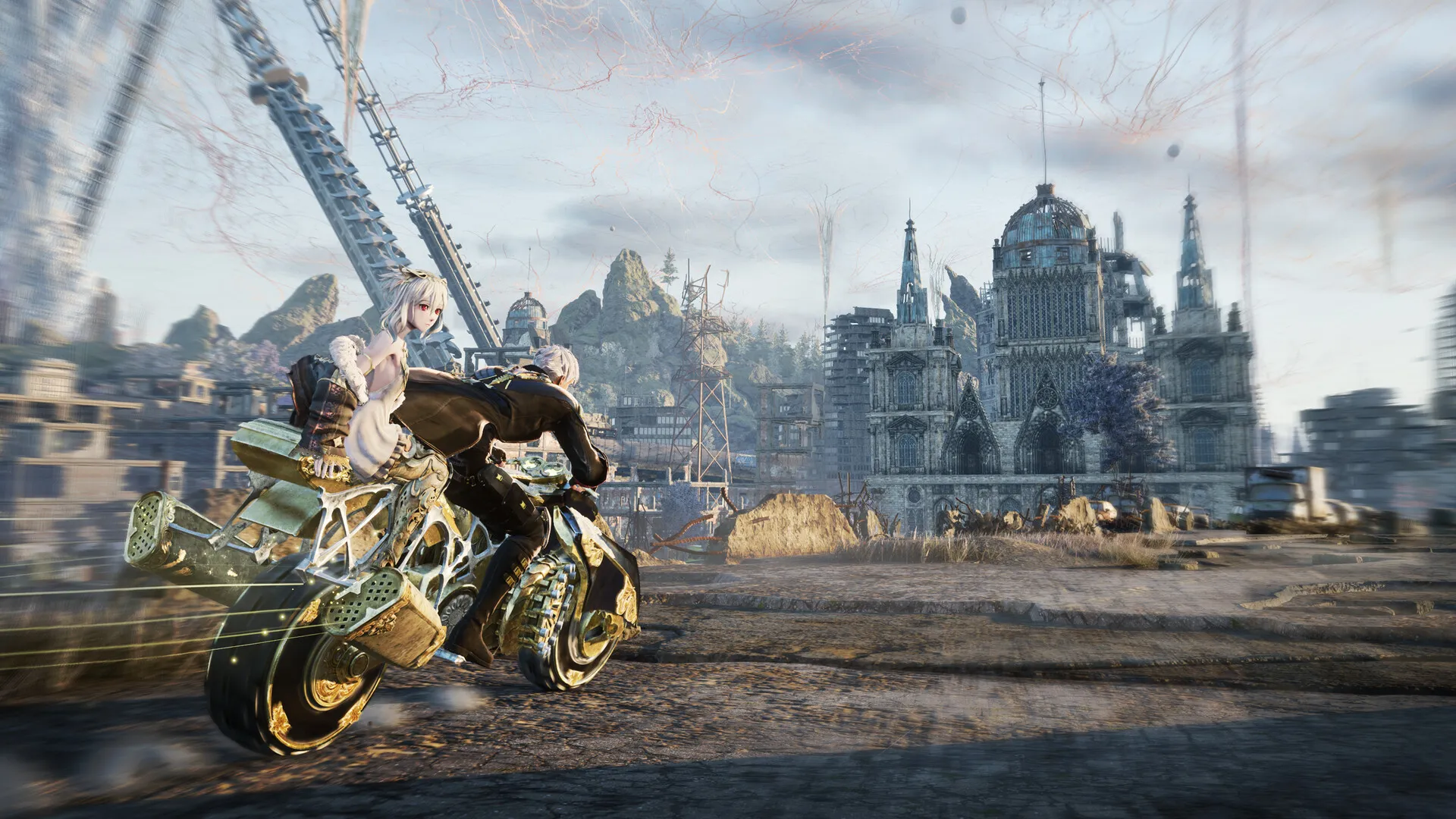
Exploration expands through an open structure, and the regions do real work to differentiate themselves. The Undead Forest carries a strong identity, and the Sunken City stands out through reflective, water-slicked surfaces that catch light in a way that makes the area feel immediately recognizable. Movement across this space leans heavily on a gothic-styled motorcycle. It covers long distances quickly on broken highways, and the added gliding mechanic extends mobility to distant cliffs and vertical routes.
The open design has limits that show up in practice. Invisible walls appear when you try to cut across terrain or bypass intended routes, and these moments make the world feel less permissive than its scale suggests. Even so, the time-shift presentation remains one of the game’s most effective tools. A lush forest viewed in the past, then revisited as a gray wasteland in the present, communicates decay without needing dialogue or exposition to spell it out.
Exploration also pays off mechanically. Pathos buffs can grant passive health regeneration, and upgrades for healing items reward players who step off the critical path. Those incentives help the open areas feel functional, not decorative. Technical performance undermines that progress at key points.
Textures can fail to load during dramatic scenes, and frame rate drops show up while moving through the open world. The stutters appear even on high-end hardware, and that instability disrupts immersion in a setting that relies on atmosphere and visual clarity. The world reaches for a grand scale, yet it does not consistently match the level of polish seen in titles like Elden Ring.
The Weight of Blood and Burden
Combat sticks to the genre’s high-stakes expectations, built around precise dodges and aggressive counter-attacks. The underlying rhythm asks you to commit, read spacing, and punish openings with confidence. Progression avoids a traditional stat point model, leaning instead on the Blood Code system for fast flexibility. Switching codes reshapes attributes and skill access on the fly, which supports quick adaptation when an enemy type or encounter pattern calls for a different approach.
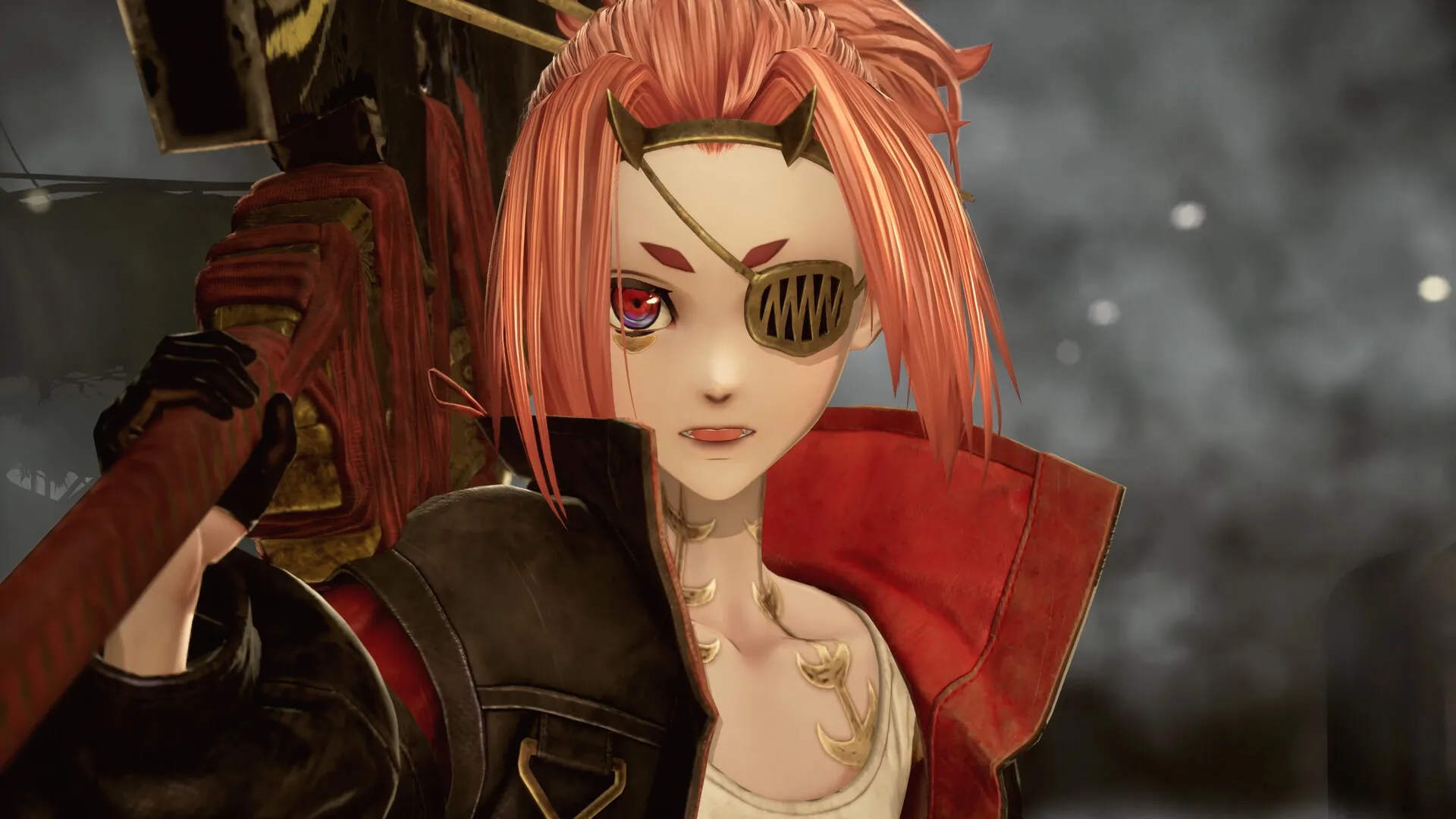
The Burden system pushes build decisions into a more deliberate space. Heavy gear lowers your available points, and exceeding the cap places the character in an overburdened state. That status carries defined penalties alongside specific benefits, so the choice can function as a planned trade rather than a simple error. Resource management ties into Ichor, which powers special abilities. You replenish Ichor through Jails, specialized tools built for drain attacks, keeping offensive pressure linked to sustain and ability access.
Defense receives its own customization channel through Defensive and Offensive Forma, which take the place of standard blocking and parrying. This shift encourages players to tune defensive behavior to their preferred tempo and risk profile. The difficulty curve does not stay consistent. Light attacks remain highly effective through many standard encounters, and that can flatten decision-making in stretches where the systems suggest richer possibilities.
Players looking for the methodical demands associated with Sekiro or Nioh 2 may feel that absence. Players who enjoy min-max planning still have room to work, since build layering supports complexity for those who chase it. Many players will progress comfortably by leaning on basic strikes and using extra experience to level up, which keeps the game approachable for a wider audience.
Relic Heroes and Emotional Echoes
The story lands strongest through the bond between the player and AI companions. Characters such as Noah and Josée contribute far beyond extra damage or simple presence. They act with independence, pull enemy attention, and can spend their own health to refill the protagonist’s HP. That support system shapes the feel of long dungeon treks, creating a sense of camaraderie built through repeated survival and shared pressure.
Hero’s Cocoon ties narrative and play into the same loop. Time in the past lets you spend meaningful moments with the legendary figures, learn their motivations, and witness the strain behind their roles. Returning to the present then turns those relationships into confrontations with their corrupted, monstrous forms. The bosses draw directly from the tools and techniques they shared while fighting alongside you, and that familiarity sharpens the emotional hit of each major encounter.
Boss design stands out through distinct identities and memorable fights, and the gap between bosses and standard enemies is noticeable. Regular foes often read as repeated assets, showing up across multiple regions with small visual changes.
That limited variety can make extended exploration segments feel repetitive, since the moment-to-moment pressure does not evolve as quickly as the environments do. The main bosses carry much of the experience’s momentum. Putting down a former ally and ending their suffering lands with real emotional force, and those scenes stand as the clearest payoffs for the time spent moving through the game’s more routine stretches.
The Review
Code Vein II
Code Vein II succeeds in creating a strong tie between the player and the world through its time travel mechanics. Seeing the heroes you aid in the past become the monsters you fight in the present gives the experience a heavy, personal weight. These highs struggle against a world that feels empty and technical issues that interrupt the action. It serves as a decent step forward that still feels held back by its own technical limits.
PROS
- Personal connection to boss backstories
- Flexible character progression via Blood Codes
- Striking art deco environments
- Strategic Burden system for gear management
CONS
- Poor technical performance and texture issues
- Repetitive fodder enemy types
- Underdeveloped open world regions
- Flimsy vehicle controls