








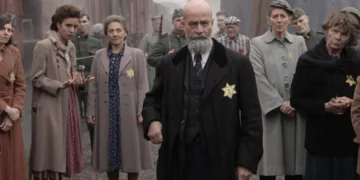







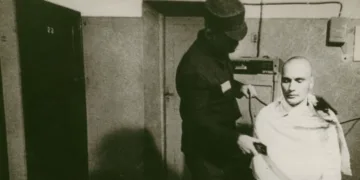









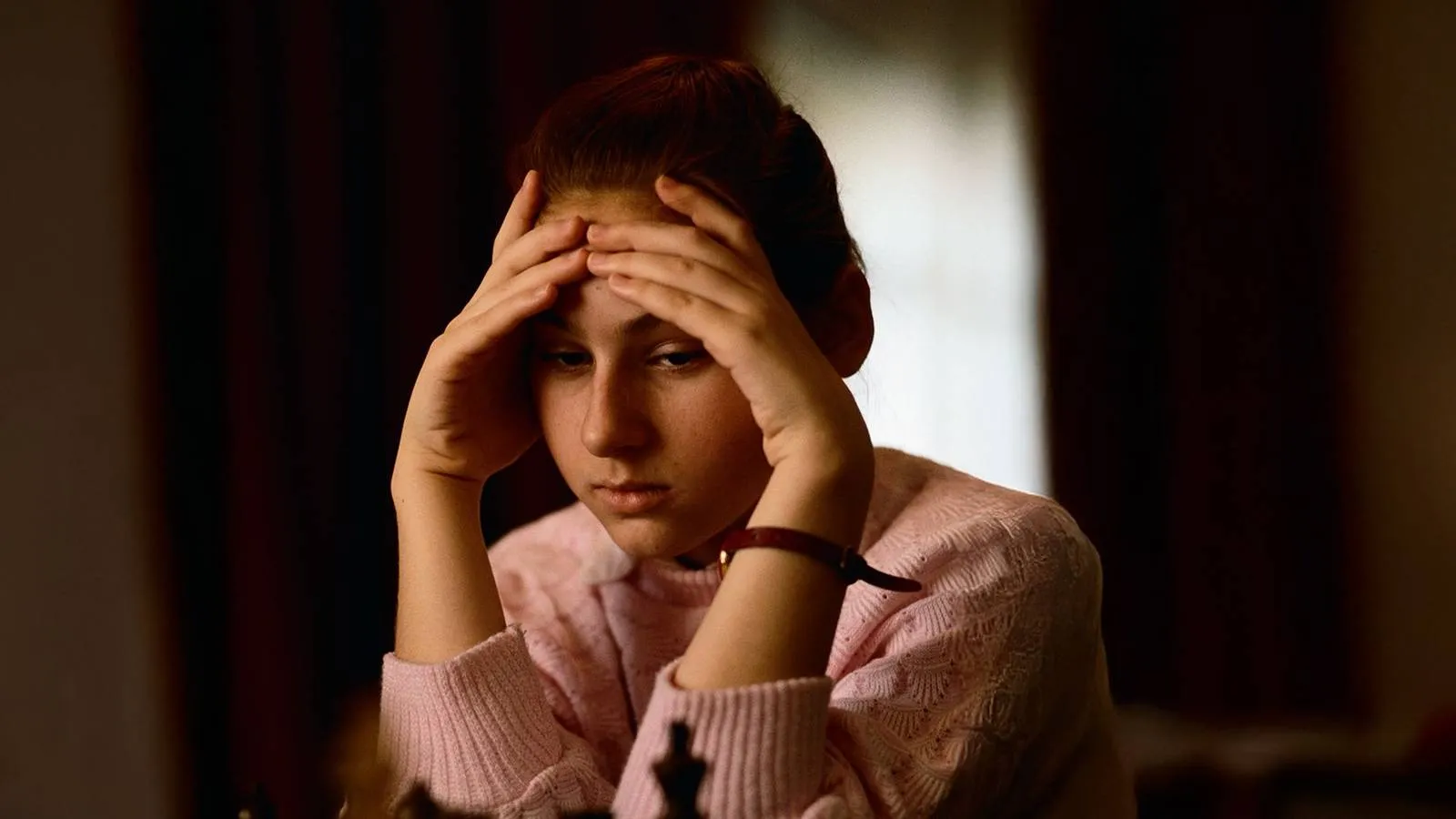

Director Rory Kennedy approaches the life of Judit Polgár with a kinetic sensibility that matches the aggression of her subject’s play. The documentary presents the Hungarian grandmaster as a disruptive force inside a rigid, male dominated hierarchy, someone whose presence exposes how exclusionary that hierarchy has been.
Polgár enters elite chess and, through excellence, forces the culture to confront its own gatekeeping. The film traces her ascent from a childhood in communist Hungary to the peak of international competition, then asks a practical question through craft: how does a quiet, cerebral game become a vivid spectacle on screen?
Kennedy answers by treating the chessboard as a high stakes battleground, a small arena where plastic pieces carry the weight of personal and national identity. A wealth of archival footage and contemporary interviews forms a narrative of constant friction.
That friction sharpens around the rivalry between Polgár and Garry Kasparov, a relationship the film uses as its primary engine. The clashes between them express a larger collision between an established order and a young woman intent on changing what the game allows. Kennedy sidesteps the dry routines of historical biography and builds an atmosphere of urgent competition, a film that keeps moving even when the players sit still.
The Laboratory of Genius
The foundation of Judit Polgár’s career rests on a radical educational theory, presented here with the clarity of a manifesto. Her father, László Polgár, argues that excellence can be manufactured through training and design. He turns the family home into a specialized academy, where Judit and her sisters practice chess for eight or nine hours daily.
The documentary keeps the environment in view: rigorous homeschooling inside the grey confines of communist Hungary, with a regime that treats the game as a political instrument meant to signal intellectual dominance over Western rivals. In that climate, the Polgár sisters become subjects of a grand social and familial experiment, their private routine entangled with national symbolism.
Travel restrictions often pin the family within the Eastern Bloc, intensifying the pressure of training that has few outlets and little escape. Judit emerges from this system with startling speed. She secures her first tournament victory at age six. By fifteen, she shatters a record held for decades by Bobby Fischer and becomes the youngest grandmaster in history. Kennedy presents these milestones as triumphs, clean points on a timeline, and the imagery invites a heavier reading at the same time. The sheer intensity of such a focused childhood suggests a psychological burden that sits behind the medals and headlines, a youth shaped by repetition and expectation.
Sustaining that level of performance requires a total surrender of traditional childhood to the demands of the board. The film details the thousands of flashcards used to memorize openings and endgame patterns, then lets those details accumulate until they feel less like trivia and more like architecture. It paints a picture of a life lived through the geometry of sixty four squares, where the mind is trained to see possibilities as patterns and threats as inevitabilities. There is a specific tension in watching young Judit, barely old enough for primary school, stare down seasoned adults. The camera lingers on faces that register disbelief, then on the child who has already learned to translate disbelief into advantage.
Her success reads as the product of a relentless, systematic grind, the kind that converts time into instinct. The political climate of the 1970s and 80s provides a cold backdrop for that development. Chess becomes a weapon in the Cold War, and the Polgár sisters are groomed as the vanguard of a new intellectual front. Their father’s obsession fills the frame as an all consuming force, leaving little room for the diversions that usually define youth. Kennedy captures this atmosphere of high pressure and singular focus with remarkable clarity, allowing the viewer to admire the results while still feeling the constriction that produced them.
Kinetic Tactics and Punk Aesthetics
Kennedy employs a bold visual vocabulary that keeps the documentary perpetually in motion. Photographs feel alive, layered with ripped paper textures and saturated with striking colors, as if the past itself has been cut and reassembled for speed. Stylish title screens announce major matches in blunt, declarative form, Polgár vs. Opponent, maintaining a rhythmic pace that resists stagnation. The film treats each match announcement like an event poster, a formal recognition that these games carry narrative weight.
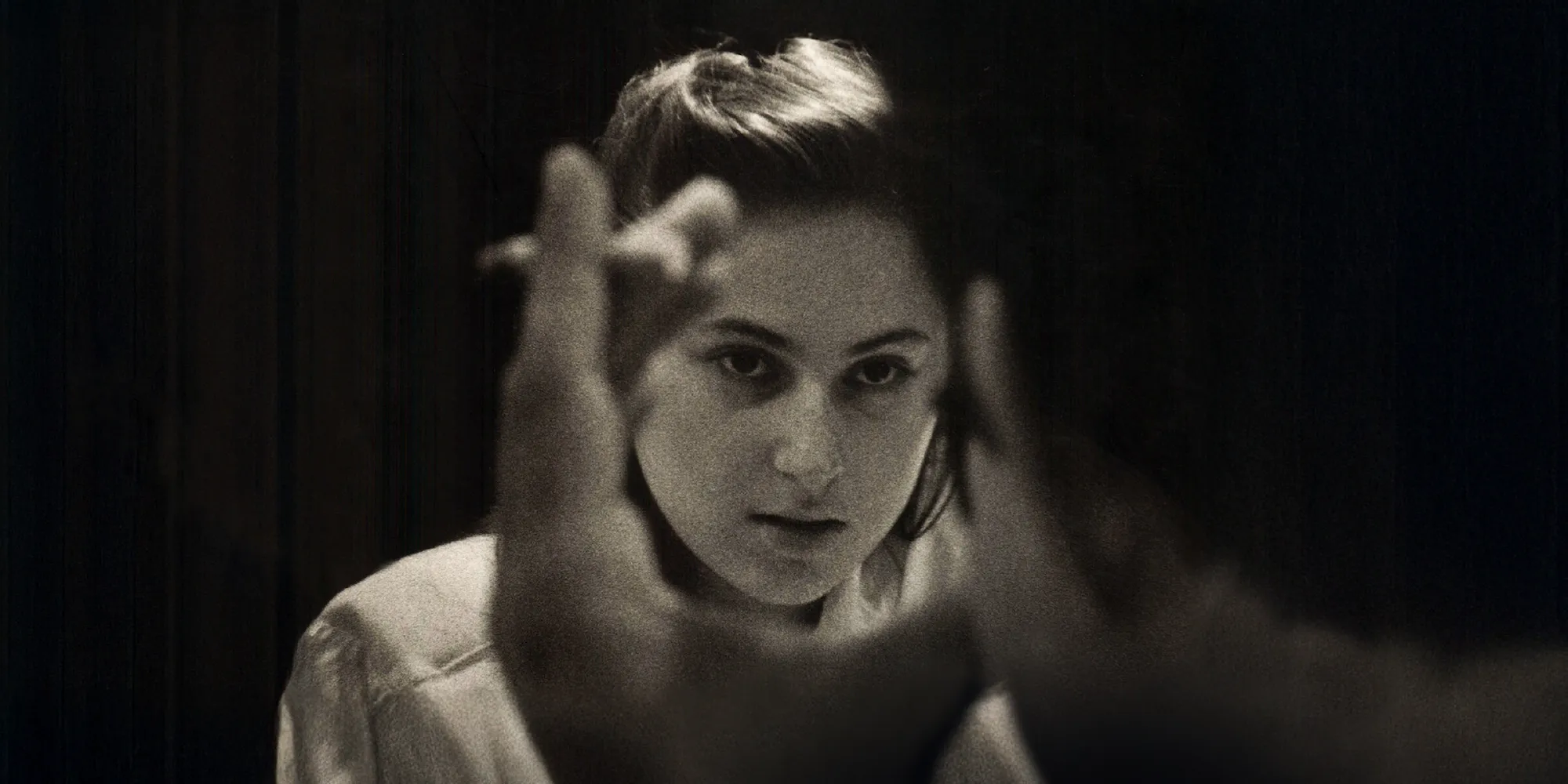
The auditory landscape is just as deliberate. A traditional score by Camilo Forero provides gravity, anchoring the story in something like classical stakes. Energetic punk rock tracks from Blondie and Elastica inject a rebellious spirit into the matches, turning tension into propulsion. The music choices help frame Polgár as a modern iconoclast, a figure whose presence feels contemporary even in archival footage. Kennedy builds momentum through sound as much as image, and the effect is a documentary that moves with the urgency of competition.
Technical hurdles get cleared with a confidence that respects both newcomers and experts. The film explains complex concepts such as the Sicilian Defense and the touch move rule in a way that keeps tempo intact. Exposition arrives as part of the rhythm of play, folded into the drama rather than stapled on as instruction. Editing carries much of this burden. Cuts and overlays allow the audience to grasp the shifting tides of a match, translating positional changes into something readable as momentum.
Viewers feel the mounting pressure of the clock and the silent weight of a looming defeat. The steady tapping of the chess clock becomes a heartbeat, pushing tension forward in scene after scene. Kennedy also draws attention to the physical toll of mental exertion, reminding the audience that tournament play lives in bodies as much as brains. That choice matters because it reframes “thinking” as labor, something that sweats and aches under the bright lights of competition.
These creative decisions transform what could have been a static history lesson into a contemporary cultural artifact, alive to style and audience psychology. The film translates the abstract beauty of chess into language that lands with visceral excitement. By treating matches like high stakes action sequences, Kennedy bridges the gap between the expert and the novice without flattening the complexity that makes the game worth filming in the first place.
Home movies add intimacy to the technical displays. The sisters appear laughing between grueling study sessions, a glimpse of humanity behind the grandmaster titles that never interrupts the film’s forward motion. The documentary avoids a stuffy, academic feel and presents a lively celebration of a brilliant mind at work.
Dismantling the Grandmaster Myth
The narrative arc is defined by Polgár’s confrontation with systemic misogyny, a social opponent that shadows every tournament hall. She operates in a professional world where headlines openly question the intellectual capacity of women, turning the public record into a kind of ongoing insult. The film includes figures like Bobby Fischer and Garry Kasparov as voices of that hostility, men who dismiss female players and question the ferocity required for top tier competition. These moments are not treated as colorful relics of a bygone era. They function as evidence of how power talks when it expects to remain unchallenged.
Polgár responds with a lethal, attacking style on the board, a form of argument that leaves little room for condescension. Her rivalry with Kasparov provides the film’s most potent drama, and Kennedy returns to it with the insistence of a thesis. The 1994 touch move incident remains a focal point of unresolved tension, a moment that illustrates the psychological warfare embedded in a game that pretends to be purely rational. Her eventual victory over Kasparov in 2002 arrives as a definitive refutation of the sexist status quo, a win that carries symbolic charge because it happens within the very structure that tried to diminish her.
Polgár emerges as a figure of striking duality: poised and quiet in demeanor, relentless in competitive drive. Kennedy uses this combination to puncture the grandmaster myth that equates greatness with isolation and arrogance. The film’s portrait expands into her later personal life, including her marriage to Gusztáv Font, which brings a sense of balance and shifts her perspective on the game. That emotional groundedness separates her from many of the abrasive personalities that populate the upper echelons of chess, offering a different image of what mastery can look like.
The documentary celebrates her role as a pioneer and keeps its gaze on the complexity of her origins. It tracks victory over external barriers, then holds space for the internal cost of living as a lifelong subject in her father’s experiment. The archival clips of Kasparov and Fischer making disparaging remarks about women land with a blunt, jarring force. Watching a young girl in a scrunchie dismantle those egos carries the satisfaction of seeing arrogance meet consequence. The film also probes the limits of a “girlboss” narrative by showing the genuine pain caused by exclusion, the bruises that remain even after triumph is recorded in standings and headlines.
Kennedy suggests that Polgár wins matches and wins legitimacy, carving out the right for women to be taken seriously in intellectual spaces that have policed seriousness through gender. The legacy of her career is felt in the modern surge of interest in chess among young women, an echo that turns biography into cultural movement. The film closes by reflecting on her transition into a mentor and ambassador, a final gesture that frames influence as something that continues after the last checkmate is placed on record.
The documentary Queen of Chess had its world premiere at the Sundance Film Festival on January 27, 2026, where it received significant acclaim for its high-energy portrayal of the world’s greatest female chess player. Following its festival run, the film was released globally on Netflix on February 6, 2026. It is currently available for streaming exclusively on the Netflix platform, offering viewers an intimate look at Judit Polgár’s historic career and her intense, years-long competition with world champion Garry Kasparov.
Full Credits
Title: Queen of Chess
Distributor: Netflix
Release date: February 6, 2026
Rating: TV-PG
Running time: 93 minutes
Director: Rory Kennedy
Writers: Mark Bailey, Keven McAlester
Producers and Executive Producers: Rory Kennedy, Mark Bailey, Keven McAlester, Peter Stern, Gabor Harmi, Galen Walker, Stephen Nemeth, Regina K. Scully, Meryl Metni
Cast: Judit Polgár, Garry Kasparov, László Polgár, Klára Polgár, Susan Polgár, Sofia Polgár
Director of Photography (Cinematographer): Imre Juhász
Editors: Azin Samari, Jesse Overman
Composer: Camilo Forero, Chris Brocato
The Review
Queen of Chess
Queen of Chess successfully translates the mental rigor of grandmaster play into a vibrant cinematic experience. Rory Kennedy avoids the typical traps of dry biography by leaning into the raw friction between Judit Polgár and a dismissive establishment. While the film occasionally prioritizes a celebratory narrative over a deeper investigation into the ethics of the upbringing Polgár endured, it remains an essential document of a woman who forced a global hierarchy to recognize her talent. It is a stylish, high energy tribute to the power of unwavering intellect.
PROS
- Kinetic visual style and high energy musical choices.
- Clear explanation of complex tactics for general audiences.
- Compelling use of archival footage to document historical sexism.
CONS
- Limited exploration of the psychological impact regarding the sisters' training.
- Occasionally leans into a simplified narrative of success.