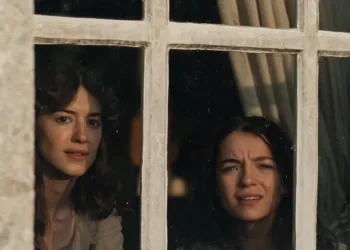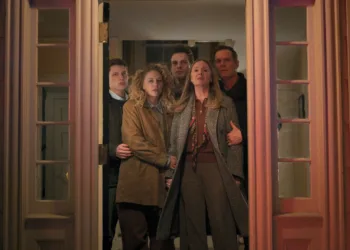


















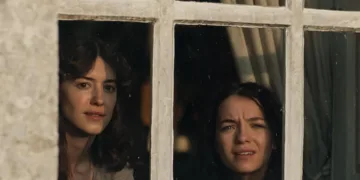











DCI Joe Mottram arrives in Capri carrying fresh grief and the familiar gloom of London in his luggage. His wife Sofia has died in a car accident, and the trip with his teenage daughter, Angelica, is meant to offer breathing room at Vinale, the family restaurant run by Sofia’s parents, Elena and Gennaro. Joe wants sun, family, and a chance to repair the bond with Angelica. Capri has other plans.
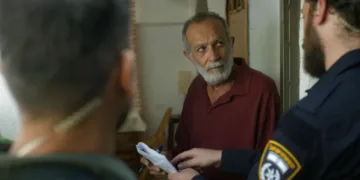
A local murder tied to cocaine and a vintage weapon drags him back toward detective work, and soon he crosses paths with Inspector Lara Sarrancino, a local officer who views this visiting British cop with understandable impatience. Joe’s involvement deepens as he tries to protect a local chef linked to his family. That premise gives the series its hook: police work set against island routines, grief eased by food, and a murder mystery plated beside pasta. It is a cozy setup with a body on the menu.
Polishing the Badge and the Plate
Warren Brown gives Joe Mottram a steady, weighted presence. Grief sits on him heavily, like a coat he forgot to take off before stepping into the Capri sun. Brown has built a reputation in high-pressure dramas, so his shift into this gentler procedural mode has a faintly amusing charge. It feels like a fighter discovering precision footwork after years of throwing punches.
Joe remains deeply attached to the habits of a London cop, and that attachment shapes nearly every scene he enters. Put him near a crime scene and the holiday spirit evaporates. Brown plays that instinct with restraint, then slips in flashes of dry humor that keep Joe from sinking into pure solemnity.
Cristiana Dell’Anna’s Lara Sarrancino gives the show its cleanest source of friction. Lara is sharp, self-possessed, and highly capable, and she treats Joe like a consultant who happens to be useful, not a hero who has arrived to rescue local law enforcement. That choice matters.
It keeps the partnership from sliding into lazy genre habits. Their working relationship develops through professional trust, and the push-pull between them carries real energy. Lara knows the secrets that circulate through Capri’s social fabric. Joe brings the cooler logic of someone who stands outside it. The procedural gains texture from those different perspectives.
Beau Gadsdon does strong work with Angelica, catching the raw irritation of a seventeen-year-old who has lost her mother and has no patience for forced healing. Her prickliness feels earned from the first scene. She disappears into her phone, tests limits, and flirts with local boys in part to place distance between herself and her father’s constant scrutiny. The show gives her rebellion emotional grounding, which keeps her from turning into a stock teenager imported from another family drama.
Phyllis Logan and Urbano Barberini lend the household real solidity as the grandparents. Logan carries herself with quiet command, and that steadiness helps define the home Joe and Angelica enter. Their lives feel unstable; Elena’s presence does not. Barberini contributes to that atmosphere of continuity, the sense that this family existed before Joe arrived and will keep moving after he leaves the room.
The supporting cast strengthens that impression. Characters such as the accused chef Luca help turn Capri into a lived-in community. They also reflect Joe’s own desire for a fresh start. The series fills the island with people who seem rooted there, and that grounding gives the family drama a warmer pulse.
Crimes in Sixty Minutes or Less
The series runs on a sixty-minute structure, and that choice has a real effect on pace. British crime dramas often sprawl across eighty-minute installments, lingering over atmosphere and procedure. This show keeps a tighter leash on its cases. The stories move quickly, sometimes a little too quickly, and a few solutions arrive with suspicious ease. Joe has a gift for spotting clues that have somehow escaped the notice of local police for years. Call it detective instinct if you are feeling generous. Call it vacation magic if you are not.

Still, the briskness suits the show’s identity. It belongs to the escapist wing of crime television, offering the pleasures of a cozy mystery even when the crimes themselves are grave. One scene can involve a drug-related execution, and the next can drift into a gorgeous view of the Tyrrhenian Sea at sunset.
That bright, almost idyllic setting produces a curious tonal effect. Violence feels tidied into solvable design. The murders register as puzzles first, tragedies second. That may frustrate viewers who want heavier moral weight, yet it also defines the series’ appeal. This is television that wants danger without surrendering its holiday glow.
The larger narrative thread comes from Joe’s attempt to recover from loss. Each case marks a small movement in that process. He carries his Metropolitan Police badge with him, even though it has no legal power in Italy, and the object works neatly as a symbol of the life he still clings to. The badge says a great deal about Joe before he does.
The cases also keep circling back to Vinale, which helps bind the procedural engine to the family story. The stakes stay personal because the job keeps brushing against home. The writers find inventive routes to place Joe inside the local police station without making the entire setup collapse under scrutiny. The episodic structure also opens space for a rotating set of island scandals. Capri looks like paradise. Paradise, it turns out, still breeds motive.
The Visual Feast of Capri
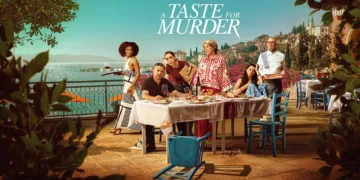
The production knows exactly what it has in Capri and wastes none of it. The camera drinks in the jagged limestone cliffs, the saturated blue of the Mediterranean, and the tight cobblestone streets that can feel enclosed and airy within the same episode. That visual approach shapes tone in clear ways.
The narrow passages create moments of pressure; the sea opens the frame back up. Bright light dominates the look of the show and gives the island the aura of a place where healing could happen. The series leaves behind the shadow-drenched language of classic noir and opts for something cleaner, warmer, and easier on the eyes.
Food plays a central dramatic role. Vinale serves as the emotional soul of the series, and cooking becomes a mode of communication among the characters. Joe’s effort to learn Eggs in Purgatory carries emotional meaning because it becomes a path toward Sofia’s culture and memory.
The cinematography treats food with the same attention many crime series reserve for forensic detail. Sizzling pans, fresh herbs, and close shots of preparation all sharpen the sensory pull of the setting. The title’s taste points toward Joe’s senses waking up again, and the show expresses that idea visually as much as narratively.
The technical work supports the tone with confidence. The opening speedboat scenes inject a sleek burst of motion against the island’s older textures, giving the series a contemporary pulse without erasing the setting’s age. The score stays light and airy, avoiding the oppressive musical cues common in police procedurals. Editing keeps things moving at a healthy clip, which matters in a format that has little room for loafing.
The island’s beauty remains in constant dialogue with the crimes under investigation. A fair question hovers over the whole production: does a murder feel different when it unfolds somewhere this beautiful? The series never settles that issue, though its aesthetic loyalties are clear. Capri gets the glamour. Crime gets the plot.
Finding Home in a Foreign Kitchen
Joe and Angelica grieve along separate tracks. Joe retreats into work habits and ritual. Angelica reaches for distraction through new people and new surroundings. The series pays careful attention to that divide, and it finds gentle drama in the possibility that a place visited for escape could become a home. Sofia’s extended family gives both of them a support system that London did not provide, and that shift changes the emotional weather of the story.
Joe also faces a classic form of cultural displacement. He is a British professional trying to function inside a system shaped by local relationships, custom, and memory. The show gets good humor from his attempts to apply official procedure in an environment where coffee and conversation can carry enormous practical weight. Joe learns that life on Capri runs according to rhythms he cannot simply overrule with credentials. Belonging demands attention, patience, and some humility.
That tension between modern policing and traditional life drives much of the series. The grandparents stand for old-world steadiness. Angelica carries the unease of a digital generation. Shared meals connect those points. The show argues for repair through small physical acts, especially cooking and sitting together at a table.
Joe keeps searching for answers in his professional instincts, yet the series nudges him toward the kitchen again and again. That is where memory lives, where family gathers, and where healing starts to feel possible. Capri keeps asking Joe the same question, with sunlight on one side and a police badge on the other: how long can he hold both?
A Taste for Murder premiered on April 7, 2026. This crime procedural is available to watch on BritBox. The story follows DCI Joe Mottram as he moves to the island of Capri to cope with the loss of his wife. He plans to focus on family and finds himself assisting local police with murder investigations. The show released its first two episodes on the premiere date and continues with a weekly release schedule.
Where to Watch A Taste For Murder Online



Full Credits
Title: A Taste for Murder
Distributor: BritBox, ITVX, ITV Studios
Release date: April 7, 2026
Rating: TV-MA
Running time: 60 minutes
Director: Jon Jones
Writers: Matt Baker
Producers and Executive Producers: Megan Ott, Miodrag Sila, Nebojsa Taraba, Jo McGrath, Walter Iuzzolino, Carolina Giammetta, Robert Schildhouse, Stephen Nye, Jess O’ Riordan
Cast: Warren Brown, Phyllis Logan, Beau Gadsdon, Cristiana Dell’Anna, Urbano Barberini, Alessandro Bedetti, Gaia Scodellaro, Alessandro Fella
Director of Photography (Cinematographer): Erol Zubcevic
Editors: Eleanor Cotton, Ashley Scott
Composer: Stefano Cabrera
The Review
A Taste For Murder
A Taste For Murder succeeds as a lighthearted escape for those who prefer their homicide served with a side of linguine. Warren Brown anchors the emotional weight well. The scenic backdrop of Capri does much of the heavy lifting. While the mysteries sometimes resolve with a suspicious level of ease, the focus on family healing and culinary tradition provides a satisfying emotional anchor. It is a reliable choice for a weekend binge.
PROS
- Breathtaking scenery and visual aesthetic
- Warren Brown’s nuanced lead performance
- Authentic portrayal of family grief
- Creative focus on Mediterranean food
CONS
- Rushed mystery resolutions within the hour
- Formulaic procedural writing
- Occasional over-reliance on coincidence