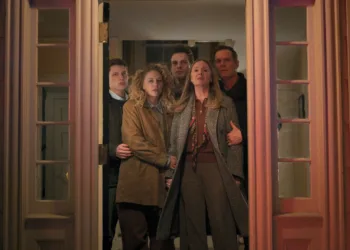
















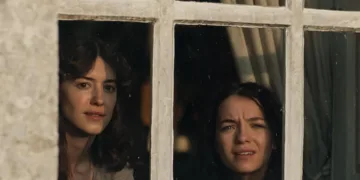










Directed by Vicky Jewson and written by Kate Freund, Pretty Lethal brings the high-speed action instincts associated with 87North into the exacting sphere of professional ballet. The film follows five American ballerinas on their way to a prestigious showcase in Budapest.
Their trip derails when a storm leaves their bus stranded in the Hungarian wilderness, pushing them toward shelter at the Teremok Inn. The place is run by Devora Kasimer, played by Uma Thurman, a former dance prodigy whose life now intersects with the local criminal world.
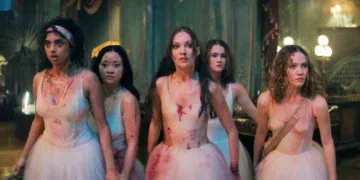
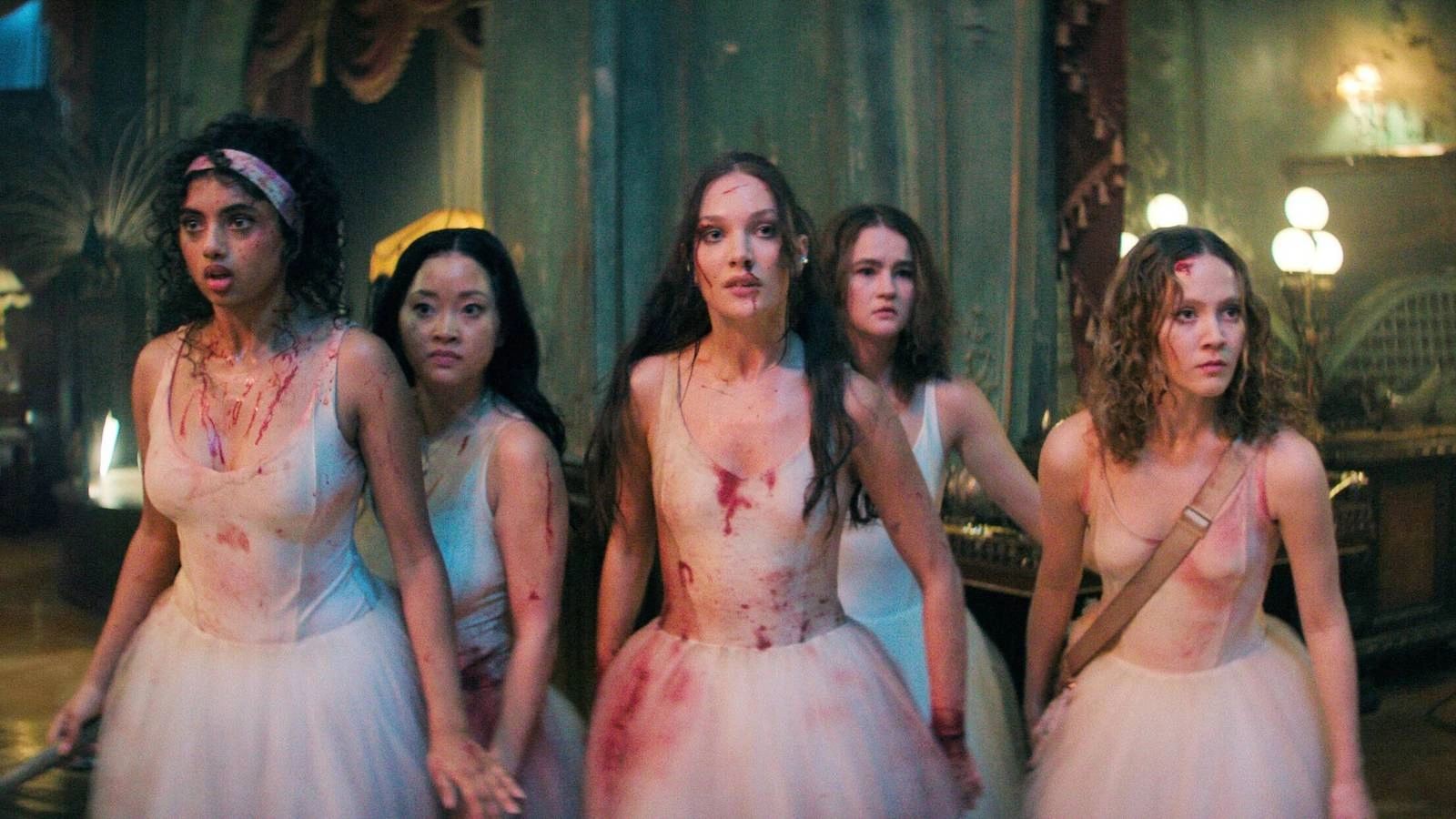
From there, the film shifts from rivalry and professional pressure into survival horror. After their instructor, Miss Thorna, is killed by a local mobster’s son, the dancers are trapped as witnesses inside the inn. Still dressed in leotards and tutus, they turn their training, their bodies, and even the objects tied to their profession into means of survival while armed henchmen close in around them.
The film treats the punishing demands of ballet as the groundwork for violence, turning discipline and control into tools for staying alive. As a survival thriller, it peels back the softness often associated with ballet and reveals the endurance, pain tolerance, and force built into the form.
The Ensemble: Class Friction and the Combatant Archetype
Maddie Ziegler plays Bones, a dancer from a modest background whose place within the group is shaped by steady friction with wealthier teammates. That class divide feels rooted in the realities of elite performance culture. Ziegler takes on the central action role with a jagged, restless energy. She gives Bones a feral urgency during the crisis, and one scene in particular captures her panic when the future she has trained for appears to vanish.
The performance carries the strain of someone who feels every loss in full. Lana Condor plays Princess, a rival marked early on by status and privilege. She serves as Bones’s foil at the start, and their forced proximity inside the violence pushes them toward a hard-won understanding. Condor handles the sharper lines well and charts Princess’s movement from hauteur into real fear.
The supporting dancers give the group added texture. Avantika brings a playful current to Grace, including a stretch of physical comedy tied to accidental drug ingestion. Millicent Simmonds and Iris Apatow play sisters Chloe and Zoe. Chloe’s Deafness shapes the sound design through scenes that shift into her point of view, while Zoe’s instinct to protect her sister gives the fight for survival much of its feeling.
Uma Thurman gives Devora Kasimer a worn, glamorous menace that recalls an aging figure from classic cinema. She remains pitiless, yet she also looks at the younger dancers and sees echoes of her own earlier life. That relationship links one generation of performers to another. Thurman controls the frame through presence alone and gives the film’s darker register its anchor.
Neon Shadows: The Visual Language of the Teremok Inn
The Teremok Inn functions as the image of a dream left to decay. Zsuzsa Kismarty-Lechner’s design sets the softness of The Nutcracker against a grim cabaret mood. Red velvet curtains sit beside shabby corners. Memorabilia crowds the rooms.
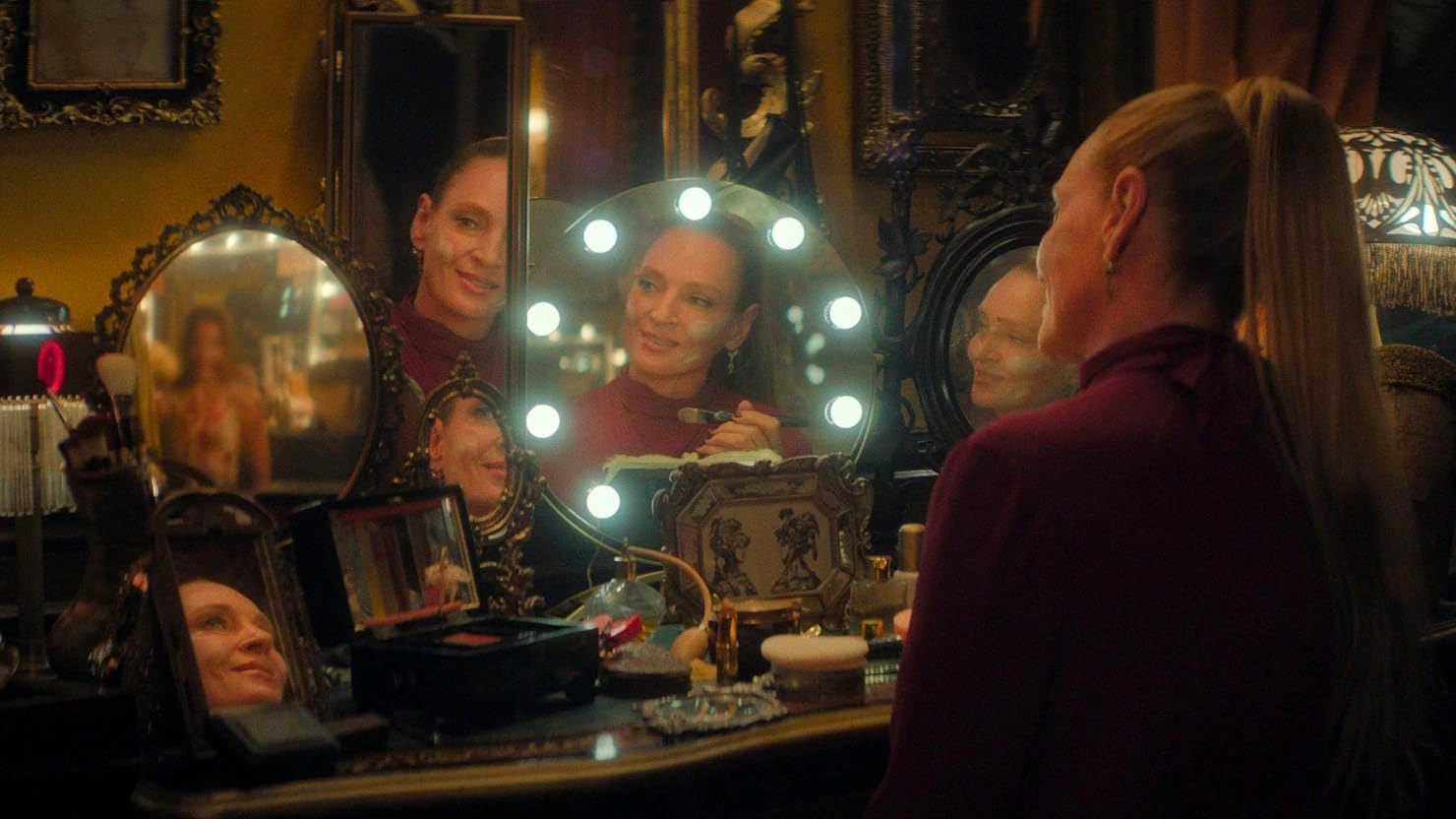
Slippers dangle from the ceiling. Photographs of a younger Devora line the walls. The whole place feels like an extension of her inner life, a space where ambition has curdled and gone still. Bridger Nielson’s lighting choices flood the film with neon pinks and blues, giving even quiet scenes a nervous charge.
The camera threads through kitchens and storage rooms in ways that steadily tighten the suspense. Sound plays a major role in keeping the violence tangible. Every body hitting the floor lands with the weight of serious damage. When the film shifts into Chloe’s perspective, silence becomes its own form of pressure. Those moments sharpen the sense of bodily risk facing the dancers.
The scrape of objects, the clatter around the inn, and the strained breathing of the performers build an atmosphere of physical exhaustion. The production design turns the inn into a trap that resembles a museum whose displays have turned aggressive. The pink interior set against the grey Hungarian wilderness deepens the feeling of isolation.
Kinetic Artistry: The Mechanics of Ballet-Fu
The film starts from a simple and effective idea. Dancers have bodies trained with a level of precision and pain tolerance close to stunt performers. Pretty Lethal turns that fact into a combat language built from ballet itself. Pirouettes become spinning attacks. Leaps work as offensive bursts. In one memorable beat, a dancer places a razor blade inside her shoe and turns her foot into a weapon.
The final lobby sequence brings the group together in synchronized motion against the mob, moving to the rhythm of Tchaikovsky. The editing locks itself to the music’s beat, creating a patterned flow that calls to mind the timing and coordination of rhythmic video games.
The action stays rough and desperate. The dancers do not move like polished fighters. They look frightened, exhausted, and cornered. Their white costumes collect blood as the night goes on. They grab whatever the inn offers them, using hammers and broken glass to stay alive. That decision keeps the stylized choreography tied to physical hardship. The film argues that ballet’s years of discipline prepare the body for forms of violence few people would expect.
The actresses handle much of their own movement, which gives the action real weight. The choreography draws on the cast’s flexibility and strength, building a style of combat shaped by momentum and balance. A fighter in a tutu remains a potent image through the finale, pressing against familiar ideas of the action hero. The force of the blows lands hard against the grace of the poses.
Subverting the Gaze: Narrative Momentum and Structural Impact
The script is built for forward motion. It keeps exposition light and works best when it stays close to the immediate threat facing the dancers. A few scenes centered on local mob leaders slow the pace and feel less urgent than the women’s struggle to survive.
The dialogue is plain and functional, carrying the story toward the next burst of action. The film takes aim at the image of the fragile female performer and recasts elegance as a mask for lethal ability. Its villains look at these women and read smallness as weakness. The dancers answer that assumption through force.
At roughly eighty-five minutes, the film reaches its third act quickly and closes on an intense finale. The group begins in rivalry and ends in collective purpose. That shift feels earned through shared training and shared danger. It gives the ordeal a satisfying shape. The structure echoes a stage performance, opening with an introduction to the players and closing with a grand finale.
The pacing keeps attention fixed on the bodily punishment of the night. By placing the story in a foreign country, the film sharpens its sense of threat and draws on associations tied to Eastern European crime cinema. The ending rests on ensemble strength, giving priority to the group instead of a single hero. It delivers the promise built into the premise.
Pretty Lethal is an action-thriller that premiered at the South by Southwest (SXSW) Film & TV Festival on March 13, 2026, before its global streaming debut on Prime Video on March 25, 2026. Directed by Vicky Jewson and produced by the action-centric 87North Productions, the film follows a troupe of American ballerinas who find themselves stranded at a remote Hungarian inn after their bus breaks down. When they witness a murder committed by a local mobster’s son, they are forced to use their years of grueling physical training and athletic discipline to fight their way out. As of today, April 20, 2026, the film is available to stream worldwide on Prime Video.
Where to Watch Pretty Lethal (2026) Online


Full Credits
Title: Pretty Lethal
Distributor: Amazon MGM Studios, Prime Video
Release date: March 13, 2026 (SXSW), March 25, 2026 (Worldwide)
Rating: R
Running time: 88 minutes
Director: Vicky Jewson
Writers: Kate Freund
Producers and Executive Producers: Kelly McCormick, Mike Karz, William Bindley, Piers Tempest, David Leitch, Kate Freund, Max Jacoby, Vicky Jewson, Marshall Leviten, Tom Salentine
Cast: Maddie Ziegler, Lana Condor, Avantika, Millicent Simmonds, Iris Apatow, Uma Thurman, Lydia Leonard, Michael Culkin, Tamás Szabó Sipos, Krisztián Csákvári
Director of Photography (Cinematographer): Bridger Nielson
Editors: Richard Smither
Composer: Paul Leonard-Morgan
The Review
Pretty Lethal
Pretty Lethal serves as a sharp physical experiment. It reframes the punishing discipline of ballet as a tactical asset. Narrative depth remains shallow and the villains lack complexity. However, the technical execution of the choreography provides a visceral experience. The film highlights the resilience of the female body under extreme duress. It strips away the artifice of the stage to expose the grit underneath. For those seeking a lean survival thriller with a distinct aesthetic, it provides a sharp, rhythmic thrill.
PROS
- Visceral and rhythmic action choreography.
- Maddie Ziegler’s intense lead performance.
- Evocative production design at the Teremok Inn.
- Innovative use of sound design for perspective shifts.
- Brisk pacing that avoids narrative bloat.
CONS
- Thin character development for supporting players.
- Standard and predictable mob subplots.
- Dialogue that can feel occasionally wooden.
- Limited exploration of the Hungarian setting.