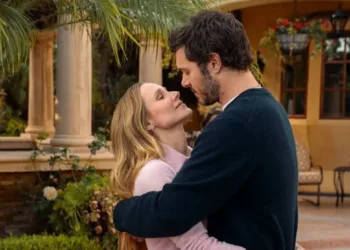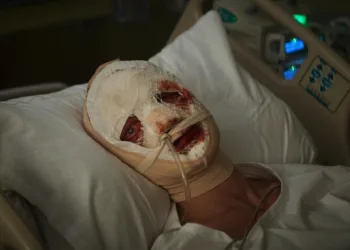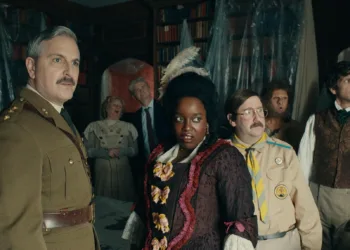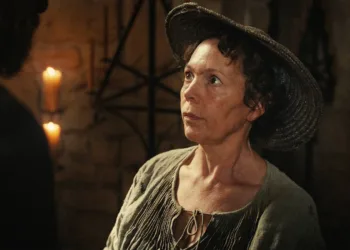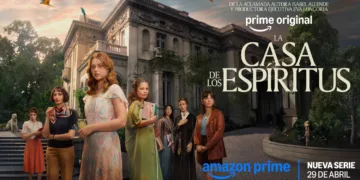










Isabel Allende’s 1982 novel The House of the Spirits is one of Latin American literature’s most enduring achievements, a multigenerational family epic that has sold over 70 million copies and shaped how much of the world understands the continent’s 20th-century history. For decades, that cultural weight sat awkwardly alongside the memory of the 1993 Hollywood film adaptation, which cast a predominantly Anglo-Saxon ensemble, compressed a vast and intricate story into a single feature, and returned something that felt like a postcard sent from someone else’s country.
Prime Video’s eight-episode miniseries, created by Chilean filmmaker Francisca Alegría and actress-writer Fernanda Urrejola, arrives as a genuine reckoning with that earlier failure. Filmed in Chile in 2024, produced entirely in Spanish, and guided by Allende herself as executive producer, this is a Latin American story told by Latin Americans on their own terms. It spans four generations of two intertwined families, tracking their private lives against the turbulent political history of a country the series, like the novel, never names but makes unmistakable. The result is ambitious, lush, and shaped by a distinctly feminist creative sensibility.
Where the Personal and the Political Cannot Be Separated
At the story’s structural centre are two figures whose lives become inextricably bound. Esteban Trueba is a ruthless, temperamental businessman who builds a fortune through his hacienda, Las Tres Marías, extracting wealth and labour from the peasants on his land while treating women as instruments of convenience. Clara del Valle is his counterpart: a woman with supernatural gifts that allow her to predict the future, move objects, and communicate with spirits. She becomes his wife. Their marriage is less a love story than a study in how power corrupts everything it touches.
The narrative is framed through Clara’s notebooks, discovered by her granddaughter Alba, which allows the series to move between generations with a sense of accumulated memory. The del Valle and Trueba families grow, fracture, and intersect across decades, with the García family introduced later as both consequence and witness to Esteban’s particular brand of cruelty. These domestic histories are also political histories. Class struggle, Indigenous exploitation, women’s suffrage, domestic violence, and the rise of socialism are not backdrop; they are the architecture.
The magical realism is handled with real intelligence. Clara’s gifts are presented as matter-of-fact rather than theatrical, integrated into daily life with the same quiet insistence as grief or hunger. This restraint pays off: the supernatural feels earned rather than decorative.
The series is, in places, genuinely brutal. Content warnings precede each episode for good reason. Yet darkness is balanced with dry humour and flickers of warmth. Its women hold power through clarity, endurance, and moral authority, without adopting the aggression that surrounds them. The series makes that distinction count.
An Ensemble Built Like a Family
The casting presented a structural challenge from the start: a story spanning several decades requires multiple actors to carry the same soul through different bodies. The solution here is largely successful, though it demands patience from the viewer.
Alfonso Herrera appears in all eight episodes as Esteban Trueba, a performance of extraordinary range and moral complexity. Esteban is, by any reasonable measure, a despicable man. Herrera makes him fascinating anyway, grounding him in a recognisable human hunger without excusing a single act. It may be the finest work of his career.
Clara is played in youth by Nicole Wallace and in adulthood by Dolores Fonzi. Fonzi’s Clara carries a weary spiritual authority that feels exactly right for a woman who has spent decades seeing the future and still being unable to stop it. Noelia Coñuenao as Pancha García is a revelation, bringing anger, defiance, and dignity to a role that carries enormous symbolic weight. Rochi Hernández holds the brutal final act together with composure. Fernanda Castillo, as Esteban’s sister Férula, brings a coiled intensity to a character whose secret love for Clara electrifies every scene she shares with Fonzi.
The broader ensemble, including Eduard Fernández, Aline Kuppenheim, Antonia Zegers, and Maribel Verdú, fills the world with texture and dimension. The accent work, a collective effort following months of dialect coaching, is imperfect in places but earnest throughout. This cast functions less as individual stars than as interlocking pieces of a much larger portrait.
The Craft of Cultural Translation
The series was directed across eight episodes by three filmmakers. Alegría handles episodes one and three, veteran Chilean director Andrés Wood takes four, with a third director covering the remainder. The tonal difference between Alegría and Wood is occasionally visible. Wood brings measured compositional authority. Alegría brings instinct and a freer relationship with the novel’s surreal possibilities.

The series’ most striking sequence, the first encounter between Blanca and Pedro Tercero in the forest, comes from Alegría’s hand. Bodies, earth, and earthquake merge into something genuinely cinematic. Moments like this are what separate the series from a handsomely produced transcription.
Production design is consistently impressive. The hacienda sequences carry real grandeur; costumes and art direction reflect careful historical research. Filming in Chile gives the landscapes a specificity that money alone cannot manufacture. The score by Tomás Videla is emotionally generous, occasionally to a fault; there are passages where the music arrives a beat before the images have earned it.
The adaptation is faithful in its broad movements, though certain omissions will unsettle readers of the novel. The absence of the character known as “the poet” and the disappearance of a key Trueba family member feel like losses that compound over time. Chile’s most historically specific political events are also kept at careful distance for much of the series’ run, surfacing gradually. This reads as restraint, though at times it feels closer to caution.
The decision to produce entirely in Spanish, resisting pressure to film in English, was the right one. It signals something about who this story belongs to, and who gets to tell it.
This eight-episode Spanish-language original series is set to premier on April 29, 2026, and will be available for streaming exclusively on Amazon Prime Video. Based on the celebrated 1982 novel by Isabel Allende, the production was filmed in Chile with a Latin American crew to capture the authentic spirit of the multi-generational family saga. It follows the lives of the Trueba family through decades of social and political upheaval in an unnamed South American country, blending elements of historical reality with magical realism as it explores themes of love, fate, and redemption.
Where to Watch The House of the Spirits Online


Full Credits
Title: The House of the Spirits (La Casa de los Espíritus)
Distributor: Amazon Prime Video
Release date: April 29, 2026
Rating: TV-MA
Running time: 60 minutes per episode
Director: Francisca Alegría, Andrés Wood
Writers: Francisca Alegría, Fernanda Urrejola, Andrés Wood
Producers and Executive Producers: Isabel Allende, Eva Longoria, FilmNation Entertainment
Cast: Alfonso Herrera, Nicole Wallace, Dolores Fonzi, Fernanda Castillo, Juan Pablo Raba, Maribel Verdú, Eduard Fernández, Aline Küppenheim
Director of Photography (Cinematographer): Arnaldo Rodríguez
Editors: Andrea Chignoli
Composer: Tomás Videla
The Review
The House of the Spirits
The House of the Spirits is the adaptation this novel has waited four decades to receive. Alegría and Urrejola have produced something genuinely significant: a Spanish-language prestige series with the cultural confidence to tell a Latin American story on its own terms, anchored by Herrera's extraordinary central performance and supported by a production of real craft and ambition. Its occasional caution with political material and a handful of puzzling omissions keep it from perfection, but this is essential television.
PROS
- Alfonso Herrera delivers a career-defining performance
- Magical realism handled with subtlety and intelligence
- Stunning production design, costumes, and Chilean locations
- Feminist narrative architecture that feels purposeful
- Faithfully captures the novel's emotional and political depth
- Bold decision to produce entirely in Spanish
CONS
- Notable omissions from the source material will frustrate devoted readers
- Political themes occasionally feel handled with caution rather than conviction
- Tomás Videla's score can over-signal emotion
- Accent consistency varies across the multinational cast