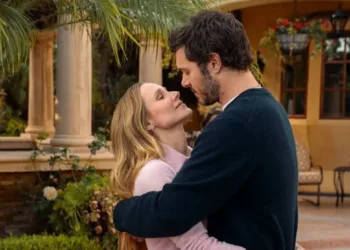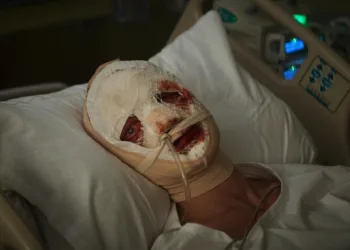


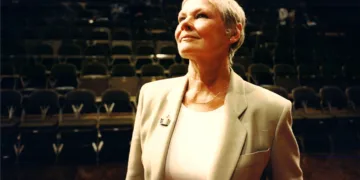


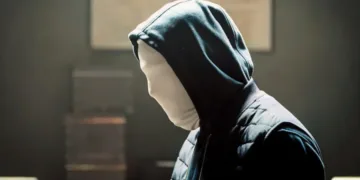





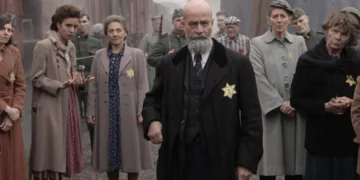
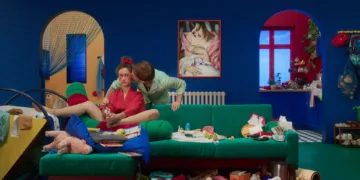



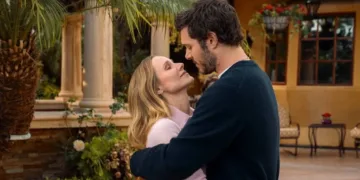
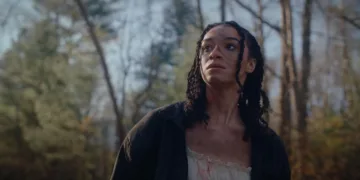










Three Spanish sisters, one dead body under a rental car, the Dominican Republic sun doing nothing to soften what comes next. That Night (Esa Noche) is a six-episode Spanish-language Netflix miniseries, adapted by Jason George from Gillian McAllister’s 2021 novel, moved from its original Italian setting to Punta Cana and Pamplona.
Cris (Paula Usero) has impulsively relocated to the Dominican Republic to run an animal shelter. Elena (Clara Galle) is the youngest sister, a single mother to an infant daughter named Ane. Paula (Claudia Salas) is the sharpest and most pragmatic of the three, the one who arrives at a crisis and immediately starts solving it. One night, Elena calls her sisters to a beachside road. A man lies dead under her car. He turns out to be a police officer. Paula devises a plan; all three become complicit.
The series gives each of its six episodes to a different narrator, with perspectives that eventually extend beyond the sisters. Their arrest is announced in the opening minutes. The central question was never about escape. It is about truth, and the distance each person has put between themselves and it.
The Same Night, a Different Truth Each Time
The Rashomon structure of That Night asks for patience in its early episodes. Each instalment returns to the same night from a new vantage point, revisiting familiar beats through a different character’s memory and motive. The first two episodes can feel like they are circling the same ground, offering incremental new information while the formal conceit has yet to earn its place.
Episode 3 is where the series changes register. The structure stops functioning as a clever device and starts doing genuine dramatic work. Each new perspective stops merely altering facts and begins reshaping the viewer’s sympathies. The tone shifts too: from a dark thriller with flashes of dry comedy to something carrying real emotional weight. The show never returns to the surface after that.
The writing sidesteps the genre’s pull toward elaborate revelations. The mystery of what physically happened resolves earlier than expected, freeing the series to pursue the harder question of why. Voiceover is used sparingly, keeping everything grounded in behaviour. Episodes run around 40 minutes, with pacing that favours emotional consequence over plot momentum.
The finale offers a structural surprise: a 23-year time jump to Ane as an adult, which reframes everything that came before. The show’s two settings do quiet work throughout. Punta Cana’s heat and Pamplona’s cooler light each carry different emotional registers, anchoring the sisters’ lives before that night dismantled them.
People Who Have Been Having the Same Arguments Their Whole Lives
The show’s casting is its most assured decision. Clara Galle, Paula Usero, and Claudia Salas play women whose shared history is legible in every argument, every silence, and every misplaced act of loyalty.
Usero’s Cris is the easiest to like and the hardest to watch come undone. She moved to the Dominican Republic on impulse, driven by compassion and a belief that good intentions are sufficient armour. Usero plays the early episodes with genuine warmth, which makes the stripping away of her illusions genuinely painful.
Galle’s Elena anchors the series. She is the youngest, the most fragile-seeming, and the one with the most to lose: the custody of her infant daughter Ane hangs over every decision from the night of the accident onward. Galle’s rendering of guilt and legal exposure is raw without being overwrought, and her best scenes carry a desperate precision that is hard to look away from.
Claudia Salas as Paula is the show’s most layered creation. Paula is controlling, fiercely protective, and constitutionally incapable of letting a situation breathe. Salas gives her a dry wit that prevents her from becoming simply obstructive, while the slow collapse of Paula’s marriage to Luisa, played by Nüll García, provides a private grief running beneath all the crisis management. García, cast as the family outsider, earns genuine sympathy from a structurally difficult position.
Pedro Casablanc rounds out the supporting cast with a late performance of quiet devastation, a sharp shift from his character’s initial abrasiveness. Every character carries visible, specific flaws. Those flaws are never tidied away by convenient moments of grace. They simply make the characters fully human.
What Family Costs, and Who Pays It
The thriller mechanics of That Night are really a vehicle for a searching inquiry into what family loyalty demands, and what it quietly takes from people. The sisters’ mother committed an act years earlier that fractured the family. This backstory functions not as context but as the structural load-bearing element of everything that follows.
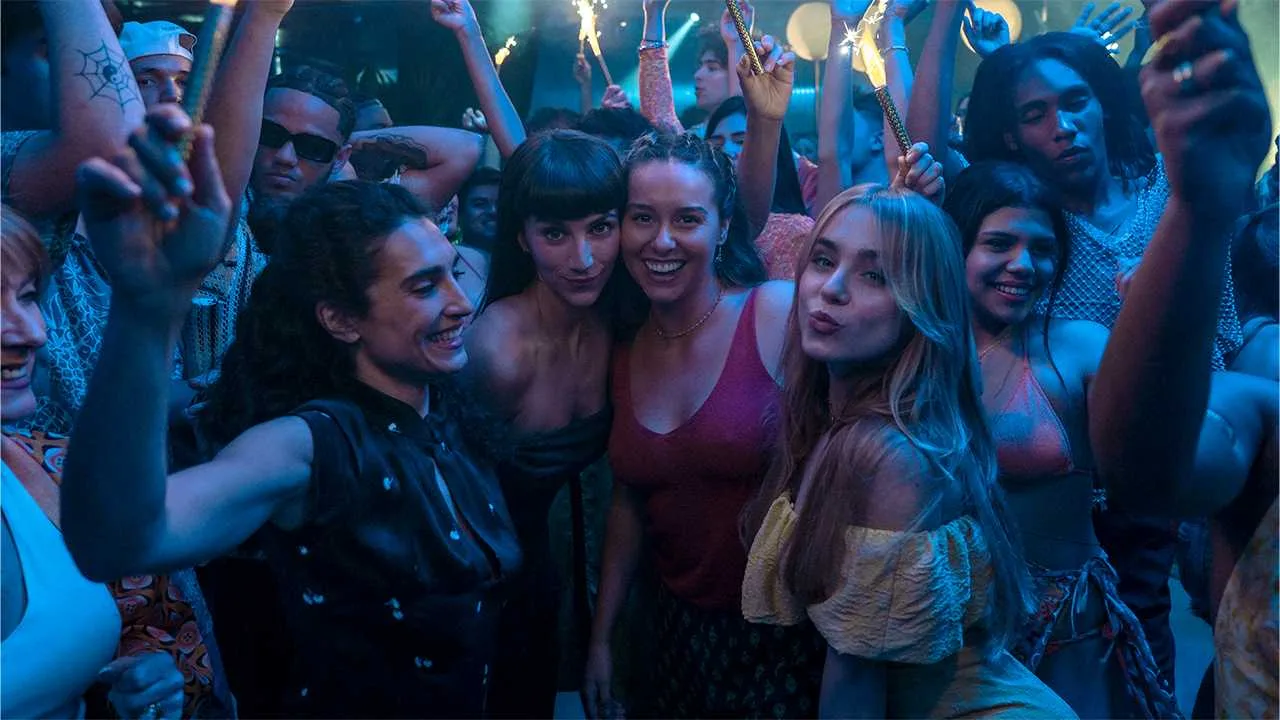
Each character’s response to that original wound has calcified into a coping mechanism. Paula controls. Elena escapes. Cris believes. The show treats these as earned psychological positions rather than dramatic shorthand, and the honesty of that approach separates it from its genre counterparts.
The moral ambiguity is where the series finds its sharpest voice. Viewers are invited to ask what they would do in Elena’s position, in Paula’s, in Cris’s, and then made to sit with how uncomfortable that question actually is. There are no clean answers, and the show never reaches for them.
The finale’s time jump to adult Ane is the series at its most emotionally precise. Her monologue about her mother is restrained and quietly devastating, built from the specific pain of someone who inherited a history she had no hand in creating. The question she poses, about the distance between understanding and forgiveness, remains open.
The Spanish thriller series That Night (originally titled Esa Noche) premiered globally on Netflix on March 13, 2026. Based on the acclaimed novel by Gillian McAllister, the show follows a family vacation that spirals into a nightmare after a life-altering incident. Filmed across the scenic landscapes of the Dominican Republic and northern Spain, the production captures a tense, atmospheric mystery led by a powerhouse trio of young Spanish stars. As of today, the first season is available for streaming in its entirety on Netflix.
Where to Watch That Night Online


Full Credits
Title: That Night (Esa Noche)
Distributor: Netflix
Release date: March 13, 2026
Rating: TV-MA
Running time: 38–46 minutes per episode
Director: Jorge Dorado, Liliana Torres
Writers: Jason George, Lara Sendim
Producers and Executive Producers: Jason George, Marian Fernández Pascal
Cast: Clara Galle, Claudia Salas, Paula Usero, Pedro Casablanc, Paco Tous, Aria Bedmar, Gorka Otxoa
Director of Photography (Cinematographer): Pau Castejón
Editors: Vanessa Marimbert, Alberto del Campo
Composer: Aitor Etxebarria
The Review
That Night
That Night earns its place among the better European miniseries Netflix has produced. It starts cautiously, finds its footing by the third episode, and finishes with genuine emotional force. The shifting-perspective structure serves the story rather than decorating it, and the three lead performances carry real weight. It asks difficult questions about family, loyalty, and the inherited cost of other people's choices, and it refuses to resolve them cheaply. A measured, psychologically grounded drama that rewards patience.
PROS
- Three central performances of real depth and credibility
- The shifting-perspective structure pays off significantly from episode 3 onward
- Psychologically precise character writing
- A finale that reframes the entire series without feeling manipulative
- Moral ambiguity sustained throughout without losing emotional grip
CONS
- The first two episodes feel repetitive and slow to justify the format
- Supporting characters are occasionally underserved by the pace
- The thriller scaffolding is thinner than the marketing suggests