




























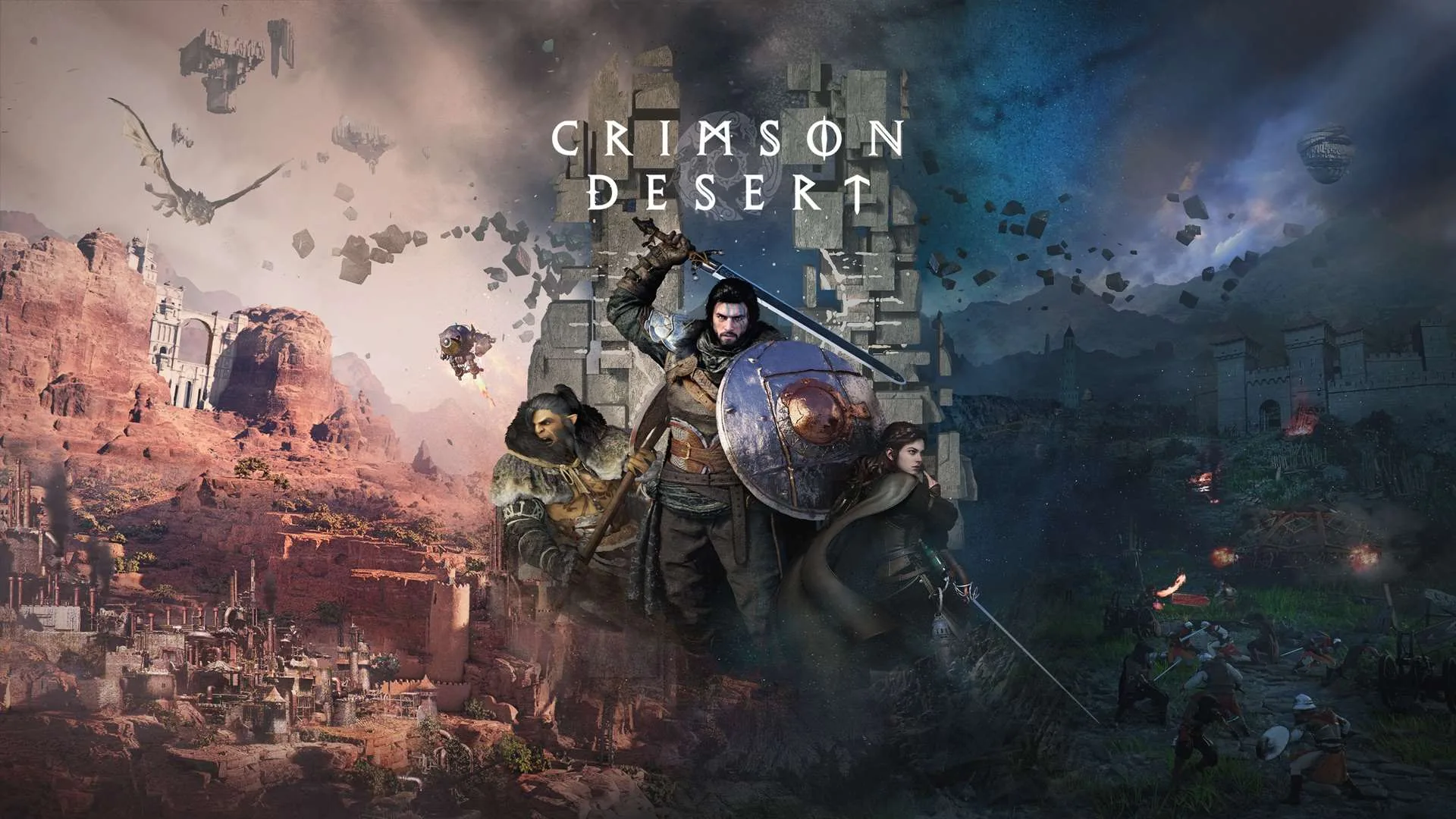

Pearl Abyss built their reputation on Black Desert Online, a massively multiplayer game known for its intricate combat and sprawling systems. Crimson Desert is their first single-player open-world action RPG, and the ambition on display is hard to ignore. Set across the war-scarred continent of Pywel, the game casts you as Kliff MacDuff, the battered leader of the Greymanes, a mercenary faction scattered after a brutal ambush. Kliff’s goal is to reunite his people, confront dark supernatural forces, and hold together a world coming apart at the seams.
Two additional characters round out the playable roster: Damiane, an agile ranged fighter, and Oongka, a bruising heavy hitter who trades speed for devastation. The game wears its influences openly, drawing from some of the biggest names in the open-world genre. What it attempts is genuinely impressive, and the question of delivery is a complicated one shaped largely by your tolerance for a game that wants to be everything at once.
A World Worth Getting Lost In, Up to a Point
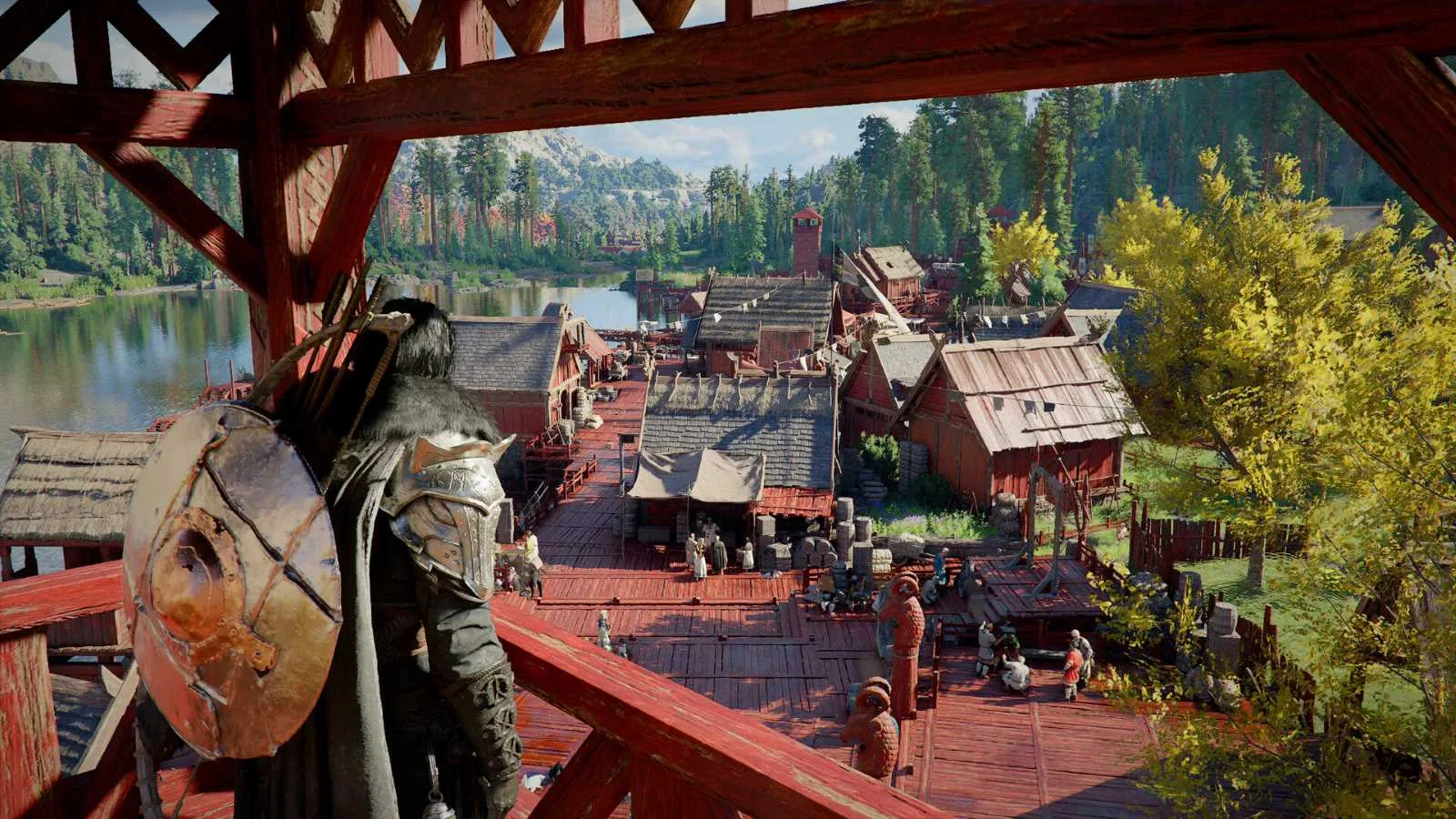
Pywel is enormous. The entire map is rendered as a single seamless location, meaning you can stand on any high point and see, stretching out before you, every inch of the world you are about to explore. That technical achievement alone gives the game a sense of scale few open-world titles can match. The biomes shift convincingly from pastoral farmlands and chalk-cliff rivers to snowy mountain passes, dense redwood forests, murky marshes, and ruins that float impossibly in the sky. Each region has a distinct visual identity, and arriving somewhere new carries a genuine charge of excitement.
The world also has mechanical life woven into it. NPCs follow daily schedules, caravans actually travel and labor at their destinations, and a bounty system lets you track a pickpocket across multiple towns over the course of a session. These details reward players who pay attention, and some of the most memorable moments come from stumbling into something unexpected while wandering far off the main path.
The learning system is a clever piece of design that reinforces this attentiveness. Enemy moves are discovered by watching opponents perform them. An NPC’s name is learned by actually speaking to them. Items are identified by observing them up close. It sounds fussy on paper, but in practice it fosters a kind of curiosity that most open-world games quietly train out of you. Fast travel is similarly restrained, locked behind the completion of puzzles scattered across the world. The approach works well as an incentive to engage with the environment rather than skip past it, though it grows punishing later when puzzle solutions require abilities you haven’t yet unlocked, leaving regions inaccessible for hours at a stretch.
Where the world stumbles is in the repetition that sets in after the first dozen or so hours. Strongholds and campsites begin to look identical regardless of which region you find them in. Side content beyond the major story beats is thin, populated by NPCs who exist to hand out tasks rather than feel like genuine inhabitants. The quiet moments on horseback, crossing a sun-lit ridge or descending into a misty valley, carry real beauty. Those 20 to 30 minute rides between objectives, before fast travel points are unlocked, make the world feel less like a living place and more like a very pretty obstacle between you and the next story beat.
A Story That Aims High and Lands Sideways
Kliff’s story begins with disaster. The Greymanes are ambushed, broken, and scattered. Kliff himself is killed, only to be revived by supernatural forces and set on a path to rebuild his faction and confront a continent-spanning threat. The bones of a solid revenge and redemption arc are present, and there are stretches where the main quest moves with real momentum.
The execution is uneven. The plot fluctuates between hard to follow and outright incoherent, prioritizing spectacle over coherence. Big cinematic setpieces land with visual impact, but without the character depth to give them weight, they wash over you rather than land. A multi-chapter arc built around a character who dies before the story even begins is a particularly puzzling structural choice; the game returns to this figure repeatedly across hours of play, expecting emotional investment the writing has done nothing to earn.
Kliff himself is difficult to invest in. His voice acting is strong, genuinely textured and gruff with flashes of vulnerability, but the writing treats him more as a visual anchor than a person with a clear interior life. The Greymanes are foul-mouthed and energetic in their dialogue yet never convince as real people with real stakes.
The one area where genuine emotional resonance surfaces is the camp rebuilding system. Seeing your disbanded faction slowly reassemble carries a quiet satisfaction the main plot rarely matches. Pearl Abyss makes this content optional roughly a third of the way through, which means many players will miss the most human moments the game has to offer.
The anime-style cutscene battles are a genuine bright spot, inventive and kinetic in ways the regular story cutscenes rarely are. The game clearly wants you to care about the people in it. The writing, far less reliably, gives you a reason to.
Combat That Dazzles, Systems That Drag
Pearl Abyss knows how to make combat feel physical. Strikes land with satisfying weight rooted in careful hit-stop timing, giving each blow a percussive quality that recalls the best fighting games. Kliff’s moveset combines melee weapons with taekwondo-style attacks, grapples, suplexes, and physics-driven interactions with the environment. On horseback, mid-air, and on the ground, the combat system has a rhythm that rewards patience and aggression in equal measure. When it flows, it genuinely flows.
The three playable characters each bring a distinct feel. Kliff is balanced and versatile. Damiane is fast and punishing at range. Oongka trades speed for wide, devastating strikes that make groups of enemies feel manageable. Progression is built around Abyss Artifacts rather than a traditional leveling system. Skills are unlocked by consuming these artifacts or by watching enemies perform moves that Kliff can then absorb and replicate. It frames combat as a form of education, making attentiveness to enemy behavior feel actively useful. The early game is where this system is at its weakest; before the skill tree opens up, combat is surprisingly flat, and the excitement promised by the trailers takes several hours to materialize. Late-game, the system genuinely delivers.
The structural problems run deeper. The control scheme carries an odd acceleration that makes precise platforming feel clumsy and looting in tight spaces feel like a genuine chore. The lock-on system is actively punishing: switching to a ranged attack mid-fight breaks the camera lock entirely, leaving you exposed at exactly the wrong moment. Boss encounters represent the sharpest tonal break in the game. The surrounding combat is fluid and casual; bosses shift suddenly into multi-phase soulslike territory, with wide attack ranges, tiny damage windows, and arena boundaries that penalize movement. Some of these encounters are satisfying. Many are exhausting, and their pacing disrupts the rhythm of the surrounding adventure in ways that patches alone may struggle to fully resolve.
The wider systems compound this friction. Healing depends entirely on food inventory, which means boss fights create a grinding loop of hunting and cooking that sits at odds with the main quest’s momentum. Inventory space is restrictive enough to force painful choices about which hard-won gear to discard, with no storage option available at launch. Life skills like fishing, farming, mining, and cleaning are charming novelties for a session or two before they become another item on a long list of obligations standing between you and the part of the game you actually want to play. Bandit-clearing commissions, tracked via a percentage counter in the corner of the screen, edge uncomfortably close to mobile game design.
Spectacular on the Surface, Shakier Up Close
Crimson Desert is visually ambitious in ways that consistently pay off at a distance. The entire world renders without regional loading screens, and the fidelity holds across a wide range of hardware configurations. Lighting is exceptional, view distances are generous, and large-scale battle sequences have a visual density that would strain many engines. Pearl Abyss has done serious technical work here.
The seams appear in closer quarters. Character faces in cutscenes carry noticeably less detail than the environments surrounding them, and lip synchronization is frequently mismatched. The world looks spectacular from a ridge top, and considerably more ordinary across a conversation screen. Pywel is beautiful without ever feeling truly specific in the way that the most memorable fantasy worlds do. It dazzles; it rarely lingers.
Audio is a different story. The English voice acting is unusually polished for a game of Korean origin, where localization is sometimes treated as secondary. Kliff’s voice is the standout: rough and worn, with enough emotional range to carry scenes the writing struggles to support. The score transitions cleanly between peaceful ambient themes and urgent battle music, and the sound design gives combat the tactile punch the animation promises.
Performance is largely impressive given the game’s scale, holding steady across a range of PC configurations. The bug picture is more complicated. Hard crashes, pathfinding failures, unresponsive inventory prompts, and at least one save-breaking quest progression bug surfaced at launch. Pearl Abyss has been active in patching, addressing critical issues and adding fast travel points post-release. The volume of bugs is not unusual for a game this size; the severity of a progression lock that could cost players seven hours of progress is a meaningful concern regardless.
Plenty to Do, Less Clear How Much Is Worth Doing
At $69.99, Crimson Desert positions itself as a full AAA single-player release. The content volume is not in question. A focused playthrough runs 50 to 60 hours, while completionists can comfortably double or extend that further. The world is dense with activities, discoverable content, and systems to engage with.
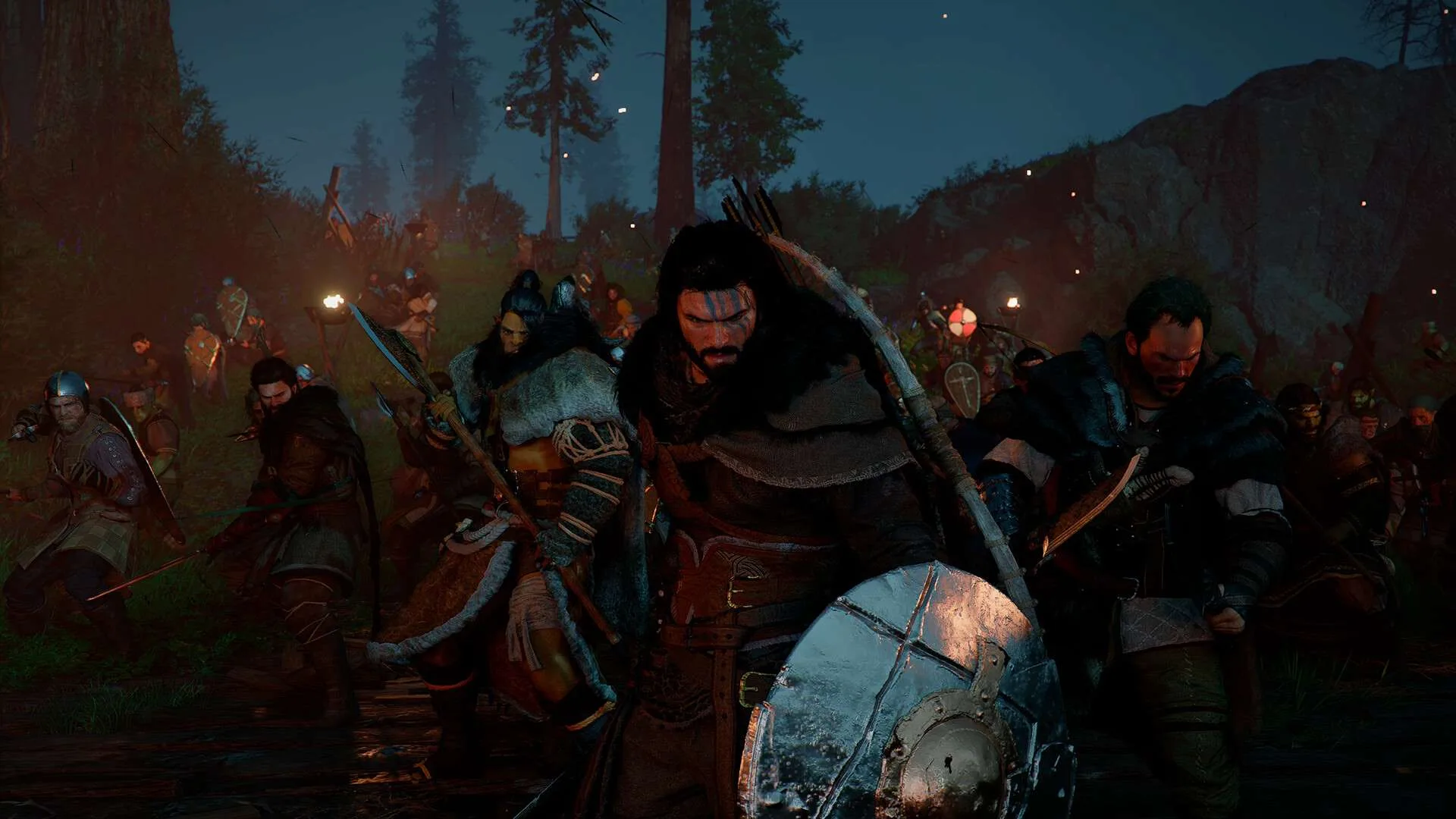
The more relevant question is how much of that time feels earned. The padding is structural rather than optional; skipping side content means missing skill unlocks and inventory expansion slots that the main quest quietly depends on. The grind loop serves players comfortable with MMO-style systems and the slow accumulation of resources. For players seeking the tighter, more focused experience that comparable action-RPGs deliver, the friction will accumulate faster than the rewards justify.
Pearl Abyss has demonstrated a willingness to respond to feedback post-launch, patching bosses, expanding fast travel, and addressing critical bugs. The foundation is there for meaningful improvement over time. At launch price, though, the recommendation comes with considerable conditions attached.
Crimson Desert is an ambitious open-world action-adventure game that follows the journey of Kliff, a mercenary of the Greymanes, as he traverses the vast and unforgiving continent of Pywel. Originally conceived as a prequel to Black Desert Online, the project evolved into a standalone single-player experience that blends high-fantasy storytelling with visceral, physics-based combat—notably incorporating professional wrestling-style maneuvers and deep environmental interaction. Released on March 19, 2026, the game is available on PlayStation 5, Xbox Series X|S, Windows PC (via Steam and Epic Games Store), and macOS. It is powered by the proprietary BlackSpace Engine, delivering a highly detailed world filled with diverse biomes, ancient ruins, and complex political factions.
Full Credits
Director (Creative/Game Director): Dae-il Kim, Hwan-kyoung Jung, Seong-woo Lee
Writers (Lead Writer/Narrative Designer): Byeong-hwa Yoo, Chae-bin Lee
Producers/Studio Leadership (Producers, Executive Producers, and Key Studio Heads): Dae-il Kim (Executive Producer/Founder), Will Powers (Director of Communications/Public Face)
Lead Voice Cast: Alec Newman (Kliff), Stewart Scudamore (Oongka), Rebecca Hanssen (Damiane)
Art Director/Lead Artist: Hyo-jin Joo, Kwang-hyeon Jo
Key Engineering/Technical Leads: Kyung-joon Cho (Lead Programmer), Yong-hyun Cho, Byeong-hwa Yoo
Composer/Sound Director: Ryu Hwi-man (Sound Director), Ju In-ro, Kim Ji-yoon, Oh Dong-June, Roh Hyoung-woo
Developer, Publisher: Pearl Abyss
Release Date: March 19, 2026
The Review
Crimson Desert
Crimson Desert is a game of genuine highs buried under significant friction. Pywel is a breathtaking technical achievement, the combat has a physical satisfaction few action-RPGs match, and the voice acting punches well above its weight. But the story struggles to earn its ambition, the systems pile on faster than they reward, and the controls undercut moments that should feel triumphant. Pearl Abyss has built something with real potential. Right now, that potential is still fighting its way to the surface.
PROS
- Seamless open world rendered at impressive scale and visual fidelity
- Combat is physically satisfying with strong hit-stop design
- Excellent English voice acting, particularly Kliff
- Strong environmental diversity across Pywel's regions
- Genuinely inventive skill-learning system tied to observation
- Solid post-launch patch support from Pearl Abyss
CONS
- Story is incoherent and emotionally undercooked
- Controls feel clunky with a punishing lock-on system
- Boss fights feel tonally disconnected from the rest of the game
- Padding is baked into progression, making grinding feel mandatory
- Inventory system is restrictive with no launch-day storage solution
- Bugs range from minor irritants to save-breaking progression locks