
























![Kingdom Hearts Collection [I-III] Review](https://gazettely.com/wp-content/uploads/2026/10/Kingdom-Hearts-Collection-I-III-1-360x180.webp "Kingdom Hearts Collection [I-III] Review: KHII Holds Steady as Newer Entries Fluctuate 37")



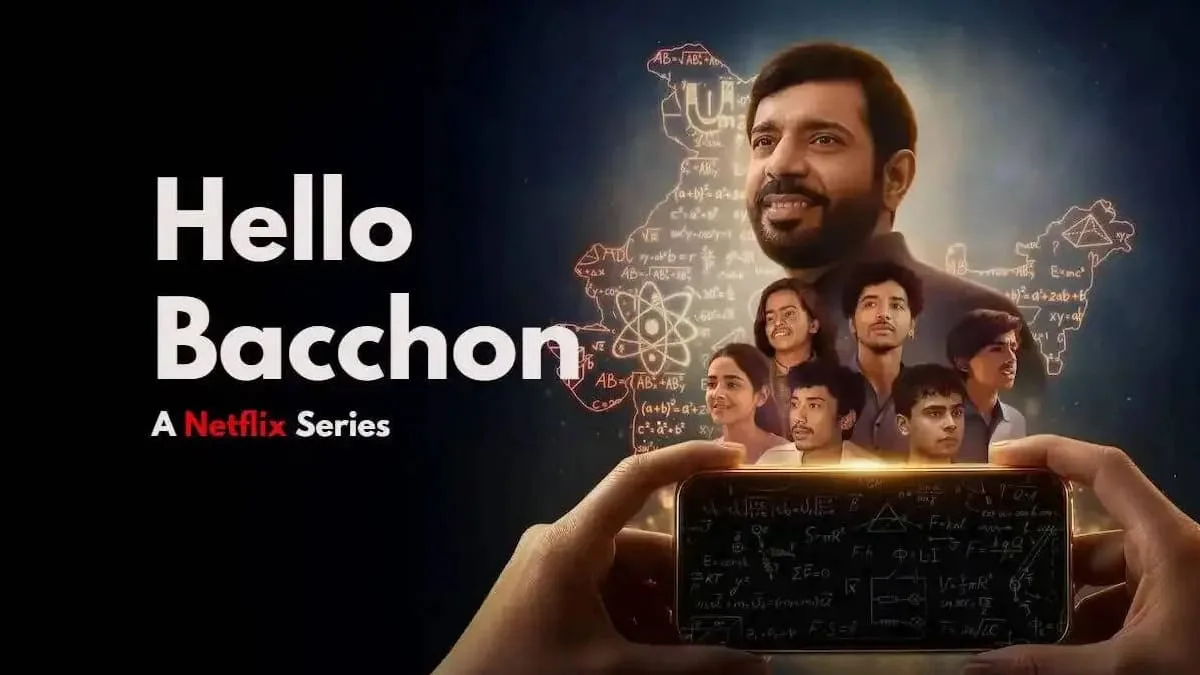

Hello Bachhon is a five-episode Hindi biographical drama now streaming on Netflix, directed by Pratish Mehta and written by Abhishek Yadav, Ankit Yadav, Vernaali, and Sandeep Singh Rawat. Produced by TVF (The Viral Fever), the series draws loosely from the real life of Alakh Pandey, founder of Physics Wallah, an ed-tech company that began as a YouTube channel offering low-cost physics lessons and grew into one of India’s most recognizable educational brands.
The show fictionalizes portions of Pandey’s story, centering his mission to keep education affordable against mounting investor pressure to commercialize the platform. Vineet Kumar Singh plays Pandey, and the series runs his professional arc alongside episodic student stories set across different parts of India, from villages in Bihar to the exam-factory corridors of Kota. Each student represents a different social obstacle: poverty, addiction, gender discrimination, academic burnout. Together, they build a portrait of a country where access to a good teacher can feel like the difference between two entirely different lives.
The Weight of a Classroom Dream
Each episode pairs Alakh’s corporate struggles with a self-contained student story anchored in a specific region of India. The production team signals location through deliberate color grading: yellow tones wash over Allahabad, cool blue tints Haryana, and deep grey shadows the Mumbai slums. This visual shorthand has roots in Indian commercial cinema’s long tradition of using color symbolically, and here it does geography work efficiently, giving each student’s world its own texture before a word is spoken.
The central conflict driving Alakh’s arc will feel familiar to anyone following the global ed-tech conversation: a founder’s original idealism measured against investor demands that treat scale as the only valid outcome. Physics Wallah’s real-world story played out against the backdrop of India’s booming ed-tech sector, and the show captures something of that pressure, even if it rarely goes deep enough into how such companies actually function and fracture.
Thematically, the series frames education as a right rather than a privilege, filtering that argument through student stories touching on poverty, drug addiction, gender discrimination, and the psychological cost of India’s hyper-competitive exam system. The Kota storyline, which includes a student suicide attempt, engages with a genuine national crisis and is one of the few places where the show allows darkness to linger past a single scene.
The student stories carry the series’ most honest emotion. A boy quietly registering that his father works two jobs, a girl pushing back against family expectations that would end her schooling — these scenes work because they stay specific and grounded. The trouble is structural: each student’s crisis reaches neat resolution within a single episode, which smooths over what should feel like lasting weight. Dialogue settles into motivational territory too often, with lines that function more as slogans than as revelations. Alakh, constructed as a figure of near-constant virtue, is rarely allowed to be questioned, which leaves his character inspiring on the surface but thin beneath it.
A Cast That Outreaches Its Scripts
Director Pratish Mehta’s clearest skill is tonal steadiness. Managing a dual-track narrative where boardroom tensions must sit alongside rural student stories that operate at a very different emotional register is a genuine structural challenge, and Mehta generally keeps the two worlds from feeling like separate shows. Editor Akash Bundhoo’s intercutting is crisp, pacing the episodic format so that each shift between storylines carries momentum rather than disruption.
The music and background score by Anand Bajpai is used wisely, amplifying emotional beats without overwhelming them. Costume design, credited to Yashika Kakkar and Prachi Upreti, does quiet but effective work charting character development. The visual difference in how students are dressed at the start and close of their arcs functions almost as a silent before-and-after, a technique Indian parallel cinema has long employed, here comfortably adapted to a more populist format.
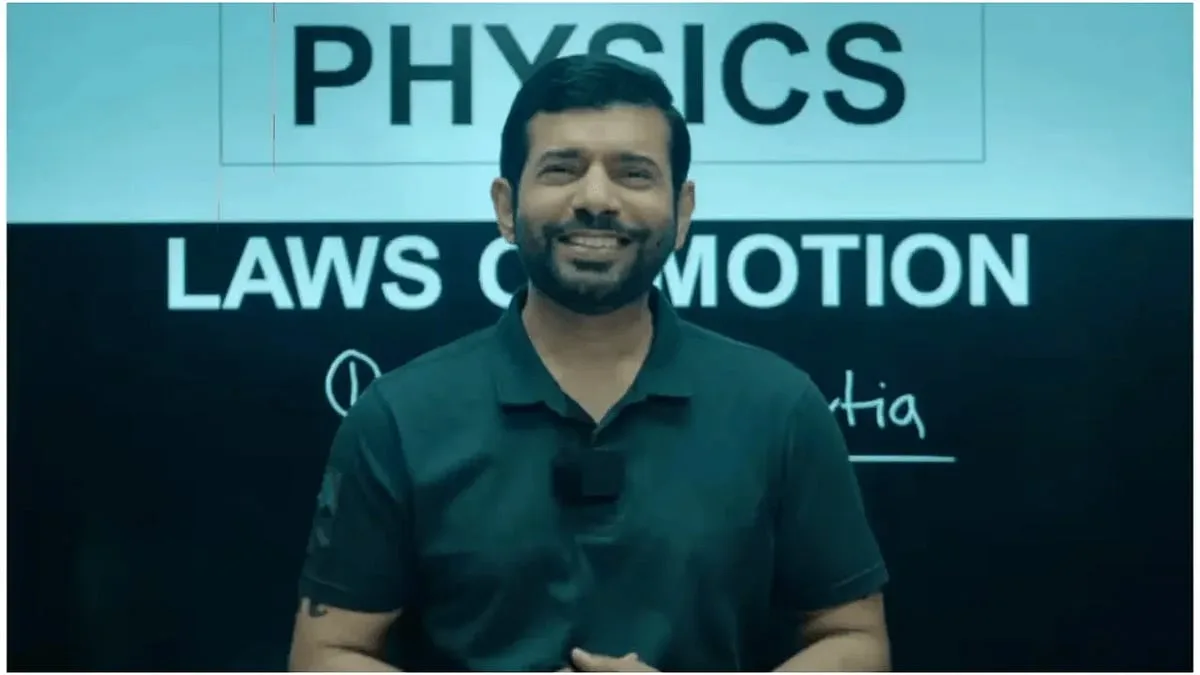
Vineet Kumar Singh anchors the series and is its strongest element. His performance operates through restraint: a held breath before a difficult conversation, eyes that register doubt even when the dialogue insists on certainty. His most alive scene is a confrontation with his father, where the actor briefly escapes the show’s tendency to treat Alakh as untouchable. Vikram Kochhar as co-founder Prateek brings a quieter, more grounded energy, and their scenes together carry a genuine ease that the investor sequences lack.
Among the student cast, Satendra Soni as Bhola carries both the comic and emotional weight of his arc without letting either overwhelm the other. Samta Sudiksha and Varun Buddhadev, as Tripti and Ankit, develop a quietly affecting dynamic. Girija Oak Godbole brings warmth to Alakh’s sister, a role that deserved considerably more space on the page.
Brand or Biography?
TVF has built a specific body of work around India’s competitive exam culture, and Hello Bachhon sits squarely within that tradition. Its ambition to pull in students from rural Bihar, Mumbai’s slums, and Haryana’s fields rather than focusing only on Kota’s coaching corridors reflects a genuine awareness of how narrow that earlier frame was.
The execution leans on the same emotional architecture: aspiration, sacrifice, a visionary teacher who sees what others miss. The formula works often enough to be watchable, and the series is most credible when it treats students as people with competing desires rather than symbols of uplift.
The more pointed question the show avoids asking is what it means for a major streaming platform to dramatize the story of a living entrepreneur and his active company. The line between biographical drama and brand content is thin, and Hello Bachhon rarely holds it steady. That ambiguity is real, and worth sitting with.
Hello Bachhon is a biographical drama series that premiered on Netflix on March 6, 2026. Produced by The Viral Fever (TVF), the show chronicles the inspiring journey of Alakh Pandey, the founder of the ed-tech giant Physics Wallah. Spanning five episodes, the narrative follows Pandey (played by Vineet Kumar Singh) from his humble beginnings as a struggling teacher in Prayagraj to his mission of democratizing education for millions of students across India. The series explores themes of grit, social equity, and the challenges of building a digital empire while remaining accessible to those from modest economic backgrounds. You can currently stream the entire first season exclusively on Netflix.
Where to Watch Hello Bachhon Online


Full Credits
Title: Hello Bachhon
Distributor: Netflix
Release date: March 6, 2026
Rating: TV-14
Running time: 44–55 minutes per episode
Director: Pratish Mehta
Writers: Abhishek Yadav, Ankit Yadav, Vernaali, Sandeep Singh Rawat
Producers and Executive Producers: Vijay Koshy, Shreyansh Pandey
Cast: Vineet Kumar Singh, Vikram Kochhar, Girija Oak Godbole, Samta Sudiksha, Varun Buddhadev, Divesh Medge, Anumeha Jain, Chitransh Raj, Pankaj Kashyap, Naman Jain, Avtar Vaishnani, Satendra Soni, Sonu Kumar Yadav, Anshul Dogra
The Review
Hello Bachhon
Hello Bachhon has its heart in the right place and Vineet Kumar Singh to carry it, but the series too often mistakes sincerity for depth. The student storylines generate genuine feeling when they stay specific, and Pratish Mehta directs with enough control to keep five episodes coherent. The writing, though, serves the brand as much as the story. A stronger show lives somewhere inside this one, waiting for a script willing to ask harder questions about its subject.
PROS
- Vineet Kumar Singh delivers a nuanced, restrained central performance
- Student storylines carry real emotional specificity
- Confident direction maintains tonal consistency across a dual-track structure
- Strong ensemble cast, particularly Satendra Soni and Vikram Kochhar
- Cinematography uses color grading effectively to distinguish regional settings
CONS
- Alakh Pandey is portrayed without meaningful flaws, reducing dramatic tension
- Each student crisis resolves too neatly within a single episode
- Dialogue frequently slides into motivational slogan territory
- The series blurs the line between biography and brand promotion
- Supporting roles, particularly Alakh's sister, are underwritten







