


























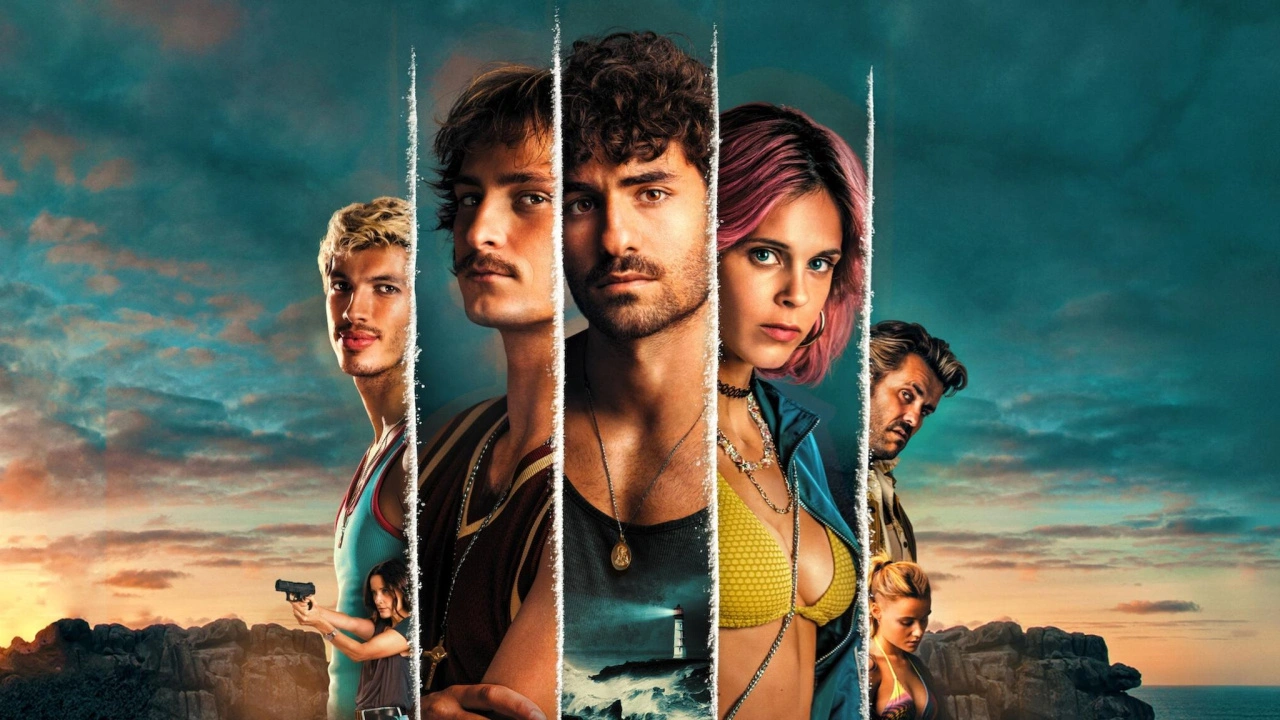

The third and final season of Turn of the Tide closes the narrative circle that began with a freak accident and reaches its end through choice. Set three years after the previous chapter, the story returns to a quartet scattered by consequence. Eduardo comes back to the Azores after prison and finds an island altered by predatory capitalism and a fishing industry in decline.
With Silvia, Rafael, and Carlos, he tries to claim control through the Night Vigilantes persona. The Portuguese drama keeps its connection to the historical 2001 cocaine wash up, then moves into a fictional study of moral decay. The volcanic landscape stands as a silent witness to a fight between local identity and corporate machines that treat the island as an extraction site.
Across six episodes, the season resolves the ghosts of the original drug shipment and the private injuries carried by its survivors. Friendship survives here, bruised and stubborn, inside a world increasingly hostile to small-time dreamers.
Social Bandits and the Architecture of Revenge
The narrative shifts away from the chaotic drug trafficking of the early seasons and toward localized justice. That movement recalls the historical idea of the “social bandit,” the figure who appears once formal institutions have abandoned ordinary people. The group adopts the Night Vigilantes name to answer the failures of the Azorean legal system.
Eduardo directs his anger at the Brazilian dealers who damaged his life. Rafael searches for escape from domestic pressure and wants a better life for his son. Silvia uses the group to protect her neighbors from predatory financial schemes. These motives shape missions such as the theft of a gold monstrance from a Brazilian priest. The revelation that the religious object contains cocaine becomes a blunt critique of institutional hypocrisy. Subtle it is not. Then again, hypocrisy rarely arrives wearing a modest hat.
The blackmail plot against the lawyer Lessa brings a grubbier surveillance texture into the season. Hidden cameras in a local brothel expose the murky overlap between private vice and public power. This episodic structure changes the rhythm of the story. The three-year gap has rearranged the island’s social order. Eduardo has become a pariah. Moniz now moves with corporate impunity.
Also Read


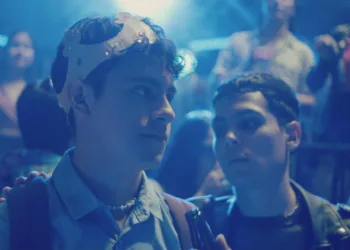



The season carries several dense threads, including the search for Mariana Frias and the mayoral spectacle surrounding Brum. The clash between the group’s small-scale strikes and Moniz’s vast power gives the season its defining pressure. The crime thriller mutates into a study of “Insular-fixation,” the obsessive urge to settle old debts inside a small geographical trap.
Passive Protagonists and Emotional Inertia
Eduardo lives in a state of “Static-Resonance” (a condition in which a character stays fixed while the world keeps moving). José Condessa builds the performance through silence and micro-expressions. Eduardo often responds to other people’s momentum, giving him the air of a man watching his own life from across the room.

Prison trauma and his internal argument over the meaning of home turn him into a ghostly presence. His stillness sits beside Rafael’s restless narration. Rodrigo Tomás plays Rafael as a man hungry for the glamour of vigilantism, using it to disguise the dull pressure of providing for a family. His emotional encounter with his deadbeat father supplies one of the season’s rare moments of raw character growth.
Silvia remains the group’s anchor. Helena Caldeira gives her a sharp-edged practicality. Silvia handles the heist logistics and the damage left by her mother’s financial mistakes. Her refusal to marry Rafael until the final act suggests a woman deeply wary of traditional stability. Carlos takes a separate path. His singing career and his dream of Lisbon express the urge to escape the “Azorean Prison.”
Detective Paula Frias carries much of the season’s emotional burden. Maria João Bastos plays her as a woman powered by grief and the single aim of finding her kidnapped daughter. Her work in the penultimate episode is a study in frustration, controlled until it scorches.
The villains, including the ruthless Cipriao Cruz and the cold Moniz, embody the impersonal machinery of modern corruption. The kidnapper couple, Billy Bob and his partner, add strange bickering to the danger. They operate as a dark mirror of the central group’s dysfunction, a reminder that intimacy and chaos can share the same kitchen table.
Chromatic Memory and the Sound of 2001
The season’s visual identity depends on a strong sense of “chromatic-memory.” Bright, retro color grading evokes the early 2000s, making the Azores resemble a postcard from a period that never ended. Raw cliffs and gray volcanic sand sit against saturated blues of the sea. The result is a visual tension between the natural world and the human criminal activity taking place across it. Production design grounds the fiction through period-specific details such as disposable cameras and older vehicle models.
The soundtrack locks onto the series’ emotional pulses. “The House of the Rising Sun” opens the season with a somber feeling of inevitability. “These Boots Are Made for Walkin’” accompanies Silvia’s decisive action against a cult leader. The songs reflect character psychology with a directness that suits the show’s blunt symbolic language.
Editing becomes faster during heist scenes, using quick cuts and high-energy pacing to create adrenaline. Those sequences sit beside long, static shots of characters staring at the ocean. The rhythm creates a sense of confinement. Wind and waves remain constant in the sound design, reminding the viewer that the island holds the final authority. Human schemes come and go. The sea keeps score.
Geological Justice and the Boat of Dreams
The finale gathers around a televised gala and a volcanic eruption. The group stages a confrontation meant to expose the corruption of Moniz and Brum. The plan has logistical gaps. The group suddenly has weapons and enough access to bribe event staff.
These details matter less than the event’s symbolic weight, which is doing most of the heavy lifting here. The eruption of the Capelinhos volcano functions as a “geological-deus-ex-machina,” a literal force of nature that destroys the corrupt port construction plans. The image suggests that greed remains fragile before the volatility of the earth.
The final sequence on Eduardo’s boat offers the most honest view of the characters. Each friend imagines a different life. Carlos pictures stardom. Rafael imagines a football career. Silvia imagines success as an agent. Their fantasies work as armor against the truth of their situation.
They choose to stay in the Azores. The island becomes prison and sanctuary in the same breath. Eduardo accepts that his dream of going to America was a mirage inherited from his father. He recognizes the island as his home. The story closes with “Oceanic-Fatalism,” the belief that destiny is tied to the water surrounding a person. The group finds a form of peace in the ruins of ambition. A bitter survival, yes. Still survival.
Turn of the Tide Season 3 premiered on April 10, 2026. This final set of episodes follows a group of friends in the Azores who face the repercussions of their involvement with a massive drug shipment. The series is currently available for viewing on the Netflix streaming service. This season finishes the story of the residents of Rabo de Peixe as they protect their community against external interests.
Where to Watch Turn of the Tide Season 3


Full Credits
Title: Turn of the Tide Season 3
Distributor: Netflix
Release date: April 10, 2026
Rating: TV-MA
Running time: 45, 55 minutes
Director: Augusto Fraga, Patrícia Sequeira
Writers: Augusto Fraga, Hugo Gonçalves, Tiago R. Santos
Producers and Executive Producers: Pandora da Cunha Telles, Pablo Iraola
Cast: José Condessa, Helena Caldeira, André Leitão, Rodrigo Tomás, Maria João Bastos, Kelly Bailey, Afonso Pimentel, Salvador Martinha
Director of Photography (Cinematographer): André Szankowski
Editors: Marcos Castiel, Pedro Ribeiro
Composer: Tiago De Derelict
The Review
Turn of the Tide Season 3
The season serves as a jagged but sincere farewell to Rabo de Peixe. While the shift into localized vigilantism introduces some logical inconsistencies and uneven pacing, the emotional weight remains grounded in the chemistry of the core four. It functions as a study of survival against the encroaching tide of corporate greed. The volcanic finale provides a literal clean slate for the characters, prioritizing their shared history over a neat resolution. This is a flawed, atmospheric piece of television that understands that some cycles of crime never truly end.
PROS
- Maria João Bastos provides a devastating portrayal of grief, while José Condessa maintains a quiet, heavy presence.
- The use of the Azores' natural, rugged beauty creates a sharp contrast with the themes of urban corruption.
- The selection of retro rock tracks perfectly mirrors the early 2000s setting and the characters' internal defiance.
- The exploration of "insular-fixation" and the concept of the island as both a sanctuary and a prison feels authentic.
CONS
- The middle episodes often stretch conflicts thin, causing the narrative momentum to stall.
- The finale relies on convenient plot points, such as the group’s sudden access to weapons and funds.
- Eduardo’s reactive nature this season can make him feel like a secondary character in his own story.
- The series moves far away from the "true events" rawness that defined the first season, occasionally feeling like a standard crime procedural.