

























Pokémon Pokopia places you in the role of a Ditto wearing the shape of its missing trainer. You arrive in a version of Kanto drained of its old bustle. Fuchsia City, once alive with movement, has become a hushed graveyard of dry earth and broken architecture. A Tangrowth mentor guides your first steps toward restoration. Across a forty-hour life simulation, combat gives way to terraforming, habitat design, and community building.
Your mimicry becomes the main verb of play, a biological tool for repairing scorched land and inviting life back into ruined spaces. The mystery of the human exodus hangs over every task, giving each creative act a mournful weight. Pokopia is patient, quiet, and focused on rebirth. It asks you to rebuild a dead world through careful, deliberate labor.
The Biological Foundation of a Mimic
Making Ditto the protagonist gives every interaction a clear mechanical identity. Your character keeps an odd, faintly unsettling look. The dot eyes and broad grin remain in place even after taking a human form, creating a strange cuteness that fits the game’s gentle weirdness.
The animation strengthens that identity. A fall from a cliff briefly turns you into a pile of pink goo before you reform, a small visual joke that reminds the player of your liquid body. The inventory system follows the same idea. You slurp stones and wood into yourself, carrying materials inside your body until construction calls for them.
Shapeshifting moves become the core of world repair. A Bulbasaur teaches you Leafage, letting you spread fresh grass over dead dirt. A Squirtle teaches Water Gun, which brings moisture back to withered trees. Early transformations appear in fragments. Vine arms sprout from your body, or a small shell appears for a specific task. These touches make your development as a mimic feel gradual and playable.
Later, full-body shifts widen the map. Surfing as a Lapras and gliding as a Dragonite change how you read the environment. Returning to blob form lets you squeeze through tight tunnels or hide from others. Form and function work together so smoothly that gathering resources feels biological. The player, the toolset, and the landscape share the same body. You heal the land by changing yourself.
The Architecture of Habitat and Community
Attracting Pokémon depends on environmental design. You are engineering a home piece by piece. Simple patches of tall grass and flower beds begin the process, and new species start to return as the land improves. The system asks you to manage variables such as light intensity and moisture. Physical traces in the wild provide clues for custom habitats. A Ghost type may require a carefully recreated somber mood before it appears.
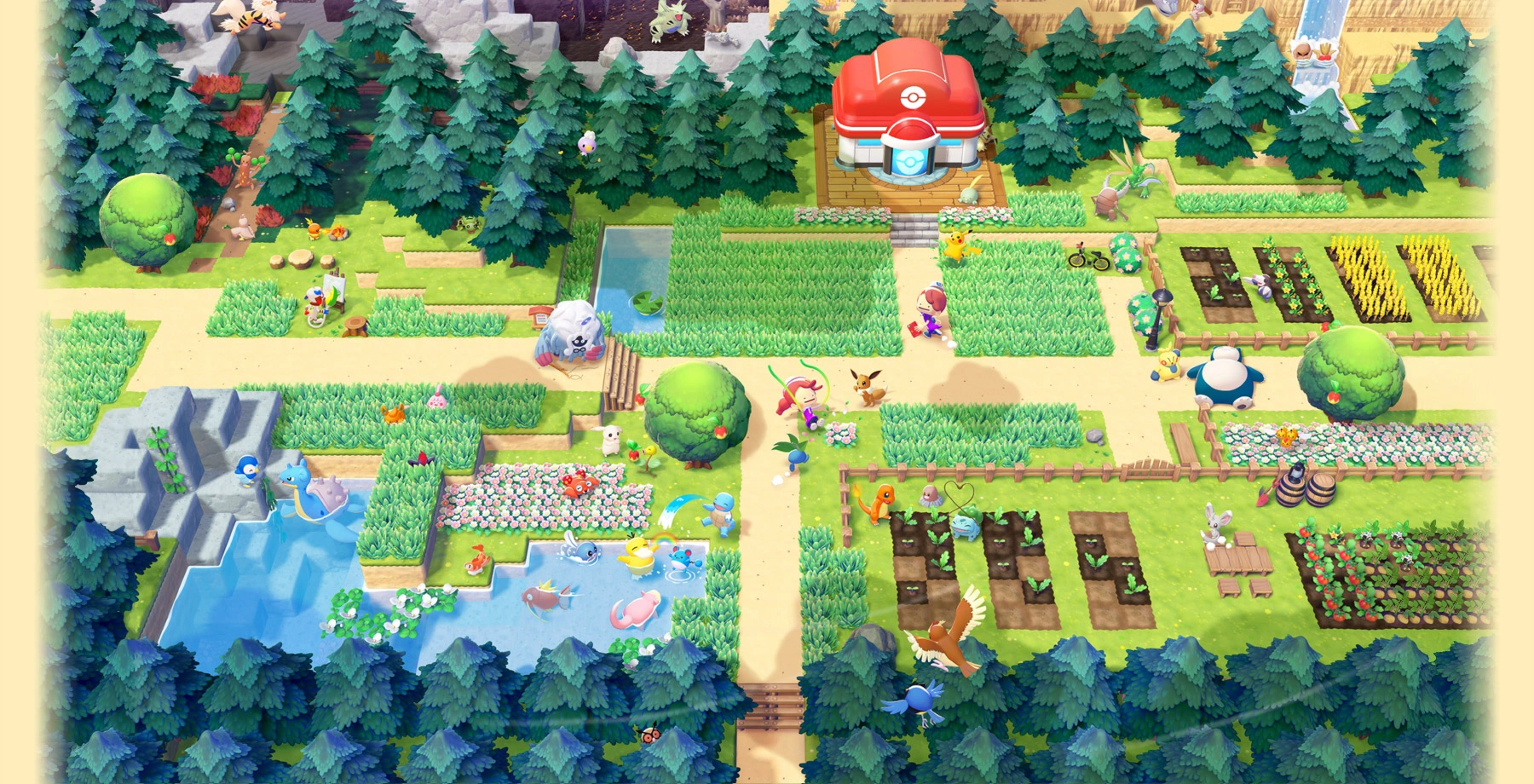
After a resident moves in, the game shifts toward social management. Each Pokémon has a Comfort Level shaped by your choices. Toys and specific bedding can raise happiness, giving the system a light strategic layer. Different species want different conditions. A Zubat thrives in a dark cave.
A Bulbasaur needs sunlight. Placing incompatible habitats too close together can make both residents unhappy. Town planning gains a geographical logic, since every patch of land has social and ecological consequences. Raising the local Environment Level unlocks better shop items, linking care, layout, and progression in a satisfying loop.
The inhabitants contribute to the town instead of functioning as background decoration. Each species can take on a specialized role that supports construction. Fire types such as Charmander heat furnaces to make metal bars. Grass types accelerate crop growth.
The town begins to feel like a working ecosystem where survival depends on everyone’s labor. You can also play tag or hide and seek with residents, which gives the social layer a softer rhythm. Security cameras let you observe habitats from a distance, creating the pleasure of a naturalist watching a rare creature return to its nest. Seeing a dormant area buzz with life carries real emotional force. It rewards the hours spent adjusting the humidity of a small jungle patch.
Atmospheric Remnants and Melancholic Echoes
Pokopia finds its narrative depth in ruins. The game sends you through four main regions heavy with history. Across the skeletal remains of familiar Kanto landmarks, logs and letters explain the disappearance of humans. The colorful, squishy art style sits beside a tragic backstory, creating a specific emotional charge. It recalls indie games that use soft visuals to hide deeper sorrow. Your work becomes an act of memorial care for a lost civilization.
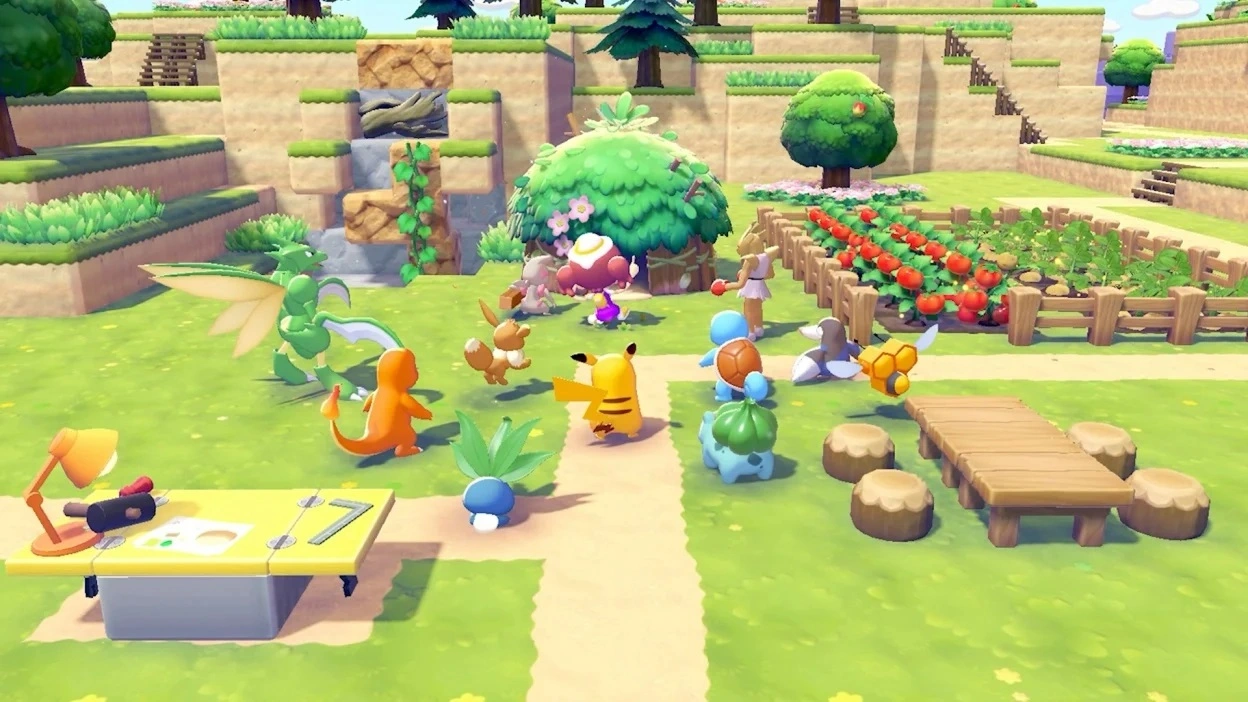
The world runs on a 24-hour clock that shapes the rhythm of play. Some creatures appear at night, so your schedule matters. This pacing keeps the experience from becoming frantic. It encourages a thoughtful style of play where small daily routines carry meaning.
A day might be spent gathering materials on a Dream Island, a focused map built around specific resources. These trips provide relief from larger terraforming projects. The structure keeps a short-term objective within reach while the larger mystery continues to unfold.
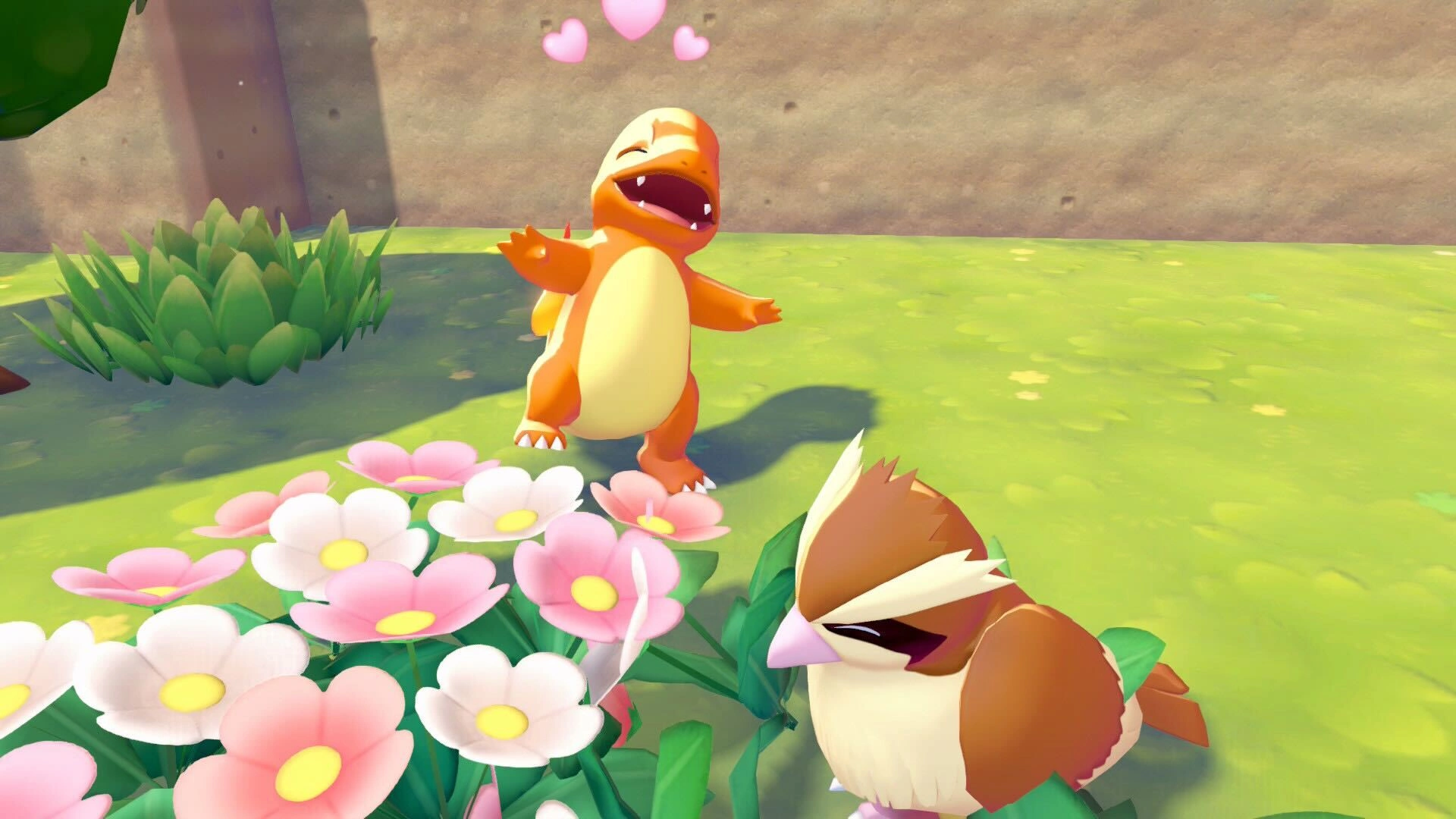
Sensory details deepen the mood. The score uses remixes of classic themes, adding a quiet nostalgia that keeps reminding you how much this world has changed. The Pokémon themselves are expressive. A Bulbasaur shaping a heart with its vines or a lost Pokémon looking sad gives the restoration work an empathetic charge.
The roster spans all nine generations, making the world feel like a celebration of series history. New variants add visual charm and keep exploration lively. Each discovery arrives at a pace that matches the slow healing of the landscape.
The Infrastructure of a Digital Sandbox
The construction interface will be easy to understand for fans of voxel builders. You break the world into cubes and stack them into new forms. For players who find manual building tedious, building kits are a smart addition. These kits let you assign worker Pokémon to assemble pre-made houses.
The system still runs into precision issues. The camera struggles in tight spaces. Placing a specific block at a precise depth can become awkward. At times, the player may accept a near-perfect placement because exact control takes too much effort. That lack of fine control can frustrate anyone hoping to build intricate creations.
Logistical management adds complexity. The pathing for Pokémon followers works smoothly. Creatures rarely get trapped by terrain, even around elevators or sky lifts. You can lead a group of five across a mountain without constant backtracking. Storage creates a much bigger problem. The game lacks a unified inventory. You have to remember which wooden box in which region contains clay or iron ore. This leads to fast travel loops and repeated searches through containers. A shared storage system would have reduced that friction.
The creative tools still have impressive scale. Palette Town works as a dedicated sandbox for players who want to focus on design and leave the story aside for a while. It gives enough room for full cities or huge sculptures. Multiplayer lets you invite three friends to help with large projects. Resources and ideas can be shared as everyone builds toward the same vision.
The game includes customization options too, including camera distance settings and button remapping. These quality-of-life features show care for player comfort. Grid-based movement can feel stiff, yet the freedom to reshape the map remains the strongest pull. Pokopia turns ruined Kanto into a creative space shaped by the player’s imagination.
The Review
Pokémon Pokopia
Pokémon Pokopia offers a meditative return to a fractured Kanto. It replaces battles with the quiet satisfaction of ecological restoration. Using Ditto as a protagonist creates a tactile connection to the world through shapeshifting. The narrative weight of the ruins provides a grounding contrast to the bright character designs. While storage limitations and building camera issues cause minor frustration, the emotional weight of the journey stays high. It is a rewarding sandbox for those who value patient world building.
PROS
- Inventive Ditto transformation mechanics.
- Strong environmental storytelling in a ruined setting.
- Detailed habitat engineering system.
- High quality Pokémon animations.
- Effective follower AI and pathing.
CONS
- Fragmented inventory management across regions.
- Imprecise building camera in small spaces.
- Rigid quest requirements in the early game.