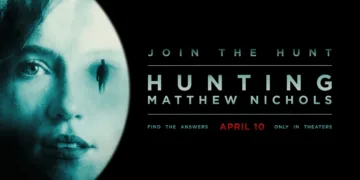








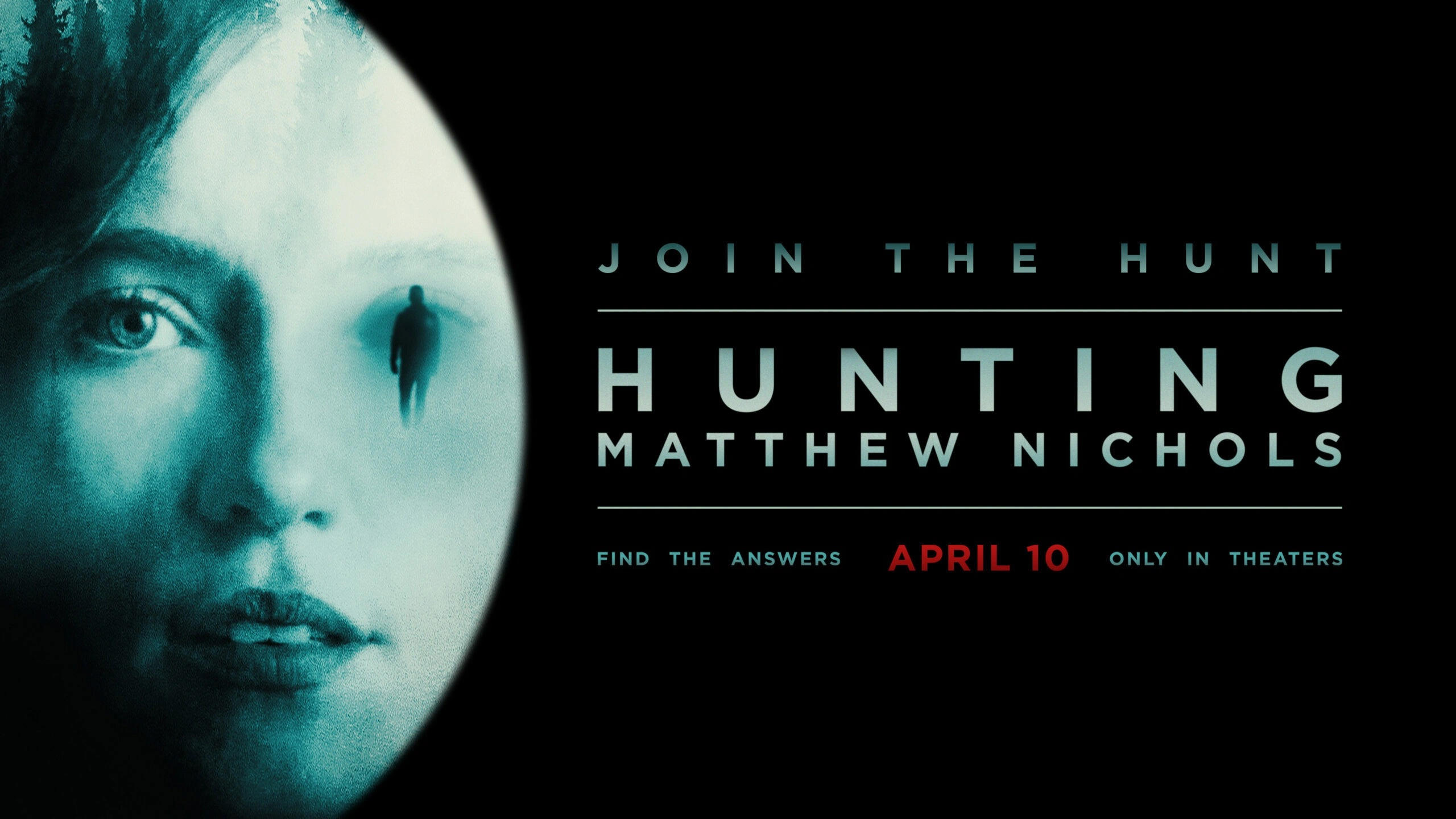

Vancouver Island stretches across the film like an arboreal burial site, soaked, vast, and almost offensively indifferent. On Halloween night in 2001, Matthew Nichols and Jordan Reimer disappeared into those woods, leaving a silence that has survived for two decades. Tara Nichols returns to that wet, punitive terrain carrying a very specific burden. She wants closure, and she wants the camera to help extract it.
Working with filmmaker Markian Tarasiuk, Tara begins a documentary aimed at stale police records and the dead air around them. An overlooked evidence box gives the investigation its first hard jolt. The box contains physical remnants, along with the first ignition of a renewed obsession.
Tara searches for a definite answer to her sibling’s absence. The film stays fixed to the cold material facts of a missing persons case, resisting the easy emotional choreography that often softens this genre. Grief here has mass. It sits. It does not perform on cue. The forest, true to form, remains unmoved.
The Aesthetics of Fabricated Truth
The film works through a disciplined mockumentary structure. Talking head interviews create an air of clinical distance, the sort of procedural calm that always feels slightly suspicious after the third grave pause. Markian Tarasiuk appears as himself, a meta-fictional choice that produces sharp pressure between creator and subject. The film’s visual grammar depends on a clean split between textures. Authentic home videos sit beside recreated archival fragments, creating a friction between recorded memory and constructed evidence.
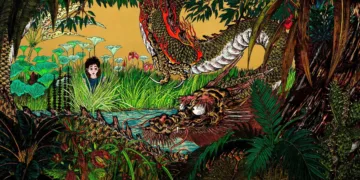
A striking monochromatic animation recounts the local legend of Roy McKenzie. The shift in form matches current true-crime habits, using illustration to move past the limits of standard reenactment. It also gives the legend a spectral quality, closer to charcoal on bone than exposition. The direction shows real control during the pivotal viewing of a discovered tape. The film holds on the crew’s faces. Their professional curiosity collapses into terror. The footage itself remains unseen.
That choice matters. Reaction takes priority over spectacle, and the psychological effect lands with quiet force. The viewer is made to imagine the image, which is usually worse than being handed it. The aesthetic later loses its polished documentary surface and turns rougher, more hand-held, more anxious.
The change signals a collapse of control. The camera stops behaving like an instrument of record and becomes a participant with a pulse. The lens takes on the panic of an eye in flight. The tripod, that noble little monument to rational order, is abandoned.
The Psychic Weight of Unresolved Trauma
Miranda MacDougall gives the production its unstable emotional axis. Her Tara begins with discipline, working through grief as if method might discipline the void into speech. That composure erodes. By the end, she has moved toward near-hysteria, and the progression feels rooted in accumulated pressure rather than theatrical display.
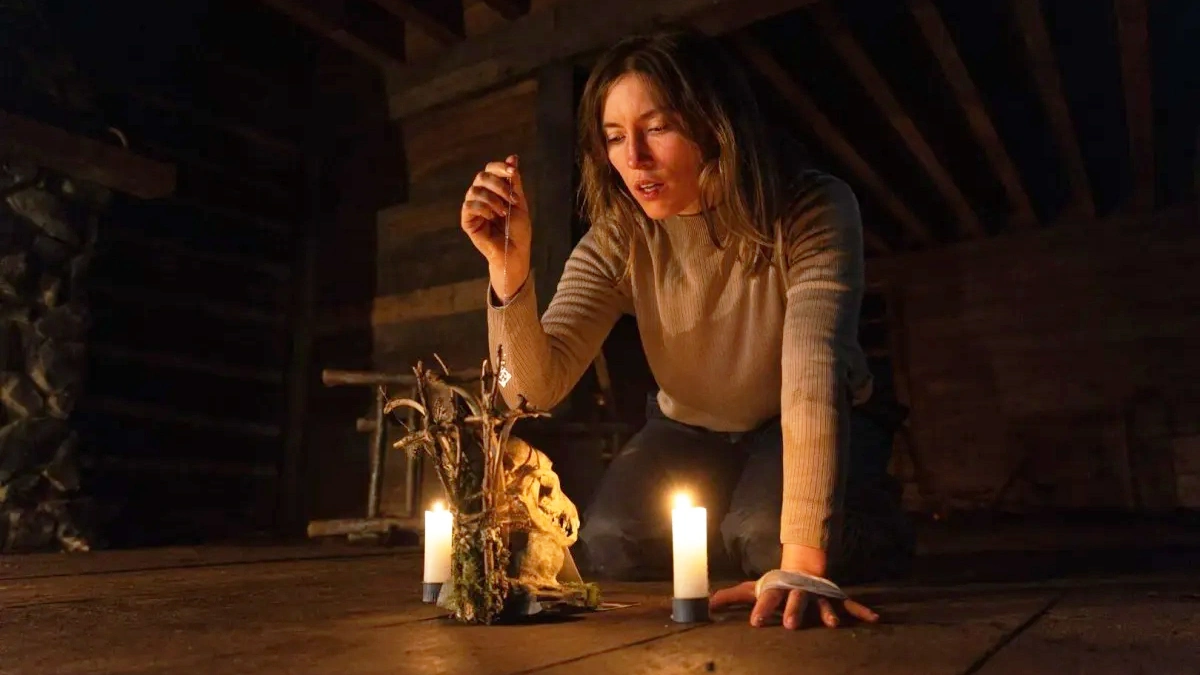
The supporting cast gives the film necessary density. Pam Hamilton plays a retired officer with a worn, protective edge. Brenda, Tara’s mother, supplies a deep emotional anchor. Her stillness works against the turbulence of the investigation, grounding the film whenever its procedural machinery starts to rattle.
Friction grows between the documentary crew and local authorities, and those exchanges sharpen the film’s interest in ethical gray zones. Trauma becomes content. Pain becomes footage. Everyone involved knows this, which naturally makes everyone behave with perfect moral clarity. Of course.
Tarasiuk plays a version of himself who steps in too often. He is a director unable to remain behind the glass, perhaps because the craft services table lacked sufficient distractions. His presence complicates the narrative arc by making the film a study of observation itself. The act of filming alters the thing being filmed. That old documentary problem becomes personal here, then dangerous.
Trauma drives nearly every irrational decision. It moves the characters toward the tree line with the terrible logic of recurrence. The past feels physical, like soaked clothing that cannot be removed. It forces repetitions of the original disappearance. History circles back with grim patience. The characters remain caught in the gravitational pull of what happened to Matthew Nichols and Jordan Reimer, and free will begins to look rather theoretical under all those trees.
Liminal Spaces and the Forest Climax
The film’s visual identity is built from monochromatic gloom. Vancouver Island becomes gray, drenched, and watchful, less a setting than a damp witness with excellent camouflage. Justin Sebastian uses the camera to stress the forest’s oppressive scale. Human figures appear small against its vertical mass. The compositions tighten the sense of entrapment long before the plot fully arrives there.
The lighting often recalls classic noir through expressionistic framing and dense chiaroscuro. Shadows pool across faces and interiors with predatory weight. The technique suits a story where identity, memory, and responsibility keep sliding into murk. Ethical certainty grows scarce. The truth, if it exists in full, seems buried under weather, fear, and old institutional failure.
The sound design works closely with the score by Jeff Griffiths and Christopher King, building a low-frequency dread that seems to vibrate under the floorboards of the film. Silence becomes active. Small sounds gain pressure. The pacing manipulates perception by withholding release, training the audience to search the frame and listen into darkness. A twig snap starts to feel like a legal deposition.
The final sequence in the woods marks a sharp escalation. Tension gains body. Practical effects keep the horror tactile, and the final acts avoid digital gloss. Clothing and set decoration maintain a grounded, functional look. Gear appears used, worn, and battered, which gives the scares a sturdy physical base. The last fifteen minutes profit from that careful preparation. The setting becomes a trap. The technical control of the first hour releases into a visceral climax.
The move into found footage sidesteps familiar subgenre habits through silence, shadow, and pressure. The camera shakes because the world has stopped making sense, and for once, that explanation feels sufficient.
Hunting Matthew Nichols is a chilling Canadian supernatural horror film that masterfully utilizes the mockumentary format to investigate the 2001 disappearance of two teenagers on Vancouver Island. After a decorated run on the film festival circuit throughout 2024 and 2025, the movie premiered for a wide North American theatrical release on April 10, 2026. This self-distributed success story is currently playing on over 1,000 screens across the continent and can be viewed at major cinema chains such as AMC Theatres, Regal Cinemas, Cinemark, and Cineplex.
Where To Watch Hunting Matthew Nichols (2026) Online
Full Credits
Title: Hunting Matthew Nichols
Distributor: DeVuono Releasing, Dropshock Pictures, Moon7 Films
Release date: April 10, 2026
Rating: 14A, R
Running time: 89 minutes
Director: Markian Tarasiuk
Writers: Sean Harris Oliver, Markian Tarasiuk
Producers and Executive Producers: Matt Villeneuve, Lucy McNulty, Amy Barager, Markian Tarasiuk, Michele McCree
Cast: Miranda MacDougall, Markian Tarasiuk, Ryan Alexander McDonald, Christine Willes, Trevor Carroll, Bernard Cuffling, Jay Hindle, Alec Willows
Director of Photography (Cinematographer): Justin Sebastian
Editors: Jonathan Mathew
Composer: Jeff Griffiths, Christopher King
The Review
Hunting Matthew Nichols
Hunting Matthew Nichols serves as a calculated meditation on the persistence of grief and the voyeurism of the digital age. The film maintains a rigorous aesthetic commitment to the true-crime format before surrendering to a visceral forest-bound climax. While the pacing occasionally stagnates, the technical precision and atmospheric dread provide a substantial foundation for the late-game scares. It is a competent entry into the found-footage canon that justifies its existence through visual flair and psychological weight. One might find the transition between styles jarring, yet the payoff remains effective.
PROS
- Striking monochromatic cinematography.
- Creative use of animation to expand local folklore.
- Strong lead performance by Miranda MacDougall.
- Immersive sound design.
- Authentic true-crime documentary aesthetic.
CONS
- Sluggish pacing in the middle.
- Reliance on established genre tropes.
- Jarring transition between filming styles.
- Predictable narrative beats.