

























![Kingdom Hearts Collection [I-III] Review](https://gazettely.com/wp-content/uploads/2026/10/Kingdom-Hearts-Collection-I-III-1-360x180.webp "Kingdom Hearts Collection [I-III] Review: KHII Holds Steady as Newer Entries Fluctuate 37")



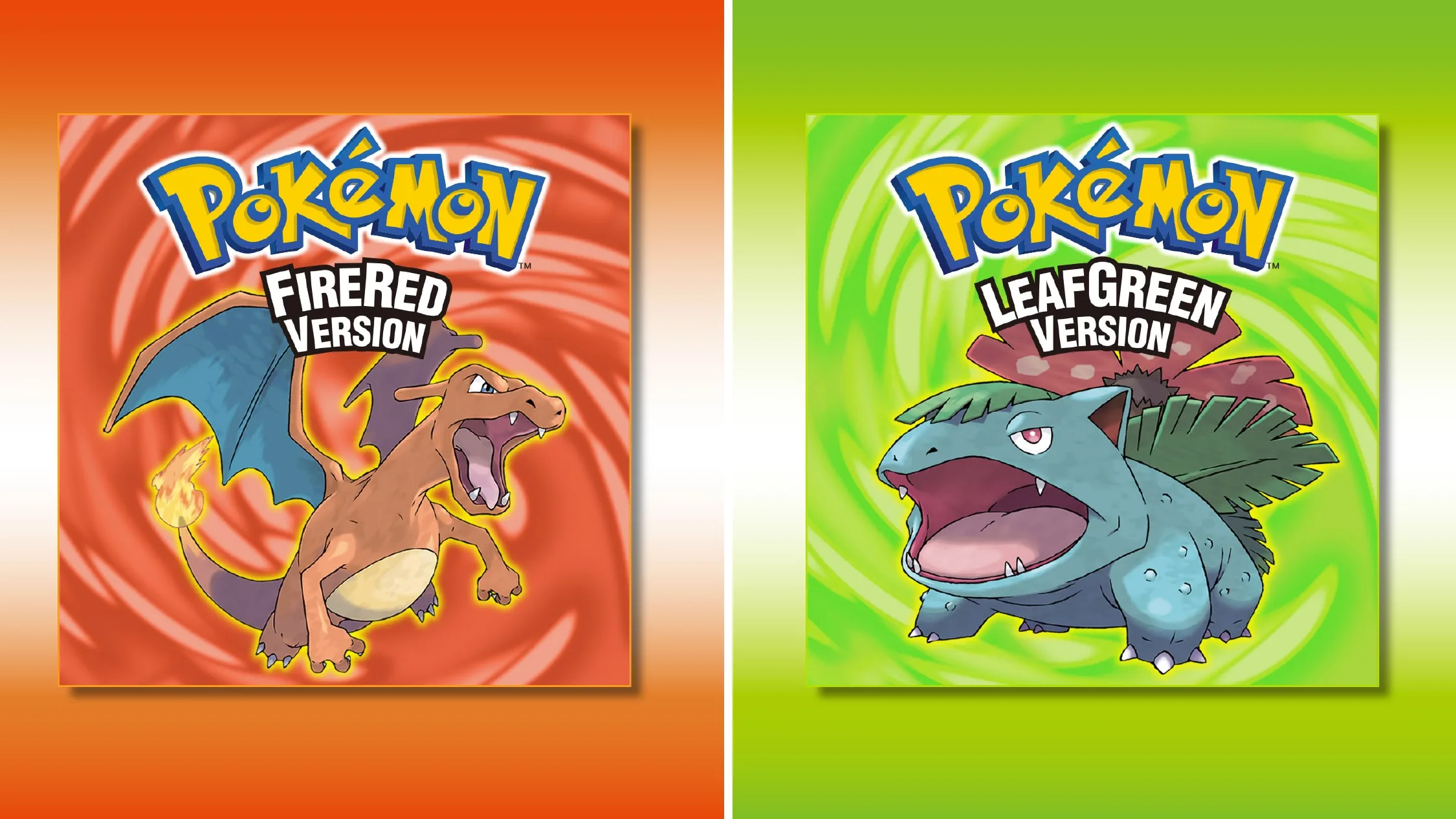

Pokémon FireRed and LeafGreen arrive on the Nintendo Switch as enhanced versions of the titles that defined a generation. These games stand between the monochrome beginnings of 1996 and the brighter Game Boy Advance era. The adventure opens in the quiet enclave of Pallet Town, set in the iconic Kanto region. You take on the role of a young trainer assigned by Professor Oak a large task: record every creature in the Pokédex while proving yourself against eight powerful Gym Leaders.
The story follows a classic coming of age path. Progress is measured against a cocky rival who always seems one step ahead. That personal rivalry runs beside a larger conflict with Team Rocket, a criminal organization whose actions threaten the region. The move from the 8-bit original to this crisp, colorful sprite work is striking. On modern screens, the pixels look sharp and deliberate. This release makes these versions the clearest way to experience the first generation, with technical refinements the original Game Boy titles lacked.
The Rigid Logic of Classic Combat
Stepping back into these games calls for an adjustment to a very specific set of technical limits. The biggest hurdle for modern players is the physical and special damage split. Current entries assign each move on its own, while damage here depends entirely on a move’s type. Every Fire type attack is special, while every Ghost type move is physical.
That creates fascinating, often frustrating, team building hurdles. A Pokémon like Gengar has a high Special Attack stat, yet its natural Ghost type moves rely on its much weaker physical Attack. Gyarados faces a similar problem, since its massive physical power goes to waste on its Special Water attacks.
Progress calls for a deliberate, slow approach. You weaken creatures in tall grass before trying to catch them, and a successful catch grants no experience points. Training takes a heavy time investment. Experience goes only to those who take part in a fight. Without the modern convenience of team wide experience sharing, you depend on the single target Exp.
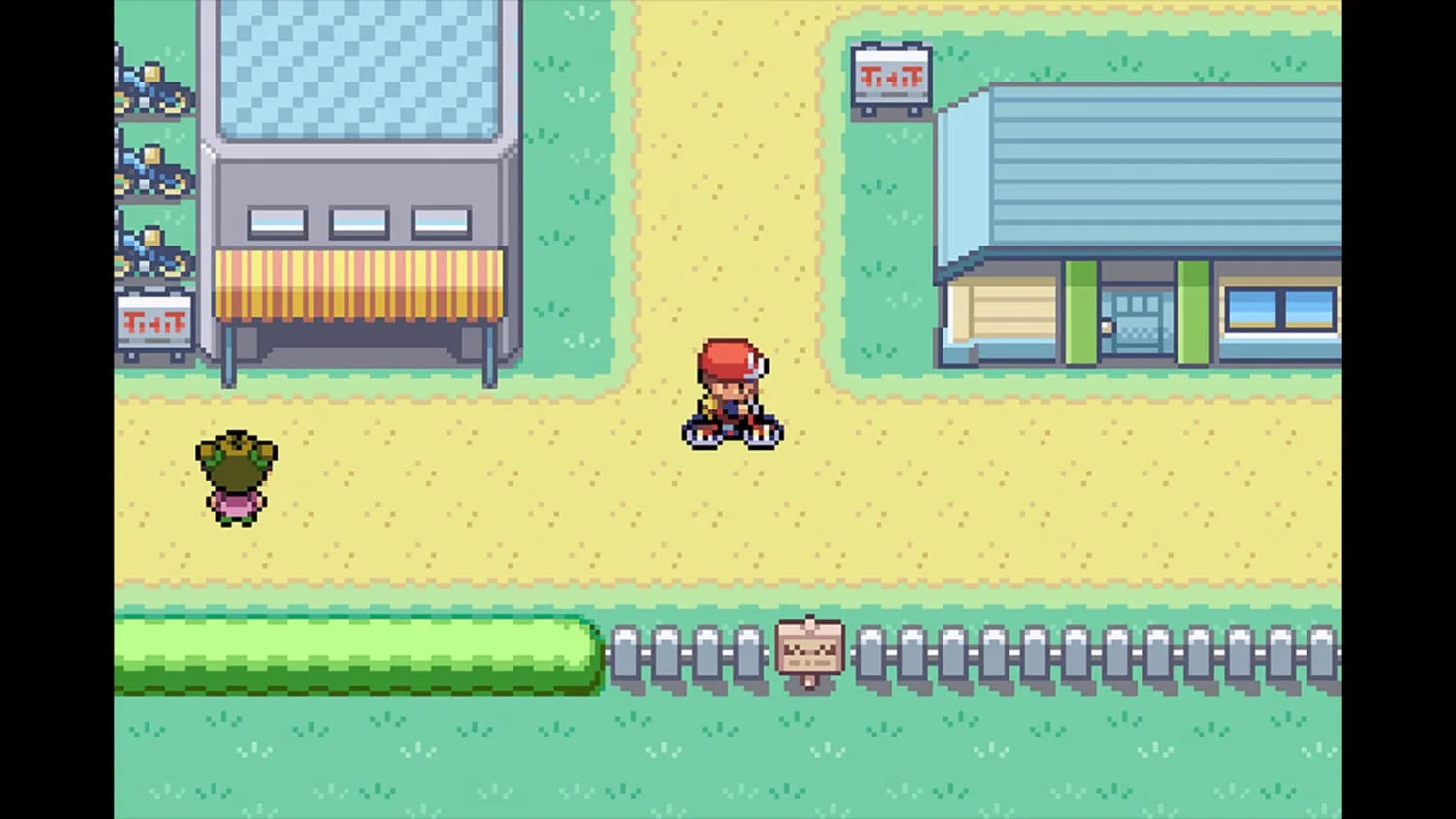
Share item or on manually rotating your team. Movement adds to that friction. The grid based movement feels stiff, and the early hours are spent walking slowly until you secure the Running Shoes or a Bicycle. Essential moves like Cut or Surf occupy permanent slots in your party’s movesets through the Hidden Machine system, often forcing you to carry a utility Pokémon dedicated solely to clearing obstacles.
Expanding the Horizon of the Original Map
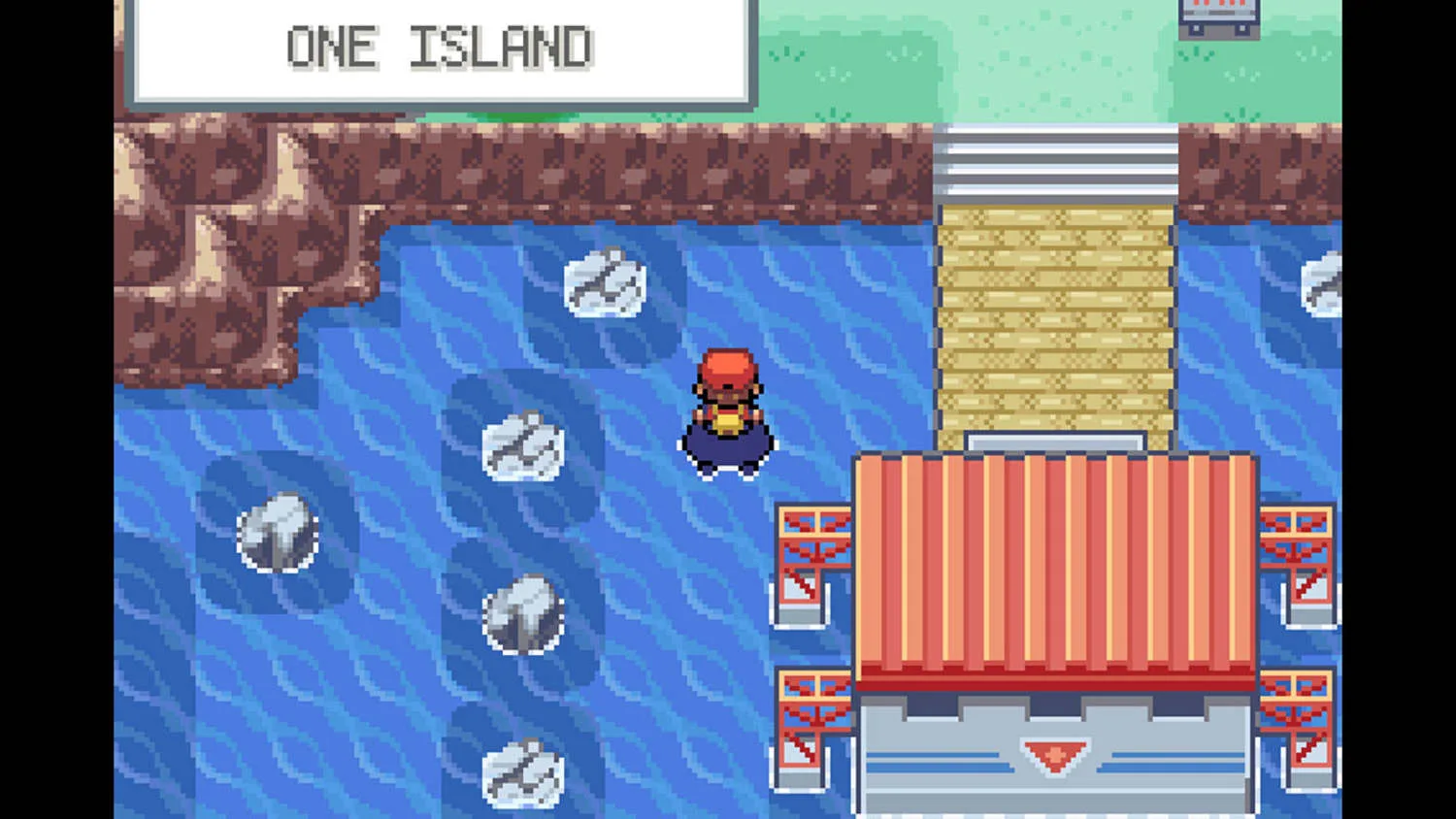
The strongest part of these remakes is the addition of the Sevii Islands. This archipelago adds a significant layer of exploration that was absent from the 1996 originals. These islands appear during the middle of the quest and expand into a large post game territory.
This area gives a home to creatures from the Johto and Hoenn regions, allowing the Pokédex to grow beyond the first 151 entries. It serves as a narrative bridge, with deeper story beats involving the remnants of Team Rocket after their defeat in Kanto. This specific Switch port includes rare items like the Aurora and Mystic Tickets. These were once limited to physical, real world events, and now they are available to all players.
These tickets unlock Birth Island and Naval Island, where you can face legendary encounters with Deoxys, Ho-Oh, and Lugia. For players seeking a mechanical test, the Trainer Tower on the Sevii Islands offers a series of high level combat trials. This extra content turns a simple return to old ground into a fuller RPG experience, with a sense of discovery that keeps the endgame from feeling stale.
A Raw Emulation of the Past
On the Nintendo Switch and Switch 2, the emulation aims for authenticity. The pixel art is upscaled with impressive clarity, while the game remains framed by black borders to respect the original Game Boy Advance aspect ratio. This visual purity extends to the audio, which preserves the lo-fi chiptune melodies many fans find deeply nostalgic.
You can even toggle between mono and stereo settings to suit your preference. The lack of modern conveniences stands out. There are no save states or rewind functions. That creates a high stakes setting where a failed capture or a lost battle carries real weight.
Connectivity stays rooted in the past. Trading and battling are limited to local wireless, so you must be physically near another player to evolve certain Pokémon like Alakazam. Inventory management also reflects the era’s limits, with a backpack divided into small sections and single use Technical Machines that require careful planning.
These quirks come from a 2004 design philosophy that values resource management and deliberate pacing. Those hurdles may turn away players used to modern automation, yet they offer a clear view of the series’ evolution. The experience feels grounded, and it rewards anyone willing to engage with its older, more stubborn systems.
Pokémon FireRed Version and Pokémon LeafGreen Version are critically acclaimed role-playing games that serve as enhanced remakes of the 1996 classics, Pokémon Red and Green. Originally released for the Game Boy Advance, these titles bring the iconic Kanto region to life with updated 32-bit graphics and mechanics introduced in the series’ third generation. In addition to the original content, the games introduce the Sevii Islands, a significant post-game expansion that adds new narrative depth and Pokémon from later generations. Following their long legacy, these classics were recently re-released as digital ports on the Nintendo Switch eShop, allowing modern players to experience the definitive version of the series’ origins on a hybrid console.
Full Credits
Director (Creative/Game Director): Junichi Masuda
Writers (Lead Writer/Narrative Designer): Hitomi Sato, Satoshi Tajiri, Akihito Tomisawa
Producers/Studio Leadership (Producers, Executive Producers, and Key Studio Heads): Hiroyuki Jinnai, Takehiro Izushi, Hiroaki Tsuru, Satoru Iwata, Tsunekaz Ishihara
Lead Voice Cast: Not applicable (The game features text-based dialogue and digitized Pokémon cries rather than a voice-acted cast).
Art Director/Lead Artist: Ken Sugimori
Key Engineering/Technical Leads: Tetsuya Watanabe, Akito Mori, Hisashi Sogabe, Sousuke Tamada
Composer/Sound Director: Go Ichinose, Junichi Masuda, Morikazu Aoki
Developer, Publisher: Game Freak, Nintendo, The Pokémon Company
Release Date: September 7, 2004 (Game Boy Advance), February 27, 2026 (Nintendo Switch)
The Review
Pokémon FireRed Version and Pokémon LeafGreen Version
These remakes offer a polished, authentic window into the series' origins. While the rigid mechanics and absence of modern features like online trading or speed toggles create friction, the core strategic loop remains deeply satisfying. The inclusion of the Sevii Islands and legendary encounters makes this the most complete way to experience Kanto. It is a demanding but rewarding journey for those who appreciate the deliberate pace of classic RPG design.
PROS
- Definitive Kanto experience with expanded post-game content.
- Clean, timeless sprite art that looks sharp on modern screens.
- Rewarding, tactical turn-based combat.
- Inclusion of previously event-exclusive legendary Pokémon.
CONS
- Slower movement and progression compared to modern entries.
- Missing standard emulation features like save states.
- Lack of online functionality for trading and battling.
- Type-based physical/special split can be counterintuitive.







